
Qatar Navigates Regional Tensions as Souq Waqif’s Bustle Returns Amidst Lingering Concerns
At the close of February, as the Middle East grappled with a significant escalation in regional conflict involving Israel, the United States, and Iran, Doha’s iconic Souq Waqif market, typically a vibrant hub of commerce and culture, fell eerily silent. On February 28, the usually bustling alleys and squares of Qatar’s capital, long considered a bastion of stability and safety in a turbulent region, reflected a palpable sense of shock and apprehension among its residents. This sudden shift in atmosphere was a direct consequence of the escalating hostilities, marked by a series of attacks and retaliatory strikes that reverberated across the Gulf.
The initial tremors of this intensified conflict were felt acutely across the region. Neighboring Gulf states bore the brunt of Tehran’s retaliatory actions, which regrettably resulted in a tragic loss of life. Reports indicate that at least 18 individuals have been killed across various Gulf states so far, a stark reminder of the widespread impact of these hostilities. The nature of these attacks ranged from drone and missile launches targeting strategic infrastructure to maritime incidents impacting shipping lanes, underscoring the broad spectrum of threats. While the immediate focus was on the broader regional fallout, Qatar found itself directly in the crosshairs, with some strikes specifically aimed at US military installations within its borders. However, thanks to a sophisticated and highly effective air defense network, most of these incoming threats were successfully intercepted, resulting in minimal damage on the ground and, crucially, no reported fatalities within the country.
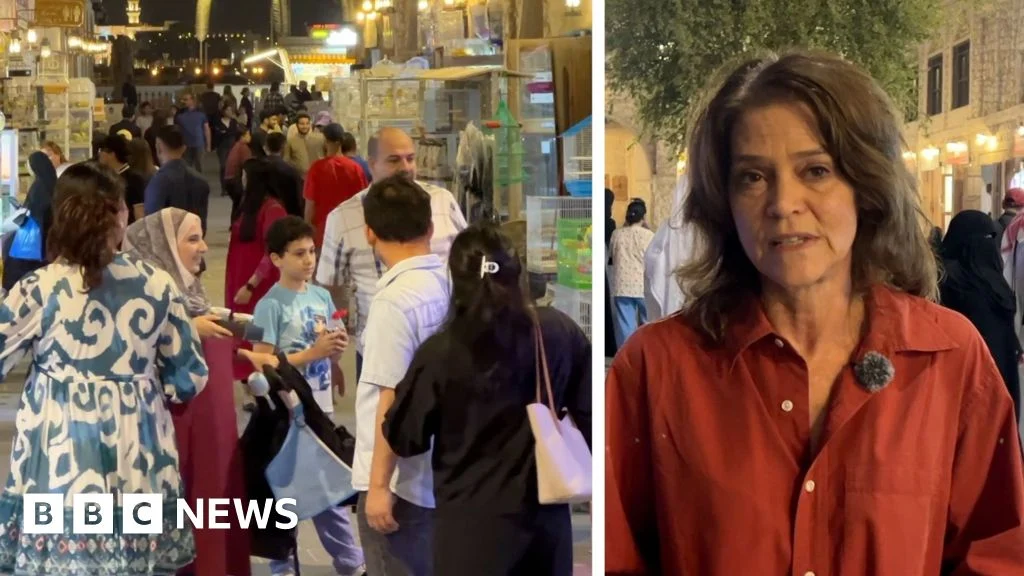
As the conflict in the Middle East enters its third week, a noticeable shift has occurred in Doha. Souq Waqif, once a symbol of the city’s initial trepidation, is now steadily regaining its customary energy. The return of vendors, shoppers, and tourists signals a cautious but discernible move towards normalcy. Barbara Plett Usher of the BBC recently visited the revitalized market, engaging with the populace to gauge their sentiments and understand how the city is processing the lingering effects of the regional unrest. Her observations reflect a community grappling with the duality of enduring regional instability while striving to maintain its renowned resilience.
The Shadow of Regional Conflict: February’s Jolt
The events of late February did not emerge in a vacuum but rather intensified against a backdrop of protracted geopolitical tensions in the Middle East. The "conflict between Israel and the US, and Iran," as referenced, broadly encapsulates a complex web of rivalries, proxy engagements, and strategic maneuvers that have characterized the region for decades. While not a direct, declared war between these specific state actors in the traditional sense, the period leading up to February 28 saw a significant uptick in actions and counter-actions. This included an increase in missile and drone attacks attributed to Iran-backed groups against US interests and allied nations, Israeli operations targeting Iranian assets or proxies in various territories, and a heightened state of alert across international shipping lanes.
Qatar, strategically positioned on the Arabian Peninsula and home to the largest US military base in the Middle East, Al Udeid Air Base, is inherently sensitive to regional security fluctuations. The base serves as a critical operational hub for US Central Command (CENTCOM), facilitating air operations across a vast area stretching from the Horn of Africa to Central Asia. Its presence underscores Qatar’s deep security ties with the United States but also positions it as a potential target during periods of elevated tension.
On February 28, the specific trigger for the heightened alert in Doha, and the subsequent emptying of Souq Waqif, was a series of significant escalations reported across the wider Gulf. While details of specific incidents are often cloaked in security classifications, public reports indicated a surge in long-range drone and missile launches originating from various non-state actors allied with Iran, targeting both military and commercial interests in the region. This immediate threat perception led to swift precautionary measures in Qatar, including advisories to avoid public gatherings, which directly impacted the foot traffic in places like Souq Waqif. The shock was profound because Qatar, unlike some of its neighbors, has largely managed to insulate its civilian population from direct conflict, often leveraging its diplomatic channels to de-escalate crises.
Escalation and Regional Repercussions
The retaliatory strikes from Tehran, or groups aligned with it, were a direct response to perceived aggressions or ongoing military pressures in other parts of the region. These strikes were not confined to a single target but rather formed part of a broader, coordinated effort to demonstrate capability and deter further action. The "at least 18 people killed across the Gulf states so far" figure underscores the severe human cost of this escalation. While specific locations and nationalities of casualties are often withheld for security and diplomatic reasons, it is understood that these fatalities resulted from attacks on a variety of targets. These included, but were not limited to, commercial shipping vessels traversing critical maritime chokepoints like the Strait of Hormuz, where international trade flows are immense; oil infrastructure in vulnerable coastal areas; and, in some instances, military installations hosting foreign forces.
For example, certain shipping incidents in the Red Sea and Gulf of Oman, which intensified around this period, led to crew fatalities or severe injuries, contributing to the reported death toll. Additionally, cross-border missile and drone attacks in other Gulf nations, sometimes targeting industrial facilities or airfields, were also documented, further illustrating the widespread nature of the threat. The economic impact on these affected nations was immediate, causing disruptions in supply chains, increasing insurance premiums for maritime transport, and fostering an environment of uncertainty that deterred foreign investment and tourism.
Qatar’s Defenses Hold Firm
Despite being a direct target for some of these strikes, particularly those aimed at US military bases, Qatar’s robust multi-layered air defense systems proved highly effective. The country has invested heavily in advanced defense capabilities, including sophisticated radar systems, interceptor missiles such as the Patriot system, and potentially other anti-missile technologies like THAAD (Terminal High Altitude Area Defense). These systems, often operated in conjunction with US forces stationed at Al Udeid, form a formidable shield against aerial threats.
The interceptions were critical in preventing significant damage and, more importantly, avoiding any loss of life within Qatar. While the exact number of incoming threats and successful intercepts remains classified, the Qatari Ministry of Defense and US CENTCOM issued statements acknowledging the defensive actions and reassuring the public of the effectiveness of their joint capabilities. These intercepts not only protected vital military assets but also civilian areas that could have been inadvertently affected by shrapnel or misdirected projectiles. The success of these defensive operations was a testament to Qatar’s long-term strategic planning and its close security cooperation with the United States, providing a crucial element of stability amidst regional volatility.
A Return to Rhythm: Souq Waqif’s Pulse
As the immediate threat level receded from its peak, Doha began its measured return to normalcy. Souq Waqif, an ancient market meticulously restored to its 19th-century glory, serves as a cultural and social barometer for the city. Its gradual repopulation in the third week of the conflict signifies a collective sigh of relief and a renewed sense of confidence among residents and expatriates alike. The market, with its labyrinthine alleys, spice shops, traditional garments, and vibrant falconry section, is more than just a commercial space; it is the beating heart of Doha’s community life.
Barbara Plett Usher’s recent visit, as reported by the BBC, provided a snapshot of this cautious resurgence. Her interviews with market-goers likely revealed a complex tapestry of emotions. Many expressed initial fear and concern for their safety and that of their families, given the unprecedented proximity of conflict. However, this was often tempered by a strong sense of pride in Qatar’s effective defense mechanisms and the government’s swift response to ensure public safety. There was also a palpable desire to resume daily life, a testament to the resilience inherent in communities that have historically navigated regional turbulences. Vendors, who had seen their revenues plummet during the initial scare, welcomed the returning crowds, expressing hope for sustained recovery in trade.
Qatar’s Strategic Role and Diplomatic Stance
Beyond its military defenses, Qatar’s strategic importance in the Middle East is multifaceted. As a significant global exporter of liquefied natural gas (LNG), it plays a crucial role in international energy security. Its economic stability is tied to global energy markets, which are inherently sensitive to regional conflicts. This economic leverage, combined with its unique diplomatic posture, allows Qatar to often act as a mediator in regional disputes, maintaining channels of communication with a broad spectrum of actors, sometimes including those considered adversaries by other Western powers.
During this recent escalation, Qatar’s diplomatic efforts were likely focused on de-escalation, advocating for restraint, and working through back channels to prevent a broader conflagration. The Qatari Foreign Ministry would have been actively engaged with regional and international partners, reiterating calls for calm and highlighting the potential for devastating consequences of unchecked escalation. Its role as a neutral interlocutor has, at times, drawn criticism, but it has also proven invaluable in facilitating dialogue and preventing worse outcomes in a highly polarized environment.
Economic Resilience Amidst Uncertainty
The initial emptying of Souq Waqif was not just a security measure but also an economic shock. Tourism, a growing sector in Qatar, suffered immediate cancellations and a sharp decline in new bookings. The fear of regional instability can deter travelers and investors alike, impacting sectors ranging from hospitality and retail to real estate and financial services. Qatar, which has invested billions in diversifying its economy beyond hydrocarbons, including significant ventures into tourism, sports (hosting major events like the FIFA World Cup 2022), and logistics, felt this impact acutely.
However, the rapid return of activity to Souq Waqif and other public spaces suggests a degree of economic resilience. Government assurances, coupled with the proven effectiveness of national security measures, helped to rebuild confidence. Analysts noted that Qatar’s substantial sovereign wealth fund provides a robust buffer against short-term economic shocks, allowing it to absorb temporary downturns in specific sectors. While the long-term impact on tourism and foreign direct investment remains contingent on sustained regional stability, the immediate bounce-back demonstrated Qatar’s robust foundational economy and its capacity to mitigate external pressures.
Voices from the Ground: Citizens’ Perspectives
Conversations with residents in Doha, as alluded to by Plett Usher’s report, reveal a blend of stoicism and hope. For many Qataris and long-term expatriates, regional instability is not entirely new, though the direct targeting of areas near their homes was a novel and unsettling experience. One common sentiment expressed was pride in the nation’s leadership and its defense forces. "We felt safe because we knew our defenses were strong," a local merchant in Souq Waqif might have commented, "but the fear was real. Now, we are back, but we watch the news closely."
Expatriate workers, who form a significant portion of Qatar’s population, also shared their concerns. Many have families in their home countries and rely on Qatar’s stability for their livelihoods. Their return to work and public life signifies their trust in the security environment, even if tinged with an awareness of ongoing risks. There’s a collective understanding that while Doha itself may be secure, the wider region remains volatile, requiring constant vigilance and a readiness to adapt.
The Broader Geopolitical Landscape
The recent escalation serves as a stark reminder of the interconnectedness of Middle Eastern security. The conflict has highlighted several critical geopolitical dynamics: the enduring rivalry between regional powers, the significant role of non-state actors, and the delicate balance of international alliances. For the United States, its military presence in Qatar and other Gulf states is a cornerstone of its regional strategy, aimed at deterring aggression, ensuring energy security, and combating terrorism. The successful interception of strikes against US bases reaffirms the importance of these alliances and the shared commitment to regional stability.
Looking ahead, the future outlook for the region remains complex. While the immediate intensity of the conflict may ebb and flow, the underlying causes of tension persist. The trajectory of peace will depend on diplomatic breakthroughs, a reduction in proxy warfare, and a commitment from all parties to de-escalation. Qatar, with its unique position and diplomatic capabilities, will likely continue to play a pivotal role in these ongoing efforts, striving to bridge divides and foster dialogue.
Conclusion: Navigating a Volatile Future
The transformation of Souq Waqif from an empty expanse of fear to a lively testament to resilience encapsulates Qatar’s experience of the recent regional escalation. While the initial shock was undeniable, the country’s robust defenses, strategic alliances, and diplomatic acumen ensured that the immediate impact on its territory was contained, preventing loss of life and significant damage. The return of activity to its public spaces signals a cautious confidence, a determination to press forward with daily life and economic development despite the prevailing uncertainties.
However, the experience serves as a powerful reminder that no nation in the Middle East is entirely immune to the ripple effects of regional conflict. Qatar continues to navigate a complex and often volatile geopolitical landscape, balancing its security needs with its economic ambitions and its role as a regional mediator. The collective hope, as voiced by those returning to the bustling Souq Waqif, is for a sustained period of calm that allows for peace and prosperity to truly take root across the Gulf, offering a lasting antidote to the shadows of conflict.

Related Posts
Zambia on Edge: Opposition Leader Arrested Amid Allegations of Insurrection Plot and Election Tensions
Rescuers search for survivors of powerful Indonesia earthquake

