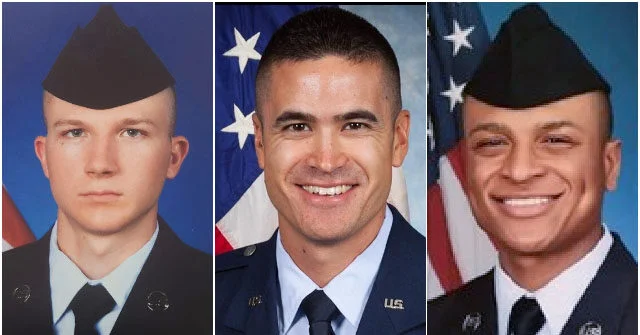
Pilot’s Poignant Tribute Honors Fallen Airmen After Tragic KC-135 Crash in Iraq
A pilot rendered a profoundly symbolic airborne tribute to three Ohio Air National Guardsmen, among six service members tragically killed on March 12, 2026, while engaged in critical support for Operation Epic Fury in Iraq. The somber gesture, meticulously charted in the skies above Columbus, Ohio, resonated deeply as a testament to their ultimate sacrifice.
A Sky-High Salute to Sacrifice
On a Thursday following the devastating incident, a pilot, whose identity remained undisclosed but whose actions spoke volumes, utilized their aircraft to meticulously trace a flight path depicting three headstones and a single saluting service member. This intricate aerial drawing, captured and widely disseminated via flight tracking software and news outlets such as Fox 9, served as a powerful and public display of remembrance. The green-outlined figures against the digital map illustrated the precision and heartfelt intent behind the tribute, turning the vast expanse of the sky into a canvas for honor. The act was not merely a navigational exercise but a deliberate and visible expression of mourning and respect, instantly drawing national attention and symbolizing a collective sorrow for the fallen. The use of flight tracking technology allowed this unique homage to be witnessed by thousands online, amplifying its impact and fostering a sense of shared remembrance across communities.
The Fateful Mission: Operation Epic Fury and the KC-135 Stratotanker
The tragic incident occurred on March 12, 2026, when a KC-135 Stratotanker refueling aircraft crashed in Iraq. The mission the aircraft was supporting, designated Operation Epic Fury, formed part of broader U.S. military efforts in the Middle East, aimed at ensuring regional stability, countering extremist elements, and supporting allied forces. While the precise nature and objectives of Operation Epic Fury were not extensively detailed in initial reports, the context of U.S. engagement in Iraq often involves counter-terrorism operations, advisory roles for Iraqi security forces, and strategic deterrence against various state and non-state actors, including those with links to Iran. Air refueling operations are indispensable to modern military campaigns, extending the range and endurance of combat aircraft and transport planes, thereby enabling sustained aerial presence and rapid response capabilities across vast operational theaters.
The KC-135 Stratotanker, a stalwart of the U.S. Air Force and Air National Guard fleets since the 1950s, is primarily designed for aerial refueling. These venerable aircraft play a critical role in global power projection, allowing fighter jets, bombers, and other reconnaissance aircraft to remain airborne for extended periods without needing to land. With a typical crew of four (pilot, co-pilot, navigator, and boom operator), the KC-135 has an impressive operational history, participating in every major U.S. conflict since Vietnam. Its robust design and continuous upgrades have ensured its longevity, yet any incident involving such a vital asset, especially one resulting in fatalities, underscores the inherent dangers and complexities of military aviation and overseas operations. Investigations into the crash typically involve meticulous analysis of flight data recorders, maintenance records, weather conditions, and potential external factors, aiming to ascertain the exact cause and prevent future occurrences.
Remembering the Fallen: Profiles in Courage
The crash claimed the lives of six dedicated service members, a profound loss for their families, their units, and the nation. Among them were three members of the 121st Air Refueling Wing, an Ohio Air National Guard unit renowned for its critical role in aerial refueling operations both domestically and abroad.
Captain Seth Koval (Ohio Air National Guard)
Captain Seth Koval, an esteemed member of the 121st Air Refueling Wing, was among those lost. His commitment to service and his proficiency in aerial operations were highly regarded within his unit. Captain Koval embodied the spirit of the Air National Guard, serving both his state and nation with distinction, ready to answer the call whenever and wherever duty beckoned. His sacrifice is a testament to the unwavering dedication required of military aviators who operate in demanding environments.
Captain Curtis Angst (Ohio Air National Guard)
Also from the 121st Air Refueling Wing, Captain Curtis Angst served with valor and professionalism. His colleagues remembered him for his leadership qualities and his invaluable contributions to the unit’s mission readiness. Captain Angst’s role as an Air National Guardsman meant balancing civilian life with rigorous military training and deployments, a commitment that highlights the unique dedication of those who choose this path of service.
Master Sergeant Tyler Simmons (Ohio Air National Guard)
Master Sergeant Tyler Simmons, a seasoned non-commissioned officer with the 121st Air Refueling Wing, represented the backbone of the unit. Master Sergeants are critical for their technical expertise, leadership, and mentorship of junior airmen. His experience and dedication were vital to the operational success of his squadron, and his loss creates a significant void within the unit’s leadership and skill base.
Beyond the Ohio Air National Guard members, the crash also claimed three other distinguished service members from different states and units, underscoring the joint nature of U.S. military operations:
Major John Alex Klinner (Alabama)
Major John Alex Klinner hailed from Alabama, contributing his expertise to the broader mission in Iraq. Officers like Major Klinner are central to planning and executing complex military operations, often leading teams and making critical decisions under pressure. His service reflected a deep commitment to national security and the protection of U.S. interests abroad.
Captain Ariana G. Savino (Washington)
Captain Ariana G. Savino, from Washington state, was another casualty of the crash. Her service highlighted the diverse roles and essential contributions of women in the armed forces. Captain Savino’s dedication to her duties, whatever they entailed on the fateful mission, demonstrated the unwavering resolve of service members who put themselves in harm’s way for their country.
Technical Sergeant Ashley B. Pruitt (Kentucky)
Technical Sergeant Ashley B. Pruitt, representing Kentucky, was also lost in the tragic incident. Technical Sergeants are highly skilled specialists, providing essential technical and operational support that underpins military readiness. Their expertise is indispensable for maintaining complex aircraft and systems, ensuring that missions can be carried out effectively and safely. Technical Sergeant Pruitt’s service was a vital component of the team’s overall capability.
The combined loss of these six individuals reverberated across their respective communities and the broader military establishment, serving as a stark reminder of the sacrifices made daily by those in uniform.
Official Mourning and Unified Condolences
In the immediate aftermath of the crash, official responses focused on expressing profound grief and solidarity. On March 14, two days after the incident, leaders of the Ohio National Guard released a poignant video message, articulating the deep sorrow felt across the organization. "We lost three exceptional airmen in a tragic KC-135 crash in Iraq and our hearts are extremely heavy," one leader conveyed, emphasizing that the loss was "deeply felt" throughout the Ohio military community and beyond.
The message underscored the personal connections within the military, highlighting that the airmen were "more than just the uniforms they wore." They were remembered as "our teammates, our friends, mentors who helped make the organization stronger every day." This sentiment speaks to the tight-knit bonds forged in military service, where professional relationships often evolve into familial ones. The leaders also extended their condolences and support to the families of the fallen, acknowledging their profound sacrifice: "Behind each of them is a family who supported their service. Those families, and the teammates who worked beside them, please know that you are not alone." Such statements are crucial in providing comfort and reassurance to grieving families and service members, reinforcing the idea that their sacrifice is recognized and valued by the entire military community and the nation it serves.
The Solemnity of Dover: A Nation’s Farewell
A dignified transfer ceremony, a solemn and hallowed tradition, was held on the Wednesday following the crash at Dover Air Force Base in Delaware. President Donald Trump personally attended this somber event, departing the White House to be present as the remains of the six fallen service members were repatriated to American soil. The presence of the Commander-in-Chief at Dover underscores the national significance of such losses and the profound respect accorded to those who die in service.
Dover Air Force Base serves as the primary port of entry for all fallen U.S. service members returning from overseas. The dignified transfer ceremony, typically a private affair witnessed by family members and senior military and civilian officials, is a moment of profound gravity. It is a precise and silent ritual where the remains, encased in flag-draped transfer cases, are meticulously moved from the aircraft to awaiting vehicles. This process, conducted with utmost reverence and precision by military honor guards, symbolizes the nation’s final salute to its heroes and offers a sacred space for initial grieving and remembrance for the families. President Trump’s attendance, a gesture often undertaken by U.S. presidents, highlights the weight of command and the personal toll of military conflicts on the nation’s leadership.
Geopolitical Context: U.S. Operations in the Middle East
The crash occurred within a complex geopolitical landscape in the Middle East, where U.S. forces have maintained a presence for decades, particularly in Iraq. Operation Epic Fury, as the mission was named, likely fit into the broader U.S. strategy to counter Iranian influence, degrade remnants of ISIS, and support the stability of the Iraqi government. The region remains volatile, characterized by proxy conflicts, sectarian tensions, and the persistent threat of extremist groups.
U.S. military operations in Iraq, while reduced from peak levels, continue to involve training, advising, and assisting Iraqi security forces, as well as conducting targeted counter-terrorism missions. The presence of Iranian-backed militias in Iraq, often operating outside central government control, poses significant challenges and risks to U.S. personnel and regional stability. These groups have historically targeted U.S. interests and personnel through rocket attacks, improvised explosive devices, and other asymmetric warfare tactics. The need for air refueling, as provided by the KC-135, is a testament to the extensive aerial surveillance, reconnaissance, and combat air patrols required to monitor these threats and respond effectively across the vast Iraqi and regional airspace. The ongoing nature of these operations underscores the continuous dangers faced by service members, even in support roles, within active operational theaters.
Strategic Resolve Amidst Loss: The Path Forward
In the wake of the tragic loss, U.S. Department of War Secretary Pete Hegseth reaffirmed the nation’s strategic resolve. Speaking on Thursday, he asserted that the operation against the Islamic regime in Iran remained "laser-focused" and decisive. His comments sought to convey a message of unwavering commitment and efficacy despite the recent casualties. "We’re winning decisively and on our terms," Hegseth stated, aiming to reassure the public and U.S. allies that the operational objectives were being met and that the U.S. retained the upper hand in the regional competition.
Such declarations, particularly following military losses, are intended to bolster morale, project strength to adversaries, and maintain public and international confidence in U.S. military strategy. The implications of these statements are multi-faceted: they signal continued engagement in the region, reiterate the strategic importance placed on countering perceived threats from Iran, and emphasize a commitment to achieving objectives despite the human cost. For the military personnel on the ground and in the air, such resolve from leadership is critical for maintaining morale and purpose in demanding and dangerous environments. The incident, while tragic, did not deter the stated objectives of the operation, reflecting the enduring commitment of the U.S. military to its missions.
Community and National Remembrance
The impact of such a tragedy extends far beyond the immediate military community, touching the hometowns and families of the fallen. Communities across Ohio, Alabama, Washington, and Kentucky mourned the loss of their own, rallying around the families with support and remembrance. Local tributes, memorial services, and gestures of solidarity often follow such events, reflecting a national appreciation for military service and sacrifice. The public reaction to the pilot’s aerial tribute, for instance, demonstrated a widespread desire to honor the fallen and acknowledge the risks inherent in military service.
For military families, the support networks provided by the armed forces and local communities become crucial during periods of grief. These networks offer everything from logistical assistance to emotional counseling, helping families navigate the profound challenges of loss. The collective mourning underscores the deep connection between the military and civilian populations, highlighting that the burden of service is shared, even if the direct risks are borne by a select few.
Enduring Legacy of Service
The tragic loss of Captain Seth Koval, Captain Curtis Angst, Master Sergeant Tyler Simmons, Major John Alex Klinner, Captain Ariana G. Savino, and Technical Sergeant Ashley B. Pruitt serves as a poignant reminder of the profound sacrifices made by service members in defense of national interests and global stability. Their dedication, courage, and ultimate sacrifice are woven into the fabric of the nation’s history. The pilot’s unique aerial tribute, the solemn dignified transfer ceremony, and the heartfelt condolences from military leadership collectively affirm a nation’s enduring gratitude and commitment to remember those who have given their lives. As operations like Epic Fury continue, the memory of these six fallen heroes will stand as a testament to the unwavering spirit of service and the enduring resolve of the United States military.

Related Posts

Democratic Candidates Must Moderate to Win General Elections, Says Rep. Greg Stanton

Lisa Demuth Secures Republican Gubernatorial Nomination in Minnesota, Defeating Trump-Endorsed Mike Lindell