
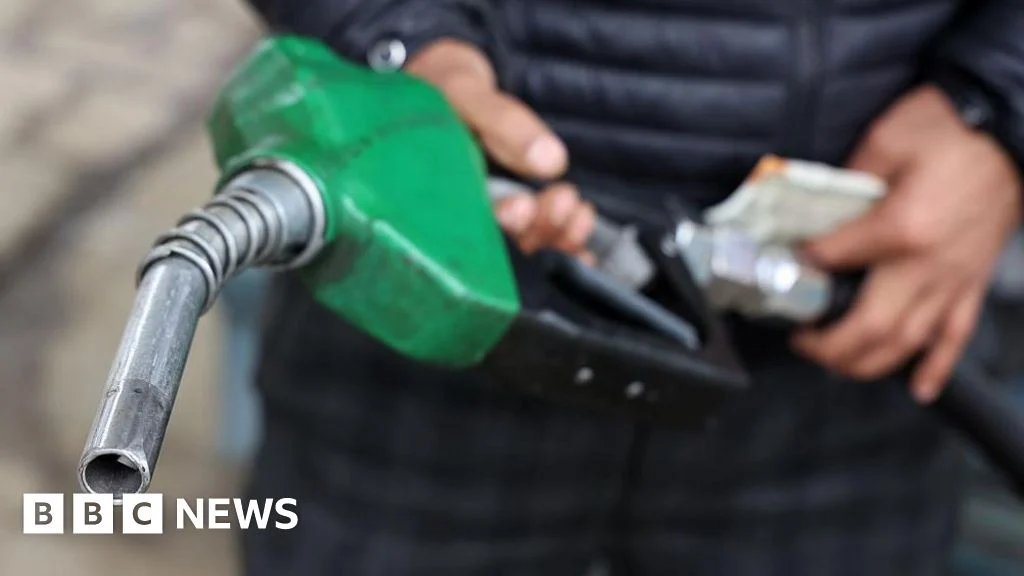
Oil Prices Surge Past $100 a Barrel as US-Iran Ceasefire Crumbles and Hormuz Blockade Announced
Global energy markets were plunged into renewed volatility on Monday as oil prices soared above the $100 mark, following the dramatic collapse of ceasefire negotiations between the United States and Iran over the weekend. The failure of diplomatic efforts, coupled with a stark announcement from former President Donald Trump regarding a blockade of Iranian ports, has ignited fears of a deepening global energy crisis and significant geopolitical instability.
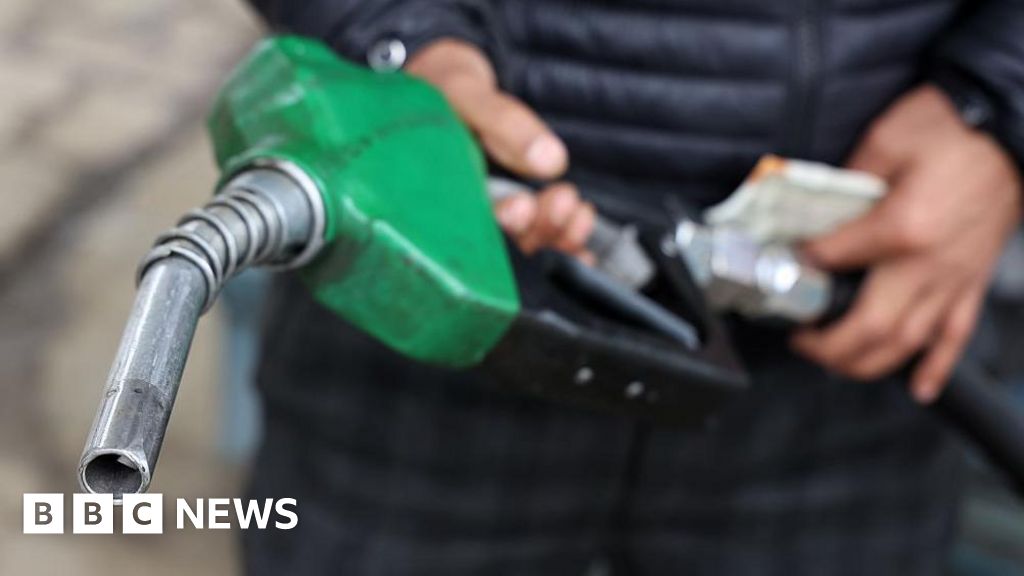
Brent crude, the international benchmark, saw an immediate and substantial surge, climbing by 8.5% to reach $102.37 (£77.15) per barrel in early Asian trading. Simultaneously, West Texas Intermediate (WTI), the US benchmark, experienced an even sharper increase, rising 9% to settle at $105.34 per barrel. This abrupt price hike reverses a temporary reprieve observed just last Wednesday, when oil prices had dipped below $100 after Washington and Tehran had agreed to a conditional two-week ceasefire deal. That agreement notably included the crucial provision for the reopening of the Strait of Hormuz, a vital maritime artery for global energy shipments.
The renewed escalation underscores the extreme fragility of the situation in the Persian Gulf, a region central to the world’s energy supply. The Strait of Hormuz, a narrow waterway connecting the Persian Gulf with the Arabian Sea, is strategically unparalleled. An estimated one-fifth of the world’s total petroleum liquid shipments, equivalent to approximately 21 million barrels per day, pass through this choke point. Its closure or significant disruption has immediate and far-reaching implications for global oil prices, international trade, and the broader world economy.
A Volatile Weekend and the Return of Tensions
The current crisis escalated rapidly over the weekend. Hopes for a sustained de-escalation, which had been cautiously building after the conditional ceasefire agreement struck on April 8, 2026, were dashed as talks in Pakistan between US and Iranian delegations concluded without a new, comprehensive deal. The ceasefire, intended to provide a window for diplomatic progress amidst the ongoing "Iran war" – a regional conflict that has seen significant US-Israeli strikes and Iranian retaliation – was explicitly tied to the continued open passage through the Strait of Hormuz. Its expiration without a successor agreement immediately heightened anxieties.
The situation was further inflamed by a post on Sunday, April 12, 2026, from former President Donald Trump on his social media platform, Truth Social. Trump declared that the US would commence "BLOCKADING any and all Ships trying to enter, or leave, the Strait of Hormuz." This unilateral announcement, coming from a former head of state with significant influence and a history of assertive foreign policy, sent shockwaves through international markets and diplomatic circles.
Confirmation of this impending action soon followed from official channels. US Central Command (Centcom), responsible for US military operations in the Middle East, issued its own statement later on Sunday, specifying that the blockade of traffic entering and exiting Iranian ports would begin promptly at 10:00 ET (14:00 GMT) on Monday, April 13, 2026. Centcom emphasized that the blockade would be enforced "impartially against vessels of all nations entering or departing Iranian ports and coastal areas," a move designed to cut off Iranian maritime trade and exert maximum economic pressure. However, in an attempt to mitigate broader international outrage and avoid unnecessary confrontations, Centcom also clarified that it "will not impede" ships in the Strait of Hormuz heading "to and from non-Iranian ports," implying a targeted rather than blanket interdiction of all traffic.
Iran’s Defiant Stance and Military Posturing
The Iranian response was swift and defiant, mirroring the historical posture of the Islamic Republic in the face of perceived external threats. Mohammad Bagher Ghalibaf, the Iranian parliamentary speaker who led the recent negotiations in Pakistan, issued a strong statement carried by local media, asserting that the country "will not submit to any threat." This uncompromising stance signals Iran’s unwavering resolve not to capitulate under pressure.
Further escalating the military dimension, Iran’s Islamic Revolutionary Guard Corps (IRGC) Naval Forces issued a stern warning. They declared that any military vessels approaching the Strait of Hormuz would be considered in violation of the recently collapsed ceasefire agreement between Washington and Tehran and would be "dealt with severely." This statement directly challenges Centcom’s clarification regarding unimpeded passage for non-Iranian traffic, suggesting a high potential for miscalculation and direct confrontation in the heavily militarized waterway. The IRGC’s naval capabilities, while not matching those of the US, are significant in asymmetric warfare, focusing on fast attack craft, mines, and anti-ship missiles, posing a credible threat to shipping in the confined waters of the Strait.
The Strategic Imperative of the Strait of Hormuz
The Strait of Hormuz is more than just a shipping lane; it is a critical geopolitical choke point, fundamental to global energy security. Its strategic importance cannot be overstated:
- Global Oil Flow: Roughly 21% of global petroleum liquids consumption flows through the Strait. This includes crude oil, condensate, and petroleum products. Key exporters like Saudi Arabia, Iran, the UAE, Kuwait, and Iraq rely on it for their maritime oil exports.
- LNG Shipments: A significant portion of the world’s liquefied natural gas (LNG) also transits the Strait, particularly from Qatar, the world’s largest LNG exporter. Disruptions here would impact global gas prices and energy supply diversity.
- Economic Vulnerability: Any sustained closure or significant impediment to traffic would trigger a global energy crisis, sending oil prices skyrocketing, potentially above historical highs of $147 a barrel seen in 2008. This would lead to widespread inflation, economic recession in major importing nations, and severe disruptions to global supply chains.
- Historical Flashpoint: The Strait has been a focal point of tensions for decades, notably during the "Tanker War" of the 1980s, where both Iran and Iraq targeted oil tankers. More recently, in 2019, a series of attacks on tankers and drones in the region underscored its persistent volatility.
Background to the "Iran War" and US-Iran Relations
The current crisis is a direct consequence of a deeply entrenched and complex history of antagonism between the United States and Iran, exacerbated by a broader regional conflict referred to in the article as the "Iran war." While specific details of this conflict are not fully enumerated, it is understood to be a protracted period of heightened regional instability involving Iran, its proxies, and adversaries including the US and Israel. This has likely involved proxy conflicts, cyber warfare, and targeted strikes, creating a volatile environment where energy infrastructure and shipping lanes become strategic targets.
Key elements of this background include:
- Collapse of the JCPOA: The 2015 Joint Comprehensive Plan of Action (JCPOA), or Iran nuclear deal, which provided sanctions relief in exchange for curbs on Iran’s nuclear program, was abandoned by the Trump administration in 2018. This led to the re-imposition of crippling US sanctions on Iran’s oil exports and financial sector, severely damaging its economy. Iran, in response, gradually rolled back its commitments under the deal.
- Maximum Pressure Campaign: The Trump administration pursued a "maximum pressure" campaign against Iran, aiming to force it to negotiate a more comprehensive deal addressing its ballistic missile program and regional activities. This campaign, characterized by aggressive sanctions and military posturing, significantly ratcheted up tensions.
- Regional Proxy Conflicts: Iran’s extensive network of regional proxies, including groups in Iraq, Syria, Lebanon, and Yemen, has been a constant source of friction. US and Israeli forces have frequently targeted these groups, leading to retaliatory actions that often threaten shipping or energy infrastructure. The "US-Israeli strikes" mentioned in the article are consistent with this pattern.
- Previous Strait Disruptions: Since the current "Iran war" began on February 28, 2026, shipping through the Strait has largely been at a standstill, causing significant economic damage. The previous conditional ceasefire was a desperate attempt to restore some normalcy, allowing countries like India and Malaysia to negotiate safe passage for their vessels, highlighting the global impact of the conflict.
Broader Economic and Geopolitical Implications
The breakdown of negotiations and the looming blockade carry profound implications across various sectors:
- Global Inflationary Pressures: A sustained oil price above $100, and potentially much higher, would exacerbate existing inflationary pressures worldwide. Transportation costs would surge, impacting supply chains, manufacturing, and consumer goods prices. Energy-intensive industries would face significant headwinds, potentially leading to job losses and reduced economic activity.
- Recession Fears: Major economies, already grappling with post-pandemic recovery and existing geopolitical tensions, could be tipped into recession by a prolonged energy crisis. Countries heavily reliant on oil imports, such as those in Europe, Japan, South Korea, and India, would be particularly vulnerable. The International Monetary Fund (IMF) had previously warned that a sustained oil price shock could shave off 0.5-1% from global GDP growth in a year.
- Supply Chain Disruptions: The Strait of Hormuz is not just for oil; it’s part of major global shipping routes. Any military activity or prolonged blockade would disrupt broader maritime trade, affecting container shipping, bulk carriers, and other vital logistics, leading to shortages and further price increases for a wide array of goods.
- Geopolitical Realignment: The crisis could compel major powers to reassess their alliances and energy strategies. Oil-importing nations might accelerate diversification efforts, investing more in renewable energy and seeking alternative suppliers, though short-term solutions are limited. It could also test the unity of international bodies and alliances.
- Humanitarian Concerns: A prolonged conflict and economic blockade could severely impact the civilian population in Iran, already suffering under extensive sanctions. Access to essential goods, medicine, and food could be jeopardized, raising humanitarian alarms.
- OPEC+ Response: The Organization of the Petroleum Exporting Countries and its allies (OPEC+) would face immense pressure to increase production to stabilize markets. However, spare capacity is limited, and internal political dynamics within the cartel could complicate any coordinated response. Saudi Arabia, a key US ally and major oil producer, would be central to any efforts to boost supply, but its strategic calculations are complex given regional rivalries.
- Financial Market Volatility: Beyond energy markets, global stock exchanges are likely to react negatively, with investors fleeing riskier assets. Bond markets could see increased demand for safe havens, and currencies of oil-importing nations could weaken against the dollar.
Calls for De-escalation and International Diplomacy
In the wake of these developments, there will be renewed and urgent calls for de-escalation from international bodies and concerned nations. The United Nations Security Council, various European Union members, and Asian economic powers like China and India are expected to appeal for restraint and a return to diplomatic channels.
Analysts from institutions like the International Energy Agency (IEA) and various geopolitical think tanks are emphasizing the catastrophic potential of a full-blown military confrontation in the Strait. "The economic fallout of a prolonged disruption in Hormuz would be unprecedented in modern times," stated Dr. Lena Khan, a senior energy economist at the Eurasia Group. "Every nation has a vested interest in ensuring this waterway remains open and secure. Diplomacy, no matter how difficult, must be the priority."
The coming days will be critical in determining whether the international community can effectively intervene to prevent a further slide into conflict, or if the region is poised for a new, potentially devastating chapter of confrontation with global repercussions. The world watches anxiously as the standoff in the Strait of Hormuz intensifies, a stark reminder of the fragile balance between geopolitics and global economic stability.

Related Posts

Zambia on Edge: Opposition Leader Arrested Amid Allegations of Insurrection Plot and Election Tensions

Rescuers search for survivors of powerful Indonesia earthquake

