
Oil Nears $110 a Barrel After Gas Field Strike
Global energy markets experienced significant upheaval on Wednesday as crude oil prices surged, with Brent crude nearing the critical $110 per barrel mark, following reports of an airstrike on a major petrochemical complex situated within Iran’s portion of the world’s largest natural gas field. The incident, reported by Iranian media, immediately reignited fears of escalating regional conflict and its potential ramifications for global energy supply chains, already strained by existing geopolitical tensions.
The Brent crude oil benchmark, a key indicator for international oil prices, saw a sharp increase, hitting $109.91 a barrel just after 14:30 GMT. This represented a jump of more than 5% compared to Tuesday’s closing prices, though it later stabilised above the $108 threshold. Concurrently, the benchmark UK gas price also witnessed a noticeable spike, climbing by 6% to 143.53 pence a therm before receding slightly below the 140 pence mark. These sharp movements underscore the acute sensitivity of energy markets to disruptions in critical production regions.
The Incident and Iran’s Response
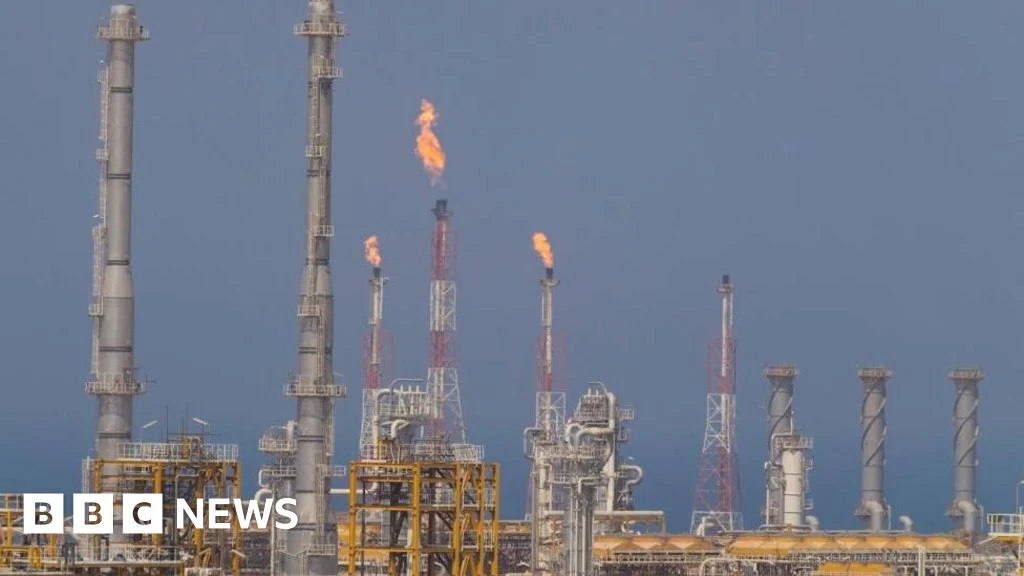
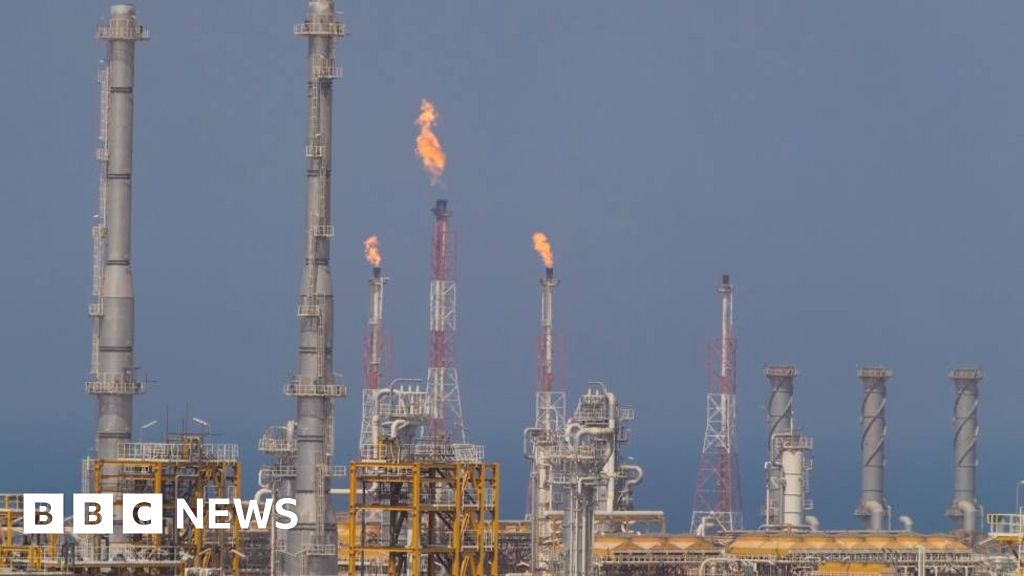
The catalyst for this market volatility was a report from Tasnim, a news agency with affiliations to Iran’s powerful Islamic Revolutionary Guard Corps (IRGC). Tasnim stated that an airstrike had targeted a petrochemical facility located on the South Pars gas field, a colossal natural gas reservoir shared between Iran and Qatar. The specific details surrounding the attack, including the responsible party, remained unconfirmed by independent sources, adding to the climate of uncertainty.
Following the initial reports, Iran’s oil ministry swiftly moved to contain the narrative, announcing via Tasnim that a fire at the petrochemical complex was brought under control by Wednesday afternoon. However, the full extent of the damage sustained by the critical infrastructure remained unclear, leaving analysts and market participants to speculate on potential long-term impacts on Iran’s energy production capacity.
In a strongly worded statement, Iran’s military issued a stark warning, vowing "decisive action" in response to the strike on its energy infrastructure. The statement, also published by Tasnim, declared, "As previously warned, if the fuel, energy, gas, and economic infrastructures of our country are attacked by the American-Zionist enemy, in addition to a powerful counterattack against the enemy, we will severely strike the origin of that aggression as well." The military further asserted, "We consider targeting the fuel, energy, and gas infrastructures of the countries of origin legitimate and will retaliate strongly at the earliest opportunity." This aggressive rhetoric signals a significant escalation in the regional shadow war, transforming potential economic targets into direct military objectives and raising the spectre of broader conflict.
The South Pars/North Dome Gas Field: A Global Energy Nexus
The South Pars/North Dome field is not merely a regional asset; it is the world’s largest natural gas field, holding an estimated 51 trillion cubic meters of in-situ natural gas and about 50 billion barrels of natural gas condensates. This immense reservoir is a cornerstone of global energy supply, with its integrity directly impacting international energy security. Iran refers to its section as South Pars, while Qatar’s adjacent portion is known as North Dome. The two nations are among the largest holders of proven natural gas reserves globally, making any threat to their joint field a matter of international concern.
Qatar, a significant player in the global liquefied natural gas (LNG) market, producing approximately a fifth of the world’s supply, also operates extensive facilities on its North Dome section. Earlier in the ongoing broader conflict, Qatar had already announced a halt in its LNG production, citing regional instability. Following the reported strike on the Iranian side, Qatar’s foreign ministry spokesman, Majed Al Ansari, voiced his country’s apprehension, stating that strikes against energy infrastructure "constitutes a threat to global energy security." This collective concern from both nations highlights the interconnectedness of their energy interests and the potential for a localized incident to trigger global repercussions.
Volatile Markets and Historical Context
While Wednesday’s surge in oil and gas prices was sharp, both benchmarks remained below their peak levels observed earlier in the current geopolitical conflict. Brent crude had previously soared to $116.78 a barrel on March 9, while the UK gas price reached a high of 162.55 pence a therm on March 3. These previous highs underscore a sustained period of elevated energy market volatility, driven by a confluence of factors including supply chain disruptions, post-pandemic demand recovery, and ongoing geopolitical instability in key energy-producing regions.
Analysts have consistently pointed to the Middle East as a primary source of this market uncertainty. The Strait of Hormuz, a narrow maritime chokepoint through which approximately one-fifth of the world’s total petroleum liquids consumption flows, remains a critical vulnerability. Any disruption or threat to shipping in this vital waterway, a recurring theme in regional tensions, can send shockwaves through global oil markets.
Danni Hewson, head of financial analysis at AJ Bell, commented on the situation, stating that the attack and Iran’s subsequent threats of retaliation had "helped dial up the temperature once again and put renewed upward pressure on oil prices." She further elaborated on the strategic significance of the region: "Any solution to the blockage of the Strait of Hormuz looks pretty distant at this point and unless and, until there is progress on that front, energy markets will likely remain volatile." Her assessment reflects a broader consensus among market watchers that geopolitical risk premiums will continue to be priced into energy commodities for the foreseeable future.
Broader Economic and Geopolitical Implications
The ramifications of this incident extend far beyond immediate price fluctuations, touching upon global economic stability, national energy policies, and regional power dynamics.
Impact on Global Supply Chains and Inflation: Elevated and volatile energy prices exacerbate inflationary pressures already gripping economies worldwide. Businesses face higher operational costs, which are often passed on to consumers, leading to reduced purchasing power and potential economic slowdowns. Supply chains, still recovering from pandemic-related disruptions, become more expensive and less predictable, affecting everything from manufacturing to transportation of goods. For energy-importing nations, sustained high prices can lead to significant trade deficits and increased national debt.
Government Responses: The Jones Act Waiver: In a move aimed at mitigating rising energy costs for its citizens, the White House announced on Wednesday the temporary suspension of the Jones Act. This 1920 law mandates that only American-made ships can be used to transport goods between US ports, a measure historically intended to bolster domestic shipbuilding and maritime industries. US Press Secretary Karoline Leavitt stated that the 60-day waiver would allow "vital resources like oil, natural gas, fertiliser, and coal to flow freely" by enabling the use of non-American-made vessels. The administration hopes this will increase the flexibility and capacity of domestic energy transport, thereby helping to stabilise prices at the pump.
However, the effectiveness of this waiver has been met with skepticism from maritime groups in the US. These groups argue that the impact on overall oil prices would likely be minimal, asserting that the primary driver of rising prices at the pump is the global price of crude oil, not the cost of domestic shipping. They suggest that while the waiver might offer marginal logistical benefits, it is unlikely to fundamentally alter the broader market dynamics influenced by international supply and demand and geopolitical events.
Regional Repercussions: Gas Flow to Iraq Suspended: The ripple effects of the strike quickly spread beyond Iran’s borders. In a direct consequence of the attack and the need to secure domestic supplies, Iran suspended the flow of gas to neighbouring Iraq, a senior Iraqi official confirmed to Reuters. This decision highlights Iran’s immediate priority to shore up its own energy infrastructure and ensure domestic stability, even at the cost of disrupting supplies to a crucial regional partner. The vast majority of Iran’s natural gas production, approximately 94% according to data from the Gas Exporting Countries Forum, is consumed domestically. This internal consumption prioritisation underscores the critical role of the South Pars field for Iran’s own energy security.
Iraq relies significantly on Iranian gas imports to fuel its power plants, and any disruption can lead to severe electricity shortages, particularly during periods of high demand. This move by Iran not only creates immediate challenges for Iraq’s energy sector but also potentially complicates the already delicate political relationship between the two nations, forcing Iraq to seek alternative, potentially more expensive, energy sources.
Deeper Dive into Regional Tensions
The reported airstrike and Iran’s retaliatory threats are embedded within a much broader and complex web of regional tensions that have characterized the Middle East for decades. This includes a multifaceted shadow war involving proxy conflicts, maritime security incidents, cyber warfare, and occasional direct confrontations. The rhetoric of the "American-Zionist enemy" used by Iran’s military is indicative of its long-standing adversarial stance towards the United States and Israel, whom it views as primary antagonists in the region.
The strategic importance of energy infrastructure in this ongoing conflict cannot be overstated. Energy facilities are not only vital economic assets but also symbolic targets, capable of inflicting significant economic pain and signaling resolve. Attacks on such infrastructure, regardless of attribution, invariably raise the specter of escalation, transforming a regional dispute into a potential international crisis with global economic implications. The explicit threat by Iran to target the "countries of origin" of any aggression represents a dangerous shift towards a more direct and potentially wider conflict, moving beyond proxy warfare to direct strikes on sovereign territory.
Market Outlook and Expert Projections
The immediate outlook for energy markets remains deeply uncertain and highly sensitive to further developments in the Middle East. Analysts anticipate continued volatility as long as geopolitical tensions persist and the threat of further attacks or retaliations looms. The full assessment of the damage to the South Pars petrochemical complex, once available, will provide clearer insights into potential long-term supply impacts from Iran.
Beyond the immediate crisis, the incident underscores the inherent fragility of global energy supply chains dependent on politically volatile regions. It also highlights the complex challenge of energy security in an era striving for energy transition. While nations are increasingly investing in renewable energy sources, the world remains heavily reliant on fossil fuels, making any disruption to major oil and gas producers a global concern. The ongoing instability may inadvertently accelerate the push for energy independence and diversification in some nations, even as it forces others to grapple with the immediate economic realities of expensive and unpredictable traditional energy sources. The coming weeks will be crucial in determining whether this incident marks a temporary spike in market jitters or signals a more profound and sustained period of heightened geopolitical risk in the global energy landscape.

Related Posts

Zambia on Edge: Opposition Leader Arrested Amid Allegations of Insurrection Plot and Election Tensions

Rescuers search for survivors of powerful Indonesia earthquake

