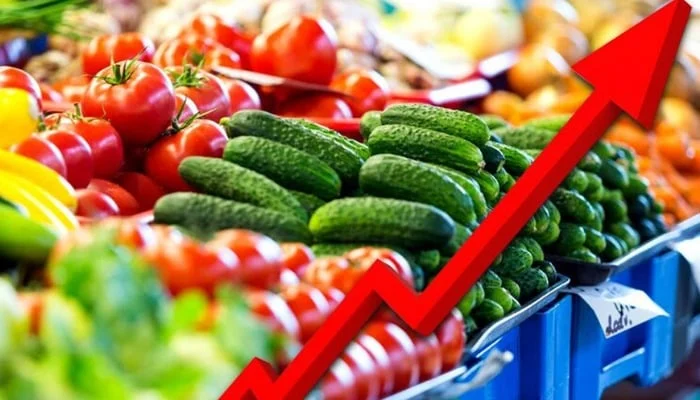
Nigeria Faces Renewed Economic Uncertainty as Food Inflation Surges Back into Double Digits in February 2026
The Nigerian economic landscape experienced a jarring shift in February 2026 as food inflation rebounded to 12.12 per cent, effectively ending the brief period of single-digit relief that had briefly buoyed consumer sentiment in January. According to the latest Consumer Price Index (CPI) report issued by the National Bureau of Statistics (NBS), this 3.23 percentage point jump from January’s 8.89 per cent reading signals a return to the persistent price pressures that have historically plagued Nigerian households. While year-on-year comparisons against February 2025 reveal a cooling trend—dropping from 26.98 per cent to the current 12.12 per cent—the month-on-month volatility serves as a stark reminder of the structural fragility within the nation’s food supply chains.
A Chronology of Price Volatility
To understand the current economic climate, one must look at the trajectory of the past fourteen months. Throughout 2025, Nigeria grappled with aggressive inflationary pressures that peaked at historic highs. By the start of 2026, tactical interventions and base-effect adjustments led to a historic milestone: January 2026 marked the first time in over a decade that food inflation hit a single-digit rate. This period of optimism, however, proved short-lived. By mid-February 2026, market surveys began to reflect a sharp uptick in the cost of essential staples, including beans, carrots, millet flour, yam flour, and specialized items like dried ogbono and snails. The rapid reversal has forced economists to re-evaluate the sustainability of the price moderation seen earlier in the year.
Dissecting the Inflationary Drivers
The NBS report identifies several key staples contributing to the 4.69 per cent month-on-month surge in food prices. Beyond the raw cost of these commodities, agricultural stakeholders have identified a "perfect storm" of rising input costs—such as fertilizers, pesticides, and transport logistics—as the primary culprits behind the price hikes.
Farmers, represented by the All Farmers Association of Nigeria (AFAN), have expressed deep frustration. Mohammed Magaji, the President of AFAN, has warned of a looming crisis in the upcoming planting season. Many smallholder farmers are reportedly considering abandoning their fields entirely due to the impossibility of maintaining profitability amid soaring operational costs. "Most of the farmers we are talking to now are saying they will not go to farm this time around; they will wait and buy. What does it mean? It has a lot of implications," Magaji cautioned. If realized, a widespread boycott of the planting season could result in a significant supply-side deficit, potentially triggering further food price spikes in the third and fourth quarters of 2026.
Regional Disparities and the Geography of Inflation
The burden of inflation is not distributed evenly across Nigeria’s thirty-six states. Data from the February report highlights stark regional variations in the cost of living. Kogi State emerged as the most expensive for food, recording a year-on-year inflation rate of 26.91 per cent, followed closely by Adamawa and Benue. Conversely, states like Katsina, Bauchi, and Imo experienced the slowest increases.
On a month-on-month basis, the volatility is even more pronounced. Bayelsa saw an 8.81 per cent increase, while parts of the North, such as Katsina, bucked the national trend with a slight decline in food inflation. These discrepancies are largely attributed to local supply chain bottlenecks, varying levels of regional insecurity, and differences in state-level infrastructure, which dictate how efficiently food items move from rural farms to urban markets.
Headline Inflation and Macroeconomic Context
While food inflation has grabbed headlines, the broader headline inflation rate—which encompasses all goods and services—saw a marginal easing to 15.06 per cent in February 2026, down from 15.10 per cent in January. This minor decline is statistically thin, representing a mere 0.04 percentage point shift. The Consumer Price Index rose to 130.0, up from 127.4 the previous month, confirming that while the pace of acceleration may have slowed, the absolute cost of living continues to climb.
The structural breakdown of the headline index reveals that food and non-alcoholic beverages remain the most significant contributors to inflation, accounting for 6.03 percentage points. Following these are costs associated with restaurants and accommodation (1.95 points), transport (1.61 points), and housing/utilities (1.27 points). The persistence of these categories as primary drivers suggests that the Nigerian economy is currently caught in a cycle of high-cost production that no amount of minor monetary policy adjustment can easily resolve.
Expert Perspectives: A Disconnect from Reality
The Organized Private Sector (OPS) has been largely critical of the government’s recent inflation figures. Dr. Femi Egbesola, President of the Association of Small Business Owners of Nigeria, characterized the marginal drop in headline inflation as a seasonal fluke rather than an indicator of economic health. "For us as Small and Medium Enterprises, I don’t think it is a call for celebration yet because the reduction is still very marginal, and of course, the major driver of inflation, which is food, is still there," Egbesola remarked.
He emphasized that the current figures do not translate to the reality faced by the average citizen or the average business owner. Echoing these sentiments, Dr. Muda Yusuf, CEO of the Centre for the Promotion of Private Enterprise (CPPE), dismissed the decline in headline inflation as "statistically insignificant." Dr. Yusuf pointed to insecurity as a fundamental inhibitor of agricultural productivity. "Productivity levels are still low, largely because of insecurity and some structural issues. Even the importation of food that helped temporarily was only a momentary intervention," he noted.
The Threat of Global and Domestic Pressures
Looking ahead to March and the remainder of 2026, experts warn of potential headwinds. Rising global energy prices, exacerbated by ongoing tensions in the Middle East, are expected to exert upward pressure on domestic fuel and transport costs. Since energy and transportation are critical cost drivers for both the agricultural and manufacturing sectors, any spike in these areas will inevitably reflect in subsequent CPI reports.
Furthermore, the reliance on imported inputs continues to expose the Nigerian economy to global price volatility. Both Egbesola and Yusuf have called for a robust, long-term shift toward backward integration—encouraging businesses to source raw materials locally rather than depending on imports. However, this transition requires long-term capital investment and security guarantees for farmers and factories alike, two areas where the current economic framework has struggled to deliver results.
Policy Implications and Future Outlook
The government is now faced with a challenging balancing act. To curb inflation, the central monetary authorities must maintain policies that stabilize the exchange rate and discourage excessive liquidity. However, such measures often raise the cost of credit, further strangling the Small and Medium Enterprises (SMEs) that form the backbone of the Nigerian economy.
The "temporary" nature of the inflation relief observed in January has now been exposed by the February data, proving that structural problems—insecurity in food-producing belts, high transport logistics costs, and the high cost of energy—cannot be cured by monetary policy alone. As the country approaches the next quarter, the focus will likely shift to whether the government can implement specific, targeted interventions for the agricultural sector to ensure that the planting season proceeds, thereby preventing a potential food crisis in the latter half of the year.
Ultimately, the February 2026 inflation report serves as a critical diagnostic tool. It confirms that while the Nigerian economy has moved away from the extreme inflationary peaks of 2025, it remains trapped in an elevated, volatile state. For the common Nigerian, the "marginal decline" in headline inflation is a number on a page that is yet to manifest as lower prices at the market or reduced operational costs for their businesses. The coming months will be a decisive test of the government’s ability to transition from paper-based economic improvements to tangible relief for the citizenry.