March Shatters Records: United States Experiences Hottest Month in Continental History
The United States recorded its hottest month since record-keeping began in the continental territory during March. New data released by the National Oceanic and Atmospheric Administration’s (NOAA) National Centers for Environmental Information indicates that the national average temperature significantly surpassed historical 20th-century benchmarks, painting a stark picture of an unprecedented climatic anomaly. This phenomenon was not isolated but concentrated across a vast swathe of the country, stretching from the West Coast eastward and encompassing the southern regions. States situated between California and Texas were at the epicenter of these record-breaking high temperatures for the period.
Unprecedented Heat Wave Grips the Nation
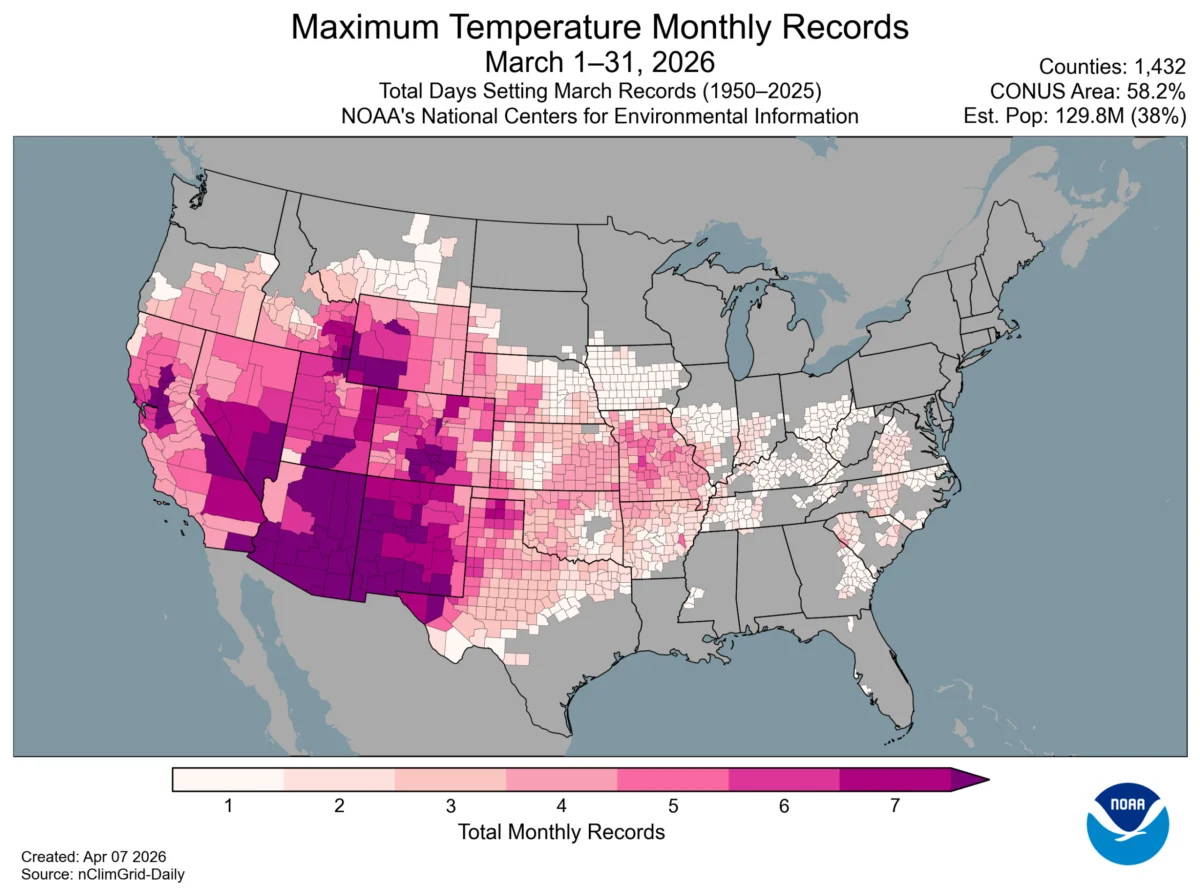
The extent of the March heatwave was staggering, with more than 500 counties reporting their warmest March on record. Compounding this, over 1,400 counties experienced their hottest March day since modern record-keeping commenced, according to the meteorological agency. The third month of the year officially became the warmest in the 132-year history of continental U.S. records. The national average temperature registered at a remarkable 50.85 degrees Fahrenheit (10.47 degrees Celsius), an astonishing 9.35 degrees Fahrenheit above the 20th-century average for the month.
This widespread heat was not a fleeting anomaly but a sustained event. The temperature map clearly depicted a continuous expanse of extreme heat emanating from the Pacific Ocean and extending across the nation to the southern plains. This climatic condition directly impacted an estimated 79 million inhabitants, highlighting the vast scale of the affected population.
A Widespread and Persistent Phenomenon
The geographical distribution of this extreme heat was particularly noteworthy. The phenomenon concentrated in a broad band extending from the West Coast to the southern United States. States positioned between California and Texas bore the brunt of the highest temperature readings for this period. In several instances, the temperatures recorded not only broke March records but surpassed the usual averages for later months in the year. California, for example, witnessed temperatures that exceeded historical records typically associated with May.
Record-Breaking Temperatures Across Multiple States
The NOAA’s comprehensive data and accompanying visualizations underscore the severity and widespread nature of the March heat event. While specific data for every affected county is extensive, several key states and regions reported particularly significant deviations from historical norms.
Key Thermal Milestones Recorded in March:
- California: Not only did the state experience its hottest March on record, but several locations within California registered temperatures that were more typical of late spring or early summer. Cities and regions that typically see mild March weather were subjected to conditions more akin to July or August. This led to significant strain on energy grids and prompted early advisories for heat-related illnesses.
- Texas: The Lone Star State, accustomed to warm weather, experienced an early and intense surge of heat. Large portions of Texas saw temperatures that were significantly above average for March, contributing to increased demand for air conditioning and raising concerns about water resources in an already drought-prone region.
- The Southwest: States across the Southwest, including Arizona, New Mexico, and Nevada, also reported exceptionally warm conditions. This accelerated the snowmelt in mountainous areas, raising concerns about downstream water availability later in the year and increasing the risk of early-season wildfires.
- The Southern Plains: Regions further east, such as Oklahoma and Arkansas, also experienced a substantial departure from typical March temperatures. This early heat can disrupt agricultural planting cycles and impact crop development.
The implications of such widespread and intense heat are multifaceted. Beyond the immediate discomfort and health risks for residents, these extreme temperatures have far-reaching consequences for agriculture, water management, energy consumption, and the delicate balance of ecosystems.
Expert Perspectives: An Unprecedented Event
Meteorologists and climate scientists have expressed considerable concern and surprise at the magnitude and timing of the March heatwave. Brett Anderson, a senior meteorologist at AccuWeather, described the event as "highly impactful and unprecedented." He further stated, "I have been a meteorologist for 37 years, and I have never seen anything like this during the month of March." This sentiment from a seasoned professional underscores the exceptional nature of the climatic conditions observed.
The combination of record-breaking warmth and an unusually dry period has created a concerning feedback loop. The dry soil, a consequence of the driest January-to-March period recorded in the U.S., allows solar energy to heat the land surface more directly. This intensified surface heating, in turn, exacerbates the feeling of warmth and contributes to higher air temperatures.
The Interplay of Heat and Drought
The record-breaking March temperatures coincided with a period of exceptionally low humidity. This confluence of factors has led to a significant expansion of drought conditions across the nation. Nearly 60% of the continental U.S. territory is now experiencing drought, a stark increase from previous periods. In states like California, the situation is particularly dire, with the record-high temperatures occurring simultaneously with the lowest precipitation levels recorded for the same period. This combination has deepened the existing drought conditions, placing immense stress on water supplies and increasing the risk of wildfires.
The implications of this prolonged dry spell and heat are substantial for the agricultural sector. Farmers face challenges with crop planting, growth, and yield. Water restrictions are becoming more prevalent, impacting irrigation and potentially leading to significant economic losses. Furthermore, the increased risk of wildfires poses a threat to natural habitats, property, and public safety.
Looking Ahead: Potential for Accelerated Trends
The concerns voiced by experts like Brett Anderson extend beyond the immediate March event. He cautioned that "it is likely these trends will continue and perhaps accelerate in the coming decades." His apprehension about the upcoming summer is palpable, with a fear that "some regions of the U.S. could experience near-record heat waves this summer."
This outlook suggests that the March heatwave may be an early indicator of more extreme weather patterns to come. The scientific consensus points towards a warming climate driven by human activities, and events like this extreme March heat are consistent with predictions of increased frequency and intensity of heatwaves.
Broader Context and Implications
The March heatwave did not occur in a vacuum. It is part of a larger pattern of climate change that is manifesting in increasingly extreme weather events globally. The NOAA’s data, while focused on a specific month, contributes to a growing body of evidence documenting the impacts of a changing climate.
Potential Long-Term Implications:
- Agricultural Productivity: Sustained periods of extreme heat and drought can severely impact crop yields, leading to food price volatility and potential food security issues. Changes in growing seasons and the need for drought-resistant crops will become increasingly important.
- Water Resources: Reduced snowpack and increased evaporation due to higher temperatures can deplete vital water resources, particularly in the Western United States, impacting everything from agriculture to municipal water supplies.
- Public Health: Extreme heat poses significant health risks, including heatstroke, heat exhaustion, and the exacerbation of pre-existing cardiovascular and respiratory conditions. Vulnerable populations, such as the elderly and young children, are particularly at risk.
- Energy Infrastructure: Increased demand for cooling during prolonged heatwaves can strain energy grids, leading to potential blackouts and necessitating investments in grid modernization and renewable energy sources.
- Ecosystems and Biodiversity: Rapid and extreme temperature shifts can disrupt natural ecosystems, impacting plant and animal life, and potentially leading to biodiversity loss. The increased frequency of wildfires also poses a significant threat to natural habitats.
The unprecedented nature of the March 2026 heatwave serves as a critical reminder of the urgency required to address climate change. While the immediate focus is on understanding and responding to this extreme event, the long-term implications necessitate proactive adaptation and mitigation strategies to build resilience against a changing climate. The data from NOAA and the observations from meteorological experts provide a clear and undeniable signal that the United States, and indeed the world, must confront the realities of a warming planet with increased resolve and concerted action. The records set in March are not merely statistical footnotes; they are potent indicators of a shifting climatic landscape that demands our immediate attention and a commitment to a sustainable future.

Related Posts

The Electric Vehicle Battery Health Debate Emerges as Argentina’s EV Market Accelerates

President Donald Trump Confirms Secret Departure from Turkey Amidst Assassination Threat