La declaración de Cristina en Comodoro Py
The highly anticipated appearance of former Argentine President Cristina Fernández de Kirchner at the Comodoro Py federal courts marked a pivotal moment in the ongoing "Cuadernos de las Coimas" (Notebooks of Bribes) trial. This high-profile judicial process, which has captivated the nation for years, centers on allegations of a vast corruption scheme involving public works contracts and alleged kickbacks paid to government officials during Kirchner’s presidential terms. Her presence in court, after a period of relative public silence, underscored the gravity of the charges and the political ramifications surrounding the case.
The proceedings themselves were prefaced by a significant mobilization of supporters and a vocal defense from allies, highlighting the deep political polarization that continues to define Argentine society. Meanwhile, critics and segments of the media focused on the judicial process, framing it as a necessary step towards accountability. The former president’s legal team maintained her innocence, characterizing the charges as politically motivated persecution.
Background and Context of the "Cuadernos de las Coimas" Case
The "Cuadernos de las Coimas" investigation, initiated in 2018, emerged from the meticulous notebooks kept by Oscar Centeno, a driver for Roberto Baratta, a high-ranking official in the Ministry of Federal Planning, Public Works and Services. These notebooks allegedly detailed a systematic network of bribe payments, purportedly channeled to government officials and politicians in exchange for awarding public works contracts. The scale of the alleged corruption, as suggested by the contents of the notebooks and subsequent investigations, has implicated numerous businessmen and former government officials, creating a complex web of accusations that has reverberated through Argentine politics and economy.
The case gained momentum with the testimonies of key figures, including Centeno himself, who testified under a plea bargain agreement, and numerous businessmen who corroborated the alleged bribery scheme. The judicial investigation has been characterized by its extensive scope, encompassing hundreds of public works projects and implicating a significant number of individuals from both the public and private sectors. The trial, which commenced with a significant backlog of cases and procedural complexities, has been closely watched as a test of the judiciary’s ability to prosecute high-level corruption.
Cristina Fernández de Kirchner’s Statement and Defense
Hours before her scheduled appearance at Comodoro Py, Cristina Fernández de Kirchner broke a prolonged public silence with a pointed statement via the social media platform X (formerly Twitter). Her message, widely disseminated and analyzed, directly addressed her perceptions of the current political and judicial climate. She asserted that "When the Executive Power does not give bread and work to the people (…), the Judicial Party and the hegemonic media give them circus (…). It doesn’t fail." This statement clearly articulated her belief that the judicial proceedings against her, and potentially others, were being utilized as a diversionary tactic by the government and media to distract from pressing economic and social issues.
Her assertion suggested a strategy to frame the legal challenges not as a matter of genuine judicial inquiry, but as a politically orchestrated "show" designed to appease public discontent and deflect attention from the government’s perceived failures in economic management. This framing aimed to galvanize her base of support and delegitimize the ongoing trial in the eyes of her followers.
Furthermore, Kirchner’s statement alluded to the shift in the trial’s format, noting that the Oral Tribunal 7, which is presiding over the "Cuadernos" case, had acceded to the media’s demand for "in-person" appearances. She critically observed that the "photo that can be captured from the YouTube channel screen with faces ‘in little boxes’ is not enough for a newspaper cover or TV clips." This pointed remark underscored her perception that the demand for physical presence was driven by media spectacle rather than genuine judicial necessity, particularly as the trial had been largely conducted remotely via Zoom. She concluded this thought by stating, "…and as is already known… the ‘show must go on’." This cynical observation further reinforced her narrative of a politically motivated judicial performance.
Despite these strong pronouncements, sources close to her indicated that she intended to appear and declare before the tribunal, upholding her legal obligation while simultaneously using the platform to voice her criticisms. This approach allowed her to comply with judicial mandates while maintaining her consistent narrative of political persecution.
Militant Mobilization and Public Support
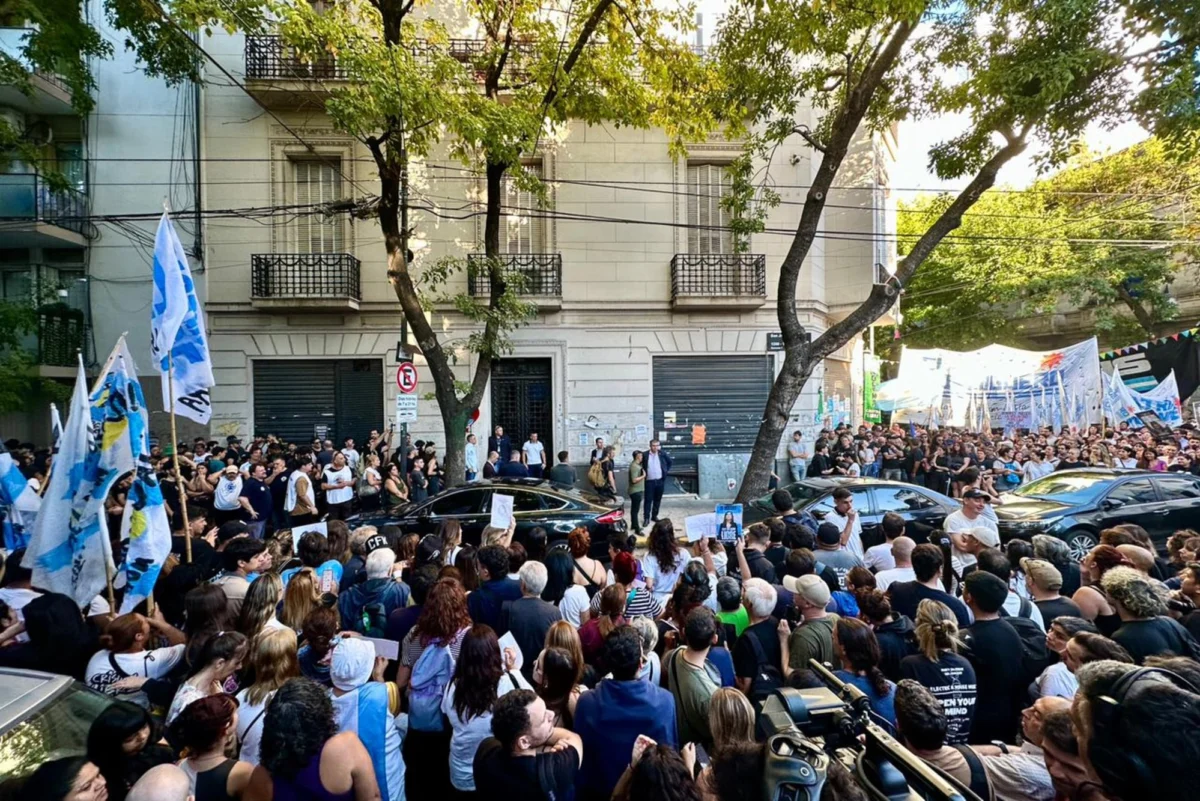
The streets surrounding Cristina Fernández de Kirchner’s residence in the Constitución neighborhood of Buenos Aires became a focal point of political activity. Militants from various Kirchnerist groups gathered in significant numbers, displaying flags, banners, and freshly painted slogans. This organized demonstration was a clear show of solidarity and support for the former president, intended to project an image of unwavering loyalty and collective strength in the face of judicial pressure. The concentration of supporters, which began early in the morning, caused traffic disruptions in the vicinity of San José and Humberto Primo, underscoring the palpable public engagement with the event.

This mobilization served a dual purpose: to provide a visible show of force and support for Kirchner and to underscore the political significance of her appearance, framing it as an event of national importance rather than merely a private legal matter. The presence of ardent supporters aimed to amplify her message and counter the narrative presented by her critics and segments of the press.
Allies’ Denunciations of a "Judicial Party"
Echoing Cristina Fernández de Kirchner’s sentiments, former national senator Oscar Parrilli emerged as a vocal defender, denouncing the judicial process and its alleged connection to political interests. Parrilli reiterated the accusation that the proceedings constituted a "maneuver by the judicial party with allied media." He asserted that these entities were engaged in a campaign of defamation and were attempting to obscure the country’s pressing economic realities.
Parrilli specifically pointed to the closure of factories, declining wages, and an annual inflation rate exceeding 30%, attributing these economic hardships to the current administration, led by a president he characterized as an "expert in economics" who had nevertheless steered the nation into a "catastrophic situation." His statement, "They are trying to cover the sun with their hands," was a powerful metaphor aimed at highlighting what he perceived as the government’s and judiciary’s desperate attempts to divert public attention from their failures. This narrative of deflection and obfuscation was a central theme in the defense’s strategy.
The Judicial Appearance at Comodoro Py
Cristina Fernández de Kirchner’s arrival at Comodoro Py was met with significant media attention, underscoring the high stakes of the proceedings. The court complex, a prominent venue for federal justice in Argentina, has been the stage for numerous significant trials involving political figures. Her decision to appear in person, as requested by the court, was interpreted as a strategic move to confront the charges directly and to project an image of resilience and defiance.
The courtroom atmosphere was undoubtedly charged, with the presence of judges, prosecutors, defense attorneys, and the accused creating a tense environment. The trial itself, as noted by Kirchner, had been largely conducted virtually, a concession to the logistical challenges and the ongoing nature of the investigation. The demand for her physical presence was seen by her supporters as an attempt to sensationalize the process and generate further media coverage.
Broader Implications and Analysis
The "Cuadernos de las Coimas" case and Cristina Fernández de Kirchner’s involvement have profound implications for Argentine politics and its ongoing struggle with corruption. The trial represents a critical juncture in the nation’s efforts to hold powerful individuals accountable for alleged malfeasance. The outcome of this case, regardless of its final verdict, will inevitably shape public perception of the judiciary’s effectiveness and impartiality.
The narrative of a "judicial party" and media collusion, articulated by Kirchner and her allies, reflects a deep-seated distrust in institutions among certain segments of the population. This narrative, if widely adopted, could further erode public confidence in the justice system and create fertile ground for political instability. Conversely, a robust and transparent judicial process, perceived as fair by a broad spectrum of society, could strengthen democratic institutions and foster a greater sense of accountability.
The economic context cited by Parrilli – high inflation, factory closures, and wage stagnation – is intrinsically linked to the corruption allegations. The alleged diversion of public funds through corrupt schemes is often seen as having a detrimental impact on economic development and the equitable distribution of resources. Therefore, the resolution of this case is not merely a legal matter but also has significant economic and social dimensions.
The media’s role in covering such high-profile trials is also under scrutiny. The balance between reporting on judicial proceedings and avoiding sensationalism or partisan influence is a constant challenge. The media’s portrayal of the events can significantly influence public opinion and the perceived legitimacy of the judicial process.
In conclusion, Cristina Fernández de Kirchner’s appearance at Comodoro Py in the "Cuadernos de las Coimas" trial was more than just a legal obligation; it was a politically charged event with far-reaching implications. Her strategic use of public statements, coupled with the fervent support of her militants and the vocal defense of her allies, aimed to shape the narrative surrounding the case. The trial itself serves as a crucial test for Argentina’s judicial system and its commitment to combating corruption, while the broader political and economic context continues to fuel the intense debates surrounding justice, accountability, and the future of the nation. The unfolding of this judicial process will undoubtedly continue to be a defining element in Argentine public life for the foreseeable future.

Related Posts

The Electric Vehicle Battery Health Debate Emerges as Argentina’s EV Market Accelerates

President Donald Trump Confirms Secret Departure from Turkey Amidst Assassination Threat