
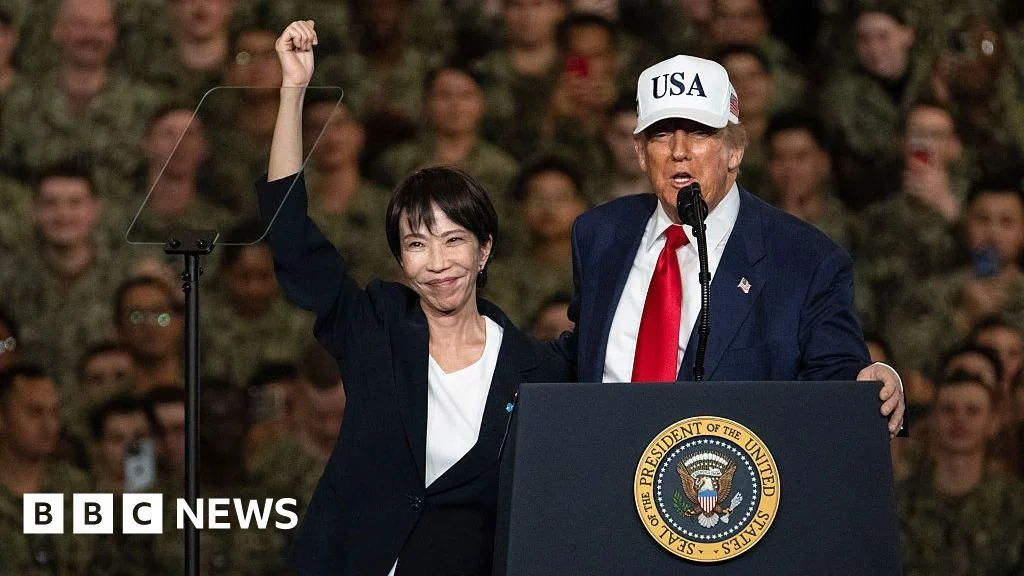
Japan’s Premier Navigates Treacherous Diplomatic Waters with Trump Amidst Iran War Fallout and Regional Tensions
Japanese Prime Minister Sanae Takaichi recently concluded a high-stakes diplomatic visit with U.S. President Donald Trump, a meeting she candidly described as potentially "very difficult." The encounter unfolded against a backdrop of escalating geopolitical anxieties, primarily fueled by the nascent "Iran war" and President Trump’s contentious calls for allied nations to bolster security in the strategically vital Strait of Hormuz – a plea that initially met with widespread silence. Takaichi, just days after her arrival, pledged to parliament that she would "do everything to maximise [Japan’s] national interest," underscoring the profound pressures shaping Tokyo’s foreign policy.
A Shifting Agenda: From "Golden Age" to Crisis Management
The visit, initially scheduled in October a week after Takaichi assumed office, was meant to celebrate a burgeoning "golden age" in bilateral ties. Following a ceremonial red-carpet reception for Trump in Tokyo and an exchange of mutual compliments, expectations were high for a productive discussion on trade and the deepening of the longstanding US-Japan alliance. Indeed, as recently as a few weeks prior, the meeting appeared poised for success, buoyed by Takaichi’s "dominant election victory" and a fresh wave of Japanese investment projects slated for the United States, as noted by Emma Chanlett-Avery, director for political and security affairs at the Asia Society Policy Institute.
However, recent events drastically recalibrated the agenda. The outbreak of the Iran war introduced an unforeseen layer of complexity, diverting focus from initial discussions around trade and Japan’s concerns about Chinese aggression. Takaichi had intended to leverage the warmth of her initial meeting with Trump to press Japan’s stance on Beijing ahead of a then-scheduled meeting between Trump and Chinese President Xi Jinping. Instead, the immediate crisis in the Middle East, particularly the security of the Strait of Hormuz, dominated the discourse, challenging the carefully laid diplomatic groundwork.
The Strait of Hormuz: A Global Chokepoint and a Diplomatic Minefield
The Strait of Hormuz, a narrow waterway connecting the Persian Gulf to the open ocean, is arguably the world’s most critical oil transit chokepoint. An estimated one-fifth of global oil consumption, roughly 21 million barrels per day, passes through this strait. For Japan, an island nation heavily reliant on imported energy, its significance is paramount; nearly 95% of Japan’s oil imports traverse these waters. This dependence places Tokyo in an unenviable position whenever stability in the region is threatened.
President Trump, earlier in the week, had taken to his Truth Social platform to issue a stark demand for certain countries to contribute to securing the vital strait. He explicitly pointed to Japan and other major Asian economies, citing their profound reliance on Middle Eastern fuel as justification for their involvement. "We get less than 1% of our oil from the [Strait of Hormuz] and some countries get much more… We want them to come and help us," Trump wrote, articulating his "America First" doctrine of burden-sharing.
The initial response from allies was notably lukewarm, prompting a swift and characteristic reversal from Trump. In a subsequent post, he retracted his request, declaring, "We did NOT NEED THE HELP OF ANYONE!" This fluctuating stance highlighted the unpredictable nature of U.S. foreign policy under his administration and presented a significant challenge for allied nations attempting to coordinate a coherent international response.
Despite Trump’s public retraction, the pressure on allies remained. On Thursday, Japan joined the UK, France, Germany, Italy, and the Netherlands in a joint statement, expressing a shared "readiness to contribute appropriate efforts to ensure safe passage" through the strait. This collective diplomatic maneuver aimed to signal commitment without necessarily committing to direct military intervention, reflecting the delicate balance many allies seek to maintain.
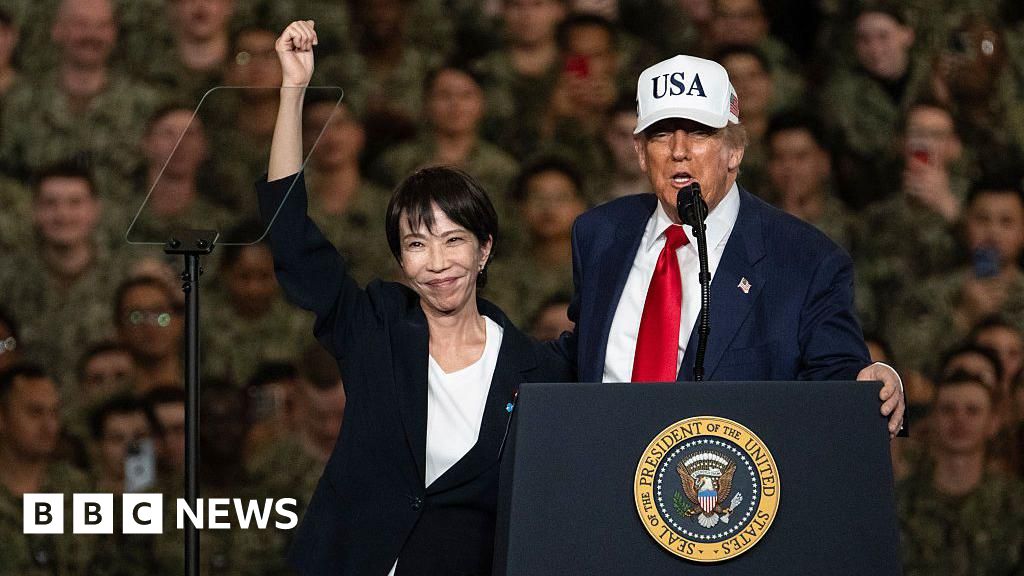
During the Oval Office meeting, President Trump acknowledged what he perceived as Japan "stepping up to the plate," though he refrained from offering specific details on the nature of Japan’s prospective contributions. Takaichi, for her part, acknowledged the "very severe security environment" and the "huge hit" to the global economy caused by the conflict. Yet, in a gesture of diplomatic deference, she expressed confidence in Trump’s ability to resolve the crisis. "I firmly believe that it is only you, Donald, who can achieve peace across the world," she stated through an interpreter, adding, "I am ready to reach out to many of the partners in the international community to achieve our objective together." This statement, while laudatory, also subtly underscored Japan’s preference for a multilateral approach, working "with many partners" rather than acting unilaterally or solely under U.S. directive.
Japan’s Constitutional Constraints and Public Sentiment
The prospect of Japan "stepping up" in the Strait of Hormuz, particularly in a military capacity, immediately invokes the profound constitutional limitations enshrined in its post-World War Two pacifist constitution. Article 9 of the Japanese Constitution, famously known as the "Peace Clause," explicitly renounces war as a sovereign right of the nation and the threat or use of force as a means of settling international disputes. It also states that "land, sea, and air forces, as well as other war potential, will never be maintained."
While successive Japanese governments have interpreted this to allow for a Self-Defense Force (SDF) for defensive purposes, deploying military assets to a distant conflict zone, especially one perceived as not directly threatening Japan’s immediate self-defense, remains a highly contentious issue domestically. Analysts had anticipated the difficulty Takaichi would face in outright refusing Trump’s demands, given Japan’s energy vulnerability, but also recognized the immense political hurdles involved in any direct military involvement.
Public opinion in Japan consistently reflects a deep-seated aversion to military engagement abroad. A recent poll by The Asahi Shimbun newspaper underscored this sentiment, revealing that a staggering 82% of voters disapprove of the ongoing "Iran war" (as stated in the original article, referring to the regional conflict/tensions). This strong public sentiment significantly curtails the government’s latitude for deploying the SDF in offensive or even overtly proactive roles beyond its immediate defensive perimeter. Any move towards military intervention in the Strait of Hormuz would likely trigger widespread protests and severe political backlash, potentially destabilizing Takaichi’s administration despite her recent electoral success.
The sensitivity surrounding Japan’s military posture was further highlighted by an unexpected remark from President Trump during the meeting. When asked why U.S. allies were not informed about an unspecified operation ahead of time, Trump provocatively referenced Japan’s 1941 attack on the United States. "We didn’t tell anybody about it because we wanted surprise. Who knows better about surprise than Japan? Why didn’t you tell me about Pearl Harbor, OK?" he stated. This comment, while seemingly off-the-cuff, exposed the historical sensitivities that still occasionally surface in the US-Japan relationship, even amidst a proclaimed "golden age" of alliance. Such remarks, though perhaps intended as rhetorical flourishes, can complicate diplomatic efforts and remind allies of the transactional and sometimes confrontational nature of Trump’s foreign policy approach.
Navigating the Chinese Challenge and Bolstering Regional Defense
Beyond the immediate crisis in the Middle East, the broader strategic landscape of the Indo-Pacific, particularly the rise of China, remained a critical undercurrent of the discussions. Sheila Smith of the U.S.-based Council on Foreign Relations identifies China as Japan’s "biggest strategic challenge." Ties between Beijing and Tokyo have indeed seen a downturn since November, following remarks by Prime Minister Takaichi that appeared to suggest Japan would activate its self-defense force in the event of an attack on Taiwan.
China, which considers self-governed Taiwan an integral part of its territory and has not ruled out the use of force for "reunification," reacted sharply to Takaichi’s statements. Japan’s robust stance on Taiwan, an issue of profound sensitivity for Beijing, reflects a growing concern in Tokyo over regional stability and the potential for a conflict in its immediate vicinity. Takaichi has neither apologized nor retracted her remarks, indicating a strategic shift in Japan’s willingness to articulate its security interests more forcefully.
During the meeting, Takaichi reiterated Japan’s position, stating that "Japan has been consistently open to dialogue with China." She also expressed hope that the US-China relationship would be "conducive for regional security and also ensuring a global supply chain for the world." This statement underscores Japan’s complex balancing act: while confronting China’s assertive actions, it also recognizes the indispensable economic ties with its larger neighbor and the need for regional stability.
Another significant topic of discussion was Japan’s potential participation in the U.S.’s "Golden Dome" missile defense system. Japanese media reports ahead of the meeting indicated that an initial sum of $25 billion (£18.7 billion) has been earmarked for this ambitious project. Inspired by Israel’s highly effective Iron Dome system, which has been intercepting rockets and missiles since 2011, the Golden Dome aims to establish a robust multi-layered missile defense architecture. Japan’s involvement would significantly enhance its defensive capabilities against ballistic missile threats, particularly from North Korea, and integrate it more deeply into a U.S.-led regional defense strategy. This move would represent a substantial investment in modernizing Japan’s self-defense posture and reinforcing its alliance with the United States in the face of evolving security challenges.
Economic Imperatives and Future Trade Dialogues
Amidst the pressing security concerns, the enduring importance of economic cooperation and trade between the two nations was not overlooked. Takaichi expressed her intent to discuss a range of topics, including energy and rare earth minerals, both critical components of modern economies and global supply chains.
Japan’s domestic economy is currently grappling with several headwinds, including rising inflation, a persistent weak yen, and sluggish consumer spending. The inflation rate in Japan, while historically lower than many Western counterparts, has seen a gradual increase, putting pressure on households and businesses. The yen’s depreciation against the U.S. dollar makes imports more expensive, further exacerbating inflationary pressures. In this challenging economic climate, securing a stable and robust economic partnership with the United States is more vital than ever for Japan. Such a partnership can provide crucial market access, investment flows, and a buffer against global economic volatility.
Discussions on rare earth minerals are particularly significant. These minerals are indispensable for advanced technologies, from electric vehicles to defense systems, and their supply chains are often dominated by a single nation. Diversifying sources and ensuring secure access to these critical resources is a strategic priority for both Japan and the U.S., aiming to reduce dependency and enhance economic resilience.
Broader Implications and the Future of the Alliance
The meeting between Prime Minister Takaichi and President Trump represents a crucial juncture for the US-Japan alliance, highlighting both its enduring strength and the stresses it faces in a rapidly changing global order. While Takaichi’s diplomatic skill appears to have navigated the immediate demands regarding the Strait of Hormuz, the underlying tensions and strategic divergences remain.
In the short term, Japan’s commitment to "appropriate efforts" in the Strait of Hormuz will likely translate into non-military contributions, such as enhanced intelligence sharing, logistical support, or financial aid to international maritime security initiatives. Direct military intervention remains a remote possibility given constitutional and public opinion constraints. This nuanced approach allows Japan to fulfill its alliance obligations while respecting its domestic red lines.
Longer term, the encounter underscores the ongoing challenge for U.S. allies to adapt to an "America First" foreign policy that often prioritizes transactional demands over traditional alliance solidarity. Japan, a cornerstone of U.S. security architecture in Asia, must continue to balance its deep economic interdependence with China against its security alliance with the United States, all while navigating its own constitutional limitations and domestic political landscape.
The discussions on missile defense and China signal a clear trajectory for the alliance: a deepening of security cooperation in the Indo-Pacific, with Japan playing an increasingly active, albeit constitutionally constrained, role in regional stability. The "Golden Dome" project, if Japan fully participates, could represent a significant step in this direction, enhancing interoperability and collective defense capabilities.
Ultimately, the Takaichi-Trump meeting served as a powerful reminder of the complex and interconnected nature of global challenges, from energy security in the Middle East to geopolitical rivalries in Asia. For Japan, the path forward requires deft diplomacy, a firm commitment to its national interests, and a strategic vision that can adapt to the unpredictable currents of international relations. The "golden age" of the US-Japan alliance, while still a rhetorical touchstone, is clearly being tested and refined in the crucible of real-world crises.

Related Posts
Zambia on Edge: Opposition Leader Arrested Amid Allegations of Insurrection Plot and Election Tensions
Rescuers search for survivors of powerful Indonesia earthquake

