Franco Colapinto Shows Promising Pace in Suzuka FP2 Amidst Emerging Concerns
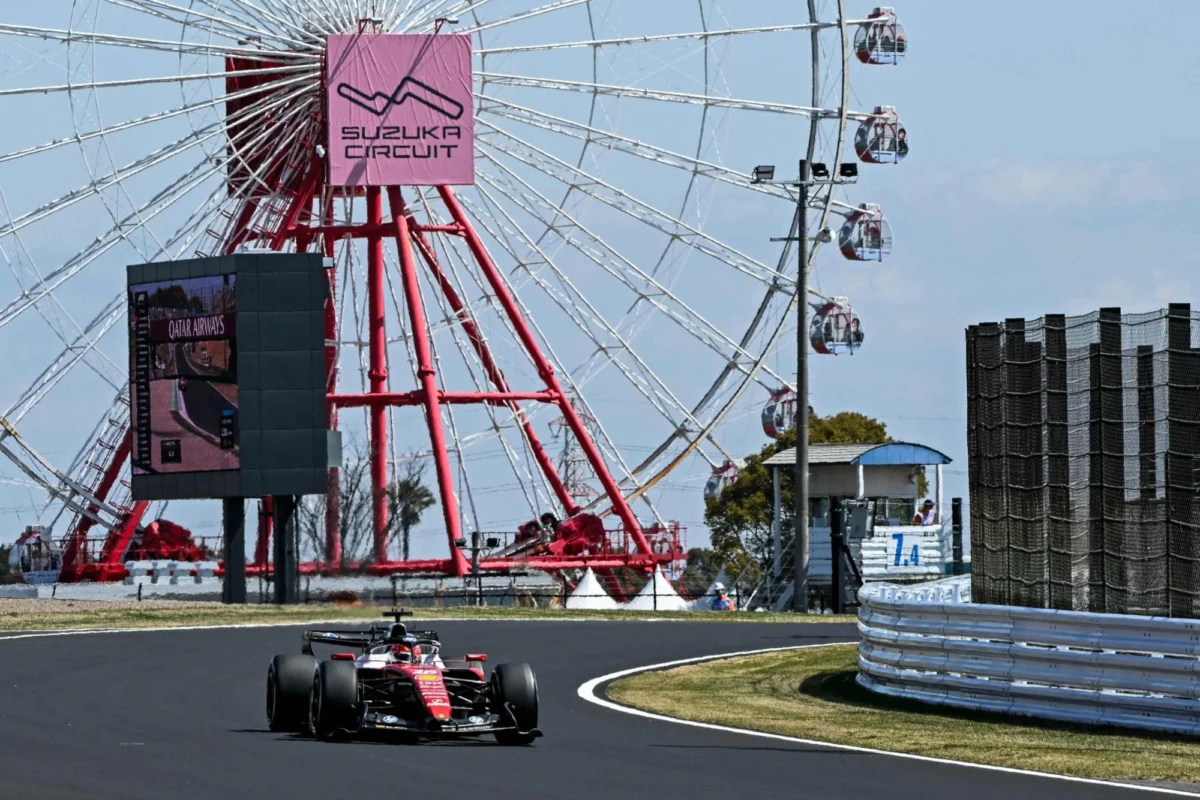
The second practice session for the Japanese Grand Prix in Suzuka saw a notable improvement from Argentinian driver Franco Colapinto, as he shaved a significant chunk off his best time. However, the session was also marked by initial concerns regarding a physical discomfort experienced by the young driver, adding a layer of intrigue to his debut weekend at the iconic Japanese circuit. As the Formula 1 world continues to digest the intense competition and evolving strategies, Colapinto’s performance offers a glimpse into his potential while underscoring the demanding nature of elite motorsport.
Session Overview and Colapinto’s Progress
The day’s activity at Suzuka began under favorable meteorological conditions. The skies were clear, offering a pleasant 17 degrees Celsius ambient temperature with the track surface warming to 34 degrees Celsius. Humidity stood at a moderate 47%, and a gentle breeze of 10.4 kilometers per hour from the southeast provided a stable environment for the drivers. This ideal weather set the stage for a productive second free practice (FP2) session, a crucial opportunity for teams and drivers to fine-tune their machines and gather vital data ahead of qualifying and the race.
The FP2 session kicked off promptly at 3:00 AM Argentina time, a familiar schedule for motorsport enthusiasts in the region. The one-hour session, broadcast live on Fox Sports and the Disney+ platform, was keenly followed by fans, with live updates provided by prominent news outlets.
Franco Colapinto, piloting the Alpine, entered FP2 with the objective of building upon his experience from the first practice session (FP1). During FP1, Colapinto had secured the 16th position, clocking a time of 1m33s891/1000. While this placed him a respectable distance from the leading pace, it was his physical condition that raised eyebrows. He was observed exiting his car appearing uncomfortable, with gestures suggesting discomfort in his right arm and shoulder. Despite this, Alpine’s mechanics had ample time during the two-and-a-half-hour interval between sessions to address any potential issues with his car, allowing Colapinto to enter FP2 without immediate apparent problems.
His first flying lap in FP2 marked a significant step forward. Colapinto registered a time of 1m33s700/1000, an improvement of 191/1000ths of a second from his initial FP1 benchmark. This new personal best placed him eighth on the provisional leaderboard at that point in the session. However, his team indicated that there was still room for improvement, specifically highlighting the need for refinement in Turn 16, a notoriously challenging corner on the Suzuka circuit.
Later in the session, Colapinto further enhanced his performance, achieving a time of 1m33s700/1000. This represented a substantial leap forward, an improvement of 884/1000ths of a second over his earliest FP1 time. This progress demonstrates his ability to adapt and extract more performance from both himself and the car as the session unfolded.
FP1 Recap and the Competitive Landscape
The opening practice session had set a competitive tone, with Mercedes drivers George Russell and Kimi Antonelli topping the timesheets. Russell’s best lap of 1m31s666/1000 in FP1 was a benchmark that proved difficult to beat initially in FP2. However, the rapid pace of modern Formula 1 was immediately evident as the session progressed. Within the first seven minutes of FP2, George Russell himself managed to eclipse his own FP1 best. This rapid evolution of lap times is characteristic of F1, where track evolution and tire degradation play crucial roles.
The initial flurry of activity in FP2 saw Oscar Piastri of McLaren briefly claim the top spot, only to be subsequently overtaken by Kimi Antonelli. The Australian driver, Piastri, then reclaimed the lead with a time of 1m31s607/1000, a testament to the tight competition at the front. This early battle for supremacy underscores the fact that while Colapinto was making strides, he was operating in a highly competitive environment where fractions of a second separate the field.
The FP1 results indicated a strong showing from the top teams, with both McLarens and Ferraris also featuring prominently in the order, often with their drivers closely matched. This pairing of cars by manufacturer in the standings hinted at a developing pecking order for the Japanese Grand Prix weekend.
Suzuka: A Circuit of Legacy and Challenge
The Suzuka International Racing Course is a venue steeped in motorsport history. Originally conceived as a test track for Honda, it has evolved into one of the most revered and challenging circuits on the Formula 1 calendar. Its demanding layout, featuring a unique figure-eight configuration with crossovers, tests every aspect of a driver’s skill and a car’s aerodynamic efficiency and mechanical grip. The iconic "Wheel of Suzuka," or the "Spoon Curve," and the high-speed Esses are particularly notorious for their difficulty and for separating the good from the great.
For drivers like Franco Colapinto, experiencing Suzuka for the first time in a Formula 1 car is a significant milestone. The circuit demands immense respect and a deep understanding of tire management and race strategy. The knowledge gained in these practice sessions is invaluable, not only for setting fast lap times but also for preparing for the pressures of qualifying and the endurance of the Grand Prix itself.
The Physical Conundrum: A Lingering Question
The most significant unresolved narrative surrounding Franco Colapinto entering FP2 was the apparent physical discomfort he experienced in FP1. Reports indicated he was holding his shoulder and moving his arm after exiting his car. While the team had time to make adjustments, the underlying cause and its potential impact on his performance throughout the weekend remained a point of concern. In elite motorsport, even minor physical issues can be amplified under the immense G-forces and physical demands of driving an F1 car. The fact that he was able to continue and improve his pace in FP2 suggests a degree of resilience, but the long-term implications, especially for a race that will demand sustained concentration and physical exertion, are yet to be fully understood.
Broader Implications and Future Outlook
Franco Colapinto’s improved performance in FP2 is a positive sign for the young driver and his team. It indicates his ability to learn and adapt quickly to a challenging circuit and to extract more performance from the car. His progress, particularly his improved lap times, suggests that he is on a trajectory to become more competitive as the weekend progresses.
However, the lingering question of his physical well-being cannot be ignored. The demanding nature of Formula 1 racing, with its high G-forces and sustained physical exertion, means that any physical impediment can significantly impact a driver’s ability to perform at their peak. If the discomfort is managed effectively, Colapinto could continue to impress. If it proves to be a more persistent issue, it could hinder his progress and require strategic management from the team.
The competitive landscape at Suzuka appears to be as fierce as ever. The strong showing from Mercedes, McLaren, and Ferrari in the early sessions suggests that qualifying will be a closely fought battle. Colapinto’s task will be to continue his upward trend, aiming to secure a strong grid position that allows him to race effectively and gain further valuable experience.
The upcoming qualifying session will be a critical indicator of his true potential for the weekend. His ability to consistently deliver strong lap times under pressure, especially with the added challenge of a potential physical limitation, will be closely watched by fans and experts alike. As the Formula 1 season unfolds, each session at circuits like Suzuka provides invaluable data, not just for the current race, but for the development of both the drivers and the machinery they pilot. Franco Colapinto’s journey at the Japanese Grand Prix is unfolding with a blend of promising performance and underlying questions, making his progress a key narrative to follow.

Related Posts
The Electric Vehicle Battery Health Debate Emerges as Argentina’s EV Market Accelerates

President Donald Trump Confirms Secret Departure from Turkey Amidst Assassination Threat