
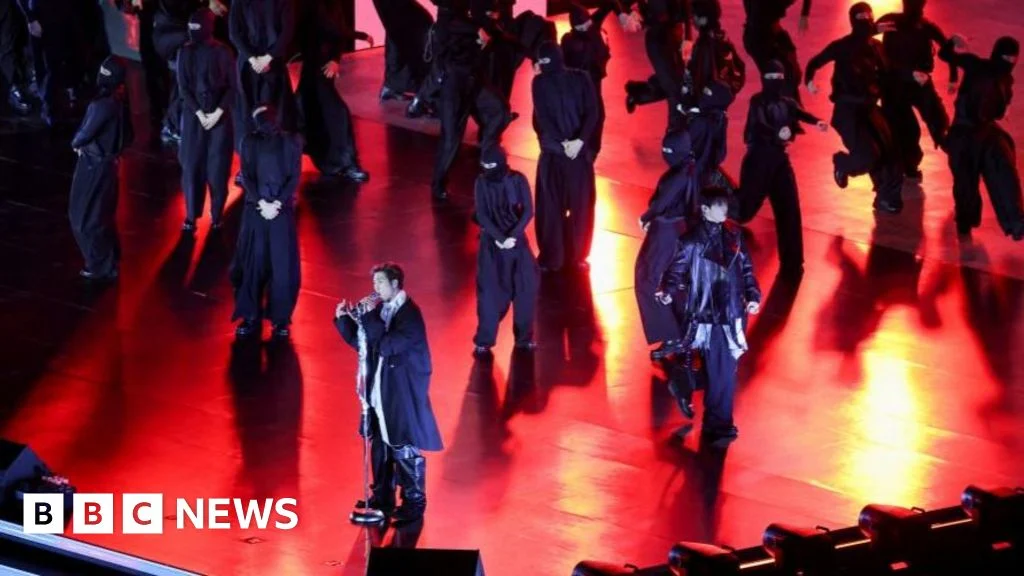
Fans Elated as BTS Play First Gig Together in Nearly Four Years
Seoul, South Korea — The pulsating heart of South Korea’s capital was transformed into a vibrant purple spectacle on Saturday as global superstars BTS reunited for their highly anticipated comeback concert, marking their first full-group performance in nearly four years. An estimated 260,000 fervent fans, affectionately known as the ARMY, descended upon Gwanghwamun Square, a historic plaza steeped in centuries of Korean heritage, to witness the triumphant return of RM, Jin, Suga, J-Hope, Jimin, V, and Jung Kook. The hour-long set, performed against the majestic backdrop of a 14th-century royal palace gateway, heralded a new era for the K-pop septet and solidified their enduring status as cultural titans. The event coincided with the release of their long-awaited new album, "Arirang," on Friday afternoon, which immediately shattered sales records, moving an astounding 3.98 million copies on its first day. This monumental gathering was not merely a concert; it was a powerful affirmation of BTS’s unparalleled global influence, a celebration of resilience after a period of individual pursuits and mandatory military service, and a profound cultural moment for South Korea.
The Long-Awaited Reunion: A Timeline of Anticipation
The journey to this historic reunion has been a meticulously watched saga for millions worldwide. BTS, who had ascended to unprecedented global fame with a string of chart-topping hits, sold-out stadium tours, and impassioned speeches at the United Nations, announced a temporary hiatus from group activities in June 2022. This period allowed members to explore solo projects and, crucially, fulfill South Korea’s mandatory military service requirement. For all able-bodied South Korean men, military enlistment is a civic duty, typically spanning 18 to 21 months. The band’s oldest member, Jin, was the first to enlist in December 2022, followed by J-Hope, Suga, RM, Jimin, V, and Jung Kook in subsequent waves. The staggered enlistments meant that the full group could not perform together, creating a void keenly felt by their dedicated fanbase. Suga, the final member to complete his service, was discharged in June of last year, setting the stage for the highly anticipated full-group comeback. The announcement of the "Arirang" album and the Gwanghwamun Square concert ignited a frenzy, transforming the hiatus from a period of waiting into a countdown to a new beginning. The concert not only marked their collective return to the stage since October 2022 but also served as a prelude to an ambitious 82-date world tour, scheduled to commence next month, spanning over 30 cities across continents, from the vibrant metropolises of Singapore and Tokyo to the historic cities of Munich and the sprawling urban landscape of Los Angeles.
Gwanghwamun Square: A Stage of Historical Significance
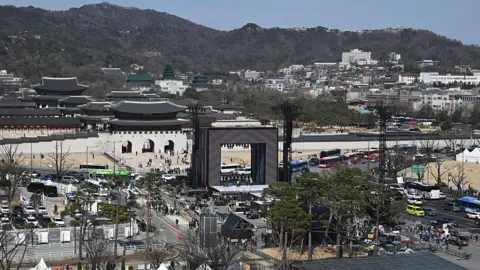
The choice of Gwanghwamun Square as the venue was deeply symbolic, elevating the concert beyond a mere musical performance to a national event. Gwanghwamun Square, redesigned in 2020, stands as a central artery of Seoul, flanked by significant landmarks such as Gyeongbokgung Palace, the National Folk Museum of Korea, and the Sejong Center for the Performing Arts. It is a place where history and modernity converge, a site for national celebrations, protests, and cultural gatherings. The stage itself, designed to resemble a triumphal arch, underscored the celebratory nature of the event and the band’s iconic status. The square was drenched in BTS’s signature purple hue, from temporary installations to illuminated landmarks, creating an immersive experience for fans. This "purple-fication" of Seoul’s central district transformed it into a massive, open-air stadium dedicated to the boyband, a rare honor that reflects the immense cultural influence BTS wields, effectively making them the contemporary face of Korea’s booming cultural success on the global stage. For many, entering the square felt akin to stepping into a temple, a testament to the band’s quasi-religious significance for its followers.
"Arirang": A New Anthem Rooted in Korean Heritage
The new album, "Arirang," is not just a collection of songs; it is a profound cultural statement. The title itself resonates deeply within the Korean consciousness, referencing "Arirang," Korea’s most beloved and enduring folk song. This sentimental anthem, recognized by UNESCO as an Intangible Cultural Heritage of Humanity, encapsulates themes of hardship, longing, separation, and ultimately, a resilient movement towards hope and betterment. The band’s decision to name their comeback album after such a foundational piece of Korean identity speaks volumes about their evolving artistry and their role as global cultural ambassadors. The promotional video for the album strikingly highlighted the historical connection: it showed the members listening to the first known recording of "Arirang," made in the United States in 1896, performed by a group of seven Korean men at Howard University. This narrative cleverly positions BTS as contemporary torchbearers of Korean culture, echoing the historical efforts of their predecessors 130 years later, exporting the essence of Korea to the world. The commercial success of "Arirang" is undeniable, with its staggering first-day sales figure of 3.98 million copies not only topping charts but also setting new benchmarks in an increasingly competitive global music market, reaffirming BTS’s formidable commercial power and their ability to continuously break records. The album’s themes, while yet to be fully dissected by critics, are widely anticipated to explore narratives of reunion, personal growth post-military service, and a reaffirmation of their collective identity, all framed within the universal sentiments of resilience and hope encapsulated by the "Arirang" motif.
The Economic and Cultural Ripple Effect

The return of BTS is far more than a musical event; it is an economic and cultural phenomenon with far-reaching implications for South Korea. The government has openly acknowledged that the band’s contribution extends well beyond mere financial figures, emphasizing their role in elevating the nation’s global image and soft power. However, the economic impact is undeniably immense. The upcoming world tour alone is projected to rake in an astounding $1 billion (£747 million) in revenue. Furthermore, the Korea Culture & Tourism Institute previously estimated that a single performance by the group could generate up to $842 million, encompassing a wide array of economic activities including ticket and merchandise sales, accommodation, tourism, and related spending. This weekend’s concert in Seoul showcased this impact firsthand. Hotels in the vicinity of Gwanghwamun Square were fully booked or had significantly raised prices more than a month in advance, reflecting the surge in demand. Local businesses, from seafood restaurants to souvenir shops, buzzed with excitement, preparing for the influx of international and domestic tourists. Kim Sung-dae, owner of a nearby seafood restaurant, exemplified this entrepreneurial spirit, stating, "I’m preparing menus in English, Chinese and Japanese, and decorating the restaurant with purple flowers," embracing the band’s signature color to attract fans. Beyond direct revenue, BTS acts as a powerful catalyst for cultural tourism, inspiring individuals like Ami Ostrovskaia, a 23-year-old student from Russia, to move to Seoul to study, driven by her love for the band and a subsequent desire to learn about Korean history, culture, food, sports, and language. This profound influence underscores BTS’s role as unparalleled cultural ambassadors, fostering a global appreciation for South Korean heritage and modern identity.
Seoul on High Alert: Managing a Global Spectacle
Hosting an event of this magnitude in a bustling historic city center required unprecedented levels of logistical planning and security, turning Seoul into a highly organized, purple-hued fortress. Authorities pulled out all the stops to ensure public safety and crowd management for the estimated quarter-million attendees. A formidable contingent of approximately 7,000 police officers, including specialized SWAT units equipped with advanced anti-drone systems, were deployed across Gwanghwamun Square and its surrounding areas. To control the massive crowds, access to dozens of buildings was restricted, and three nearby subway stations were temporarily closed. The square itself, typically an open public space, was meticulously cordoned off, with access controlled through 31 entry points, each fitted with metal detectors to screen attendees. In a highly unusual move reflecting the extraordinary security concerns, authorities also temporarily barred civilians from retrieving firearms, despite South Korea’s strict gun control laws where private ownership is rare and weapons are typically stored at police stations. This extensive deployment highlighted the immense responsibility taken by the city to manage an event that effectively paralyzed parts of the city center for several hours, underscoring the delicate balance between public celebration and urban functionality.
Public Discourse: Convenience vs. National Pride
While the concert was a moment of immense national pride, it also sparked a nuanced public discourse in South Korea regarding the allocation of public resources and urban planning. The extensive security measures and restrictions, while necessary, inevitably caused disruptions for ordinary citizens. Sohn Yeon-ju, a lawyer in her 30s, found herself in a particularly stressful situation as her wedding was scheduled near Gwanghwamun Square just hours before the concert. By Thursday, clarity on how she and her hundreds of guests would navigate the heavily guarded venue remained elusive, with police suggesting guests might be allowed to board police buses if the nearest subway station was closed. This anecdote highlights the personal impact of such large-scale events. A Seoul city official clarified that authorities provided the venue, crowd management, and other safety measures but refrained from offering direct financial support to the concert organizers. However, the debate continued on social media platforms like X (formerly Twitter). One user expressed concern, writing, "They’ve pulled in police and fire personnel en masse. If something happens elsewhere, there may be no staff left to respond, and access could be blocked because of the controls." Pop music critic Jung Min-jae raised important questions about precedent, stating, "If a comeback concert of this scale, one that effectively paralyses parts of the city centre, is allowed, then other artists or agencies may well request to use the same space in the future. At that point, on what criteria will the Seoul Metropolitan Government approve or reject such requests?" These concerns underscore the complexities of balancing the economic and cultural benefits of a global event with the daily lives and rights of citizens. Conversely, many locals passionately defended the governmental support and the temporary inconveniences. One resident living nearby retorted, "I don’t see what the problem is. BTS has done so much for Korea, elevating our image abroad, with no government support all along. Why can’t we share the Gwanghwamun public space for their performance just one Saturday?" This sentiment reflects a deep-seated appreciation for BTS’s contributions to the national image and a willingness to embrace the temporary disruptions as a small price for the immense pride they bring.
The ARMY’s Unwavering Devotion: A Global Phenomenon
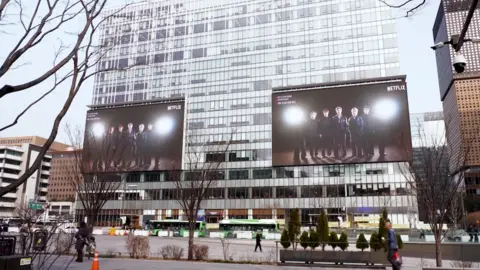
The BTS Army, the global collective of the band’s millions of fans, demonstrated their unwavering devotion through an intense scramble for tickets. The initial release of 13,000 free tickets was snapped up instantaneously, with over 100,000 people queuing online, a mere fraction of those hoping to attend. A subsequent release of 7,000 free tickets met a similar fate, selling out within minutes. The intensity of this demand was palpable, with many like "Rachel," who doesn’t even describe herself as a hardcore fan but was drawn by their talent and global fame, expressing disappointment after failing to secure a ticket despite using multiple devices. The distribution of free tickets also sparked internal discussions within the fandom, with some expressing concern that it might reduce the chances for dedicated, long-time fans to attend. In response, fan communities launched campaigns to discourage resales and prevent "no-shows," highlighting the community’s ethical standards and dedication to fair access. Ami Ostrovskaia, the 23-year-old Russian student, recounted her initial despair after failing to get a ticket, confessing, "I was crying the whole night," only to experience elation when a friend secured one for her. "I was so happy and felt like all my problems were gone. This means that I’ll be joining their [full-group] performance after so many years. It’s really meaningful for me," she shared, her words echoing the sentiments of countless fans worldwide. Margarita Perez, a 58-year-old architect from Germany, traveled to Seoul despite not securing a ticket, opting to "stay nearby" on concert day, a testament to the profound draw of the band. Jacqueline, a 29-year-old teacher from Mexico City, shared the collective sentiment of relief and joy: "The last few years have been a sad time for [the BTS] Army. I loved their solo albums, but they’re more amazing when they’re together." For the millions of fans unable to attend in person, the concert was live-streamed exclusively on Netflix, a strategic marketing triumph for both the band and the streaming giant. This deal not only granted Netflix exclusive global streaming rights for the show but also secured a documentary on the band’s reunion, underscoring the massive investment Netflix has made in Korean entertainment and its recognition of BTS’s unparalleled global appeal. The ability to bring together a quarter-million people in Seoul, and millions more online, solidifies BTS’s position not just as a music group, but as a global cultural phenomenon capable of inspiring immense devotion and galvanizing unprecedented gatherings.
Additional reporting by Leehyun Choi and Hosu Lee.

Related Posts
Zambia on Edge: Opposition Leader Arrested Amid Allegations of Insurrection Plot and Election Tensions
Rescuers search for survivors of powerful Indonesia earthquake

