
Escalation in Occupied West Bank: Settler Attacks Surge Following Teen’s Death
A dangerous escalation has gripped the occupied West Bank, as extremist Jewish settlers unleashed a wave of violent attacks on Palestinian villages over the weekend. The assaults, which included widespread arson, destruction of property, and confrontations, erupted in retaliation for the death of an 18-year-old settler. This latest surge in violence further destabilizes an already volatile region, drawing condemnation from international bodies and highlighting the persistent challenges to peace and security.
A Night of Arson and Confrontation Grips Palestinian Villages
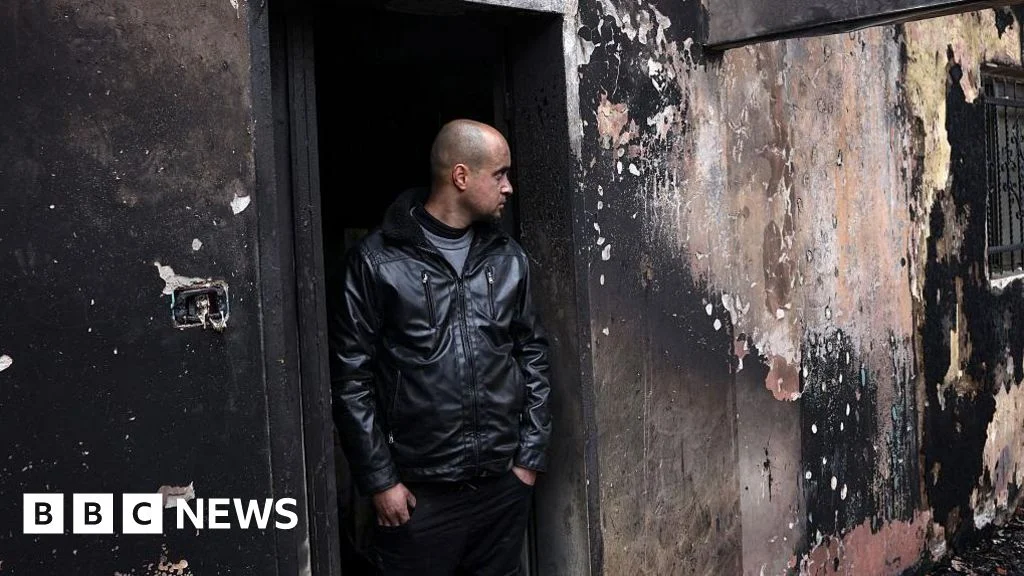
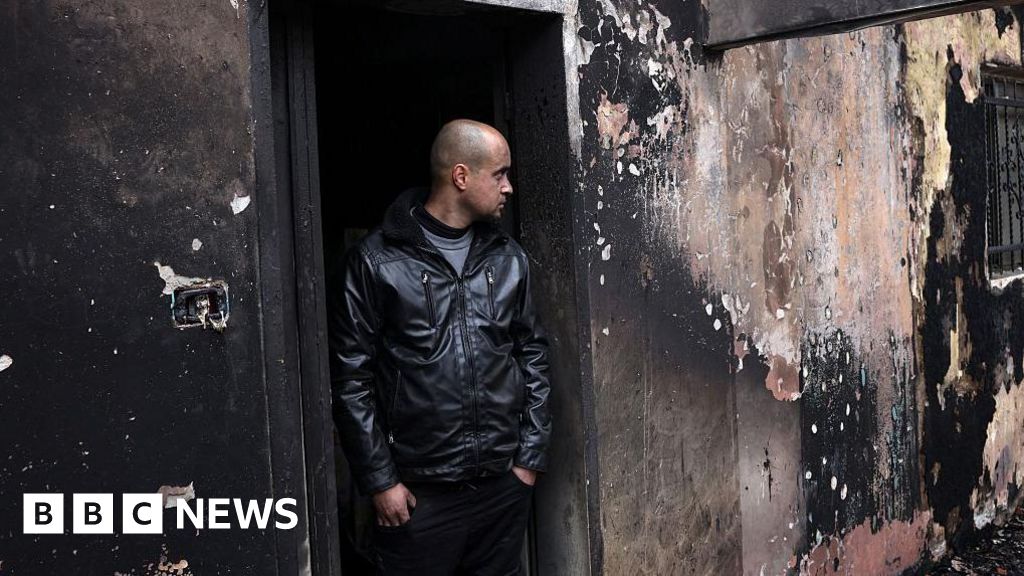
The tranquility of Palestinian villages in the occupied West Bank was shattered on Saturday night as organized groups of extremist Jewish settlers launched a series of coordinated attacks. Homes, vehicles, and vital agricultural fields were set ablaze, leaving a trail of destruction and terror. Villages such as Jalud, Qaryut, al-Funduqmiya, and Silat al-Dhah were among those targeted, experiencing significant property damage and widespread fear among residents. Eyewitness accounts and unverified online footage depicted scenes of chaos, with more than 90 individuals, many masked and clad in black, reportedly storming Jalud. The images showed multiple vehicles engulfed in flames, buildings with shattered windows, and emergency sirens piercing the night as ambulances rushed to assist the injured. One particularly stark image showed the words "Avenge Yehuda" spray-painted onto a building, clearly indicating the retaliatory motive behind the assaults.
The Palestinian Red Crescent Society confirmed that at least three Palestinians sustained head wounds during confrontations with the attackers and required hospitalization. Reports from Israeli media also indicated that some settlers were injured during the disturbances. The Israel Defense Forces (IDF) acknowledged the gravity of the situation, stating that its troops and border police units were dispatched to several Palestinian villages on Saturday night. Their statement noted receiving reports of Israeli civilians "committing acts of arson against structures and property, as well as engaging in disturbances in the area." This official recognition underscores the severity and widespread nature of the settler-led violence.
The Death of Yehuda Sherman and Calls for Vengeance
The catalyst for this latest wave of aggression was the death of 18-year-old Yehuda Sherman, an Israeli settler, on Saturday. Sherman was reportedly killed after being struck by a vehicle driven by a Palestinian while he was riding his quad bike. The precise circumstances surrounding his death remain under investigation, with police examining whether the incident was a deliberate act or a tragic accident. Regardless of the official findings, the event quickly ignited calls for "revenge" among settler communities. According to the Israeli newspaper Haaretz, WhatsApp groups frequently utilized by settlers became platforms for organizing a "revenge campaign" in the immediate aftermath of Sherman’s death. Messages shared within these groups, as reported by Israeli media, explicitly called for retaliation. One post declared, "Jews won’t remain silent over spilled Jewish blood," while another chillingly read, "We demand vengeance and expulsion of the enemy." These messages reveal a deeply entrenched culture of vigilantism and collective punishment that often characterizes responses to Israeli casualties in the occupied territories.
The funeral for Yehuda Sherman, held on Sunday afternoon, drew a substantial crowd of over 500 attendees, including prominent Israeli political figures such as the far-right Finance Minister Bezalel Smotrich. His presence, while customary for such events, further highlights the political weight and official attention given to settler grievances, often in stark contrast to the response to Palestinian casualties. Following the funeral, reports emerged of continued settler activity, with groups blocking roads in protest across the occupied West Bank. The local news agency WAFA also reported that settlers had again begun to gather outside some Palestinian villages on Sunday evening, setting fire to a car wash north-west of Nablus, indicating the prolonged nature of the unrest.
Devastation in Palestinian Villages and Broader Humanitarian Impact
The impact of the settler attacks on Palestinian communities extends beyond immediate property damage and injuries. The timing of these assaults, occurring during Eid al-Fitr, a significant religious holiday for Muslims marking the end of Ramadan, amplified the distress and desecration felt by the affected communities. The Palestinian Ministry of Foreign Affairs vehemently condemned the assault, characterizing it as involving the "burning of homes and property, terrorising and killing of civilians, and the targeting of vital roads, junctions, and main streets during Eid al-Fitr." While the Red Crescent reported injuries rather than fatalities in these specific incidents, the Ministry’s statement reflects the broader pattern of violence and the severe psychological and physical toll it exacts on Palestinian civilians.
The destruction of homes and agricultural land directly impacts the livelihoods and security of families, many of whom are already vulnerable. The burning of fields, a recurring tactic in settler violence, not only destroys current harvests but also undermines future agricultural capacity, a critical component of the West Bank’s economy. The constant threat of such attacks fosters an environment of fear and instability, making daily life precarious for Palestinians living in close proximity to settlements. Access to essential services, freedom of movement, and even basic safety are frequently compromised, exacerbating the humanitarian crisis in the occupied territories.
Official Reactions and International Scrutiny
The escalation of violence has not gone unnoticed by international actors, adding to the growing chorus of concern regarding the situation in the occupied West Bank. Earlier this month, both the European Union (EU) and the United Kingdom (UK) issued strong demands for Israel to halt the alarming surge in settler violence against Palestinians. These calls reflect a mounting international frustration with what is often perceived as insufficient action by Israeli authorities to curb extremist settler activities.
The United Nations (UN) has consistently documented the rising tide of settler violence and its devastating consequences. According to UN figures, a total of seven Palestinians have been killed by Israeli settlers and 18 by Israeli forces since the beginning of the year. Disturbingly, 15 of these fatalities have occurred since the alleged "war in Iran" began on February 28, suggesting a correlation between regional geopolitical tensions and intensified violence on the ground in the West Bank. The UN Office for the Coordination of Humanitarian Affairs (OCHA) regularly reports on incidents of settler violence, noting not only direct attacks but also harassment, intimidation, and damage to property, all contributing to a coercive environment that often leads to displacement. These reports frequently highlight a perceived lack of accountability for settler crimes, which perpetuates a cycle of impunity and further fuels the violence.
A Worsening Trend: Settler Violence in the Occupied Territories
The recent attacks are not isolated incidents but rather part of a disturbing and accelerating trend of settler violence in the occupied West Bank. For decades, the presence and expansion of Israeli settlements have been a flashpoint in the Israeli-Palestinian conflict. Israel has established approximately 160 settlements, housing an estimated 700,000 Jewish settlers, since it occupied the West Bank and East Jerusalem during the 1967 Middle East war. These territories, along with Gaza, are envisioned by Palestinians as forming the core of their future independent state. Approximately 3.3 million Palestinians currently live alongside these settlements, often in contentious and frequently violent proximity.
International law considers these settlements illegal, a position upheld by numerous UN Security Council resolutions and the International Court of Justice. Despite this, successive Israeli governments have continued to support and expand them, often leading to confiscation of Palestinian land and restriction of Palestinian movement and development. The ideological and religious motivations of many settlers, particularly those in the more extreme factions, often lead to a rejection of Palestinian rights and a belief in their own claim to the entire land. This deeply rooted ideological conflict, combined with the lack of effective enforcement mechanisms and accountability for settler crimes, creates a fertile ground for recurrent violence. Data from human rights organizations consistently shows that a very low percentage of investigations into settler violence lead to indictments or convictions, further empowering perpetrators and discouraging victims from seeking justice.
The Legal and Political Landscape of Settlements
The legality of Israeli settlements under international law is a critical aspect of the broader conflict. Article 49 of the Fourth Geneva Convention explicitly states that an occupying power "shall not deport or transfer parts of its own civilian population into the territory it occupies." This principle forms the bedrock of the international community’s stance that Israeli settlements in the West Bank are illegal. However, Israel disputes this interpretation, arguing that the West Bank is not "occupied territory" but rather "disputed territory," and that the Geneva Conventions do not apply in this context. This fundamental disagreement over legal status forms a significant barrier to resolving the conflict.
Politically, the issue of settlements is deeply divisive within Israel itself. While the far-right government strongly supports settlement expansion, a significant portion of the Israeli public and opposition parties view continued expansion as detrimental to a future peace agreement. The influence of settler political blocs, particularly within the current governing coalition, ensures that settlement issues remain high on the political agenda and that policies often favor settler interests. This internal political dynamic complicates any efforts to rein in settler violence or halt settlement growth, as such actions are often seen as politically costly. Furthermore, the presence of these settlements creates a complex web of security arrangements and infrastructure, including settler-only roads and checkpoints, which further fragments Palestinian territory and impedes daily life.
International Pressure and Prospects for De-escalation
The ongoing violence in the West Bank poses a significant challenge to regional stability and international efforts towards a two-state solution. The calls from the EU and UK for Israel to halt settler violence reflect a broader international consensus that such actions are counterproductive to peace and undermine the credibility of any future negotiations. However, without concrete enforcement mechanisms or significant political pressure, these demands often have limited impact.
The escalation of tensions, exacerbated by regional events such as the alleged "war in Iran," creates a dangerous feedback loop where violence begets violence. The recent attacks highlight the urgent need for a robust and consistent response from Israeli authorities to protect Palestinian civilians and ensure accountability for those who commit violence. De-escalation requires not only immediate security measures but also long-term political will to address the root causes of the conflict, including the continued expansion of settlements and the systematic discrimination faced by Palestinians. The international community, including the UN and major global powers, faces the ongoing challenge of finding effective ways to compel all parties to uphold international law, protect human rights, and work towards a just and lasting peace in the region. Without a concerted effort to address settler violence and the broader political issues, the cycle of aggression in the occupied West Bank is likely to persist, further eroding prospects for a peaceful resolution.

Related Posts
Zambia on Edge: Opposition Leader Arrested Amid Allegations of Insurrection Plot and Election Tensions
Rescuers search for survivors of powerful Indonesia earthquake

