Ekiti State Government deploys arts and culture to combat voter apathy and reduce invalid ballots ahead of June 20 governorship election
The Ekiti State Government has unveiled an unconventional strategy to address the perennial challenges of voter apathy and high rates of invalid ballots that have historically marred electoral processes in the region. By leveraging the power of "Theatre-for-Development," the state’s Ministry of Arts, Culture and Creative Economy is launching a comprehensive, state-wide mobilization tour designed to educate citizens on the importance of civic participation and the mechanics of casting a valid vote. This initiative, which commences on March 28, will traverse the three senatorial districts of the state, utilizing performing and visual arts as a medium to communicate essential electoral information.
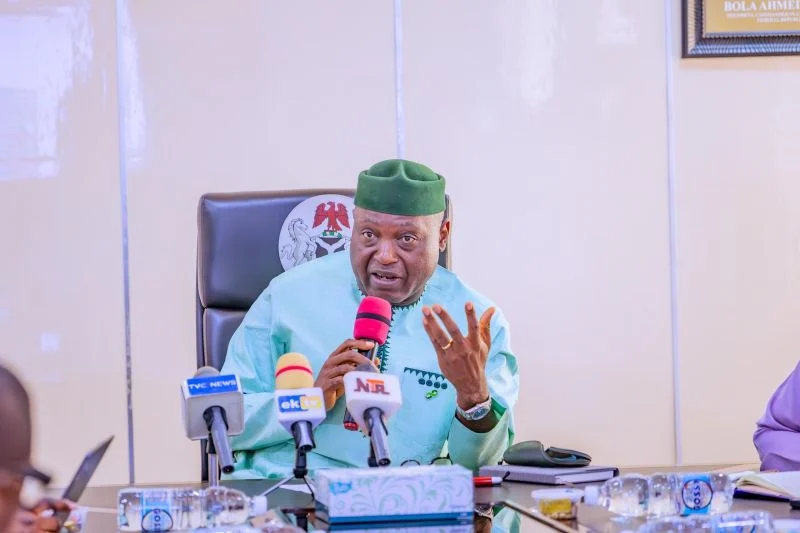
The announcement was made by the Commissioner for Arts, Culture and Creative Economy, Prof. Rasaki Bakare, during a press conference held in Ado Ekiti on Monday. Flanked by the Ministry’s Permanent Secretary, Prince Adebanji Adelusi, and the Special Assistant to the Governor on Culture, Adewale Igbeda, Prof. Bakare emphasized that the campaign is strictly non-partisan and focused solely on democratic education and public enlightenment.
Addressing the Electoral Deficit: A Statistical Context
The urgency of this intervention is underscored by the sobering statistics from the 2022 gubernatorial election in Ekiti State. Despite having a robust voter register of 988,923, only 360,753 citizens participated in the electoral process—a turnout rate of approximately 36.5 percent. This significant disparity between registered voters and actual participants serves as the primary impetus for the government’s current mobilization efforts.
Beyond the low turnout, the state has frequently grappled with a high volume of invalid votes, often attributed to a lack of awareness regarding the technical requirements of the electoral process. Voters frequently struggle with proper thumbprinting, the correct method of folding ballot papers, and the broader understanding of how their civic input directly impacts governance. Prof. Bakare noted that research conducted by his ministry revealed that many citizens still prioritize personal economic activities, such as farming, over participating in the electoral process, often failing to see the correlation between their vote and the quality of governance they receive.
The state government has set an ambitious target to exceed 500,000 voters in the upcoming June 20 election. To achieve this, the Ministry is aligning its efforts with the Independent National Electoral Commission (INEC) and the National Orientation Agency (NOA) to ensure that messages regarding voter registration and the procedural "how-to" of voting reach the grassroots level.
The Mechanism of Change: Theatre-for-Development
The "Theatre-for-Development" model represents a departure from traditional, speech-heavy political rallies. By using cultural narratives, music, and skits, the government aims to bypass the communication barriers that often make technical electoral information seem inaccessible or tedious.
"Election is a government programme," Prof. Bakare stated. "Our intervention here is to complement the jobs of the National Orientation Agency and the Independent National Electoral Commission. We are moving round all our major towns and the senatorial districts to make sure that we use the art, creativity and culture to sensitize the people on election, as well as what causes flooding and how to prevent it."
This dual-pronged approach—addressing both the upcoming election and climate-related hazards—is designed to maximize the engagement of rural populations. By embedding civic education into the cultural fabric of the community, the Ministry hopes to foster a sense of shared responsibility for the state’s future.
Economic Empowerment: The 2026 Art Endowment Fund
During the briefing, Prof. Bakare also highlighted the continued support for the state’s creative sector, announcing that Governor Biodun Oyebanji has approved a fresh tranche of funding for the 2026 Ekiti State Art Endowment Fund. This program is designed to provide financial stability to workers within the arts and creative economy, including fashion designers, content creators, and traditional artisans.
The fund operates as a revolving loan with a seven percent interest rate. By opting for a loan model rather than a grant, the government aims to encourage fiscal responsibility and long-term sustainability. "It is not a grant because we want our people to be responsible for how they spend the money," the Commissioner explained. "It is a revolving loan. Whatever the government gives yearly is added to what is already there so that more people can continue to benefit as beneficiaries pay back."
Early feedback from the 2024 and 2025 cycles of the endowment has been largely positive, with the Ministry reporting that many beneficiaries have successfully scaled their ventures into employment-generating enterprises. This program is seen as a key component of the administration’s broader strategy to stimulate the creative economy as a viable pillar of the state’s GDP.
Broader Implications and Future Outlook
The decision to utilize the Ministry of Arts, Culture and Creative Economy for civic mobilization is a strategic maneuver that acknowledges the limits of traditional political messaging. By delegating this task to a department perceived as culturally aligned rather than politically competitive, the government hopes to reduce the skepticism often directed toward state-led initiatives during election cycles.
However, the effectiveness of this program will be tested by the turnout on June 20. Political analysts suggest that while cultural sensitization is a powerful tool, it must be paired with sustained voter education that persists well beyond the mobilization tour. The challenge lies in ensuring that the message of "why to vote" resonates with an electorate that may feel alienated by previous administrative cycles or disillusioned by the perceived impact of their ballots.
Furthermore, the integration of environmental awareness (specifically regarding flooding) into the election sensitization tour highlights the state’s intent to treat civic participation as a holistic responsibility. By framing the act of voting as a duty tied to community safety and development, the government is attempting to broaden the definition of civic duty beyond the ballot box.
Chronology and Operational Timeline
- March 28: Commencement of the statewide mobilization tour across all three senatorial districts.
- Ongoing: Continuous voter registration exercises conducted by INEC to increase the pool of eligible voters.
- June 20: The scheduled date for the Ekiti State governorship election, serving as the benchmark for the effectiveness of the mobilization campaign.
- Post-Election: Evaluation of the impact of the mobilization tour on total voter turnout and the reduction of invalid votes.
As the state moves closer to the election, the success of these initiatives will be evaluated not just by the raw numbers of the ballot, but by the qualitative improvement in how citizens interact with their democracy. The Ekiti model of merging creative expression with institutional governance goals provides a unique case study for other states seeking to address democratic stagnation. For now, the administration remains focused on its objective: transforming the narrative of voter apathy into a culture of informed, active, and valid participation.
With the machinery of the Ministry fully mobilized, the focus remains on the grassroots. Whether through the lens of a theatrical performance or the practical guidance on how to properly fold a ballot paper, the goal is clear: to ensure that when the residents of Ekiti go to the polls, they are prepared, empowered, and fully aware of the power of their civic voice.