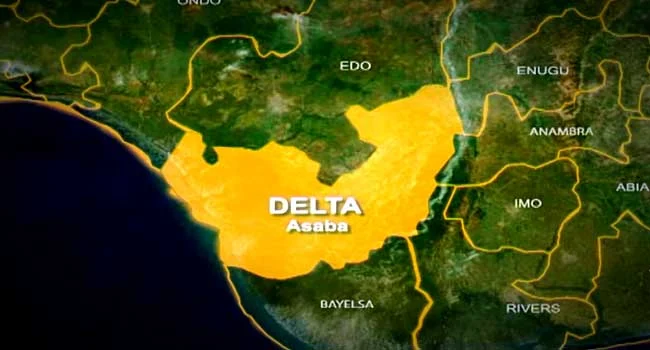
Delta State Police Command Dismantles Kidnap Syndicate and Rescues Three Victims in High-Stakes Operation near Issele-Uku
In a major tactical victory against organized crime, the Delta State Police Command successfully dismantled a notorious kidnap syndicate operating within the dense forest fringes of Issele-Uku. The operation, characterized by a seamless synergy between state police, military personnel, and local security stakeholders, culminated in the rescue of three victims who had been held captive under duress. This decisive intervention serves as a significant milestone in the state’s ongoing battle to neutralize criminal elements that have increasingly utilized the region’s difficult terrain as a staging ground for illicit activities.
The rescue mission, which took place following a swift response to a distress call on March 16, 2026, highlights the effectiveness of intelligence-led policing. By integrating formal security forces with the localized knowledge of hunters and vigilante groups, the Delta State Command has demonstrated a refined approach to countering kidnapping—a scourge that has plagued various parts of the Niger Delta and surrounding areas in recent years.
Chronology of the Rescue Operation
The sequence of events began on March 16, 2026, when the Issele-Uku Divisional Police headquarters received a credible report regarding the abduction of three individuals. Recognizing the urgency of the situation and the threat to human life, the Divisional Police Officer (DPO), CSP Aderemi Badiru, immediately initiated a robust search-and-rescue protocol.
By the early hours of the subsequent investigation, a multi-agency task force was formed. This task force included elements from the Nigerian Army, local community vigilante groups, and experienced local hunters who possess an intimate understanding of the treacherous forest topography near Issele-Uku. The team conducted a methodical sweep of identified hideouts within the surrounding bush.
As the security forces closed in on the syndicate’s primary encampment, they were met with fierce resistance. A sustained exchange of gunfire ensued between the kidnappers and the joint security operatives. During this high-intensity engagement, the tactical superiority of the security forces became evident. One of the suspects was fatally wounded during the firefight, while the remaining syndicate members were forced to retreat into the depths of the forest. The three victims, who had been held in captivity, were recovered unharmed and subsequently reunited with their families after medical evaluations.
In the aftermath of the initial contact, the security team maintained a perimeter and continued to comb the forest. This persistence led to the apprehension of 22-year-old Ahmadu Hassan, a native of Kange Village in Awe Local Government Area, Nasarawa State. Hassan, who was suffering from gunshot wounds sustained during the confrontation, was taken into custody and moved to a secure medical facility for treatment under heavy police guard. Further search of the immediate vicinity yielded the recovery of one AK-47 rifle, along with four rounds of live ammunition, confirming the lethal capabilities of the criminal cell.
Contextualizing Kidnapping in the Delta Region
The Issele-Uku operation is not an isolated event but rather part of a broader, persistent struggle against kidnapping in Delta State. Over the past decade, the state has grappled with an influx of armed criminal networks that capitalize on the region’s dense vegetation and interconnected road networks. These kidnappings are often driven by economic desperation, the pursuit of ransom, or, in some instances, the influence of broader regional instability.
Data from recent security reports indicate that while the frequency of kidnapping remains a concern, the response time of the Delta State Police Command has improved significantly. The use of “community-based intelligence”—the inclusion of local hunters and vigilantes—has been identified by security analysts as a critical force multiplier. Because these local stakeholders possess deep-rooted knowledge of the forest paths and seasonal movements of criminal gangs, their collaboration with the police provides a layer of situational awareness that standard patrol units often lack.
Furthermore, the involvement of suspects from outside the state, such as the apprehended Ahmadu Hassan, underscores the transnational and inter-state nature of these criminal syndicates. Law enforcement agencies have frequently noted that criminal cells often recruit members from across the federation to obfuscate their tracks and complicate investigations.
Official Statements and Security Posture
The Police Public Relations Officer (PPRO) for Delta State, SP Bright Edafe, emphasized the gravity of the situation in his official briefing to the press on Wednesday. He lauded the swift mobilization of the Issele-Uku division, noting that the operation’s success was a direct result of the directive from the State Commissioner of Police, CP Aina Adesola.
CP Adesola, in his subsequent address, commended the “gallantry and synergy” displayed by the joint operatives. He reaffirmed the Command’s unwavering commitment to the total eradication of criminal networks, stating that the state would not provide a sanctuary for those intent on harming its citizens. “The safety of the people of Delta State remains our primary mandate,” the Commissioner noted. “We are refining our strategies to ensure that our response to such threats is not only reactive but proactive, utilizing every available asset to stay ahead of these criminals.”
The Commissioner also issued a clarion call to the public, urging residents to continue providing timely, actionable, and credible information to the police. He underscored that the success of such operations is frequently predicated on the quality of intelligence provided by citizens who observe suspicious movements or unusual activities in their communities.
Implications for Regional Security
The successful dismantling of this syndicate carries several implications for the security architecture of the region. First, the recovery of the AK-47 rifle and the neutralization of key syndicate members significantly degrade the operational capacity of that specific cell. It sends a strong deterrent message to other criminal groups operating within the Delta forest corridors.
Second, the operation serves as a blueprint for inter-agency cooperation. The success of the Issele-Uku mission highlights the efficacy of the “Integrated Security Model,” where the professional training of the military and police is augmented by the local expertise of vigilantes. This model is likely to be scaled up as the Delta State Command looks to secure more rural and forested communities that are traditionally difficult to patrol.
However, challenges remain. The escape of several syndicate members into the vast, unforgiving forest landscape suggests that the threat is not entirely eliminated. The ongoing manhunt for these fugitives remains a priority for the Command, as their continued mobility poses a persistent, albeit diminished, threat to the area. Furthermore, the presence of firearms like the AK-47 in the hands of non-state actors continues to be a point of concern for regional security, prompting calls for more aggressive arms-trafficking control measures along the state’s borders.
Conclusion and Future Outlook
As the Delta State Police Command continues its investigation into the background and network of the captured suspect, Ahmadu Hassan, the focus remains on dismantling the broader supply chain that supports these kidnappers. The recovery of the weapon and the intelligence gathered from the operation are expected to yield further leads, potentially uncovering other sleeper cells in the vicinity.
The resilience displayed by the Issele-Uku community and the security forces provides a glimmer of hope in a challenging environment. As the state government continues to prioritize infrastructure and security, the ability to protect the populace from kidnapping remains the ultimate test of the effectiveness of local governance and law enforcement. The residents of Delta State, for their part, remain vigilant, hopeful that the continued cooperation between the public and the police will usher in a period of increased stability and safety.
For now, the three rescued victims are undergoing the process of reintegration into their families, marking a positive conclusion to what could have been a tragic ordeal. As the legal proceedings against the surviving suspect move forward, the Command stands ready to ensure that justice is served, signaling a zero-tolerance policy toward the menace of kidnapping.