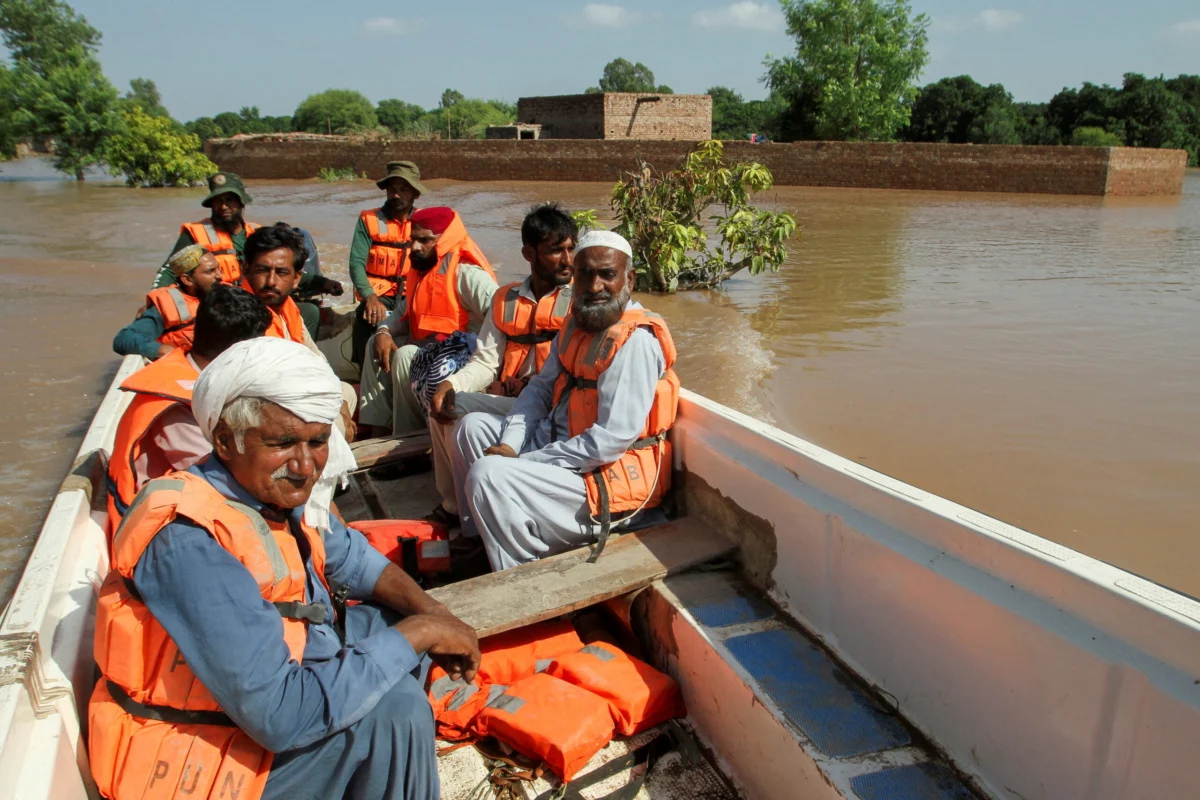
Broken debt system must be fixed to confront future climate shocks
The United Nations, in collaboration with a coalition of emerging economies and international financial experts, has officially inaugurated a high-level forum designed to overhaul the global financial architecture. This new initiative arrives at a critical juncture as dozens of nations across the Global South face a dual-pronged assault: escalating climate-driven catastrophes and a systemic debt crisis that prevents them from investing in resilience. The forum, tentatively titled the Sovereign Debt and Climate Sustainability Commission (SDCSC), aims to dismantle the "vicious cycle" where climate-vulnerable countries are forced to borrow at exorbitant rates to recover from disasters, only to find themselves deeper in debt when the next storm or drought hits.
For decades, the international financial system—largely governed by frameworks established in the mid-20th century—has been criticized for failing to account for the unique vulnerabilities of developing nations in an era of rapid environmental change. As of April 2026, data suggests that more than 60% of low-income countries are at high risk of, or already in, debt distress. This fiscal paralysis means that for every dollar earned, a disproportionate amount is diverted to debt servicing rather than building sea walls, transitioning to renewable energy, or developing drought-resistant agriculture.
The Intersection of Debt and Climate Vulnerability
The core objective of this UN-supported forum is to address the "Great Finance Divide." While wealthy nations can borrow capital at interest rates of 1% to 4% to fund their green transitions, many nations in Africa, Southeast Asia, and the Caribbean face rates as high as 12% to 15%. This disparity is often driven by credit rating agencies that categorize climate vulnerability as a "sovereign risk," effectively punishing countries for the geographical and environmental threats they did not create.
The forum’s inaugural report highlights the case of the Philippines, where the International Rice Research Institute has been working to develop late-maturing, flood-resistant rice varieties. While such technological innovations are vital for food security, the Philippine government, like many of its peers, faces restricted fiscal space to scale these programs. When typhoons devastate the agricultural heartlands, the government must choose between immediate disaster relief and long-term climate adaptation, often relying on high-interest private loans to cover both.
According to UN economists, the global system currently requires developing countries to pay more in debt service than they receive in climate finance. In 2025, it was estimated that the Global South paid over $400 billion in debt repayments to external creditors, a figure that dwarfs the actual disbursements made through the UN’s Loss and Damage Fund or the Green Climate Fund.

A Chronology of the Reform Movement
The establishment of this forum is the culmination of years of diplomatic pressure and evolving economic thought. The timeline of this movement reveals a steady escalation of demands from the Global South:
- September 2022: Barbados Prime Minister Mia Mottley introduces the "Bridgetown Initiative" at COP27, calling for a massive overhaul of the World Bank and IMF to prioritize climate resilience.
- June 2023: The Summit for a New Global Financing Pact in Paris brings together world leaders to discuss "debt-for-climate swaps" and the suspension of debt payments during natural disasters.
- November 2024: At COP29, the "Finance COP," developing nations successfully negotiate for a New Collective Quantified Goal (NCQG) on climate finance, though the mechanisms for delivery remain contentious.
- August 2025: A record-breaking monsoon season in South Asia and unprecedented droughts in the Horn of Africa lead to a unified call from the G77+China for a formal UN body to oversee sovereign debt restructuring linked to climate goals.
- April 2026: The UN-supported forum is officially convened in New York, marking the first time a multilateral body has been empowered to directly challenge the lending practices of the Bretton Woods institutions.
Supporting Data: The Cost of Inaction
The economic rationale for the forum is supported by stark data. The Intergovernmental Panel on Climate Change (IPCC) has repeatedly warned that the cost of adaptation will rise exponentially if investments are not made immediately. Currently, the adaptation finance gap is estimated to be between $215 billion and $387 billion per year for developing countries.
Furthermore, the "climate risk premium" charged by private lenders adds an estimated $160 billion in additional interest costs annually for climate-vulnerable nations. For a country like Kenya or Colombia, this means that even a modest hurricane or a seasonal drought can trigger a credit downgrade, making future borrowing even more expensive. The forum intends to propose a "Global Climate Credit Guarantee" that would subsidize these interest rates, ensuring that climate-positive projects are funded at concessional rates regardless of a country’s current debt-to-GDP ratio.
Official Responses and Global Reactions
The launch of the forum has elicited a spectrum of responses from the international community. UN Secretary-General António Guterres, a long-time advocate for financial reform, described the forum as a "necessary rebellion against a morally bankrupt system." In a statement released this morning, Guterres noted, "We cannot expect countries to fight the fires of climate change while they are being suffocated by the ropes of debt. This forum is about survival, not just economics."
Representatives from the V20 (the Vulnerable Twenty Group of Ministers of Finance) have welcomed the initiative but remain cautious. "We have seen many forums and many promises," said a spokesperson for the V20. "What we need now is a binding mechanism that forces private creditors to the table and ensures that debt sustainability is measured by a country’s ability to protect its citizens from climate change, not just its ability to pay back Wall Street."
Conversely, some voices within the G7 and the private banking sector have expressed reservations. Critics argue that broad debt forgiveness or the forced restructuring of loans could destabilize global bond markets and lead to a "moral hazard" where fiscal responsibility is abandoned. However, proponents of the forum argue that the "moral hazard" lies in the current system, which allows the world’s wealthiest nations—responsible for the bulk of historical emissions—to profit from the interest paid by the world’s poorest nations as they struggle to survive the consequences of those emissions.

Broader Impact and Future Implications
The success of this UN-supported forum will likely be measured by its ability to influence the upcoming 2027 review of the International Monetary Fund’s quotas and the World Bank’s capital adequacy framework. If the forum can successfully advocate for the widespread adoption of "Climate Resilient Debt Clauses" (CRDCs), it would allow nations to automatically pause debt repayments in the wake of a declared national disaster, providing immediate liquidity when it is needed most.
Beyond immediate debt relief, the forum is expected to push for a global tax on shipping and aviation emissions, with the proceeds directed toward a "Global Resilience Fund." This would create a predictable stream of revenue that is independent of the annual budget cycles of wealthy donor nations, which have proven to be unreliable.
The implications for global stability are profound. Fiscal instability in the Global South is a primary driver of mass migration and regional conflict. By providing nations with the "breathing space" to manage climate shocks, the forum is not only addressing an economic issue but a fundamental security concern. If a country like the Philippines can afford to transition its agriculture and protect its coastlines without collapsing into a debt spiral, the ripple effects will be felt in global food markets and regional geopolitical stability.
As the forum begins its first round of working groups this week, the eyes of the Global South are fixed on New York. The transition from policy discussion to systemic change remains the ultimate challenge. However, with the backing of the United Nations and a growing consensus that the current financial path is unsustainable, the forum represents perhaps the most significant attempt yet to align the world’s money with the world’s most urgent existential threat. The era of "business as usual" for global finance is being challenged by the reality of a warming planet, and the outcome of this struggle will define the economic landscape for the remainder of the 21st century.

Related Posts
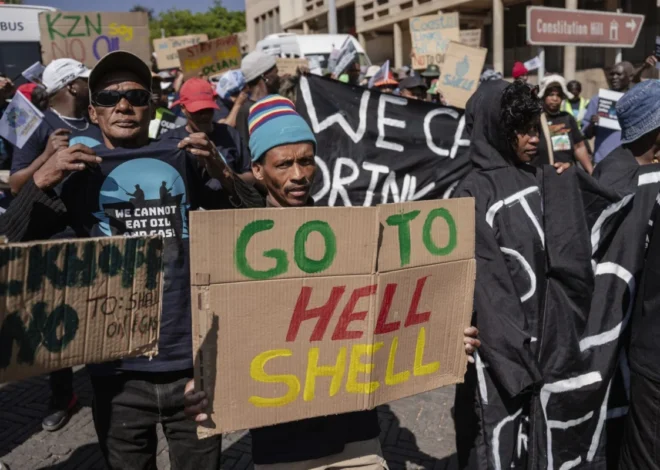
Constitutional Court of South Africa Bars Shell Oil Exploration in Landmark Victory for Environmental and Community Rights
The Battle for Saldanha Bay: South Africa’s Ambitious Ocean Economy Strategy Faces Legal and Environmental Reckoning