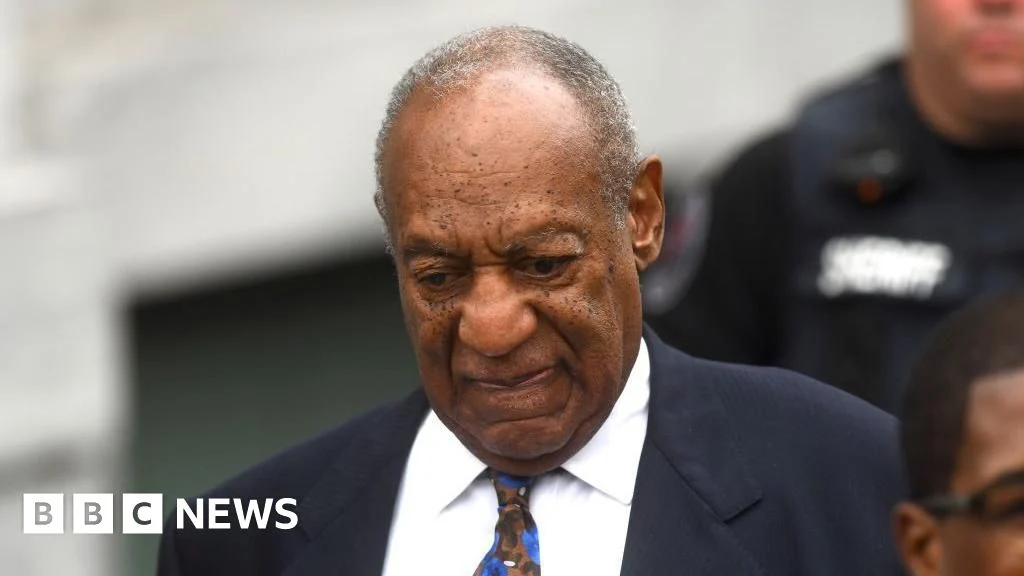
Bill Cosby Ordered to Pay $19.25 Million in Decades-Old Sexual Assault Case
A jury in Santa Monica, California, has delivered a significant verdict against former entertainment icon Bill Cosby, ordering him to pay $19.25 million (£14.3 million) in damages to Donna Motsinger, a former waitress who accused him of drugging and sexually assaulting her more than five decades ago. The civil judgment, handed down on Monday, represents a pivotal moment in the ongoing legal saga surrounding the 88-year-old comedian, whose public image as "America’s Dad" has been irrevocably shattered by a torrent of sexual assault allegations spanning decades. Motsinger’s case centered on an incident from 1972, where she alleged Cosby incapacitated her with a pill and wine before the assault. Cosby vehemently denies Motsinger’s claims, as he has with similar accusations from dozens of women, and his legal team has already indicated an intention to appeal the verdict. The jury’s decision could be further compounded by additional punitive damages, which are yet to be determined, underscoring the severe financial and reputational penalties Cosby continues to face in civil courts.
The Verdict: A Landmark Ruling in Santa Monica
The civil trial in Santa Monica culminated in a finding by the jury that Bill Cosby was liable for the sexual assault of Donna Motsinger. The substantial monetary award of $19.25 million is intended to compensate Motsinger for the profound emotional distress, pain, and suffering she endured as a result of the alleged 1972 incident. This verdict highlights the critical distinction between criminal and civil legal proceedings. While Cosby’s criminal conviction for sexual assault was famously overturned on a technicality in 2021 by the Pennsylvania Supreme Court, the lower burden of proof in civil cases – a "preponderance of the evidence" rather than "beyond a reasonable doubt" – allows survivors to seek justice and accountability through financial compensation. For Motsinger, now 84, the ruling represents a form of vindication after decades of silence and the emotional burden of her experience. Her legal team presented a compelling case, arguing that Cosby’s actions fit a well-established pattern of behavior, which has been a recurring theme in the numerous accusations leveled against him. The jury’s swift decision underscores their belief in Motsinger’s testimony and the evidence presented.
The Accusation: Donna Motsinger’s 1972 Account
Donna Motsinger’s allegations date back to 1972, a period when Bill Cosby was already a burgeoning star in the entertainment industry. According to her lawsuit, Motsinger worked as a waitress at The Trident, a popular restaurant in Sausalito, California, known for attracting celebrities, including Cosby. She alleged that Cosby invited her to attend one of his stand-up comedy shows. On the night of the incident, Cosby reportedly picked her up at her home in a limousine. During the journey, Motsinger testified that Cosby offered her wine and a pill, which she believed to be aspirin. Shortly after consuming the pill, she described experiencing a rapid onset of incapacitation, losing consciousness and later recalling only fragmented "flashes of light." The lawsuit detailed that Motsinger awoke at her home, naked except for her underwear, with the immediate and harrowing realization that she had been drugged and raped by Bill Cosby.
For decades, Motsinger, like many other accusers, remained silent about her experience. The reasons for this silence are complex and multifaceted, often involving fear of retaliation, social stigma, shame, and the immense power imbalance between a young woman and a celebrity of Cosby’s stature. The legal landscape at the time also presented significant barriers, particularly strict statutes of limitations that often precluded older sexual assault claims from being pursued. Motsinger’s ability to bring this lawsuit forward in recent years was facilitated by legal reforms, specifically California’s Assembly Bill 218, which temporarily suspended the statute of limitations for certain sexual assault claims, thereby opening a critical window for survivors of historical assaults to seek redress in civil courts. This legislative change proved instrumental in allowing Motsinger and other survivors to finally have their day in court.
A Cultural Icon’s Downfall: The Broad Spectrum of Allegations
Before the litany of sexual assault allegations surfaced and gained widespread public attention, Bill Cosby was an iconic figure in American culture. Rising to prominence as a stand-up comedian in the 1960s, he broke racial barriers and charmed audiences with his wholesome, family-friendly humor. His role as Dr. Cliff Huxtable on "The Cosby Show" in the 1980s solidified his image as "America’s Dad," a beloved and trusted patriarch. The show was a cultural phenomenon, lauded for its positive portrayal of an affluent African American family and its comedic brilliance. Cosby leveraged his immense popularity into a lucrative career in television, film, and advertising, often serving as a moral arbiter and advocating for education and family values. His philanthropic efforts and numerous honorary degrees further cemented his public persona as a benevolent and respectable figure.
However, this carefully constructed image began to unravel dramatically in the mid-2010s, though whispers and individual allegations had circulated for decades prior. The turning point came in October 2014 when comedian Hannibal Buress referenced Cosby’s alleged sexual misconduct during a stand-up routine, which subsequently went viral. This public re-ignition of the allegations spurred dozens of women to come forward, sharing remarkably similar accounts of being drugged, often with Quaaludes, and sexually assaulted by Cosby. The pattern described by many accusers involved Cosby cultivating a mentor-like relationship or using his celebrity to gain their trust, often offering career advice or opportunities before allegedly incapacitating and assaulting them. The sheer volume and consistency of these narratives were devastating, leading to a rapid and dramatic collapse of Cosby’s public standing, the cancellation of television projects, and the rescinding of honorary degrees. The emergence of these stories also coincided with and contributed to the broader #MeToo movement, empowering survivors globally to share their experiences and demand accountability from powerful individuals.
The Arc of Justice: Cosby’s Legal Battles and Reversals
Donna Motsinger’s civil case is part of a complex and protracted legal battle that Bill Cosby has faced for years, encompassing both criminal and numerous other civil proceedings. The most high-profile of these was the criminal case brought by Andrea Constand, a former Temple University employee, who accused Cosby of drugging and sexually assaulting her at his home in 2004. After an initial mistrial in 2017, Cosby was convicted in 2018 on three counts of aggravated indecent assault. He was sentenced to three to ten years in state prison, becoming the first celebrity of the #MeToo era to be criminally convicted for sexual assault. For many survivors and advocates, this conviction represented a monumental victory and a symbol of accountability.
However, this victory was short-lived. In June 2021, the Pennsylvania Supreme Court dramatically overturned Cosby’s conviction and ordered his immediate release from prison. The court’s decision was based on a "technicality" related to a prior agreement between Cosby and a previous district attorney, Bruce Castor, in 2005. Castor had agreed not to prosecute Cosby criminally if he testified in a civil deposition related to Constand’s lawsuit. Cosby, relying on this agreement, provided incriminating testimony in the civil case. The Pennsylvania Supreme Court ruled that the subsequent prosecutor, Kevin Steele, was bound by Castor’s non-prosecution agreement and therefore violated Cosby’s Fifth Amendment rights by using that testimony against him in the criminal trial. This ruling, while legally complex, was met with outrage by many, particularly sexual assault survivors, who viewed it as a grave injustice and a setback for accountability. Cosby’s release, however, did not absolve him of the civil claims.
Beyond the Constand case, Cosby has faced and settled multiple other civil lawsuits. For example, in 2015, seven women who accused Cosby of sexual assault reached a confidential settlement in a defamation lawsuit they filed after Cosby and his representatives publicly called them liars. These civil cases, including Motsinger’s, demonstrate that even when criminal convictions are overturned or never secured, civil courts remain a crucial avenue for survivors to seek justice and financial restitution, holding perpetrators accountable for the harm inflicted. The lower burden of proof in civil litigation allows for a broader presentation of evidence, including "prior bad acts" or "pattern evidence" from other accusers, which is often restricted in criminal trials.
California’s Legal Framework: Addressing Historical Grievances
The Motsinger case underscores the significant impact of legislative changes in enabling older sexual assault claims to proceed. Historically, strict statutes of limitations for sexual assault cases meant that survivors often ran out of time to pursue legal action, particularly given the common delays in reporting such crimes due to trauma, fear, and social pressures. In California, Assembly Bill 218 (AB 218), signed into law in 2019, created a three-year window, from January 1, 2020, to December 31, 2022, during which the statute of limitations was temporarily suspended for civil sexual assault claims that would otherwise have been time-barred. This legislative amendment was a direct response to the #MeToo movement and the widespread revelations of historical sexual misconduct by powerful figures, acknowledging the systemic barriers survivors faced.
AB 218 proved to be a critical lifeline for individuals like Donna Motsinger. Without this legislative intervention, her claim from 1972 would almost certainly have been dismissed on procedural grounds, preventing her from ever having her case heard by a jury. The law reflected a growing societal understanding of the unique challenges faced by survivors of sexual violence, recognizing that the healing process and the decision to come forward can take many years, sometimes decades. This legal window allowed Motsinger to finally confront her alleged abuser in court, providing a rare opportunity for accountability and closure that was previously unavailable. Her successful verdict now stands as a powerful testament to the impact of such reforms and offers a potential pathway for other survivors of historical assaults to seek justice.
The Trial Proceedings: Arguments and Evidence
During the Santa Monica trial, both the plaintiff and defense teams presented their arguments and evidence to the jury. Donna Motsinger’s legal team focused on establishing the credibility of her decades-old account and demonstrating a pattern of similar behavior by Bill Cosby. They presented Motsinger’s emotional testimony, recounting the details of the 1972 incident and the profound, lasting impact it had on her life. Expert witnesses may have been called to testify about the psychological effects of trauma and why survivors often delay reporting sexual assault, thereby addressing potential skepticism regarding the elapsed time. The strategy likely emphasized the consistency of Motsinger’s account with those of other women who have accused Cosby, suggesting a modus operandi. While specific details about whether other accusers testified in this particular trial are not widely reported, it is common in civil cases against Cosby for courts to allow testimony from "prior bad acts" witnesses to demonstrate a pattern of behavior, which can significantly strengthen the plaintiff’s case.
Conversely, Bill Cosby’s legal team, led by Jennifer Bonjean, mounted a vigorous defense, consistent with their long-standing strategy of denying all allegations. They challenged Motsinger’s recollection of events, particularly given the passage of over 50 years. Court filings from Cosby’s lawyers argued that Motsinger "freely admits that she has no idea what happened," attempting to cast doubt on her ability to definitively assert that she was sexually assaulted. The defense likely suggested that any encounter was consensual or that Motsinger’s memory was unreliable due to the passage of time and the alleged use of substances. They may have also attempted to portray Motsinger’s lawsuit as financially motivated, a common defense tactic in high-profile civil cases. However, the jury ultimately sided with Motsinger, indicating they found her testimony and supporting evidence more credible and compelling than the defense’s arguments.
Reactions to the Verdict: From the Courtroom to Public Discourse
The verdict has elicited strong reactions from all involved parties and the broader public. Bill Cosby’s lawyer, Jennifer Bonjean, immediately announced that her client would appeal the decision, reiterating Cosby’s steadfast denial of the allegations. This stance is consistent with Cosby’s public statements throughout his legal battles, where he has maintained his innocence and characterized all encounters as consensual. The appeal process will likely be lengthy and costly, continuing the legal wrangling that has defined Cosby’s later years. For Cosby, who has already experienced the tumultuous journey from conviction to release, this civil verdict represents another significant blow to his remaining legacy and financial resources.
On the other side, the verdict brings a measure of relief and vindication for Donna Motsinger. While she has not yet made a public statement regarding the outcome, her legal team likely expressed satisfaction with the jury’s decision, emphasizing the importance of holding powerful individuals accountable, even decades after the alleged acts. For Motsinger and other survivors, the financial award is not merely about money; it symbolizes a formal recognition by the justice system of the harm they endured.
Victim advocacy groups and proponents of sexual assault awareness have hailed the verdict as a crucial victory. They often emphasize that civil litigation serves as a vital avenue for justice when criminal charges are not pursued or fail. The outcome of the Motsinger case reinforces the message that survivors’ voices are being heard and that legal reforms, like California’s AB 218, are instrumental in achieving accountability. It sends a powerful message that the passage of time does not diminish the gravity of sexual assault and that perpetrators, regardless of their past stature, can still face consequences. The public discourse surrounding Cosby’s cases continues to reflect a deep division, with some still defending him, while a growing consensus condemns his alleged actions and supports the survivors.
The Broader Implications: Accountability and the Power of Civil Litigation
The Bill Cosby verdict in the Donna Motsinger case carries significant broader implications for legal accountability, the rights of sexual assault survivors, and the ongoing public reckoning with historical misconduct by powerful figures. Firstly, it underscores the enduring power of civil litigation as a mechanism for justice. In cases where criminal charges are difficult to prosecute due to evidentiary challenges, statute of limitations issues, or prosecutorial decisions, civil courts can provide a pathway for survivors to seek redress and achieve a form of closure. The lower burden of proof in civil cases often makes them more accessible for victims seeking to hold perpetrators financially responsible for their actions. This distinction is particularly relevant in the post-Cosby criminal acquittal landscape, demonstrating that an overturned criminal conviction does not equate to exoneration in the eyes of civil law or public opinion.
Secondly, the case reinforces the importance of legislative reforms like California’s AB 218. By temporarily suspending statutes of limitations, these laws acknowledge the complex psychological impact of sexual assault and the often-delayed process of coming forward. They empower survivors who previously felt silenced or legally barred from seeking justice. The success of Motsinger’s lawsuit may encourage other states to consider similar reforms, creating broader opportunities for survivors of historical assaults to pursue their claims.
Finally, the verdict contributes to the ongoing cultural conversation about celebrity power, consent, and accountability. Bill Cosby’s downfall from a revered public figure to a convicted (though later released) sex offender and civilly liable assailant has reshaped public perceptions of celebrity and trust. The Motsinger case, like the many others against Cosby, highlights how individuals in positions of immense power and influence can allegedly abuse that power with impunity for decades. The jury’s decision sends a clear message that fame and fortune do not provide immunity from the legal consequences of such actions, even if those actions occurred half a century ago. This verdict stands as a testament to the resilience of survivors and the evolving legal landscape that increasingly seeks to provide them with avenues for justice.
What Lies Ahead: Appeals and Unresolved Questions
The legal journey for Bill Cosby and Donna Motsinger is far from over. Cosby’s legal team has unequivocally stated their intention to appeal the Santa Monica verdict. The appeals process will scrutinize various aspects of the trial, including evidentiary rulings, jury instructions, and the application of California’s statute of limitations reforms. Such appeals can take months or even years to resolve, prolonging the legal uncertainty and emotional toll on all parties involved.
Furthermore, the jury has yet to determine punitive damages in Motsinger’s case. Punitive damages are awarded not to compensate the plaintiff for losses, but to punish the defendant for particularly egregious conduct and to deter similar behavior in the future. If the jury decides to award punitive damages, the financial penalty against Cosby could increase significantly beyond the initial $19.25 million, adding another layer of consequence to the already substantial verdict.
Beyond this specific case, the broader implications for Bill Cosby’s legacy remain an unresolved question. While his criminal conviction was overturned, the numerous civil judgments and the weight of dozens of accusations have permanently altered his public image. His career as an entertainer is effectively over, and his once-unassailable reputation has been irrevocably tarnished. For Donna Motsinger and the other women who have accused Cosby, the pursuit of justice has been a long and arduous journey. While legal victories like this verdict offer a sense of closure and validation, the trauma of their experiences will undoubtedly endure. The Motsinger verdict, therefore, serves as both a conclusion to one chapter of a complex legal saga and a continuation of the broader narrative of accountability in the age of survivor empowerment.

Related Posts

Wang Jibing, a Food Delivery Rider, Wins China’s Prestigious Lu Xun Literary Prize for Poems Penned Between Deliveries

Colombia’s Relentless Struggle: A Return to Coca Cultivation Amidst Failed Promises and Global Demand