Leandro Paredes Scores Decisive Goal in Boca Juniors’ Superclásico Victory Over River Plate
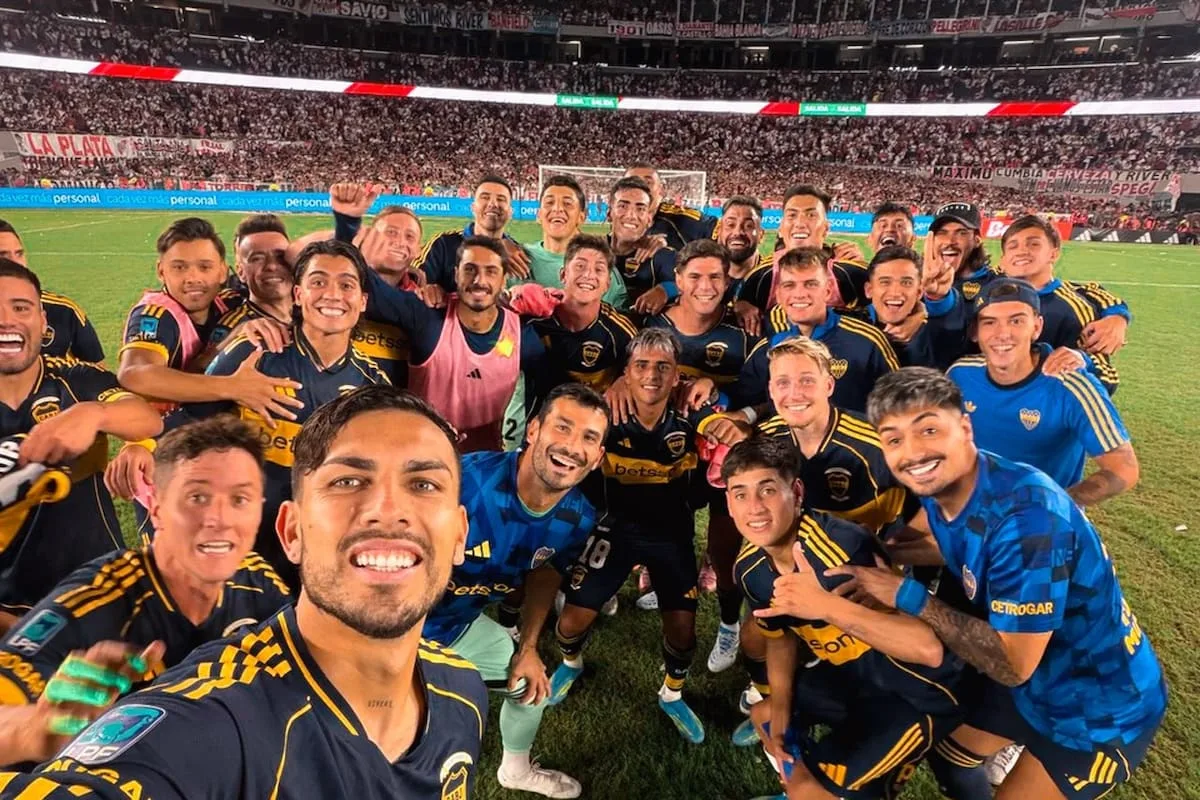
The roar of the Monumental stadium, a cauldron of fervent River Plate support, often intimidates visiting teams. Yet, for Leandro Paredes, the air crackled with a different kind of energy on Sunday. In a career marked by significant milestones, the Argentine midfielder etched a new, deeply personal one into his ledger: scoring his first-ever goal against River Plate in the colors of Boca Juniors. This wasn’t just any goal; it was the decisive strike, the one that sealed a historic Superclásico victory on enemy territory. The reception he received, from the moment his name was announced over the loudspeakers, was a testament to his burgeoning influence. The boos, a cascade of sonic disapproval, were not born of animosity, but of a grudging acknowledgment. They were the sounds of a formidable opponent, the captain of Boca, the man most feared among the visitors. The final scene of the night, however, offered a powerful counter-narrative. As his teammates swarmed in a jubilant cluster, Paredes, with a disarming smile, borrowed a phone from a staff member. He stepped forward, the focal point of the elated Boca contingent, and with a click, captured a photograph that would resonate deeply with fans celebrating the triumph in homes, bars, and across the hallowed turf of La Bombonera. Boca had conquered the Monumental, a victory that transcended mere statistics, imbued with an immeasurable emotional dividend.
The Unquantifiable Influence of Paredes
Class, as the adage goes, cannot be bought. It is an intrinsic quality, woven into the fabric of a player’s being. Leandro Paredes embodies this principle, his footballing DNA marked by a distinctiveness that sets him apart. While he may not have dominated every single moment of the Superclásico, his mere presence radiated a magnetic aura, a silent yet potent force that fueled Boca’s aspirations for back-to-back victories against their arch-rivals. In their previous encounter, a 2-0 win in November, Paredes’s impact had been more understated. This time, however, he assumed the mantle of a seasoned general, capable of absorbing immense pressure and relishing the responsibility that came with it. His performance was a masterclass in midfield control and strategic influence, a stark contrast to the occasional errancy that marked the opening exchanges of the match.
The match began with a degree of imprecision from the midfielder, evidenced by an avoidable foul in the center of the pitch. However, it was not long before the innate brilliance of his right foot began to orchestrate the game. A beautifully weighted pass found Merentiel, sending him on a threatening run towards River’s goal. Only a last-ditch intervention from Martínez Quarta prevented the striker from unleashing a shot. As River’s initial attacking surge subsided, Paredes found his rhythm, his comfort level steadily increasing. His gravitational pull on the midfield was undeniable. Even when not in possession, he was a vocal conductor, directing his teammates, dictating the tempo of the game with an innate understanding of positional play and tactical nuances. As the first half drew to a close, Paredes showcased the qualities that have made him a vital component of the world champion Argentine national team. He created two further goal-scoring opportunities for Merentiel with visionary passes, anticipating plays before they unfolded and executing them with a precision befitting his pedigree. In one instance, Merentiel’s effort narrowly missed the target; in the other, a desperate save from Rivero thwarted the attempt. The subsequent passage of play, however, would lead to a pivotal moment.
The Penalty and the Pantheon of Memories
The minutes that elapsed between the referee’s decision to review a foul on Merentiel via VAR and Paredes’s subsequent penalty conversion would undoubtedly be etched into his personal hall of fame. The stadium held its breath as Darío Herrera meticulously scrutinized the monitor. Paredes, however, exuded an unwavering composure. He claimed the ball immediately, his intent clear and resolute, as if to preempt any notion of dispute. Meanwhile, Ayrton Costa maintained a watchful presence at the penalty spot, a silent sentinel guarding against any unsportsmanlike interference from River players on the already beleaguered turf. Paredes stepped up, his gaze fixed on the goal. He dispatched the penalty with clinical precision, a shot driven high to his right, finding the back of the net.
The ensuing celebration was a multifaceted display of emotion and symbolism. Initially, Paredes sprinted towards the jubilant Boca fans, his sky-blue eyes scanning the stands, his right hand cupped to his ear in a gesture that conveyed a defiant "I can’t hear you." This was followed by a more theatrical pose, hands clasped behind his ears, a gesture reminiscent of Juan Román Riquelme’s iconic "Topo Gigio" celebration. While Riquelme’s original rendition was a playful jab at then-Boca president Mauricio Macri, Paredes’s current iteration, perhaps, resonated with a younger generation of fans. The imagery of the blue and yellow – colors intrinsically linked to Boca – might also evoke the popular animated character "Bluey," a blue and yellow heeler dog, whose familial adventures have captured the hearts of children worldwide. This subtle nod to contemporary cultural touchstones underscored the multi-layered significance of his actions.
The celebration continued with a passionate kiss of the Boca crest, a visceral display of his allegiance. He then engaged in a playful reenactment of a card game with teammates Merentiel and Bareiro on the pitch, a moment of camaraderie amidst the high stakes of the Superclásico. Finally, as he found himself momentarily isolated, Paredes turned to face the supporters in the lower tier, issuing another silent challenge. The referee, Herrera, opting for leniency, chose to withhold the yellow card he was obligated to issue, signaling for the game to resume.
Speaking post-match, still amidst the euphoria on the field, Paredes reflected on the significance of the victory. "The two classics I’ve played, we’ve won them," he stated. "Today, we knew how to suffer when necessary, and in the end, we played a complete game. We are growing, and we are becoming a more man-like team." Addressing the penalty, he added, "I was very calm for the penalty; the celebration just came out, I hadn’t planned it."
Navigating the Storm of the Superclásico
The second half witnessed a more defensive posture from Boca Juniors. Amidst this shift, an unexpected interaction occurred between Paredes and Marcos Acuña, his national team colleague. Following a foul committed by Paredes on Joaquín Freitas, Acuña delivered a push to the Boca midfielder, leading to both players receiving a yellow card. Later, the home crowd directed an "insulting song" towards Paredes. Following his post-match shower within the stadium’s confines, Paredes downplayed the incident. "It didn’t bother me; it’s logical, we are the rival," he commented, displaying a pragmatic understanding of the intense derby atmosphere.
His substitution in the 72nd minute, making way for his friend Ander Herrera, was not a reflection of diminished performance but a precautionary measure. Earlier in the halftime interval, he had alerted the team staff to a twinge in his right hamstring. Despite the curtailed playing time, Paredes’s impact was substantial. He was Boca’s most active player on the field, registering 44 touches, completing 25 of his 30 attempted passes, and winning seven of his nine duels. These statistics, however, merely offer a quantitative glimpse into the qualitative influence of a player who has seamlessly reintegrated into his boyhood club.
The Architect of a New Era
Leandro Paredes has returned to Boca Juniors not merely as a player, but as a leader. He was instrumental in bolstering the confidence of interim coach Mariano Ubeda during a period of uncertainty, providing a stabilizing presence when the team’s trajectory seemed unclear. He commands respect on the field, a de facto captain even when not wearing the armband. He feels complemented by the presence of Delgado and Ascacibar in midfield, recognizing the youthful exuberance and audaciousness that Aranda brings to the team. If Boca Juniors is to embark on ambitious projects and forge a successful future, then the architect of this burgeoning hope has, in the heart of their traditional adversary’s fortress, begun to lay the foundational blueprints. His performance in the Superclásico was not just a victory; it was a declaration of intent, a powerful statement of intent from a player who has come home to lead.

Related Posts

The Electric Vehicle Battery Health Debate Emerges as Argentina’s EV Market Accelerates

President Donald Trump Confirms Secret Departure from Turkey Amidst Assassination Threat