

India’s $26 Billion Metro Expansion Faces Uphill Battle as Ridership Falls Short of Projections
India’s ambitious, multi-billion dollar metro network expansion, a cornerstone of its urban infrastructure development, is confronting a significant challenge: widespread underperformance in ridership figures. Despite a staggering investment of over $26 billion since 2014 under the Narendra Modi government, and a quadrupling of the network length to over 1,000 kilometres by 2025, many newly inaugurated metro lines are struggling to attract the projected number of passengers. This disparity raises critical questions about planning, affordability, operational efficiency, and the long-term sustainability of these massive public transport projects in a rapidly urbanising nation.
The Mumbai Conundrum: A Microcosm of National Challenges
The situation is perhaps best exemplified in Mumbai, India’s financial capital, with its recently launched Aqua Line. On a typical weekday evening last month, the southbound Aqua Line metro train notably emptied out several stops before reaching its final destination, Cuffe Parade. Upon de-boarding, the terminal station presented a stark image: less like a bustling commercial hub in a city synonymous with relentless crowds, and more akin to a desolate, perhaps Soviet-era, structure. This 33.5km (20.8 miles) fully underground corridor, which commenced operations last year, was designed to connect the historic business district of Cuffe Parade to burgeoning commercial zones like Bandra Kurla Complex (BKC) and the city’s airport terminals in the northern suburbs. Its grand vision was to significantly alleviate Mumbai’s notorious traffic congestion and was projected to serve nearly 1.5 million passengers daily. However, current estimates indicate actual ridership is merely a tenth of that figure, hovering around 150,000 passengers per day.
A ticketing executive at Cuffe Parade station succinctly articulated a primary concern to the BBC: "Not a lot of people are using the line. It’s too expensive." This sentiment underscores a core issue permeating India’s metro landscape – the delicate balance between operational costs and passenger affordability. The Aqua Line’s struggle, therefore, is not an isolated incident but a poignant reflection of a broader, national trend affecting the breakneck expansion of India’s metro infrastructure.
A Decade of Ambitious Expansion: The Modi Government’s Vision
Since 2014, the Indian government has aggressively pushed for an expansive metro network, earmarking over $26 billion for connectivity across nearly two dozen Indian cities. This strategic investment aligns with the government’s broader agenda of modernising urban infrastructure, enhancing ease of living, and promoting sustainable development in its rapidly growing cities. The figures are impressive on paper: the network has grown fourfold, from under 300km to over 1,000km, with ambitious plans to reach 1,700km by 2027. Concurrently, average daily ridership across the entire network has almost quadrupled over the last decade, escalating from three million to over 11 million people. This impressive aggregate growth is frequently cited by government officials as a testament to the success of the urban transport policy.
The underlying vision for this massive investment is multi-pronged: to decongest urban areas, reduce pollution by shifting commuters from private vehicles to public transport, provide rapid and reliable mobility options, and stimulate economic activity by improving connectivity between residential and commercial hubs. India’s rapid urbanisation, with its cities expected to house an additional 400 million people by 2050, makes the development of robust public transport systems an imperative. The metro, with its high capacity and segregated right-of-way, is seen as a vital solution to this demographic shift.
The Chasm Between Projection and Reality: Widespread Underperformance
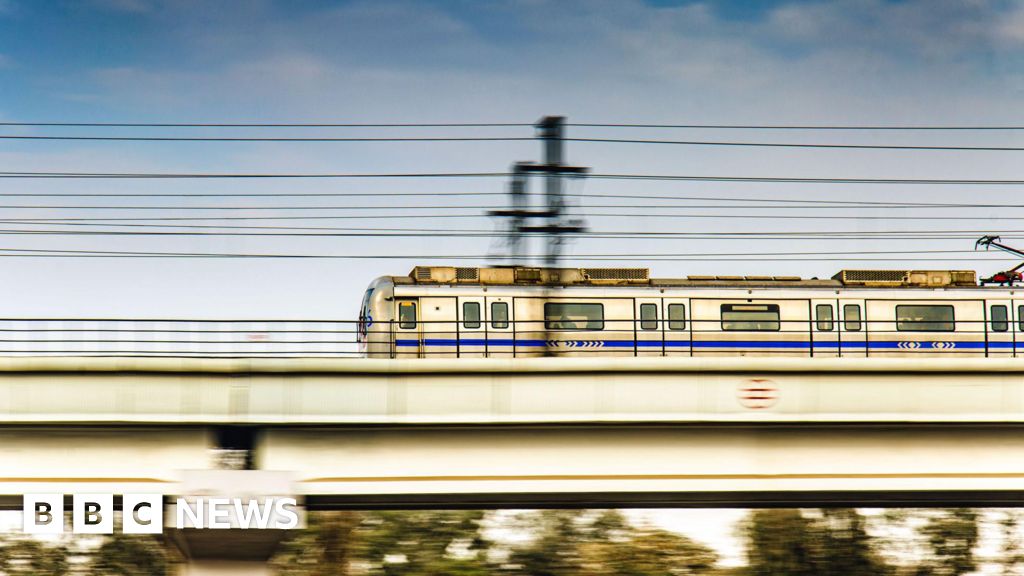
However, these grand aggregate numbers, while indicative of significant expansion, mask worrying underlying data concerning individual line performance. Experts universally agree that most metro systems in India have failed to achieve even a fraction of the ridership figures projected during their initial planning stages. This discrepancy is a critical concern, impacting the financial viability and long-term effectiveness of these colossal projects.
A comprehensive report from the Indian Institute of Technology (IIT) Delhi in 2023 painted a stark picture, revealing that ridership across various corridors consistently stood at merely 25-35% of the projected figures. One of the study’s authors indicated to the BBC that these numbers are unlikely to have significantly improved throughout 2024 and 2025. These findings are not isolated. Other research bodies corroborate this trend of underperformance. The Observer Research Foundation (ORF), a prominent think tank, highlighted that ridership in some tier-3 cities, such as Kanpur, plummeted to as low as 2% of the projected estimate. Even in larger, more established metropolitan areas like Chennai, the first phase of its metro system only achieved 37% of its anticipated ridership. Further data shared by the Institute for Transportation and Development Policy (ITDP) revealed actual ridership ranging between a modest 20-50% in cities like Pune and Nagpur in western India.
The National Capital Region, Delhi, stands as a notable, albeit nuanced, exception. Delhi boasts India’s widest and most mature metro network, and its usage figures appear to have slightly surpassed projections. However, this apparent success requires closer scrutiny. Transport experts Aditya Rane of ITDP and Ashish Verma of the Sustainable Transportation Lab at the Indian Institute of Science in Bengaluru point out that Delhi Metro Rail Corporation (DMRC) has adopted a practice of counting interchanges as separate trips. This accounting method inflates the overall ridership numbers, making a direct comparison with systems using different methodologies problematic and potentially masking underlying inefficiencies. For instance, a single commuter making one journey requiring two line changes would be counted as three trips, rather than one, skewing the overall ridership statistics.
Unpacking the Root Causes: A Multifaceted Problem
The struggle of metro travel in a nation where car ownership remains relatively low, and other public transport systems are notoriously overcrowded and overstretched, begs a critical question: why the disconnect? The answer lies in a confluence of factors, ranging from flawed planning to operational deficiencies and socio-economic considerations.
1. Flawed Demand Projections:
A fundamental issue, according to experts like Ashish Verma, is the often-inaccurate projection of potential demand by consultants. "It is a complex task [to project demand], and figures are sometimes exaggerated to show the project is economically viable," Verma stated. He elaborated that forecasts are frequently based on "offered capacity" – such as a certain number of coaches or theoretical train frequencies – which, in many cases, are never realised in actual operations. This over-optimistic planning creates an initial inflated expectation that real-world conditions fail to meet.
2. Operational Inefficiencies and Service Gaps:
Beyond flawed projections, actual operational parameters fall short. In Bengaluru, for example, peak-hour train frequency on the busiest line is five minutes or more, a stark contrast to global benchmarks. On newer lines, this frequency can extend to a staggering 25 minutes, significantly deterring commuters seeking rapid transit. Similarly, the number of coaches on many Indian metro trains ranges only between three and six, whereas leading global metro systems typically operate with nine coaches and a frequency of a train every minute-and-a-half, as highlighted by the Sustainable Transportation Lab. Such discrepancies in capacity and frequency directly impact perceived convenience and overall ridership.
3. The Affordability Barrier:
For a price-sensitive population, affordability is a critical determinant. A single journey on Mumbai’s Aqua Line, for instance, costs between 10-70 rupees (£0.08-£0.56). In stark contrast, a three-month unlimited travel pass on the well-established local Mumbai suburban railway is significantly cheaper at 590 rupees. This considerable price differential steers a large segment of the population, particularly daily wage earners and lower-income workers, away from the metro. Aditya Rane of ITDP notes, "In Indian metro systems, the integrated journey cost can consume 20% of income for lower-income workers, above the global benchmark of 10-15%."
Ashish Verma further points out an increasing "proclivity to reduce subsidies" in Indian metro systems, which he argues may not be a prudent strategy in a country with India’s socio-economic profile. The direct impact of fare hikes was demonstrated in Bengaluru last year, where citizens protested after a fare increase, leading to a noticeable 13% drop in ridership, according to data collated by Greenpeace. Verma draws a parallel to the London Tube, which, despite being one of the most expensive public transport systems globally, is still "heavily subsidised" because of its inherent purpose of providing sustainable mobility and decongesting the city. This suggests that viewing metro systems purely as profit-generating entities rather than essential public services might be counterproductive to their core objectives.
4. Poor Network Planning and Last-Mile Connectivity:
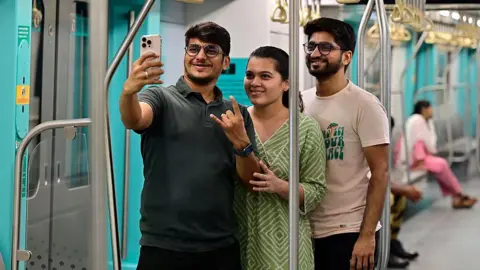
Effective public transport hinges on seamless integration and accessibility. Nandan Dawda, a Fellow at ORF’s Urban Studies programme, argues that "People will switch to public transport only when waiting times are as low as possible." A significant impediment in India is the inadequate provision of feeder buses and other micro-mobility solutions to bridge the "last-mile connectivity" gap from metro stations to final destinations. Commuters often find themselves stranded or forced to rely on expensive alternatives after exiting a metro station.
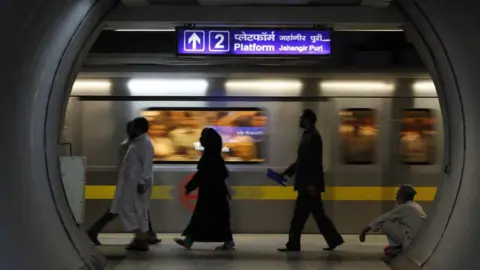
Furthermore, transit times between different metro lines can be excessively long and unwieldy. At Delhi’s Hauz Khas station, a major interchange, transferring from one line to another can take anywhere from 15 to 20 minutes due to long corridors and poor signage. This inconvenience detracts from the metro’s promise of rapid transit.
5. Institutional Fragmentation:
Dawda identifies "institutional disaggregation" as a major impediment to solving connectivity issues. Various metro lines and local bus networks, even within a single city, are often managed by different operators who tend to work in silos. "There needs to be better operational integration between them," he asserts. This lack of a unified command and control structure prevents the creation of truly integrated, multi-modal transport solutions, where a single ticket or pass could cover various modes of transport, and schedules are coordinated for optimal transfers.
6. Pedestrian Infrastructure and Safety Concerns:
The overall urban environment surrounding metro stations also plays a crucial role. Verma highlights the deficiency of "convenient" access and approach to and from metro stations. "If I am a tourist even in a city like Delhi, I can’t drag my bag to the metro easily and walk to my hotel 500m away," he illustrates, pointing to poor walkways, lack of ramps, and pedestrian-unfriendly urban design.
For residents, particularly women, safety is a paramount concern, especially after dark. Chetna Yadav, a 40-year-old resident of north Delhi, articulated her apprehension: "If I am coming home after sunset, I cannot rely on the metro. The station is about 15km from where I live and when I reach the final stop at night, it is next to impossible to get a cab home. I have been stuck in that situation a few times." The absence of reliable and safe last-mile transport options, combined with poorly lit or deserted areas around stations, significantly deters usage, especially for vulnerable groups.
Official and Expert Perspectives
While acknowledging the challenges, government bodies involved in metro development often emphasize the long-term vision and the transformative impact of these projects. They highlight the initial capital expenditure required for such large-scale infrastructure and the gradual nature of ridership growth as cities adapt to new transport modes. The aim is not just immediate profitability but also the wider economic and environmental benefits, such as reduced pollution, fuel consumption, and improved productivity due to faster commutes.
However, transport experts like Verma, Rane, and Dawda advocate for a more pragmatic and integrated approach. They urge policymakers to move beyond mere construction and focus on the holistic ecosystem of urban mobility. This includes re-evaluating demand projection methodologies to ensure realism, implementing dynamic fare policies that balance affordability with operational costs, and critically, investing heavily in last-mile connectivity through robust feeder bus networks, shared auto-rickshaws, and safe pedestrian infrastructure. Dawda stresses the importance of fostering greater collaboration between different transport agencies within a city to create a seamless, integrated network.
Broader Implications: Economic, Environmental, and Social Costs
The underperformance of India’s metro network carries significant implications across economic, environmental, and social dimensions. Economically, underutilized infrastructure represents a massive opportunity cost. Billions of dollars invested are not generating the expected returns, potentially straining public finances and diverting funds from other critical sectors. The financial viability of metro corporations, many of which operate on a deficit, becomes a pressing concern, often necessitating further government bailouts or fare hikes that further deter ridership.
Environmentally, if commuters continue to rely on private vehicles due to the metro’s shortcomings, the primary goal of reducing urban pollution and carbon emissions remains unfulfilled. India’s cities are among the most polluted globally, and a functional, widely-used public transport system is crucial for improving air quality. Socially, the affordability barrier creates an inequitable transport system, disproportionately impacting lower-income groups who are most reliant on public transport but find the metro out of reach. Safety concerns, particularly for women, also perpetuate gender inequality in access to urban opportunities.
The Road Ahead: Towards Integrated and Sustainable Urban Mobility
Despite the current problems, experts foresee metro use continuing to inch up incrementally. The sheer scale of India’s urban traffic congestion, escalating pollution levels, persistent parking woes, and critical road safety issues have reached a tipping point in many Indian cities. This growing urban distress is fueling renewed calls for more stringent measures, such as the introduction of congestion pricing for private vehicles, as proposed in cities like Mumbai. Such measures could organically push more commuters towards public transport.
However, for a swift and dramatic rise in adoption, a more comprehensive and commuter-centric approach is indispensable. Aditya Rane concludes that "The systems most likely to improve strongly are the ones that get bus integration, station access and fare integration right." Without a concerted effort to address these multifaceted challenges – from realistic planning and affordable fares to robust last-mile connectivity, seamless inter-modal transfers, and enhanced safety measures – India risks continuing to build impressive metro lines that, while operationally useful, consistently underperform against their original, ambitious projections. The ultimate success of India’s metro revolution hinges not just on laying tracks and constructing stations, but on creating an accessible, affordable, and integrated urban mobility ecosystem that truly serves its diverse population.
Additional reporting by Nikita Yadav

Related Posts
Zambia on Edge: Opposition Leader Arrested Amid Allegations of Insurrection Plot and Election Tensions
Rescuers search for survivors of powerful Indonesia earthquake

