French Peacekeeper Killed in Southern Lebanon Amid Heightened Regional Tensions, Sparking International Condemnation
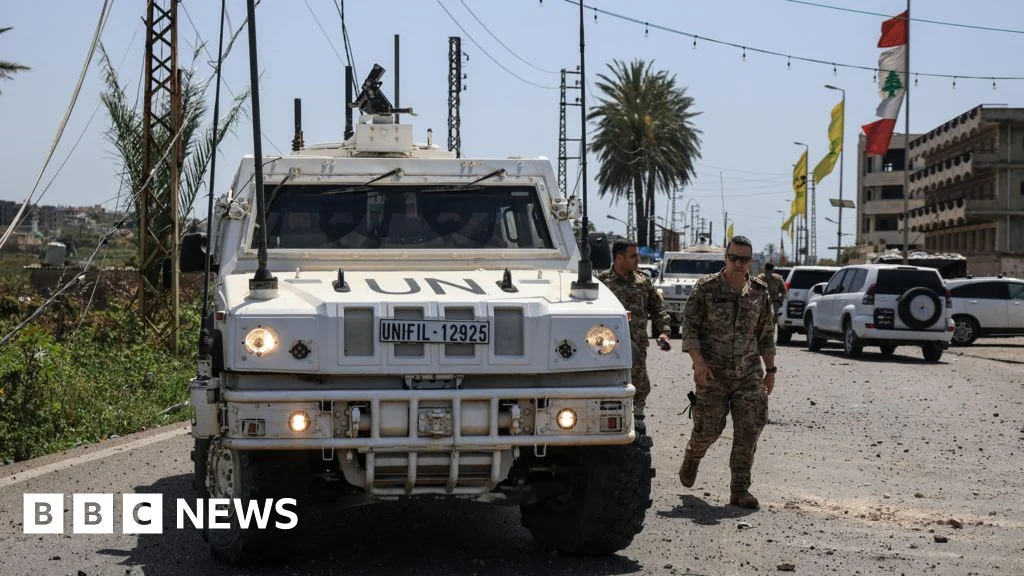
A French peacekeeper serving with the United Nations Interim Force in Lebanon (UNIFIL) has been killed, and three others wounded, after their patrol came under what officials described as a deliberate small-arms fire attack in southern Lebanon. The incident, which occurred during a critical mission to clear explosive ordnance and restore access to an isolated UNIFIL position, has ignited a fresh wave of international condemnation and underscored the escalating dangers faced by peacekeepers in the region amidst renewed hostilities between Hezbollah and Israel.
A Deadly Ambush in a Volatile Zone
The fatal incident transpired in the village of Ghanduriyah, located within the operational area of UNIFIL in southern Lebanon. The patrol, comprising French personnel, was engaged in the hazardous task of clearing explosive remnants of war (ERW) along a crucial road. This mission was designed to reconnect UNIFIL positions that had become isolated due to the ongoing fighting, a testament to the essential, yet perilous, work undertaken by the multinational force.
The Incident Unfolds
According to France’s Armed Forces Minister Catherine Vautrin, the peacekeeper’s patrol was "ambushed by an armed group at very close range." The soldier was reportedly "hit immediately by a direct shot from a small arms weapon." Despite the immediate efforts of his fellow soldiers to pull him to safety and render aid, they were tragically unable to revive him. The sudden and close-quarters nature of the ambush suggests a premeditated act, intensifying concerns about the security environment for UN personnel. The United Nations Interim Force in Lebanon (UNIFIL) confirmed the fatality and the injuries, noting that two of the three wounded peacekeepers sustained serious injuries, necessitating advanced medical treatment in Beirut. The third injured peacekeeper was being treated for moderate injuries in southern Lebanon.
Casualties and Repatriation Efforts
Following the attack, swift arrangements were made for the repatriation of the fallen peacekeeper. On Sunday, UNIFIL confirmed that the body of the French soldier would be repatriated to Paris, a solemn journey marking the ultimate sacrifice made in the pursuit of peace. The two seriously injured peacekeepers remain under intensive care in Beirut, highlighting the severity of their wounds, while the third receives ongoing treatment locally. The incident immediately triggered high-level diplomatic reactions, with French President Emmanuel Macron swiftly attributing blame to Hezbollah, an Iran-backed armed group with significant influence and military presence in southern Lebanon.
UNIFIL’s Critical Mandate in a Precarious Landscape
The United Nations Interim Force in Lebanon (UNIFIL) operates in one of the world’s most complex and volatile geopolitical theatres. Established in 1978 by UN Security Council Resolution 425 and 426, its initial mandate was to confirm Israeli withdrawal from southern Lebanon, restore international peace and security, and assist the Lebanese government in re-establishing its effective authority in the area. This followed Israel’s invasion of Lebanon in response to a Palestinian attack.
Origins and Evolution of the Mission
Over the decades, UNIFIL’s role has evolved significantly. A major expansion of its mandate came after the devastating 2006 war between Israel and Hezbollah. UN Security Council Resolution 1701 greatly strengthened UNIFIL’s responsibilities, tasking it with monitoring the cessation of hostilities, accompanying and supporting the Lebanese Armed Forces (LAF) as they deploy throughout southern Lebanon, and extending assistance to the local population. Crucially, it also mandated UNIFIL to help ensure humanitarian access and contribute to creating conditions for a long-term permanent ceasefire. The mission’s operations are concentrated along the "Blue Line," the de facto border separating Lebanon and Israel, a frontier that remains heavily militarized and a constant flashpoint. Today, UNIFIL comprises approximately 10,000 peacekeepers from dozens of contributing countries, operating alongside about 800 Lebanese Armed Forces personnel. Their presence is vital for maintaining a fragile calm and preventing accidental escalation.
Challenges and Previous Fatalities
Operating in such a sensitive environment presents immense challenges. UNIFIL peacekeepers frequently navigate complex political landscapes, deal with armed non-state actors, and contend with the constant threat of renewed conflict. The force must maintain strict impartiality while executing its mandate, often caught between the opposing forces of Hezbollah and the Israeli military. This delicate balancing act has, tragically, come at a high cost. Since its inception, more than 330 UNIFIL peacekeepers have lost their lives in the line of duty, a stark reminder of the inherent dangers of peacekeeping operations in active conflict zones. Just prior to this latest incident, in late March, three Indonesian peacekeepers serving with UNIFIL were killed in separate, albeit related, incidents: one in an explosion that destroyed a UNIFIL vehicle, and two others a day earlier in a projectile strike. These previous fatalities underscore a disturbing trend of increasing threats to UN personnel in southern Lebanon, highlighting a worrying deterioration in the security situation.
Escalating Tensions Along the Blue Line
The recent attack on the French peacekeepers did not occur in a vacuum but against a backdrop of severely heightened tensions in southern Lebanon. The region has been gripped by a dangerous escalation of cross-border fighting between Hezbollah and Israel, which reignited with ferocity following the October 7th attacks on Israel and the subsequent war in Gaza.
The Broader Conflict Backdrop
Since early October 2023, the Israel-Lebanon border has witnessed near-daily exchanges of fire, rocket launches, and drone attacks. Hezbollah, a powerful Shiite political party and militant group, has explicitly stated its actions are in solidarity with Hamas in Gaza and aimed at distracting Israeli forces from their operations there. Israel, in turn, has responded with significant airstrikes and artillery fire targeting Hezbollah infrastructure and operatives deep within Lebanese territory. This protracted cross-border conflict has displaced tens of thousands of civilians on both sides of the Blue Line, inflicted substantial damage on infrastructure, and raised fears of a broader regional conflagration. The "renewed fighting" that UNIFIL referenced as starting around March 2nd likely refers to a particularly intense period of these exchanges, marking a significant uptick in the scale and frequency of hostilities, further destabilizing an already volatile region.
The Fragile Ceasefire Agreement
Amidst these escalating tensions, diplomatic efforts have been ongoing to de-escalate the situation. On April 16th, a 10-day ceasefire between Israel and Lebanon came into effect, brokered and announced by the United States. This agreement was seen as a critical, albeit fragile, step towards alleviating the immediate threat of wider conflict. The US, in announcing the deal, had explicitly urged Hezbollah to abide by its terms, recognizing the group’s pivotal role in the conflict dynamics. The attack on the UNIFIL patrol, occurring shortly after this ceasefire came into effect, immediately cast a shadow over its efficacy and raised questions about adherence to its provisions by all parties. It highlighted the precarious nature of any cessation of hostilities in a region where numerous armed actors operate with varying degrees of autonomy and adherence to international agreements.
International Outcry and Calls for Justice
The killing of the French peacekeeper elicited strong reactions from the international community, particularly from France and the United Nations, alongside pledges of action from Lebanese authorities.
France’s Stance and Demands
French President Emmanuel Macron was unequivocal in his condemnation, stating, "Everything suggests that responsibility for this attack lies with Hezbollah." Macron’s strong accusation underscores the deep concern in Paris over the security of its troops and the integrity of the UN mission. France is a significant contributor to UNIFIL, both in terms of personnel and strategic support, reflecting its historical ties and enduring interest in Lebanon’s stability. The President went further, demanding that "France demands that the Lebanese authorities immediately arrest the perpetrators and take their responsibilities alongside UNIFIL." This statement not only called for justice but also implicitly challenged the Lebanese state to assert its sovereignty and control over armed groups operating within its borders, a perennial issue in the country. French Armed Forces Minister Catherine Vautrin provided a detailed account of the ambush, describing it as a direct and immediate assault, further solidifying the French government’s view of it as a deliberate act.
United Nations’ Condemnation and Assessment
The United Nations Secretary-General António Guterres’s spokesperson also condemned the attack in the strongest terms. The spokesperson added that an initial assessment from UNIFIL suggested that the patrol came under fire from "non-state actors," which they presumed to be Hezbollah. This cautious yet pointed attribution from the UN reflects the challenges of operating in an environment where official state control is often contested by powerful non-state entities. The UN spokesperson also reiterated the urgent plea for all parties to "respect the cessation of hostilities and to cease fire," highlighting the immediate threat the incident posed to the fragile calm. UNIFIL itself issued a stern warning, reminding "all actors" of their obligation under international law to ensure the "safety and security" of UN personnel. The force unequivocally stated that "deliberate attacks" on peacekeepers are "grave violations" of international humanitarian law and "could amount to war crimes," signaling the seriousness with which such incidents are viewed and the potential for legal accountability.
Lebanese Authorities Pledge Investigation
In Beirut, Lebanese President Joseph Aoun condemned the attack and, during a phone call with President Macron, assured him that those responsible would be brought to justice. This pledge is critical for upholding Lebanon’s international obligations and for demonstrating its commitment to the UNIFIL mandate. Prime Minister Nawaf Salam also ordered an immediate investigation into the incident, signaling a coordinated effort by the Lebanese government to address the crisis. The Lebanese Armed Forces (LAF), which works in close coordination with UNIFIL, acknowledged the incident, stating it followed exchanges of fire with armed individuals and that they were cooperating closely with UNIFIL during what they described as a "sensitive phase in southern Lebanon." These statements from Lebanese officials are crucial, as their cooperation is paramount for UNIFIL’s effectiveness and for any successful investigation and prosecution.
Hezbollah’s Denial and Counter-Narrative
In response to the accusations leveled by President Macron and implicitly by UNIFIL, Hezbollah issued a statement denying any involvement in the attack.
Rebuttal and Calls for Prudence
On Saturday, Hezbollah released a statement describing the accusations as "rushed" and "baseless." The group called for "caution in making judgements and assigning blame regarding the incident, pending the Lebanese army’s investigation to determine the full circumstances." This denial is consistent with Hezbollah’s strategy of often avoiding direct public responsibility for actions that could provoke significant international backlash or undermine its political legitimacy within Lebanon. The group further urged both UNIFIL and the Lebanese army to continue coordinating with locals on maneuvers "under these delicate circumstances." This appeal highlights Hezbollah’s desire to manage the narrative and potentially influence the ongoing investigation, emphasizing its significant local presence and influence, which it often frames as legitimate resistance. The group’s response underscores the deeply polarized and contested information environment in southern Lebanon, where conflicting accounts of incidents are common, making definitive attribution challenging without a comprehensive, impartial investigation.
The Geopolitical Chessboard: Iran, Israel, and Regional Powers
The incident serves as a stark reminder of the intricate geopolitical dynamics at play in Lebanon and the broader Middle East. The presence of UNIFIL is not merely about maintaining a buffer zone but is deeply intertwined with the regional power struggles involving Iran, Israel, and various international actors.
The Role of External Actors
Hezbollah, a powerful political and military force in Lebanon, is widely recognized as a proxy of Iran. Tehran provides significant financial, military, and logistical support to Hezbollah, enabling it to maintain a formidable arsenal and exert considerable influence in southern Lebanon. This relationship means that Hezbollah’s actions are often viewed through the prism of Iran’s regional strategy, particularly its posture against Israel and the United States. The renewed fighting between Hezbollah and Israel since October 7th is a direct spillover of the Gaza conflict, illustrating how localized tensions can quickly escalate into broader regional confrontations. The US, while announcing the ceasefire, has also been a key diplomatic player, attempting to de-escalate the situation and prevent a full-scale war that could further destabilize the Middle East. France, with its historical ties to Lebanon and its leading role in UNIFIL, also plays a crucial diplomatic role, advocating for Lebanese sovereignty and stability.
Implications for Regional Stability
The attack on UNIFIL peacekeepers carries significant implications for regional stability. It risks undermining the fragile ceasefire brokered by the US, potentially leading to a renewed escalation of hostilities between Hezbollah and Israel. Any further deterioration could draw in other regional actors and expand the conflict beyond its current scope. The incident also highlights the precarious position of Lebanon itself, a country already grappling with a severe economic crisis and deep political divisions. The inability of the central government to fully assert its authority in the south, where Hezbollah maintains de facto control, makes it vulnerable to external pressures and internal instability. The attack could further strain Lebanon’s international relations and complicate efforts to garner much-needed economic aid and political support.
Protecting Peacekeepers: A Global Imperative
The killing of a peacekeeper is not merely a tragic individual loss but an attack on the principles of international peace and security. It underscores the critical importance of upholding international humanitarian law and ensuring accountability for those who target UN personnel.
International Humanitarian Law and Accountability
Under international humanitarian law, UN peacekeepers are non-combatants and are entitled to protection. Deliberate attacks against them are considered grave violations and, depending on the circumstances, can constitute war crimes. UNIFIL’s explicit warning about potential war crimes emphasizes the severity of such acts and the international community’s commitment to holding perpetrators accountable. Investigations, such as those pledged by the Lebanese authorities, are crucial for gathering evidence, identifying those responsible, and ensuring that justice is served. Beyond individual accountability, these investigations are vital for deterring future attacks and reinforcing the legal framework that protects peacekeepers globally. The safety and security of UN personnel are paramount for the effective execution of their mandates, which often involve stabilizing post-conflict zones, protecting civilians, and facilitating peace processes.
The Future of UNIFIL Operations
The incident inevitably raises questions about the future operational environment for UNIFIL. Increased threats to peacekeepers could necessitate a review of their security protocols, rules of engagement, and overall strategic posture. It might also prompt discussions within the UN Security Council about the force’s mandate, resources, and protection mechanisms. The ability of UNIFIL to fulfill its mandate – which includes monitoring the cessation of hostilities, supporting the LAF, and ensuring humanitarian access – is severely hampered when its personnel are deliberately targeted. The international community, led by the UN, must reaffirm its commitment to UNIFIL and ensure that it has the necessary support and protection to operate effectively in such a dangerous environment. Without robust protection and clear lines of accountability, the vital work of peacekeepers in preventing wider conflict and fostering stability becomes increasingly untenable.
Conclusion: A Stark Reminder of Enduring Dangers
The killing of the French peacekeeper in southern Lebanon is a somber reminder of the enduring dangers faced by those dedicated to maintaining peace in the world’s most volatile regions. It highlights the fragility of ceasefires, the complexities of operating amidst non-state armed groups, and the urgent need for all parties to respect international law and the integrity of UN missions. As investigations proceed and diplomatic efforts intensify, the incident underscores the precarious balance of power in southern Lebanon and the constant threat of escalation that hangs over a region yearning for lasting peace. The international community’s response to this tragic event will be crucial in shaping the future of UNIFIL and, by extension, the prospects for stability along the volatile Blue Line.

Related Posts
The Silent Threat: How a Tick Bite Led to the World’s First Confirmed Fatal Mammalian Meat Allergy

Wang Jibing, a Food Delivery Rider, Wins China’s Prestigious Lu Xun Literary Prize for Poems Penned Between Deliveries