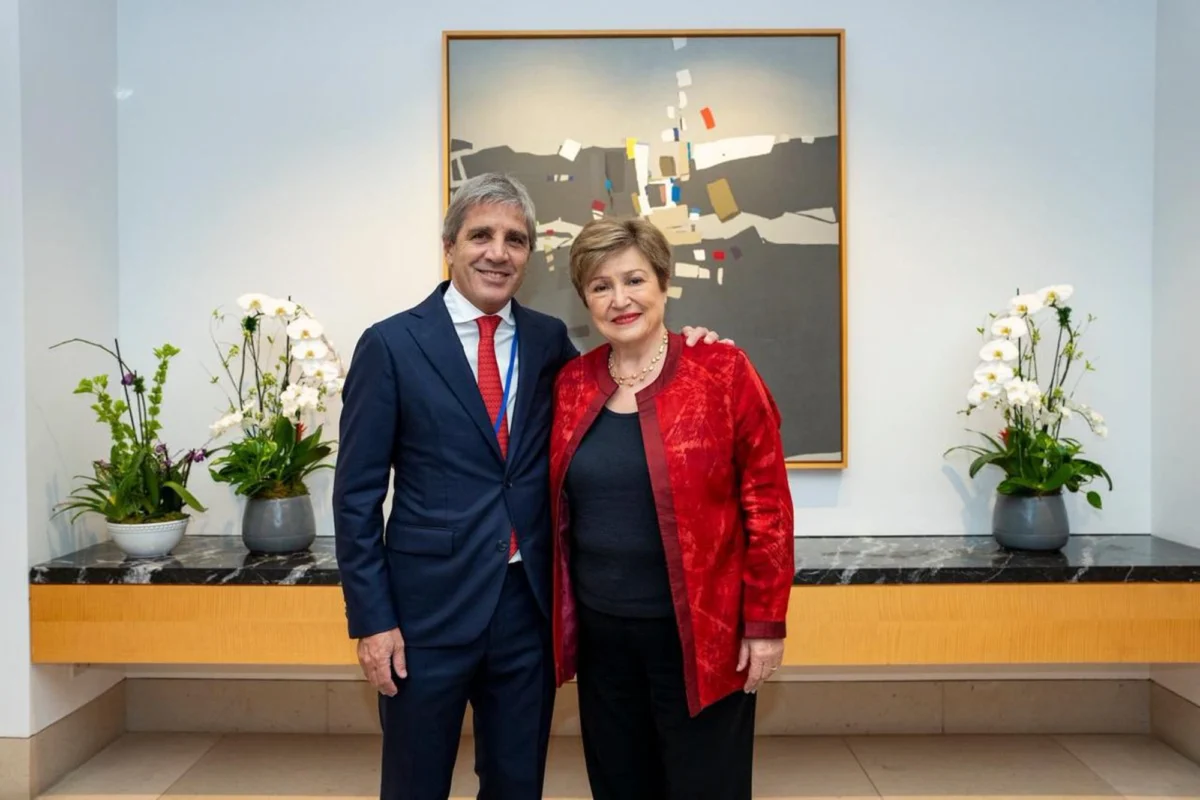
Argentina Secures Crucial IMF Approval for Second Review, Paving Way for $1 Billion Disbursement and Signaling Multilateral Support
WASHINGTON D.C. – Following the International Monetary Fund’s (IMF) approval of the second review of its agreement with Argentina, coupled with significant financial backing from multilateral organizations to finance sovereign debt, Argentine Minister of Economy Luis Caputo garnered further endorsement for the government’s economic program during a high-stakes meeting in Washington with IMF Managing Director Kristalina Georgieva. The positive reception underscores a strengthened relationship between Argentina and the international financial community, even as the South American nation navigates persistent inflationary pressures and global economic headwinds.
The meeting, described by Caputo as "very pleasant" and characterized by a "relationship of trust," took place just hours after IMF officials lauded the progress made under the second review. This review, currently en route to the IMF’s Executive Board for formal ratification, is expected to unlock a crucial $1 billion disbursement for Argentina. Furthermore, IMF projections indicate a forthcoming "process of disinflation" in Argentina, a projection made despite a recent uptick in the consumer price index in March, a testament to the Fund’s forward-looking assessment of the government’s policy trajectory.
Caputo, accompanied by a high-level delegation including Central Bank President Santiago Bausili, Vice Minister of Economy José Luis Daza, and Central Bank Vice President Vladimir Werning, engaged in an in-depth discussion with Georgieva. The productive exchange, lasting over an hour, focused on the current state of Argentina’s economy and key pillars of its ambitious economic program. Caputo conveyed that Georgieva was "super impressed with the achievements," highlighting a mutual recognition of the substantial policy shifts implemented by the current administration.
"It’s a very close, very cordial, very professional relationship, so it always goes that way," Caputo had stated prior to the meeting, emphasizing the deep trust fostered by the government’s consistent delivery on its stated objectives. This sentiment of mutual confidence was palpable during the discussions held at the IMF headquarters.
The meeting with Georgieva was a central event during Caputo’s multi-day visit to Washington, D.C., coinciding with the Spring Meetings of the IMF and the World Bank. This period is crucial for global economic dialogue and for individual nations to engage with international financial institutions.
While a preliminary discussion on inflation had occurred earlier in the week between Caputo and Georgieva shortly after the Minister’s arrival, the focus of their recent meeting shifted. Caputo clarified that Georgieva’s primary concern was not solely Argentina’s domestic inflation, but rather the broader implications of "external shocks," referencing the ongoing geopolitical conflict in the Middle East and its ripple effects on global commodity prices and supply chains.
Caputo elaborated on this point, explaining that external shocks can often expose vulnerabilities in economic policies. He stated, "Argentina has suffered this many times, and what ends up happening is that sometimes the external shock exposes the vulnerabilities of economic policies. We are not oil importers, but if we had a disorderly macroeconomy, this shock would have impacted us brutally." This statement underscores the IMF’s emphasis on robust macroeconomic fundamentals as a buffer against external volatility.
Georgieva’s concern, as articulated by Caputo, was rooted in preventing the exacerbation of these vulnerabilities. "Her concern is a bit like that. It’s saying, don’t be complacent, don’t start implementing loose fiscal policies, because then you’ll add fuel to the fire. Because if in this context you start spending more and if you start increasing debt levels, then interest rates will continue to rise, debts will become unsustainable, and the spillover effect will end up being worse than the shock itself." This reflects the IMF’s persistent advocacy for fiscal discipline, particularly in an environment susceptible to global economic turbulence.
A significant development highlighted in the discussions was the Argentine government’s strategic decision to refrain from issuing debt in international markets at current high-interest rates. This approach has been bolstered by recent agreements secured during Caputo’s Washington trip with the World Bank and the Inter-American Development Bank (IDB). These agreements are designed to provide guarantees that will facilitate private sector funding, with the government anticipating an aggregate of approximately $4 billion at interest rates ranging between 5.5% and 6.5%.
"They understood it perfectly, they gave us the right [to proceed this way], and we told them that when the time was right, we would rebuild reserves, taking into account the economic situation and the depth of the market," Caputo remarked. He further explained the rationale behind this strategy: "Going out to issue at those rates [in the market, which are around 9%] when we can refinance at lower rates is not beneficial for the country. It also improves the technical conditions of the market."
Caputo also pointed to a less frequently discussed but crucial advantage: "And at the same time, something that is said little, the passage of time works in our favor, because the economic fundamentals are improving. And eventually, when the country risk compresses and is at a more reasonable rate, then we can return to the market." This indicates a long-term vision for Argentina’s re-entry into international capital markets, contingent on sustained economic stabilization and reduced risk premiums.
Looking ahead, the IMF’s perspective, as articulated by Luis Cubeddu, Deputy Director of the Western Hemisphere Department and a key official in negotiations with Argentina, is that the mobilization of financing, coupled with the implementation of the economic program and increased reserve accumulation, will lead to "a reduction in risk differentials (spreads) and, over time, timely and more sustainable access to international capital markets." This outlook signals a gradual but optimistic path towards re-establishing Argentina’s creditworthiness on the global stage.
This revised timeline for market access is a notable shift from earlier assessments. During the first review of the program in mid-2023, the IMF had suggested a return to international markets should occur around "early 2026." The recent communication regarding the second review indicates a more flexible timeframe, suggesting "over time" an expectation of "timely and sustainable access to international capital markets."
Cubeddu provided a concrete timeline for the next procedural step, stating that the second review is slated to be presented to the IMF’s Board "sometime between early and mid-May." He confirmed, "We are currently in the full process of preparing the necessary documentation for this purpose," underscoring the operational momentum behind the agreement.
The approval of the second review signifies Argentina’s adherence to the stringent performance criteria set forth in the IMF program. These criteria typically include targets for fiscal deficits, net international reserves, and inflation, among others. Successful completion of reviews demonstrates a government’s commitment to fiscal discipline, monetary control, and structural reforms aimed at fostering sustainable economic growth.
Argentina’s current Stand-By Arrangement with the IMF, valued at approximately $44 billion, has been a critical tool for the nation to manage its substantial debt obligations and stabilize its economy. The program’s success hinges on a delicate balance of austerity measures and structural reforms designed to address deep-seated economic challenges, including chronic inflation, a fiscal deficit, and external debt servicing.
The recent IMF endorsement is particularly significant given Argentina’s history of economic volatility and frequent recourse to IMF assistance. The current administration, led by President Javier Milei, has embarked on an aggressive reform agenda characterized by significant fiscal adjustments, including substantial cuts to public spending, and a move towards a more flexible exchange rate regime. These policies, while often socially challenging in the short term, have been central to the government’s strategy to restore macroeconomic stability.
The support from other multilateral development banks, such as the World Bank and the IDB, further solidifies Argentina’s position. These institutions play a vital role in financing development projects and providing policy advice, and their continued engagement with Argentina signals a broader international commitment to the country’s economic recovery. The structured financing mechanisms being employed, leveraging guarantees to attract private capital at favorable rates, represent an innovative approach to debt management in a challenging global financial environment.
The projected disinflationary trend, if realized, would be a major victory for the Argentine government and a critical step towards improving the living standards of its citizens. High inflation has eroded purchasing power for years, and its reduction is a paramount objective for social and economic stability. The IMF’s forward-looking assessment, while acknowledging current inflation figures, suggests that the underlying policy framework is conducive to a sustained decline in price pressures.
However, the path forward remains complex. Argentina must continue to navigate the social implications of its austerity measures, manage external economic shocks, and maintain fiscal discipline to ensure the long-term sustainability of its economic program. The ongoing dialogue with the IMF and other international partners will be crucial in guiding these efforts and securing the necessary financial and technical support.
The successful completion of the second review and the anticipated disbursement of funds provide much-needed breathing room for Argentina’s fiscal accounts, allowing the government to meet its debt obligations and fund essential public services. It also sends a positive signal to international investors, potentially paving the way for increased foreign investment in the medium to long term, once market conditions become more favorable.
The strategic decision to avoid costly international borrowing at present, while securing alternative funding through multilateral guarantees, reflects a pragmatic approach to debt management. This strategy aims to optimize financing costs and reduce the country’s exposure to volatile international capital markets. It also underscores the government’s commitment to rebuilding Argentina’s economic fundamentals before aggressively tapping global debt markets.
The IMF’s emphasis on the "passage of time" as a factor working in Argentina’s favor is a recognition of the gradual nature of economic stabilization. As fiscal accounts improve, inflation subsides, and confidence in the economic program grows, the country risk premium is expected to decline, making borrowing more affordable and sustainable.
In conclusion, the IMF’s approval of the second review marks a significant milestone in Argentina’s economic stabilization efforts. The positive engagement with Kristalina Georgieva and the broader multilateral financial community underscores the international recognition of the government’s policy commitments. While challenges persist, the program’s continued progress offers a hopeful outlook for Argentina’s economic future, characterized by a gradual return to financial stability and sustainable growth. The next steps, including the formal Board approval and the potential for further disbursements, will be closely watched by markets and stakeholders alike.

Related Posts

The Electric Vehicle Battery Health Debate Emerges as Argentina’s EV Market Accelerates

President Donald Trump Confirms Secret Departure from Turkey Amidst Assassination Threat