Pese a la suba de marzo, el FMI pronosticó una baja de la inflación en los próximos meses
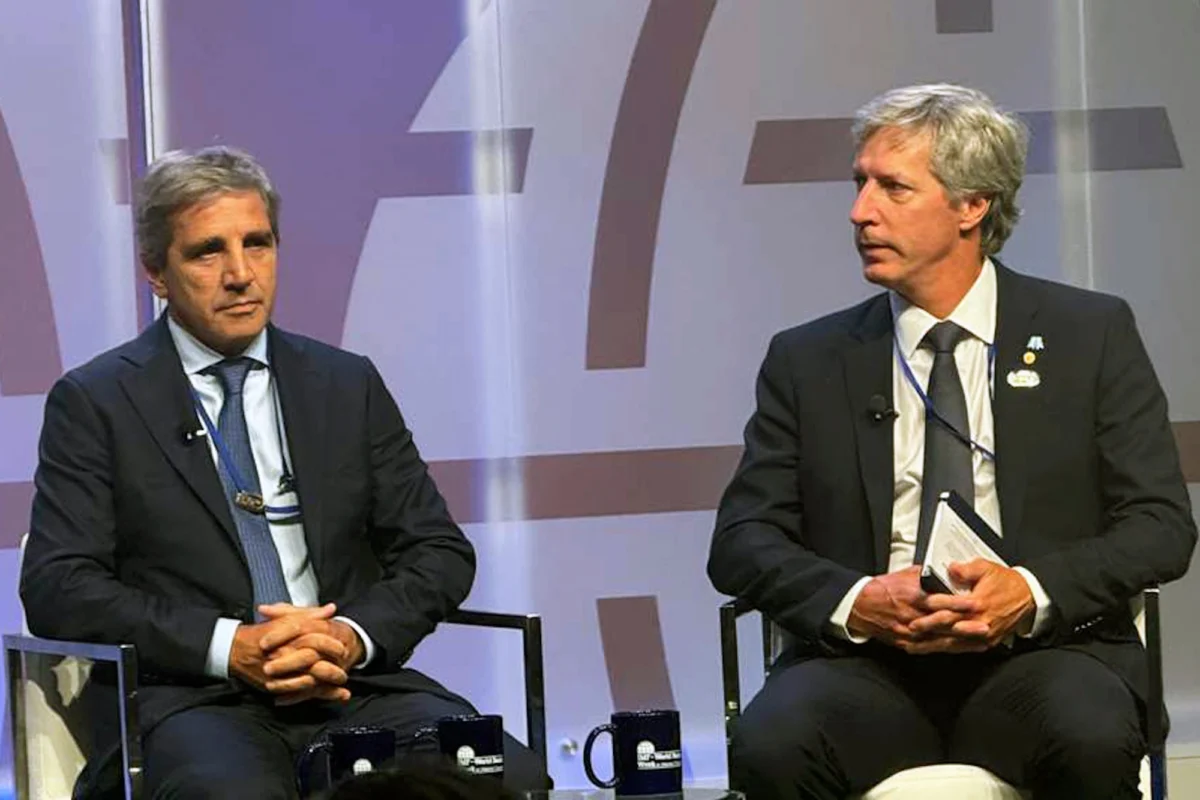
Washington D.C. – Following the pivotal approval of the second review of its Extended Fund Facility (EFF) arrangement with Argentina, which paves the way for a crucial US$1 billion disbursement, the International Monetary Fund (IMF) has projected a forthcoming "disinflationary process" for the South American nation. This optimistic outlook is underpinned by the Fund’s expectation of prudent fiscal policies and is further bolstered by the Argentine government’s comprehensive global financial strategy for the current year. This strategy prominently features guarantees from multilateral organizations, a key component recently announced in Washington by the Minister of Economy, Luis Caputo.
The IMF’s assessment comes at a critical juncture for Argentina, a country grappling with persistently high inflation and seeking to stabilize its economy under a new administration. The successful completion of the second review signifies a significant step in the ongoing dialogue and collaboration between Argentina and the IMF, aiming to restore macroeconomic stability and foster sustainable growth.
IMF Officials Emphasize Positive Developments and Future Outlook
Nigel Chalk, Director of the IMF’s Western Hemisphere Department, characterized the agreement as "very positive for both Argentina and the Fund," highlighting the "very productive conversations" held with the Argentine government and the "close collaboration" that continues. Speaking at a press conference at the Fund’s headquarters in Washington, Chalk elaborated on the positive momentum observed.
"I believe what has happened throughout this year represents a very positive political impulse for the country," Chalk stated. He specifically pointed to the approval of the national budget as a significant achievement, alongside a substantial labor reform. Furthermore, Chalk noted the ongoing accumulation of foreign exchange reserves, a direct result of the Central Bank’s consistent efforts in the market to acquire them. He also acknowledged recent "technical improvements in their monetary operations," which the IMF had previously requested and deemed "very valuable."
Luis Cubeddu, Deputy Director of the Western Hemisphere Department, addressed the recent acceleration in Argentina’s inflation rate. In March, the Consumer Price Index (CPI) registered a 3.4% increase, marking the tenth consecutive month of rising inflation. Cubeddu explained that this uptick reflects a confluence of factors, including the global surge in energy prices, seasonal price adjustments in sectors like education, and the gradual correction of regulated prices as authorities work to address underlying relative price imbalances.
"Therefore, there are reasons that explain the increase in inflation that we witnessed in March," Cubeddu remarked. "We project that in the coming months, a process of disinflation will develop. High-frequency indicators for April suggest this will indeed be the case." He emphasized that this projected disinflationary trend will be supported by "prudent fiscal policies, underpinned by a very solid fiscal anchor—whose credibility, as you know, is strengthening—and also by improvements in the monetary policy framework, which will contribute to bolstering the process of remonetization of the economy."
Cubeddu further noted that inflation expectations, particularly those projected for a 12-month horizon, remain relatively well-anchored, hovering around 25%. This level, he indicated, is "relatively consistent with our forecasts for the current year."
Argentina’s Multifaceted Financial Strategy
Regarding Argentina’s financing strategy and alternative funding sources, Cubeddu referred to the details previously outlined in the Fund’s staff-level agreement press release. He described a "multifaceted strategy" with several key components. The first involves mobilizing dollar financing from local domestic markets. The second centers on the sale of state assets or privatization initiatives. The third mechanism entails repurchase operations (repos) conducted by the Central Bank. Crucially, the fourth component involves securing loans from commercial banks that are guaranteed by multilateral development banks such as the World Bank and the Inter-American Development Bank (IDB). "We consider this aspect to be equally essential and of equal importance for the global financial strategy planned for this year," Cubeddu emphasized.
Nigel Chalk also highlighted the government’s "continuous effort to eliminate distortions in the economy, open it to the outside world, and increase productivity." He pointed to the energy sector as an area where these efforts are already yielding tangible results, noting that "Argentina is now an energy exporter." This development, he added, is "extremely valuable in the current circumstances, where higher prices for energy are being obtained," implicitly referencing the geopolitical impact of the conflict in the Middle East on global energy markets.
Addressing the Waiver and Pending Measures
Chalk addressed concerns regarding the finalization of pending measures, stating that they "do not constitute a major problem." He explained that the IMF team has been working diligently, resolving "some technical aspects related to the process of presenting the program to the board, as well as the review of certain documentary details."
A key point of discussion has been the potential granting of a waiver to Argentina for failing to meet its reserve accumulation target for the previous year. Chalk clarified that "this is a decision that rests with our board of directors." He elaborated, "We will submit the proposal to the board, and they will be the ones to decide, at the appropriate time, on the matter of the waiver." He reiterated that the IMF views the established framework as "a solid and coherent macroeconomic framework that will be fundamental to continuing the path of improvement that Argentina is on, something that, in my judgment, is already being reflected in the markets."
Revisions to Fiscal and Reserve Targets
The IMF’s announcement on Wednesday also revealed adjustments to Argentina’s fiscal and reserve targets within the EFF arrangement. The primary fiscal surplus target for 2026 has been revised downwards from 2.2% of GDP to 1.4%. On the external front, the agreement now targets an increase in net international reserves of US$8 billion by the end of the year. This target is supported by efforts to mobilize foreign currency financing and maintain Central Bank foreign currency purchases at a minimum of US$10 billion for the year, aligning with the ongoing remonetization of the economy.
Background and Context: The EFF Arrangement
Argentina’s current Stand-By Arrangement (SBA) with the IMF, approved in March 2022, was designed to address the country’s significant external debt inherited from a previous large loan. The EFF, a more comprehensive program, typically involves longer repayment periods and is intended for countries facing protracted balance of payments problems. The program aims to support Argentina’s efforts to restore macroeconomic stability, reduce inflation, rebuild foreign exchange reserves, and implement structural reforms to foster sustainable economic growth.
The EFF arrangement requires Argentina to meet specific performance criteria and structural benchmarks, which are reviewed periodically by the IMF. These reviews are crucial for unlocking tranches of financial assistance and for demonstrating the government’s commitment to the agreed-upon economic program. The approval of the second review signifies that Argentina has met the conditions set for this stage of the program, providing a much-needed injection of funds and a boost to market confidence.
The initial EFF arrangement was for approximately US$44 billion. Subsequent reviews have focused on ensuring adherence to fiscal targets, monetary policy objectives, and structural reforms aimed at improving the business climate and enhancing competitiveness. The current administration, which took office in December 2023, has emphasized a more orthodox approach to economic management, prioritizing fiscal consolidation and the reduction of inflation as key pillars of its economic policy.
Broader Implications and Market Reactions
The IMF’s positive assessment and the impending disbursement are expected to provide significant relief to the Argentine government, easing immediate financing pressures and bolstering its credibility in international financial markets. The projected disinflationary process, if realized, would be a critical victory for the administration, which has made controlling inflation its paramount economic objective.
The strategy of leveraging guarantees from multilateral development banks for commercial loans is a testament to the government’s innovative approach to securing financing in a challenging global economic environment. Such guarantees can significantly de-risk investments for commercial lenders, making it more feasible for Argentina to access capital.
The emphasis on opening the economy and increasing productivity, as highlighted by Chalk, points towards a longer-term vision of structural transformation. Argentina’s emergence as an energy exporter is a prime example of how policy adjustments can unlock new avenues for economic growth and export revenue.
While the IMF board’s decision on the waiver for the reserve target remains pending, the Fund’s acknowledgement of the government’s efforts and the overall positive assessment of the macroeconomic framework suggest a favorable outcome. The markets, which have been closely watching Argentina’s progress, are likely to interpret these developments as a sign of increased stability and a commitment to sound economic policies, potentially leading to further improvements in investor sentiment and asset prices.
The upcoming meeting between Minister Caputo and IMF Managing Director Kristalina Georgieva at the Spring Meetings in Washington underscores the continued high-level engagement between Argentina and the international financial community. These discussions are vital for solidifying the path forward and addressing any remaining challenges in the implementation of the economic program.
Argentina’s economic trajectory remains under intense scrutiny, but the IMF’s latest pronouncements offer a glimmer of optimism, suggesting that the country is on a path towards macroeconomic stabilization and a more sustainable economic future. The success of the projected disinflationary process and the effective execution of the outlined financial strategy will be crucial determinants of Argentina’s economic performance in the coming months and years.

Related Posts

Argentina’s Captain Lionel Messi to Forego National Team Celebrations for Club Commitments

Chaos Erupts at Obelisco: Celebrations for World Cup Final Descend into Violent Clashes with Police