Resilient Climate Action Persists Across American Society Despite Federal Opposition Says Clark University Climate Expert
The landscape of American climate policy has undergone a profound transformation as of April 2026, characterized by an intensifying friction between federal directives and decentralized action. Lou Leonard, a prominent environmental lawyer and dean of the climate school at Clark University, observes that while Washington D.C. has launched a concerted campaign to dismantle national climate frameworks, these efforts have failed to extinguish the momentum of the broader American society. Leonard’s assessment comes at a critical juncture where the United States’ official stance on the global stage increasingly diverges from the operational realities of its states, municipalities, and private sector. This internal dichotomy is defining the American response to the escalating climate crisis, even as federal pressure begins to influence international financial institutions and global energy forecasts.

The Resilience of Sub-National Climate Frameworks
The core of Leonard’s argument rests on the structural "stickiness" of climate initiatives embedded within the American economy and legal system. Since the mid-2020s, a significant portion of the United States’ progress in emissions reduction has been driven not by federal mandates, but by market forces and state-level legislation. Leonard points out that the "attacks" from Washington—ranging from the proposed repeal of clean energy tax credits to the systematic removal of climate scientists from federal agencies—have met with stiff resistance from a coalition of governors and corporate leaders who view the transition to a low-carbon economy as an economic necessity rather than a political choice.
In states like California, New York, and Washington, climate goals have been codified into law, creating a regulatory environment that remains insulated from the volatility of federal administrations. These states, which collectively represent a significant portion of the global GDP, have continued to implement aggressive renewable energy portfolios and electric vehicle mandates. Furthermore, the private sector has largely stayed the course, driven by the need to remain competitive in a global market that is increasingly defined by carbon transparency and sustainability standards.

A Chronology of Federal Retrenchment and Global Reaction
The current state of climate politics in 2026 is the result of a series of rapid policy shifts that began in late 2024 and accelerated throughout 2025. To understand the present tension, it is essential to trace the timeline of these developments:
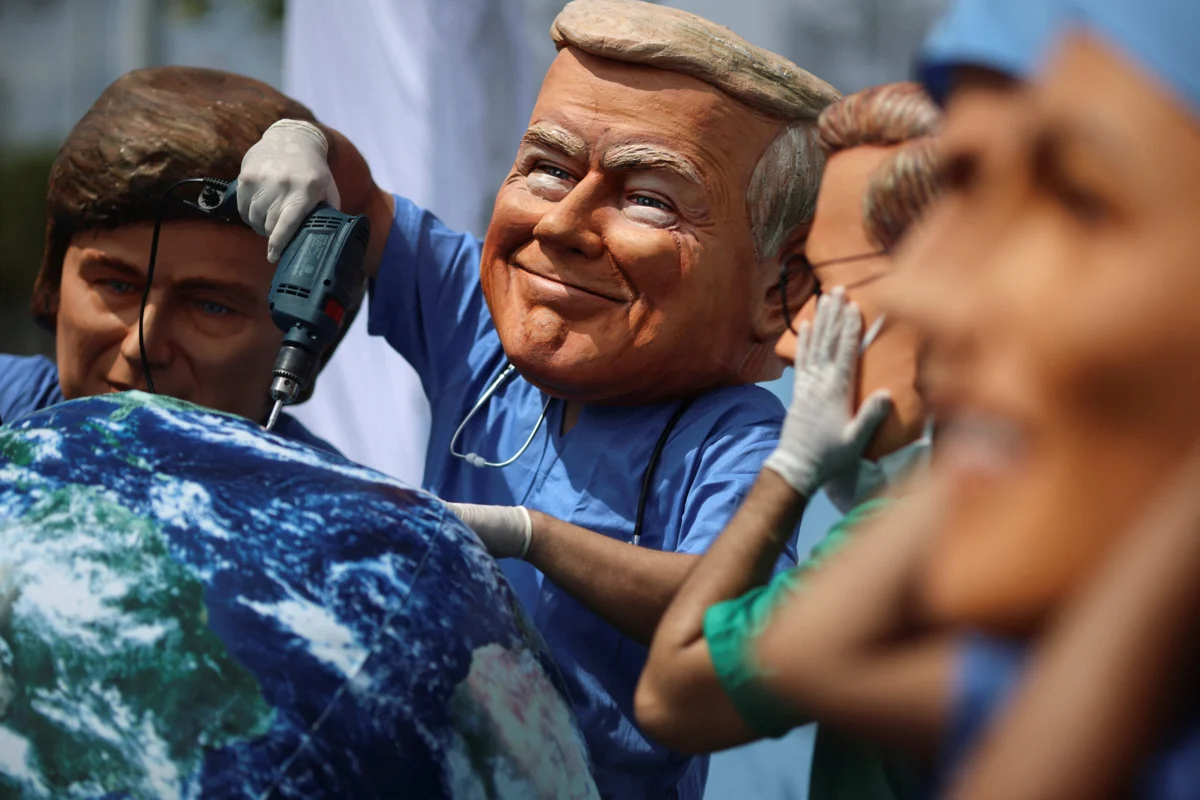
- November 2025 (COP30, Belem): During the United Nations Climate Change Conference in Brazil, activists from Oxfam and other NGOs staged dramatic protests, symbolizing a "dying Planet Earth" in response to what they perceived as a vacuum of leadership from major emitters, including the United States. While the U.S. federal delegation remained largely silent on new commitments, a "shadow delegation" of American mayors and CEOs reaffirmed their commitment to the Paris Agreement goals.
- January 2026: Washington began a formal review of the Inflation Reduction Act’s remaining funds, signaling an intent to redirect capital away from green hydrogen and carbon capture projects toward conventional fossil fuel expansion.
- March 2026: Reports emerged from the World Bank indicating that U.S. representatives were pressuring the institution to scrap its "green targets." These closed-door negotiations sought to pivot the Bank’s lending portfolio back toward coal and natural gas infrastructure in developing nations, arguing for "energy security" over "climate ideology."
- April 2026: The International Energy Agency (IEA) issued a landmark report slashing its oil demand forecast by nearly one million barrels per day. Paradoxically, this was not due to climate policy but to the economic fallout of the ongoing conflict in the Middle East, specifically involving Iran. The "Iran war" has upended global energy markets, forcing a forced reduction in consumption that may inadvertently lock in long-term emissions declines.
The World Bank Standoff and International Pressure
The most significant external manifestation of Washington’s new climate stance is the current deadlock at the World Bank. For years, the World Bank has been a cornerstone of global climate finance, aiming to align its entire portfolio with the goals of the Paris Agreement. However, the U.S. push to expand support for fossil fuels has brought the institution’s climate agenda to a standstill.

Developing nations, particularly those in the Global South, have reacted with alarm. Many of these countries are currently trapped in a "broken debt system," where the cost of servicing international loans leaves zero fiscal space to navigate climate disasters. A new UN-supported forum has been proposed to challenge this status quo, but the U.S. position at the World Bank threatens to undermine these efforts. Proponents of the green transition argue that by abandoning climate targets, the World Bank risks saddling developing nations with "stranded assets"—fossil fuel infrastructure that will become economically unviable as the rest of the world moves toward renewables.
Market Dynamics: The IEA and the Impact of Conflict
While Washington attempts to revive the fossil fuel era, global market dynamics are moving in the opposite direction, often driven by unforeseen geopolitical crises. The IEA’s recent decision to slash oil demand forecasts highlights a shift in how governments and consumers respond to volatility. As the war involving Iran disrupts traditional supply chains, the resulting price spikes have acted as a catalyst for efficiency measures and a pivot toward domestic renewable energy sources in Europe and Asia.

This "forced transition" illustrates a key point in Leonard’s analysis: federal policy can attempt to steer the ship, but it cannot ignore the prevailing winds of global economics. In the U.S., despite federal rhetoric favoring oil and gas, the high cost of conventional energy during times of conflict makes solar and wind power increasingly attractive to utilities and consumers alike. The IEA data suggests that the demand reductions triggered by the 2026 energy crisis could become permanent, effectively doing the work that federal policy has abandoned.
Global Counterweights: Brazil, the EU, and Rare Earths
As the U.S. federal government retreats from climate leadership, other global players are stepping in to fill the void, often with policies that create "green" pressure on American businesses.

- The EU Carbon Tax: The European Union’s Carbon Border Adjustment Mechanism (CBAM) has begun to penalize importers from countries with lax climate regulations. This has created a significant incentive for American manufacturers to maintain low-carbon production processes to avoid losing access to the European market. Leonard notes that this "regulatory export" from the EU is a powerful check on Washington’s attempts to deregulate the domestic industry.
- Brazil’s Rare Earth Push: In Brazil, lawmakers are pushing for the creation of a state-owned developer for rare earth minerals. These minerals are essential for wind turbines, electric vehicle motors, and other green technologies. As the U.S. and China compete for these resources, Brazil is positioning itself as a central hub for the green tech supply chain. This move by the Lula administration (and its successors leading into COP30) demonstrates that the global "green race" is continuing unabated, regardless of the U.S. federal stance.
- The Deforestation Roadmap: At the international level, a Brazil-led roadmap aims to rescue the global pledge to halt deforestation by 2030. This initiative connects forest preservation with the transition away from fossil fuels, particularly in the Amazon and Congo basins. Even without active U.S. federal support, these international frameworks are creating new standards for corporate accountability that American multinationals must follow.
Analysis of Implications: A Divided Climate Future
The current situation suggests a bifurcated future for climate action in the United States. On one hand, the federal government’s "attacks" are causing real damage to international cooperation and slowing the deployment of federal capital toward emerging technologies. The pressure on the World Bank, in particular, threatens to leave the world’s most vulnerable populations without the resources needed for adaptation.
On the other hand, the resilience Leonard describes is a testament to the decentralization of power in the American system. The "real economy"—composed of states, cities, and major corporations—is increasingly decoupled from the ideological shifts in Washington. For many business leaders, the transition is no longer about environmentalism; it is about risk management and seizing the opportunities of a multi-trillion-dollar global market for clean energy.

The legal expertise Leonard brings to the discussion is also crucial. He suggests that the 2026 legal landscape will be defined by litigation, as states and environmental groups challenge federal rollbacks in court. The "Chevron deference" debates of years past have evolved into a complex web of administrative law battles that will determine the extent to which a president can unilaterally dismantle climate regulations.
Conclusion
As the world looks toward COP31 in Antalya, Türkiye, the United States remains a nation at odds with itself. Lou Leonard’s observations provide a nuanced perspective: while the federal government may have abdicated its role as a climate leader, the "spirit of climate action" is deeply embedded in the American societal fabric. The combined forces of sub-national policy, international trade pressure (like the EU’s CBAM), and the harsh realities of a volatile global energy market are ensuring that the transition continues, albeit in a more fragmented and contested manner. The story of 2026 is not one of climate surrender, but of a decentralized and resilient movement that persists despite the most significant political opposition in a generation.

Related Posts
Constitutional Court of South Africa Bars Shell Oil Exploration in Landmark Victory for Environmental and Community Rights

The Battle for Saldanha Bay: South Africa’s Ambitious Ocean Economy Strategy Faces Legal and Environmental Reckoning