
Global Energy Crisis Deepens as Iran Conflict Triggers Permanent Shifts in Fossil Fuel Demand and Carbon Emissions
The escalation of military conflict in the Persian Gulf throughout the first quarter of 2026 has sent shockwaves through the global economy, forcing a radical reappraisal of energy security and accelerating a shift away from fossil fuels that experts believe may be permanent. As of April 15, 2026, the protracted instability surrounding Iranian territory and the critical maritime corridors of the Strait of Hormuz has resulted in the most significant disruption to global oil and gas supplies since the 1970s. However, unlike previous energy shocks, the current crisis is occurring in an era of viable green alternatives, leading governments and consumers to implement drastic demand-reduction measures that are inadvertently locking in a lower trajectory for planet-heating emissions.
The Genesis of the Crisis: A Chronology of Escalation
The path to the current market upheaval began in late 2025, following the collapse of multi-lateral diplomatic efforts regarding regional security and nuclear proliferation. By January 2026, a series of maritime skirmishes in the Gulf of Oman led to a sharp increase in insurance premiums for tankers, effectively chilling commercial traffic. On February 12, 2026, the situation transitioned into a full-scale kinetic conflict, involving targeted strikes on energy infrastructure and the subsequent closure of the Strait of Hormuz—a chokepoint through which approximately 21 million barrels of oil per day, or roughly 21% of global petroleum liquid consumption, typically flows.
By March 2026, the global Brent crude benchmark surged past $160 per barrel, nearly doubling its price from the previous year. Natural gas prices followed a similar trajectory, particularly in European and Asian markets that rely heavily on Liquified Natural Gas (LNG) shipments from the region. The immediate reaction from the international community was one of emergency mitigation; the International Energy Agency (IEA) coordinated a record-breaking release of strategic petroleum reserves, yet the volume was insufficient to offset the total loss of Iranian and neighboring regional exports.
Market Disruptions and Supporting Data
The impact on global energy markets has been categorized by analysts as a "structural break" rather than a temporary spike. According to data released by the World Bank in early April, global GDP growth projections for 2026 have been revised downward by 1.8 percentage points, primarily due to the inflationary pressure of energy costs. In the United States, the average price of gasoline reached a record $6.50 per gallon, while in the European Union, household electricity bills have risen by an average of 45% compared to April 2025.
The supply-side shock is illustrated by the following figures:
- Global Supply Deficit: An estimated 5.5 million barrels per day have been removed from the global market due to sanctions and combat-related infrastructure damage.
- Shipping Rerouting: Tankers diverting around the Cape of Good Hope have added 12 to 15 days to transit times, increasing the "oil on water" volume and further tightening immediate spot market availability.
- Industrial Curtailment: In Germany and Northern Italy, energy-intensive industries including steel, chemicals, and glass manufacturing have reported a 30% reduction in output as high input costs render production uneconomical.
Government Policy and the Pivot to Efficiency
Faced with the prospect of a prolonged conflict, governments have moved beyond emergency subsidies to implement long-term demand destruction policies. In Brussels, the European Commission has fast-tracked the "Emergency Energy Sovereignty Act," which mandates a 15% reduction in natural gas consumption across all member states through 2027. This includes accelerated bans on new gas boiler installations and subsidized retrofitting of heat pumps.

In the United States, the administration has invoked the Defense Production Act to scale up the domestic manufacturing of electric vehicle (EV) batteries and long-duration energy storage. The goal is to insulate the American economy from future "geopolitical oil shocks." Japan and South Korea, both heavily dependent on Middle Eastern imports, have announced a "Green Acceleration" program, shifting billions in capital from traditional infrastructure to offshore wind and hydrogen development.
These policy shifts are not merely temporary fixes. "We are seeing a fundamental decoupling of economic activity from fossil fuel consumption," says Dr. Elena Rossi, a senior energy analyst at the Global Energy Institute. "In 2008, high prices led to more drilling. In 2026, high prices are leading to more insulation, more EVs, and more renewables. Once a household switches to a heat pump or an electric car, that demand for oil and gas does not come back, even if prices eventually drop."
Consumer Behavior and the "Green Shift" by Necessity
The psychological impact of the 2026 Iran war on consumers has been profound. For the first time, the transition to green energy is being framed globally not just as a climate imperative, but as a matter of immediate economic survival and national security.
Retail data from March 2026 shows a 400% year-over-year increase in inquiries for residential solar installations in North America and Europe. In China, the world’s largest car market, EV market share for new car sales hit an unprecedented 65% in the first quarter of the year, as consumers fled the volatility of the internal combustion engine.
Public transportation systems in major metropolitan areas have reported record ridership levels as commuters abandon private vehicles. In cities like Paris, London, and New York, "car-free" initiatives that were once controversial have gained widespread public support as a means of reducing the national fuel bill. This shift in consumer habits is estimated to have reduced global oil demand by nearly 2 million barrels per day through behavioral changes alone—a reduction that climate scientists note is equivalent to the total annual emissions of several mid-sized industrial nations.
Official Responses and Geopolitical Realignment
The international response to the crisis has been divided between immediate crisis management and long-term strategic pivoting. UN Secretary-General António Guterres, speaking at an emergency session in New York, stated: "The tragic conflict in the Middle East is a stark reminder of the frailty of a civilization built on the foundations of fossil fuels. We must use this moment of crisis to break our addiction and ensure that the energy systems of tomorrow are built on the stability of the sun and the wind."
OPEC+ members have struggled to reach a consensus on how to handle the volatility. While some member nations have benefited from the surge in prices, others fear that the current price levels are destroying long-term demand. A spokesperson for the Saudi Ministry of Energy noted that "extreme volatility is in no one’s interest," though the kingdom has found it difficult to fill the supply vacuum left by the conflict due to technical constraints and regional security risks.

In Washington, the bipartisan consensus has shifted toward "Energy Isolationism," with a focus on North American self-sufficiency. However, this has created friction with traditional allies in Asia and Europe who feel abandoned by the U.S. domestic focus. This friction has accelerated the "Multipolar Energy World," where regional blocs are forming their own energy security alliances based on shared renewable grids and mineral supply chains for green technology.
Broader Impact: A Silver Lining for the Climate?
While the human and economic cost of the Iran war is devastating, climate scientists are observing a potential turning point in the fight against global warming. The massive reduction in fossil fuel demand, if sustained, could bring the world closer to the goals of the Paris Agreement than any previous diplomatic effort.
The IEA’s preliminary report for the first half of 2026 suggests that global CO2 emissions could drop by as much as 4.5% this year. Unlike the temporary dip seen during the 2020 pandemic, which was caused by a cessation of activity, the 2026 decline is being driven by structural changes—efficiency gains, electrification, and the retirement of aging fossil fuel assets that have become too expensive to operate.
"We are essentially witnessing a decade’s worth of energy transition compressed into six months," says Marcus Thorne, a climate economist. "The ‘lock-in’ effect is the most significant factor here. When you replace a coal plant with a wind farm because the coal supply is unreliable and expensive, you don’t go back to coal. The infrastructure of the 20th century is being dismantled in real-time by the geopolitical realities of the 21st."
Conclusion: Navigating a Volatile Future
As the conflict continues into the mid-year, the global community remains in a state of high alert. The immediate priority remains the cessation of hostilities and the stabilization of global markets to prevent a full-scale humanitarian crisis in energy-poor developing nations. However, the legacy of the 2026 Iran war is already clear: the era of cheap, reliable, and politically uncomplicated fossil fuels is over.
The "demand destruction" witnessed over the past few months is likely to be the foundation of a new global energy order. While the path to this new reality has been paved with volatility and economic hardship, the resulting acceleration of the green transition offers a rare glimmer of hope for the long-term health of the planet. Governments now face the dual challenge of managing the immediate economic fallout of the war while ensuring that the momentum toward a decarbonized future is not lost when the guns eventually fall silent.
The decisions made in the coming months will determine whether the emissions reductions of 2026 are a temporary anomaly or the beginning of the end for the fossil fuel age. For now, the world watches the Persian Gulf, recognizing that the price of oil is no longer just a number on a ticker, but a catalyst for a global transformation that was once thought to be decades away.

Related Posts
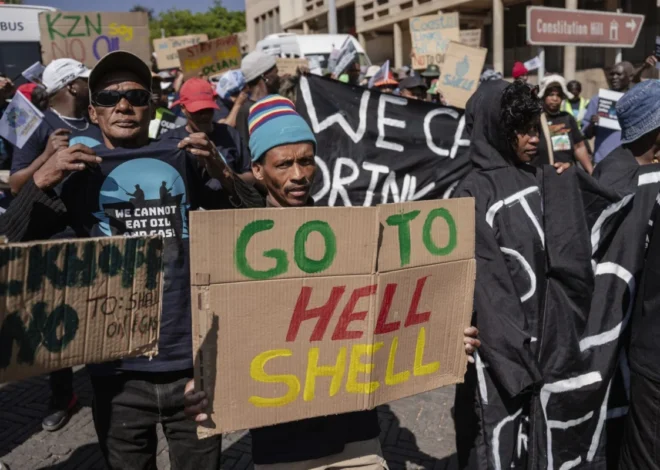
Constitutional Court of South Africa Bars Shell Oil Exploration in Landmark Victory for Environmental and Community Rights

The Battle for Saldanha Bay: South Africa’s Ambitious Ocean Economy Strategy Faces Legal and Environmental Reckoning