France Validates Mobile Command Innovation and High-Intensity Readiness in Landmark Orion 26 Exercise
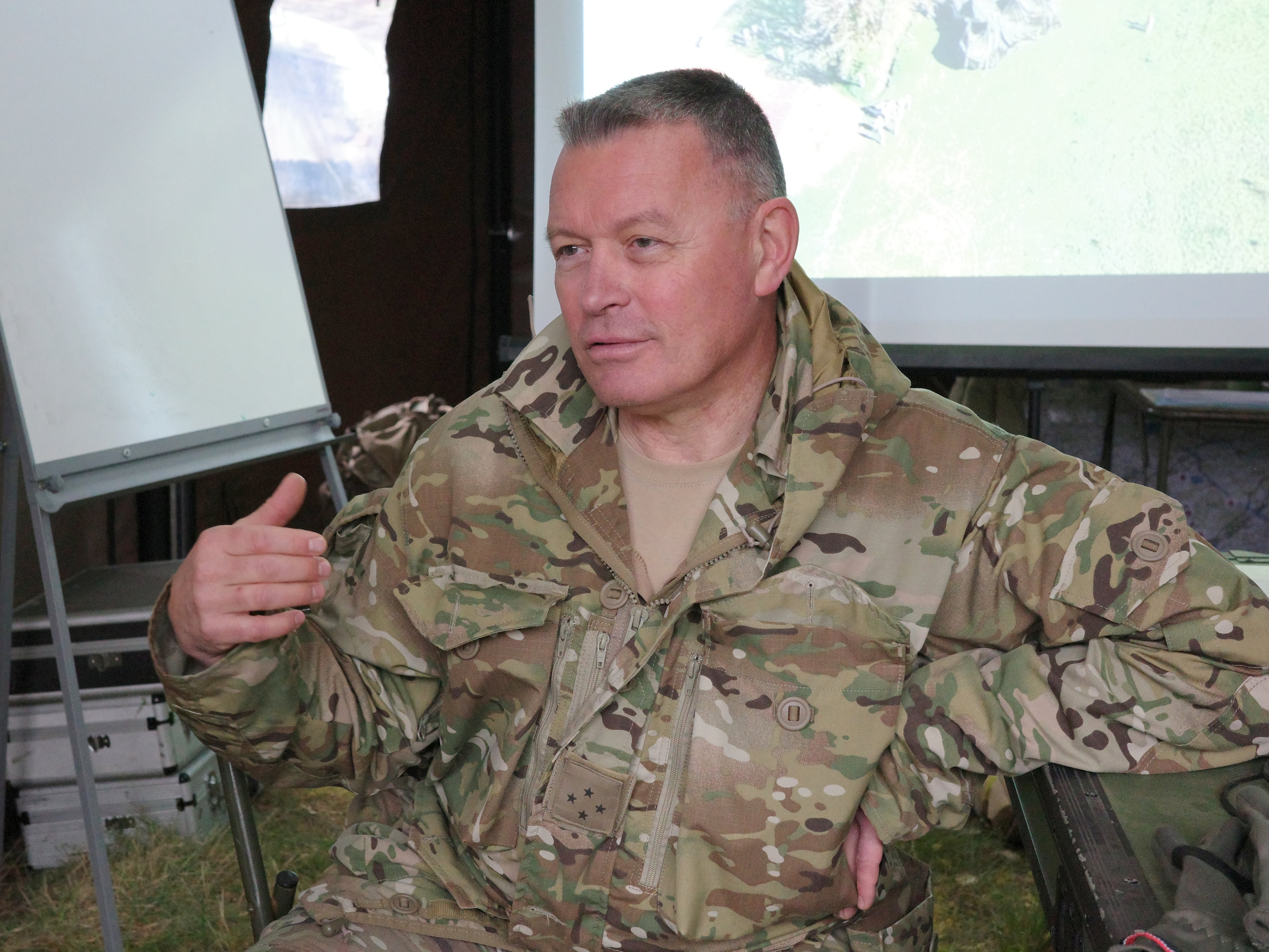
On the edge of a windswept meadow in western France, Gen. Benoît Desmeulles maneuvers between two closely parked armored personnel carriers (APCs) tucked deep within a thicket of trees and shrubs. His makeshift office is not a reinforced bunker or a sprawling tactical center, but a patch of grass shielded by a tent and multi-spectral camouflage netting designed to defeat both thermal and visual reconnaissance. This Spartan setup represents the cutting edge of French military doctrine: a mobile, agile, and survivable command structure tailored for the brutal realities of modern, high-intensity conflict.
As the commander of the French 1st Army Corps, Desmeulles is currently overseeing Orion 26, a massive multi-domain exercise designed to test France’s ability to act as a "framework nation" for NATO. For the first time, the 1st Army Corps is deploying its full mobile command configuration, moving away from the static, vulnerable headquarters of the past several decades. From a dark metal chair at a scuffed, green-topped table, Desmeulles manages the movements of approximately 120,000 simulated and live troops across a theater of operations that mirrors the complexities of a peer-to-peer European war.
The Evolution of Command Post 1: Mobility as Survival
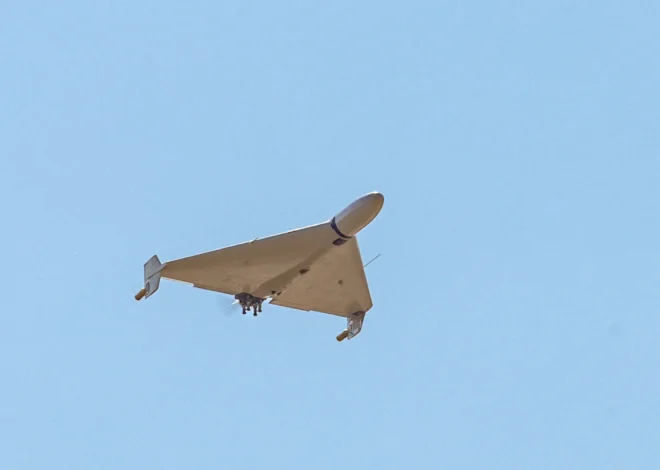
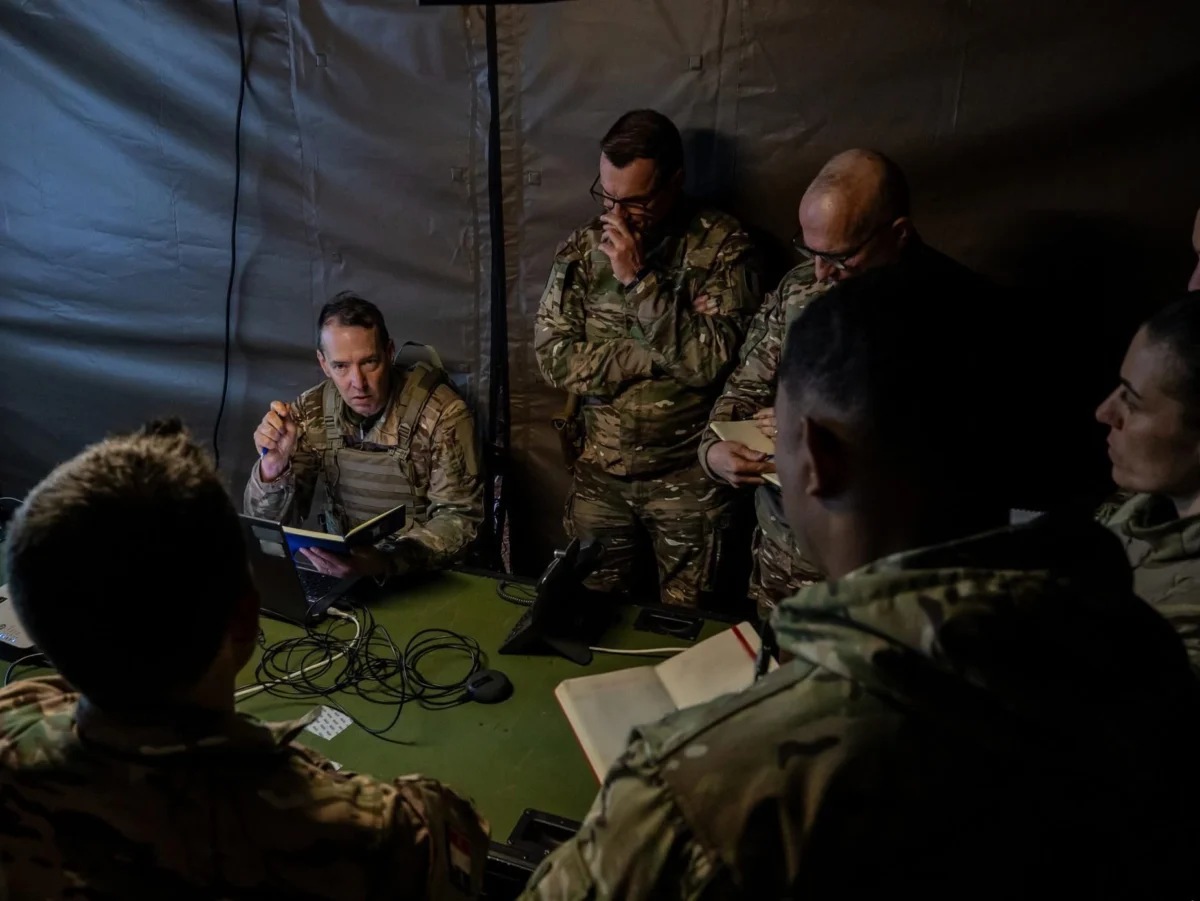
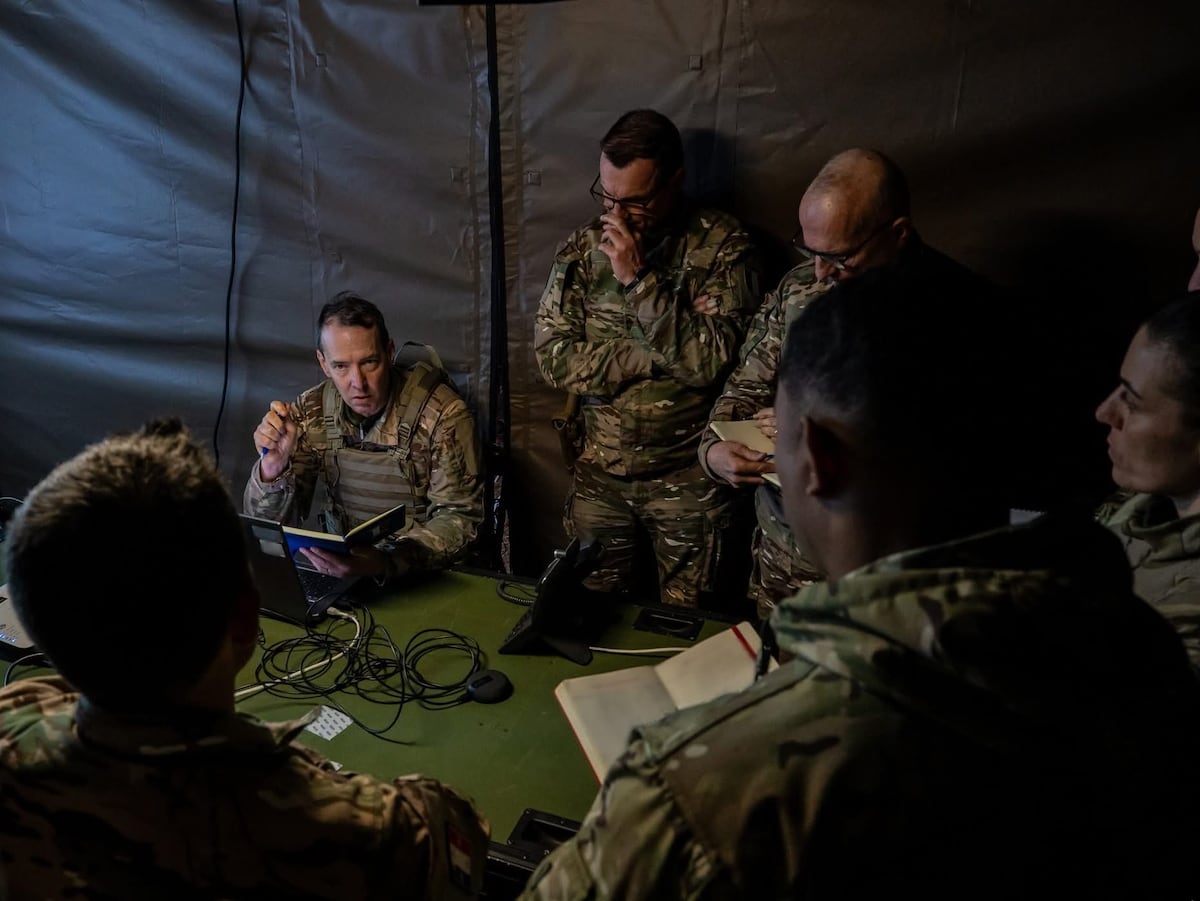
At the heart of this tactical evolution is Command Post 1 (CP1). Established in just a few hours, the unit is centered around six armored vehicles packed with high-density computing and communications gear. Unlike the sprawling, semi-permanent command compounds used during counterinsurgency operations in Afghanistan or the Sahel, CP1 is designed to relocate every few hours. This constant movement is essential to evade detection and precision strikes—a lesson reinforced by the ongoing attrition seen in contemporary conflicts like the war in Ukraine.
Desmeulles’ tiered command structure places CP1 roughly 80 to 100 kilometers from the forward line of engagement. This proximity allows commanders to maintain a physical and psychological "feel" for the battlefield while remaining mobile enough to avoid being targeted by long-range artillery or loitering munitions. This is a significant departure from standard NATO corps commands, which are traditionally fixed installations located much further to the rear.
"The main thing we’ve gained is the ability to be as close as possible to the divisions leading the battle," Desmeulles explained during a briefing at the Montmorillon training camp. "As corps commander, that to me is the most important. If I were at war, I’d be with the divisions rather than here to see how things are going. The structures in place before didn’t allow for that at all."
Orion 26: A Chronology of High-Intensity Preparation
The Orion 26 exercise is the culmination of an 18-month transformation period that began after the French Ministry of Defense recognized the shifting global security landscape. The exercise follows a logical progression of escalation:
- Phase I: Strategic Deployment (Early 2026): The 1st Army Corps practiced rapid deployment, moving from its headquarters in the 17th-century Lille citadel to the port of Dunkirk via A400M transport aircraft and barges. From there, units were moved by roll-on/roll-off ships to La Rochelle on the Atlantic coast.
- Phase II: Tactical Command Integration (April 2026): This phase focuses on the "offensive" maneuver through "Arnland," a fictional country whose geography bears a striking resemblance to France. This phase tests the ability of the French-led corps to command divisional headquarters from Poland, Britain, Italy, and Spain.
- Phase III: Live Maneuvers (Late April 2026): The exercise will transition from computer-simulated combat to live-fire drills involving 12,500 French troops, including complex operations such as wet-gap crossings (bridging rivers under fire).
By simulating a corps-level conflict, France is validating its capacity to lead a large-scale European force without total reliance on U.S. command-and-control infrastructure. This aligns with the broader European push for "strategic autonomy," a concept championed by the French government to ensure the continent can defend itself if American priorities shift toward the Indo-Pacific.
Technical Innovations and "Digital Hygiene"
The shift to a mobile command post required a complete overhaul of technical systems. Capt. Charles of the 41st Signal Regiment, which is attached to the corps, noted that fitting modern computing power into the venerable Véhicule de l’Avant Blindé (VAB) APC was a primary challenge. While the VAB is currently the workhorse of CP1, the French Army plans to eventually transition these command nodes to the new Griffon APC, a vehicle with superior protection and integrated electronics.
To survive in a data-saturated environment, the 1st Army Corps has implemented what Ukrainian officials call "digital hygiene." This involves:
- Tiered Command Nodes: While CP1 handles immediate tactical decisions with a lean staff of 50 people, CP2 (the rear support node) and CP3 (the data-heavy headquarters in Lille) handle logistics and massive data processing.
- Hybrid Connectivity: The command posts are linked through a resilient network of satellites, military radio, and commercial mobile networks, ensuring that if one channel is jammed, others remain operational.
- Decoys and Electronic Warfare: During the exercise, the 41st Signal Regiment successfully deployed decoy command posts that emitted fake electromagnetic signatures. This tactic successfully confused "enemy" reconnaissance teams, who initially tracked the decoys rather than the actual CP1.
Furthermore, France is preparing to integrate artificial intelligence-enabled data processing into its corps command. This system, which Desmeulles compared to the U.S. military’s Project Maven, will allow for rapid analysis of battlefield imagery and signals intelligence, further compressing the "Observe-Orient-Decide-Act" (OODA) loop.
The Strategic Pivot: From Counterinsurgency to Peer Conflict
The renaming of the unit in January—from the Rapid Reaction Corps-France back to the 1st Army Corps—serves as a symbolic and practical return to Cold War-era designations. For decades, the French Army was optimized for "small wars" and counter-terrorism, where command posts could be static and air superiority was guaranteed.
"We are now envisaging deploying the entire army corps for a much shorter period, but in a way that is obviously far more intensive," Desmeulles stated. This shift requires a mental and physical "remilitarization." In past NATO deployments, such as the International Security Assistance Force (ISAF) in Afghanistan, command centers were essentially small cities that were impossible to move. In the high-intensity scenario of Orion 26, such a footprint would be a "death sentence."
The French military’s roadmap is ambitious. The country aims to have a full division ready for high-intensity war by 2027 and a combat-ready corps by 2030. This timeline is driven by the 2024-2030 Military Programming Law (LPM), which has significantly increased defense spending to address long-standing equipment shortages.
Addressing Capability Gaps and NATO Integration
Despite the successes of Orion 26, Gen. Desmeulles was candid about the challenges that remain. While France possesses sovereign communications and a world-class command structure, its "firepower" remains a point of concern for lawmakers and military analysts.
The French Army currently faces a deficit in long-range rocket artillery and a shortage of self-propelled howitzers (such as the CAESAR system), many of which have been sent to aid Ukraine. "I’m not saying it would be as easy [without U.S. support]," Desmeulles admitted. "But overall, we’re good."
The integration of French command chains with NATO structures also presents technical friction. Orion 26 utilizes parallel command chains to expose the difficulties of maintaining national sovereignty while adhering to alliance-wide operational procedures. These "frictions" are precisely what the exercise aims to solve before a real-world crisis occurs.
Broader Implications for European Defense
The transformation of the 1st Army Corps positions France as a primary driver of land force evolution within NATO. While many alliance members agree on the necessity of mobile command in principle, Desmeulles noted that France is among the few to have actually invested the capital and manpower to implement it.
"We’ve invested money to completely reorganize the army corps command structure," the general said. "Now that we’ve done it, everyone sees that’s the direction we need to go."
As the exercise concludes its tactical phase, the message to allies and adversaries alike is clear: France is reclaiming its role as a premier land power capable of managing large-scale, multi-national operations. While the "Arnland" scenario is fictional, the readiness it builds is intended for a very real and increasingly volatile global environment. The successful deployment of CP1 proves that in the modern age, the most powerful command post isn’t the one that is most fortified—it is the one that is hardest to find.

Related Posts
Pentagon Forges Landmark Seven-Year Agreements with Boeing and RTX to Accelerate Standard Missile-3 Production and Stabilize Defense Supply Chains
Boeing Unveils Ultra Low-Cost Seeker to Enhance Missile Inventory and Combat Cost Challenges in Modern Warfare