Singapore: Halt Imminent Execution for Cannabis Trafficking
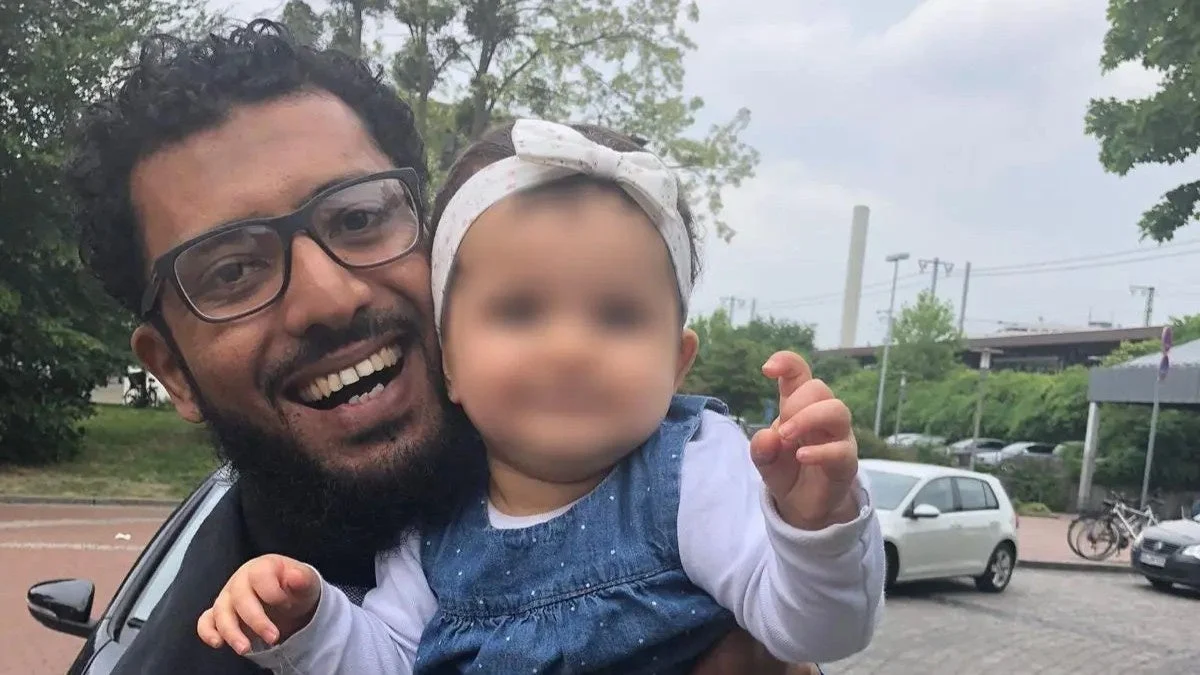
A coalition of prominent international human rights organizations has issued a joint plea to the Singaporean government to immediately stay the scheduled execution of Omar bin Yacob Bamadhaj. The 41-year-old Singaporean national is set to be executed on April 16, 2026, following a conviction for trafficking cannabis. The appeal, spearheaded by Human Rights Watch, Amnesty International, the Capital Punishment Justice Project (CPJP), and the Anti-Death Penalty Asia Network (ADPAN), argues that the continued use of capital punishment for drug-related offenses violates international law and places the city-state at odds with global human rights standards.
The case has drawn significant international attention, not only because of the nature of the crime but also due to the personal tragedies surrounding the defendant’s family and the rigid legal framework that necessitates mandatory death sentences in the absence of specific prosecutorial cooperation. As the scheduled date of execution approaches, advocates are calling for President Tharman Shanmugaratnam to exercise his power of clemency, citing a recent precedent where a death sentence was commuted to life imprisonment under similar circumstances.
The Arrest and Legal Chronology of the Case
The legal ordeal for Omar bin Yacob Bamadhaj began nearly eight years ago. On July 12, 2018, Omar was stopped during a routine check at the Woodlands Checkpoint, the primary border crossing between Singapore and Malaysia. During the inspection, authorities discovered 1,009 grams of cannabis in his possession. Under Singapore’s Misuse of Drugs Act (MDA) of 1973, cannabis is classified as a Class A controlled drug. The law dictates that any individual found trafficking more than 500 grams of cannabis faces a mandatory death sentence.
At the time of his arrest, Omar was no longer a resident of Singapore, having relocated to Germany to live with his wife and children. He had returned to the region to observe the holy month of Ramadan with his extended family. Following his arrest, he was charged under Section 7 of the MDA for the importation of controlled drugs.
The judicial process was protracted. After his initial trial, Omar was convicted of the charges. He subsequently sought to overturn the verdict, but Singapore’s highest court dismissed his appeal in October 2021. In February 2022, the court officially sentenced him to death. Since that time, Omar has remained on death row while his family and legal representatives explored remaining avenues for relief. On April 2, 2026, the Singapore Prison Service issued a formal notice to his family, stating that the execution had been scheduled for two weeks later.
Human Rights Advocacy and Legal Criticisms
The planned execution has sparked a sharp rebuke from the international community. Rachel Chhoa-Howard, a Southeast Asia researcher at Amnesty International, characterized the death penalty as the "ultimate cruel, inhumane, and degrading punishment." She noted that Singapore’s adherence to capital punishment for drug offenses is increasingly anomalous in a world where many nations are moving toward abolition or at least restricting the death penalty to the "most serious crimes."
International legal standards, specifically the International Covenant on Civil and Political Rights (ICCPR), to which many nations are signatories, state that in countries that have not yet abolished the death penalty, it should be reserved only for the most serious crimes. United Nations experts and the UN High Commissioner for Human Rights have consistently maintained that drug-related offenses do not meet this high threshold.
A central point of contention in Omar’s case is the "mandatory" nature of his sentence. Under current Singaporean law, a judge may only exercise sentencing discretion—choosing life imprisonment over death—if two specific conditions are met:
- The defendant’s role was limited to that of a "courier."
- The Public Prosecutor issues a "certificate of substantive assistance," confirming that the defendant helped the Central Narcotics Bureau disrupt drug trafficking activities.
While the judge in Omar’s case acknowledged that his involvement was limited to the transportation of the drugs, the prosecution declined to issue the certificate of assistance. Without this certificate, the judiciary is legally barred from considering a life sentence, regardless of any mitigating personal circumstances. This "double-lock" mechanism has been criticized by legal experts and human rights defenders for stripping the judiciary of its independence and placing the power of life and death in the hands of the prosecution.
A Family’s Tragedy and the Plea for Clemency
Beyond the legal technicalities, the human cost of Omar’s incarceration has been profound. His wife, Alexandra Maria, a German national, has spent years navigating the emotional and financial strain of her husband’s imprisonment from abroad. The family’s situation was further complicated by the health of their son, Naqeeb, who suffered from medical conditions requiring specialized care in Germany.
Due to the high costs of travel and Naqeeb’s fragile health, the family was never able to visit Omar in prison following his 2018 arrest. The separation became permanent in November 2025, when Naqeeb passed away at the age of 11 without ever seeing his father again. Omar’s daughter, Amal, who is now nine years old, has no memory of her father outside of prison walls.
In a poignant letter addressed to President Tharman Shanmugaratnam on April 12, 2026, Alexandra Maria pleaded for mercy. She highlighted the "unimaginable suffering" the family has already endured and asked the President to consider the impact on her daughter. "Please give Amal… the opportunity to experience the joy of reconnecting with her father, and not the irrevocable pain and regret of never having gotten to know him," she wrote.
Comparative Data and the Trend of Executions in Singapore
The push for Omar’s clemency comes at a time when Singapore has significantly increased its rate of executions. According to data compiled by human rights monitors, the city-state has executed seven people since the start of 2026, all for drug-related offenses. This follows a high-volume year in 2025, during which 15 people were executed for drug crimes—a nearly 100% increase from the eight executions recorded in 2024.
This trend stands in contrast to regional shifts. Neighboring Malaysia, for instance, took the historic step of abolishing the mandatory death penalty in 2023, granting judges the discretion to impose life sentences and even providing a mechanism for those already on death row to have their sentences reviewed. Thailand has similarly moved toward the decriminalization of cannabis, further highlighting the divergence in drug policy within Southeast Asia.
Advocates argue that Singapore’s "zero-tolerance" approach and its reliance on the death penalty as a deterrent lack empirical support. Jacinta Smith, chair of the Capital Punishment Justice Project, stated that the government’s stance "reflects a total disregard for the right to life" and ignores the shifting regional landscape where reliance on capital punishment is being reduced.
The Precedent of Presidential Clemency
While presidential clemency is rare in Singapore, it is not without precedent. Supporters of Omar bin Yacob Bamadhaj point to the case of Tristan Tan Yi Rui as a source of hope. In August 2025, President Shanmugaratnam granted clemency to Tan, who had been sentenced to death for trafficking 337.6 grams of methamphetamine.
In that instance, the Cabinet recommended clemency based on the "specific facts and circumstances of the case," and Tan’s sentence was commuted to life imprisonment. The Ministry of Home Affairs noted at the time that the move was intended to "reduce disparity between outcomes" in the justice system. Alexandra Maria referenced this decision in her letter, calling it an "act of compassion and fairness" that showed the system is capable of recognizing unique human circumstances and the possibility of redemption.
Analysis of Broader Implications
The execution of Omar bin Yacob Bamadhaj, if carried out, will likely intensify the international debate regarding Singapore’s use of the death penalty. Human rights defenders argue that the city-state’s strategy of using restrictive laws to silence anti-death penalty activists further complicates the issue. By stifling public debate, the government maintains a domestic consensus on capital punishment that may not fully account for the evolving international legal consensus.
Bryony Lau, deputy Asia director at Human Rights Watch, emphasized that the global community is watching. "Concerned governments should urgently call on Singapore to immediately halt the execution," Lau said. She suggested that commuting death sentences for drug offenses should be the first step toward a full abolition of the practice.
The case also raises questions about the efficacy of the "Certificate of Substantive Assistance." Critics argue that low-level couriers, who often have the least information about the inner workings of drug syndicates, are the least likely to be able to provide the "substantive assistance" required to escape the gallows. This creates a paradox where the "big fish" of the drug trade can trade information for their lives, while the most vulnerable and replaceable members of the network face the ultimate penalty.
As the clock ticks toward the morning of April 16, the fate of Omar bin Yacob Bamadhaj rests in the hands of the Singaporean executive branch. The decision will serve as a significant indicator of whether the city-state intends to maintain its rigid adherence to mandatory sentencing or if it will move toward a more discretionary, human-rights-aligned approach to criminal justice. For a family in Germany, the decision is even more personal: it is the difference between a future of possible reconciliation and the finality of an irrevocable loss.

Related Posts
Bangladesh: First Enforced Disappearance Case Since July 2024 Uprising
Crackdown on Artistic Dissent in Morocco: The Arrest of Mehdi Black Wind and the Shrinking Space for Freedom of Expression