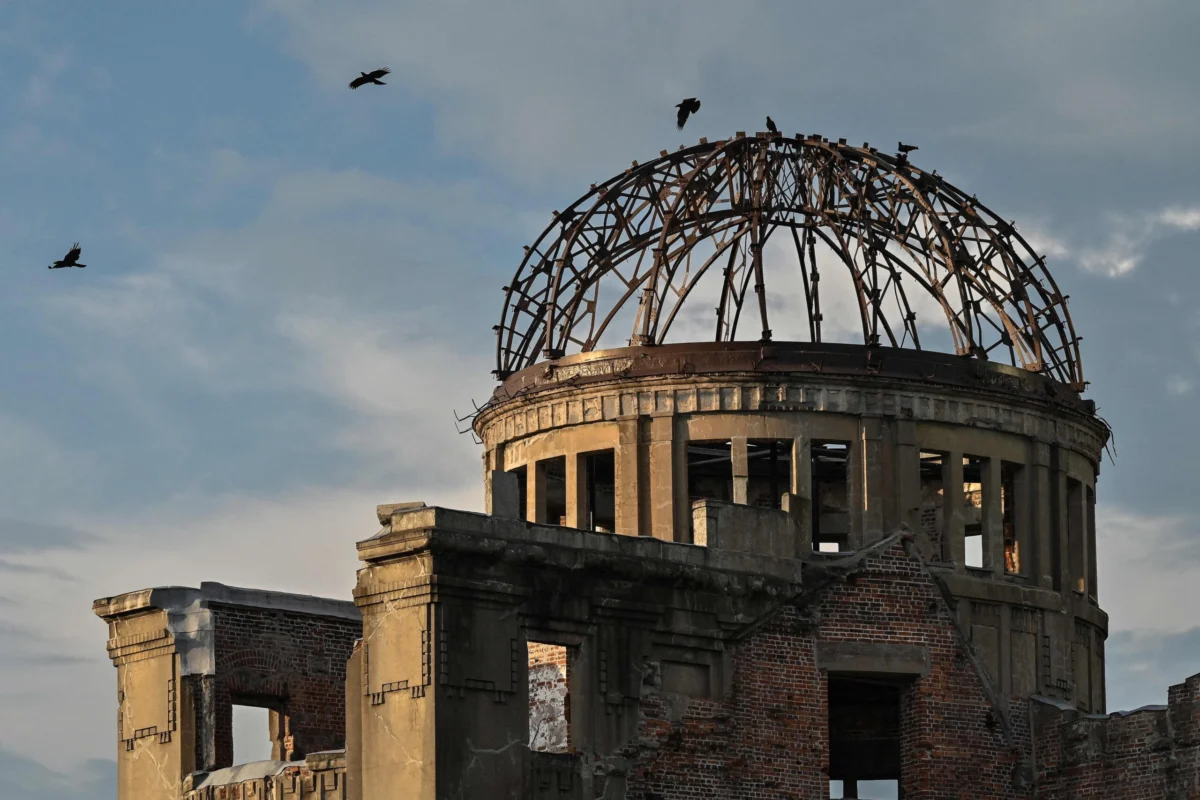
Hiroshima: A City Reborn Amidst the Echoes of Atomic Devastation
Weeks before the vibrant sakura blossoms began to unfurl, I arrived in Hiroshima. My intention was to confront the somber narrative etched into the very fabric of the Peace Memorial Museum, to brace myself for the weight of history, and to acknowledge the darker facets of the human condition, especially in an era where the specter of 20th-century nightmares feels perpetually renewed. Yet, Hiroshima, a city of profound resilience and gentle spirit, welcomed me with the delicate grace of the sakura. Some trees bore only nascent buds, while others were already in the full glory of their bloom. Beneath a canopy of these nascent cherry blossoms, in a park adjacent to the memorial grounds, I observed a small gathering. Approximately five individuals, their faces etched with the wisdom of age, were preparing for a hanami, a traditional cherry blossom viewing. Picnic mats were spread on the grass, a modest spread of food was laid out, and an aura of serene contemplation suggested they intended to linger, absorbing the ephemeral beauty of the freshly opened flowers.
My desire to visit Hiroshima had long been a quiet ambition, amplified years ago by the profound impact of Alain Resnais’s 1959 cinematic masterpiece, Hiroshima mon amour. The film’s haunting refrain, "You have seen nothing in Hiroshima," spoken by one of its characters, had always stirred a deep curiosity within me. What could it truly mean, for those of us who did not experience the cataclysm of the Second World War firsthand, to "see" something in Hiroshima? This question lingered as I stood on a rather unremarkable street, reading an inscription marking the precise spot where, at 8:15 AM on August 6, 1945, the atomic bomb detonated. While a shiver may not have overtly manifested, the words of Emmanuelle Riva, the film’s protagonist, echoed in my mind: "Ten thousand degrees on earth. Ten thousand suns, they will say."
My visit to the Peace Memorial Museum, though impactful, presented a curatorial approach that felt considerably tempered compared to the raw, documentary footage depicted in Resnais’s film. Nonetheless, the weight of the tragedy is undeniable. The sheer scale of suffering that transpired, coupled with the alarming casualness with which nuclear warfare is invoked in contemporary discourse, underscores the profound disconnect between historical atrocities and present-day understanding. The suffering of others, no matter how well-documented, inevitably feels distant to those who have not directly experienced it.
While the devastating effects of radiation were always a known consequence, the pervasive and desperate thirst experienced by survivors had never been a focal point of my comprehension. Those who endured the immediate inferno, grappling with severe burns and injuries, were consumed by an unimaginable thirst. "They would throw themselves into the river," a Spaniard residing in Hiroshima for some time recounted, "without realizing that those waters were also burning." The museum illustrates this horror through evocative drawings. One depicts survivors, their faces turned skyward, mouths agape, desperately seeking a strange, black rain. The accompanying text explains that shortly after the explosion, a dark, acidic, and radioactive downpour descended upon the city – a poisoned liquid that many consumed in their desperation.
The waters of the Motoyasu River, no longer boiling with the fires of destruction, now flow peacefully alongside the Hiroshima Peace Memorial Park. Within this hallowed ground, numerous fountains offer solace. "So that the souls of those who agonized can drink," a guide informed me, a poignant gesture of remembrance and compassion.
Navigating the park leads one to familiar images, such as the tribute to Sadako Sasaki and her thousand paper cranes, a powerful symbol of hope amidst tragedy. Equally impactful, though perhaps less widely known, is the Atomic Bomb Memorial Mound. This grassy hill conceals the remains of approximately 70,000 victims whose bodies were so utterly disintegrated by the blast that their identities could never be ascertained.
The voice of Emmanuelle Riva continued to resonate: "I wanted to have an inconsolable memory, a memory of shadows and stone. I fought on my own, with all my might, every day, against the horror of no longer understanding at all the why of remembering." It was with this persistent echo that I arrived at the Cenotaph for the Atomic Bomb Victims, a central monument within the park. Engraved upon it is a message that, when read today, is profoundly heart-wrenching: "Let all the souls here rest in peace, for we shall not repeat the evil."
The Genesis of Destruction: A Historical Overview
The bombing of Hiroshima was the culmination of a brutal and devastating global conflict. World War II, initiated by Nazi Germany’s invasion of Poland in September 1939, had engulfed much of the world in conflict. By 1945, while Allied forces had made significant gains in Europe, the Pacific theater remained a fiercely contested battleground. Japan, under an increasingly militaristic government, continued to resist Allied demands for unconditional surrender, despite facing immense pressure and suffering considerable losses.
The development of the atomic bomb was a top-secret undertaking by the United States, driven by fears that Nazi Germany might develop such a weapon first. Codenamed the Manhattan Project, it involved a massive scientific and industrial effort, culminating in the successful test of a nuclear device in July 1945. Following Germany’s surrender in May 1945, attention shifted entirely to the Pacific. Allied leaders, including U.S. President Harry S. Truman (who succeeded Franklin D. Roosevelt upon his death in April 1945), faced the grim prospect of a prolonged and bloody invasion of the Japanese mainland, which was predicted to result in hundreds of thousands, if not millions, of casualties on both sides.
The Fateful Decision: August 6, 1945
On August 6, 1945, at 8:15 AM local time, the B-29 bomber "Enola Gay," piloted by Colonel Paul Tibbets Jr., dropped a uranium-based atomic bomb, codenamed "Little Boy," on the city of Hiroshima. The bomb detonated at an altitude of approximately 600 meters above the city center, unleashing an unprecedented blast of heat, light, and destructive force. The immediate effects were catastrophic.
Immediate Devastation: Statistics and Eyewitness Accounts
- Blast Wave: The explosion generated a blast wave traveling at supersonic speeds, flattening buildings within a radius of approximately 1.6 kilometers from the hypocenter. The force of this wave caused immense structural damage and propelled debris at lethal velocities.
- Thermal Radiation: An intense flash of heat, estimated to be around 3,000 to 4,000 degrees Celsius at the hypocenter and reaching surface temperatures of up to 1,000 degrees Celsius in the immediate vicinity, instantly incinerated people and ignited widespread fires. This thermal radiation caused severe burns, often leaving permanent "shadows" of victims on walls and surfaces where their bodies had momentarily blocked the intense heat.
- Ionizing Radiation: The bomb released a significant amount of ionizing radiation, both instantaneously and in the form of residual fallout. This radiation caused acute radiation sickness, characterized by nausea, vomiting, hair loss, internal bleeding, and ultimately, death, for those exposed. The long-term effects included increased rates of cancer and genetic mutations.
Estimates of the immediate death toll vary, but it is widely accepted that between 70,000 and 80,000 people were killed instantly or within the first 24 hours. By the end of 1945, the total number of deaths directly attributable to the bombing, including those who succumbed to injuries and radiation sickness, was estimated to be between 90,000 and 146,000. The city, once a bustling metropolis, was reduced to a landscape of rubble and ash, with approximately 90% of its buildings destroyed or severely damaged.
The Lingering Scars: Long-Term Consequences and Survivor Accounts
The impact of the atomic bombing extended far beyond the immediate destruction. Survivors, known as hibakusha, faced a lifetime of physical and psychological suffering.
Health Impacts:
- Radiation Sickness: Many survivors experienced the debilitating effects of acute radiation sickness, with symptoms appearing days, weeks, or months after the bombing.
- Increased Cancer Rates: The exposure to radiation led to a significantly higher incidence of various cancers, including leukemia, thyroid cancer, breast cancer, and lung cancer, among the hibakusha and their descendants.
- Other Health Issues: Survivors also suffered from a range of other health problems, including cataracts, keloid scars, and psychological trauma.
Social and Psychological Impact:
The hibakusha often faced discrimination and stigma due to fears of contagion and hereditary effects of radiation. This led to social isolation and difficulty in finding employment and marriage. The psychological trauma of witnessing such horrific destruction and losing loved ones left deep emotional scars, often manifesting as post-traumatic stress disorder.
The Shadow of Nuclear War: Global Reactions and Implications
The bombing of Hiroshima, followed by the bombing of Nagasaki three days later, ushered in the nuclear age and profoundly altered the geopolitical landscape.
International Response:
The use of atomic weapons sparked widespread debate and condemnation, even as it hastened Japan’s surrender on August 15, 1945, officially ending World War II. The devastating power of these weapons led to a global arms race and the establishment of international organizations aimed at preventing their future use.
The Peace Movement and Advocacy:
Hiroshima and Nagasaki have become enduring symbols of the horrors of nuclear war. The cities have actively promoted peace and disarmament, serving as centers for international dialogue and remembrance. The hibakusha themselves have become powerful advocates for peace, sharing their testimonies to ensure that the lessons of the past are not forgotten.
Contemporary Relevance:
In an era marked by renewed geopolitical tensions and the proliferation of nuclear technology, the legacy of Hiroshima remains critically relevant. The city’s memorial sites and the enduring stories of its survivors serve as a stark reminder of the catastrophic consequences of nuclear conflict and the imperative of pursuing diplomatic solutions and nuclear disarmament. The inscription on the Cenotaph, "Let all the souls here rest in peace, for we shall not repeat the evil," continues to resonate as a global plea for peace and a commitment to a future free from the threat of nuclear annihilation. The presence of individuals quietly partaking in hanami amidst the memorials speaks to the remarkable capacity of the human spirit to find beauty and foster peace even in the shadow of unimaginable tragedy, a testament to Hiroshima’s enduring resilience.

Related Posts

Argentina’s President Javier Milei Reflects on 2026 World Cup Reception and Political Criticisms

Argentina’s Captain Lionel Messi to Forego National Team Celebrations for Club Commitments