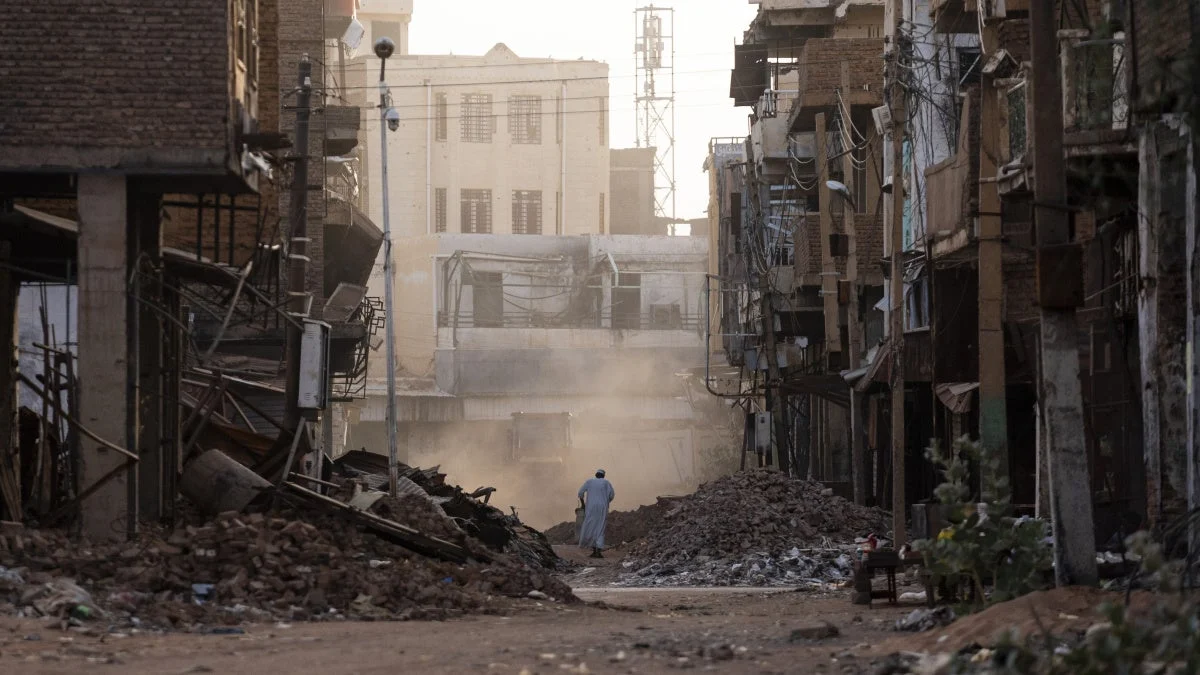
Global Leaders Gather in Berlin to Address Sudan Crisis as Three-Year Conflict Marks Devastating Toll on Civilians and Infrastructure
International leaders and diplomats convened in Berlin on April 15, 2026, marking exactly three years since the outbreak of full-scale hostilities in Sudan. The high-level summit, hosted by Germany alongside the African Union, France, the European Union, the United Kingdom, and the United States, aims to address the deteriorating security situation and the catastrophic humanitarian vacuum left by the protracted war between the Sudanese Armed Forces (SAF) and the Rapid Support Forces (RSF). Human Rights Watch (HRW) has issued a stern call to the participating nations, demanding concrete, time-bound commitments to protect the civilian population and ensure that those responsible for international crimes are held to account.
The conference serves as a critical juncture for the international community to move beyond rhetoric. It follows the formation of an atrocity prevention coalition in late February 2026, initially comprised of Ireland, Germany, the Netherlands, Norway, and the UK. Organizers hope the Berlin summit will expand this coalition, galvanizing global momentum to deter further massacres and address the systemic collapse of the Sudanese state.
A Three-Year Chronology of Escalation
The conflict, which began on April 15, 2023, in the capital city of Khartoum, has evolved from a localized power struggle between General Abdel Fattah al-Burhan of the SAF and Mohamed Hamdan “Hemedti” Dagalo of the RSF into a multi-front civil war. The timeline of the conflict highlights a consistent pattern of civilian targeting and the erosion of international norms.
April 2023 – December 2023: Initial fighting focused on Khartoum and the Darfur region. Within the first six months, the United Nations reported that over five million people had been displaced, and the city of El Geneina in West Darfur became the site of ethnically motivated killings that many observers labeled as ethnic cleansing.
January 2024 – September 2025: The war transitioned into a stalemate of attrition, with the RSF seizing control of significant portions of the Gezira state—Sudan’s agricultural heartland—while the SAF maintained its stronghold in the east and north. During this period, the use of starvation as a weapon of war became increasingly documented by international monitors.
October 2025: A pivotal and tragic moment occurred with the fall of El Fasher, the capital of North Darfur. After an 18-month siege that saw the population endure relentless shelling and a total blockade of food and medicine, the RSF overran the city. A UN Fact-Finding Mission later reported that the final assault bore the "hallmarks of genocide," characterized by systematic executions and mass sexual violence.
Early 2026: The conflict entered a new phase of high-tech warfare. The proliferation of drones and precision-guided explosive weapons by both factions led to a sharp increase in civilian casualties in the Kordofan and Blue Nile regions.
The Human Cost: Displacement and Atrocities
The statistics surrounding the Sudanese conflict are staggering. As of April 2026, the International Organization for Migration (IOM) estimates that more than 12 million people have been internally displaced, with an additional 3 million seeking refuge in neighboring countries such as Chad, Egypt, and South Sudan. This represents the largest displacement crisis globally.
Human Rights Watch researchers have documented a harrowing array of abuses. In the wake of the fall of El Fasher, survivors described a coordinated campaign of bombardment followed by door-to-door massacres. Reports indicate that arbitrary detentions have become a standard tool of war for both sides. The SAF and its affiliated militias have been accused of targeting individuals based on their ethnicity, political affiliations, or their involvement in local "Emergency Response Rooms"—the grassroots aid networks that have become the only lifeline for millions of Sudanese.
“The conference in Berlin should not be another box-ticking exercise,” said Mohamed Osman, Sudan researcher at Human Rights Watch. “Yet another year in Sudan has been marred by widespread war crimes and an ongoing flow of weapons into the hands of abusive warring factions. The international community must finally galvanize momentum to protect civilians, including local aid workers who are being targeted for their bravery.”
The Shift to Drone Warfare and Attacks on Medical Infrastructure
One of the most alarming developments discussed at the Berlin summit is the increased reliance on unmanned aerial vehicles (UAVs) and explosive weapons in densely populated areas. The United Nations Office of the High Commissioner for Human Rights (OHCHR) noted in March 2026 that the use of relatively cheap, high-tech weaponry has had a devastating impact on civilian infrastructure.
Recent reports from Médecins Sans Frontières (MSF) underscore the gravity of these technological shifts. On March 20, 2026, a Sudanese Armed Forces drone strike targeted a hospital in East Darfur, resulting in the deaths of 70 people, including 15 children. Less than two weeks later, on April 2, the RSF conducted a similar strike on a medical facility in White Nile state, killing at least 10 individuals, including seven medical professionals.
These attacks on healthcare facilities are not merely collateral damage but appear to be part of a broader strategy to dismantle the social fabric of communities. The targeting of medical staff has forced many international NGOs to withdraw, leaving vast swathes of the country without any form of professional medical assistance.
Judicial Accountability and the Role of the ICC
A central theme of the Berlin conference is the pursuit of justice through international legal mechanisms. Human Rights Watch and other advocacy groups are pressing participating nations to provide full political and financial support to the International Criminal Court (ICC). Currently, the ICC’s jurisdiction is limited primarily to the Darfur region based on a 2005 UN Security Council referral.
There is a growing movement to expand this jurisdiction to cover the entire territory of Sudan, allowing for the investigation of crimes committed in Khartoum, Kordofan, and other regions. Furthermore, there is renewed pressure on the Sudanese authorities and the international community to facilitate the handover of former dictator Omar al-Bashir and other high-ranking officials wanted for previous crimes against humanity.
The "Atrocity Prevention and Justice Coalition" is expected to propose a new mechanism to track and respond to ongoing violations in real-time. This mechanism would ideally serve as a repository of evidence for future prosecutions and provide a basis for targeted sanctions against military commanders on both sides of the conflict.
Geopolitical Complications and the Arms Embargo
The conflict in Sudan does not exist in a vacuum. Throughout the three-year war, various external actors have been accused of fueling the violence through the provision of weapons, financing, and logistical support. Human Rights Watch has specifically called on the Berlin summit participants to publicly name and shame the backers of the warring parties.
Particular attention has been directed toward the United Arab Emirates (UAE), which has been frequently cited in UN reports as a key supporter of the RSF. Conversely, the SAF has reportedly received support from various regional actors seeking to maintain the traditional military establishment.
A primary objective of the Berlin summit is to discuss the enforcement and expansion of the United Nations arms embargo. Currently, the embargo applies only to the Darfur region. Diplomats are debating the feasibility of a country-wide embargo, though such a move faces potential vetoes at the UN Security Council from permanent members with vested interests in the region.
Broader Impact and Implications for Regional Stability
The implications of the Sudan conflict extend far beyond its borders. The collapse of the Sudanese state threatens to destabilize the entire Horn of Africa and the Sahel. The influx of refugees into Chad and South Sudan—nations already grappling with their own internal instabilities—has created a regional humanitarian emergency.
Furthermore, the vacuum of authority has allowed various insurgent groups and transnational criminal networks to flourish. There are concerns that the longer the conflict persists, the more likely it is to become a permanent "frozen conflict" or a fragmented state of warlordism, similar to the situations in Libya or Somalia.
The Berlin conference represents a litmus test for Western and African diplomacy. If the meeting fails to produce more than a communique of "deep concern," the message to the warring factions will be one of impunity. However, if the coalition can agree on a unified strategy—including a mechanism for civilian protection, the expansion of the ICC’s reach, and a rigorous enforcement of arms restrictions—it may finally begin to alter the calculus of the SAF and RSF leadership.
As the summit continues, the eyes of the Sudanese people remain fixed on the international stage. For the millions trapped in conflict zones or languishing in refugee camps, the commitments made in Berlin are not merely diplomatic points; they are a matter of survival. The next year of the conflict will be defined by whether the world chooses to intervene with substance or continue to watch from the sidelines as the nation of Sudan faces total disintegration.

Related Posts

Human Rights Watch Calls for Investigation into Death of Detainee Following Removal from Najaf Hospital by Iraqi Drug Police
Human Rights Watch Urges UN Security Council to Extend Lebanon Peacekeeping Mission Amid Escalating Conflict and Humanitarian Crisis