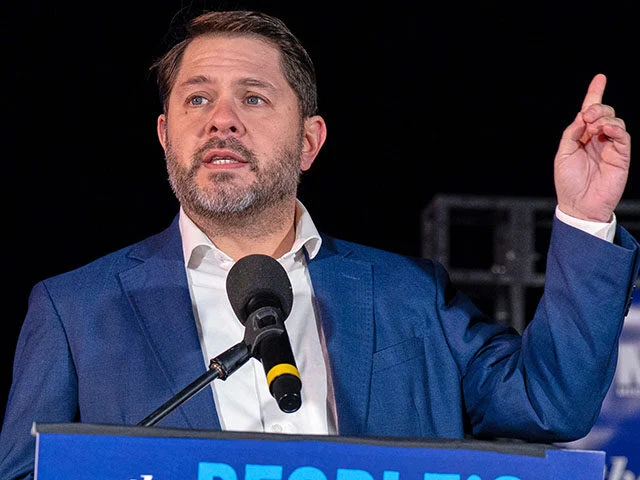
Senator Ruben Gallego Calls for Expulsion of Representative Eric Swalwell Amidst Sexual Assault Allegations, Leading to Swalwell’s Resignation
The political landscape in Washington D.C. was rocked today by a dramatic series of events culminating in the swift resignation of Representative Eric Swalwell (D-CA) after a former staffer accused him of sexual assault and Senator Ruben Gallego (D-AZ) publicly called for his expulsion from Congress. The revelations have sent shockwaves through the Democratic Party and reignited critical conversations about accountability, power dynamics, and workplace conduct on Capitol Hill.
Mounting Pressure and Allegations
The catalyst for these developments was a detailed investigative report published by the San Francisco Chronicle, which brought to light severe allegations against Representative Swalwell by a former congressional staffer. The woman, whose identity has been protected to ensure her privacy and safety, recounted two separate incidents of alleged sexual assault, occurring years apart, while she was employed by Swalwell and later after her departure from his office.
According to the Chronicle‘s report, the first incident allegedly took place in September 2019. The staffer claimed that after an evening outing for drinks with Swalwell, she became severely intoxicated, rendering her unable to recall the entirety of the night. She reported waking up naked in Swalwell’s hotel bed, experiencing sensations indicative of vaginal intercourse. The alleged victim stated that Swalwell subsequently distanced himself from her, leading to a gradual fading of their professional and personal interactions. Prior to this, she had also described two other disturbing encounters: one where Swalwell allegedly attempted to kiss her in her car after a donor meeting, and another where he reportedly exposed himself in her car and requested oral sex, which she stated she performed in a parking lot.
Five years later, in April 2024, the woman recounted a second alleged assault. She had attended a charity gala where Swalwell was an honoree. After the event, they met for drinks, during which she again reported becoming highly inebriated. Her memory of the night was fragmented, but she distinctly recalled pushing Swalwell away and repeatedly saying, "No," as he allegedly forced himself upon her. These accounts paint a troubling picture of a pattern of predatory behavior and a significant abuse of power, given Swalwell’s position as her employer and his status as a married man, 17 years her senior.
Senator Gallego’s Decisive Intervention
The gravity of these allegations prompted a robust and unequivocal response from Senator Ruben Gallego, a fellow Democrat and, until recently, a close personal friend of Representative Swalwell. In a statement that quickly went viral, Senator Gallego declared that Swalwell was "no longer fit" to serve in Congress and explicitly called for his expulsion. "I support the ethics committee’s investigation and believe Eric Swalwell is no longer fit to be a Member of Congress," Gallego’s statement read. "He should be expelled from Congress."
Gallego’s statement carried significant weight, not only due to its severity but also because of his acknowledged close relationship with Swalwell. Gallego had previously referred to Swalwell as his "best friend" on social media, underscoring the profound personal betrayal he expressed in his latest communication. "I had no knowledge of the allegations of assault, harassment, and predatory behavior brought against Swalwell," Gallego asserted, emphasizing his shock and disillusionment. "I trusted someone who I believed was a friend, but it is now clear that he is not the person I thought I knew."
The Arizona Senator concluded his powerful statement by unequivocally supporting the alleged victims: "The women who have come forward have shown courage. They deserve to be believed, to be supported, and to see justice served." Gallego’s public denunciation, coming from within Swalwell’s own party and from a prominent figure, signaled a significant shift in political tolerance for such allegations and undoubtedly intensified the pressure on Swalwell.
The House Ethics Committee Launches Investigation
Hours before Senator Gallego’s explosive statement, the House Ethics Committee had already announced it was initiating an investigation into Representative Swalwell. In a joint statement released on Monday, Committee Chairman Michael Guest (R-MS) and Ranking Member Mark DeSaulnier (D-CA) confirmed the bipartisan committee’s intent to gather "additional information regarding the allegations that Representative Eric Swalwell violated the Code of Official Conduct or any law, rule, regulation, or other applicable standard of conduct in the performance of his duties or the discharge of his responsibilities, with respect to allegations that he may have engaged in sexual misconduct, including towards an employee working under his supervision."
The Committee’s statement, while standard procedure, highlighted the seriousness with which these allegations were being treated. It also included the customary disclaimer: "The Committee notes that the mere fact that it is investigating these allegations, and publicly disclosing its review, does not itself indicate that any violation has occurred. No other public comment will be made on this matter except in accordance with Committee rules." This formal process is designed to ensure a fair and thorough review, independent of political pressures, though the public outcry often impacts the pace and perception of such inquiries.
The House Ethics Committee is a unique bipartisan body tasked with upholding the integrity of the House of Representatives. Its investigations can be lengthy and complex, often involving interviews with witnesses, collection of documents, and a detailed review of evidence. Potential outcomes range from public reprimands or censures to recommendations for fines, removal from committee assignments, or, in the most severe cases, expulsion from Congress. Expulsion requires a two-thirds vote of the House and is an exceedingly rare punishment, typically reserved for cases of severe misconduct or disloyalty.
Chronology of a Rapid Fallout
The timeline of events unfolded with remarkable speed, underscoring the immediate and overwhelming impact of the San Francisco Chronicle‘s report:
- Earlier in the week: The San Francisco Chronicle publishes its investigative report detailing the sexual assault allegations against Representative Eric Swalwell by a former staffer.
- Monday: The House Ethics Committee, led by Chairman Michael Guest (R-MS) and Ranking Member Mark DeSaulnier (D-CA), issues a joint statement announcing the initiation of an investigation into Swalwell regarding the sexual misconduct allegations.
- Hours later: Senator Ruben Gallego (D-AZ) issues a forceful public statement, expressing profound disappointment, stating Swalwell is "no longer fit" for Congress, and explicitly calling for his expulsion. Gallego also voices strong support for the alleged victims.
- Shortly after Gallego’s statement: Representative Eric Swalwell issues his own statement announcing his immediate resignation from Congress, effective immediately.
This rapid sequence of events – from published allegations to an ethics investigation, a call for expulsion from a prominent colleague, and finally, resignation – illustrates the current political environment’s low tolerance for allegations of sexual misconduct, especially involving abuses of power.
Broader Context: #MeToo and Congressional Accountability
This incident occurs within a broader societal and political context shaped by the #MeToo movement, which has significantly altered public expectations regarding the conduct of powerful individuals, particularly elected officials. The movement has empowered victims to come forward and brought increased scrutiny to workplace environments, including those on Capitol Hill.
Congress has faced its own reckoning with issues of sexual harassment and assault. The Congressional Accountability Act of 1995 was designed to apply federal labor laws to Congress, including protections against sexual harassment. Subsequent reforms, particularly in the wake of the #MeToo movement, have aimed to make the reporting process more transparent and supportive for congressional staffers. Despite these efforts, power imbalances and fear of professional repercussions can still deter individuals from coming forward. The courage demonstrated by Swalwell’s former staffer in speaking out highlights the persistent challenges and the personal cost involved in holding powerful figures accountable.
The political implications for the Democratic Party are also significant. Representative Swalwell, a visible figure often appearing on cable news and a former presidential candidate, represented a prominent voice within the party. His resignation, particularly under these circumstances, represents a loss for the party and an immediate challenge to fill his vacant seat in California’s 14th congressional district through a special election. The incident also puts a spotlight on how political parties handle internal allegations, with Gallego’s strong stance signaling a potential shift towards a less forgiving approach when such serious accusations arise.
Legal and Ethical Ramifications Beyond Resignation
While Swalwell’s resignation immediately ends his tenure in Congress and the prospect of a vote on his expulsion, it does not necessarily close the book on the matter. The House Ethics Committee, though its primary jurisdiction lies with current members, may choose to conclude its investigation and issue a report, especially if it deems its findings important for future congressional conduct guidelines or to provide a complete public record. Such a report, even if it cannot lead to formal sanctions against a former member, could still carry significant weight in public opinion and historical record.
Furthermore, the allegations themselves could potentially lead to criminal investigations, depending on whether the alleged victim(s) choose to pursue such avenues with law enforcement agencies. Sexual assault is a serious crime, and while a congressional ethics investigation focuses on violations of official conduct, criminal proceedings operate under a different legal framework and burden of proof. The civil justice system also remains an option for individuals seeking redress for alleged harm.
The departure of Representative Swalwell marks a significant moment in the ongoing national conversation about accountability for sexual misconduct. It underscores the increasing pressure on elected officials to maintain the highest ethical standards and the profound consequences when those standards are allegedly breached, particularly when involving power dynamics inherent in employer-employee relationships within the halls of Congress. The focus now shifts to the ongoing work of the Ethics Committee, the potential for further legal actions, and the broader implications for workplace safety and integrity in legislative bodies across the nation.

Related Posts
Democratic Candidates Must Moderate to Win General Elections, Says Rep. Greg Stanton

Lisa Demuth Secures Republican Gubernatorial Nomination in Minnesota, Defeating Trump-Endorsed Mike Lindell