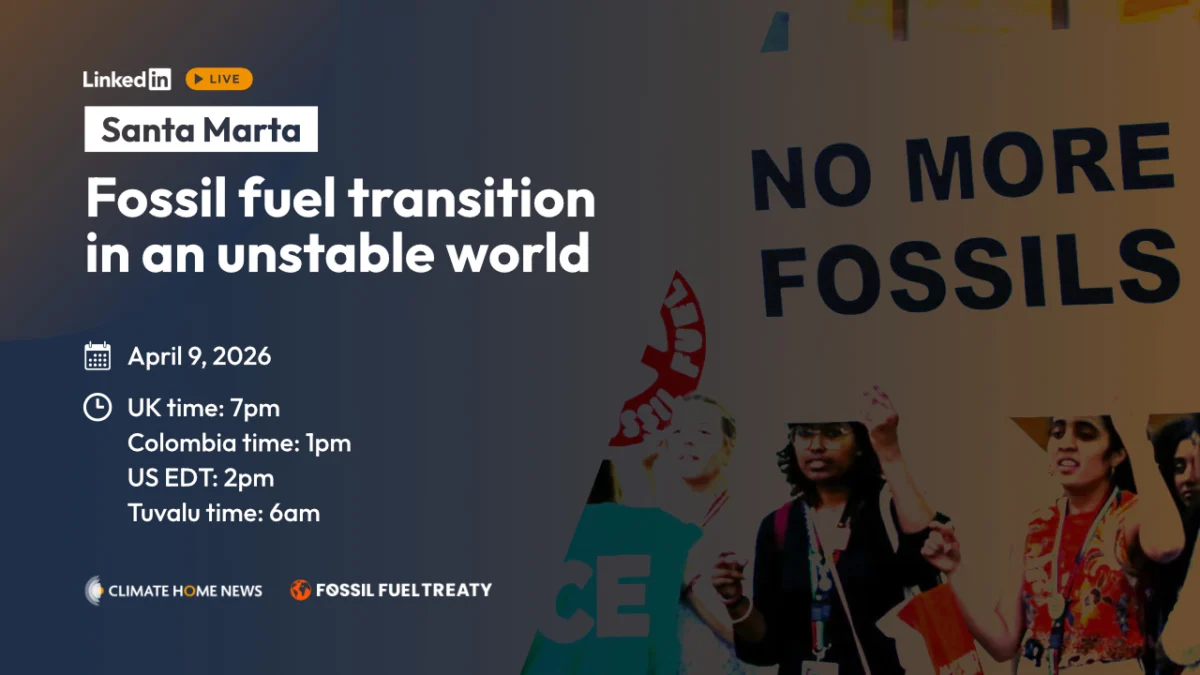
Transitioning away from fossil fuels in an unstable world: how can Santa Marta deliver?
As global leaders and climate experts gather in the coastal city of Santa Marta, Colombia, the challenge of navigating a just energy transition has reached a critical juncture. Against a backdrop of escalating geopolitical tensions, fluctuating energy markets, and a shortfall in international climate finance, the "Santa Marta Dialogue" aims to establish a blueprint for middle-income, resource-dependent nations to pivot away from hydrocarbons without triggering economic collapse. The summit, held in April 2026, arrives at a time when the world is grappling with the dual pressures of immediate energy security and the long-term necessity of decarbonization.

Santa Marta, historically a vital hub for Colombia’s coal exports, serves as a poignant setting for these discussions. The city embodies the friction between the old energy economy and the emerging green frontier. For decades, the region’s economy has been tethered to the extraction and shipment of thermal coal, yet it is also one of the areas most vulnerable to the rising sea levels and extreme weather patterns associated with global heating. The central question facing the delegates is whether a city—and by extension, a nation—can successfully dismantle its primary economic engine while simultaneously building a new one in an environment defined by global instability.
The Geopolitical Context of 2026
The transition away from fossil fuels is no longer a purely environmental endeavor; it has become inextricably linked to national security and global diplomacy. In early 2026, the world witnessed a series of shocks that have complicated the climate agenda. The recent missile strikes in Tehran, which resulted in the destruction of high-level research facilities, have sent ripples through the Middle East, causing a spike in global gas prices. This volatility has already forced some European nations to recalibrate their climate timelines. Italy, for instance, recently announced a delay in its scheduled coal exit, citing the need to maintain energy stability as natural gas costs soar.

These events highlight the "unstable world" referenced by the Santa Marta delegates. When energy prices rise, the political will to abandon domestic fossil fuel reserves often wavers. However, Colombian President Gustavo Petro has maintained a firm stance, arguing that the volatility of the fossil fuel market is the very reason why nations must decouple their economies from oil and coal. During the opening session of the summit, Colombian officials emphasized that the current global instability is a symptom of a dying energy paradigm, not a reason to prolong its life.
Colombia’s Bold Legal Maneuvers
A significant development discussed at the summit is Colombia’s recent pledge to exit the Investor-State Dispute Settlement (ISDS) system. This move is seen as a direct response to the "legal warfare" waged by multinational fossil fuel corporations against sovereign climate policies. Under the ISDS framework, companies can sue governments in private tribunals if environmental regulations—such as the denial of new mining permits or the early closure of coal plants—harm their projected profits.

Legal experts at the Santa Marta summit noted that Colombia has faced billions of dollars in claims from international investors following its decision to restrict mining in sensitive high-altitude ecosystems and its refusal to grant new oil exploration licenses. By withdrawing from these investment protection treaties, Colombia is attempting to reclaim its policy autonomy. However, this strategy is fraught with complexity. Unwinding decades of bilateral investment treaties (BITs) requires intense international coordination, and there are concerns that such a move could deter the very foreign direct investment (FDI) needed for the renewable energy sector.
The Financial Gap: GEF and the Global North’s Shortfall
The transition in Santa Marta and beyond is hindered by a widening gap in climate finance. Reports released during the summit reveal that the Global Environment Facility (GEF) has raised approximately $3.9 billion ahead of its latest funding deadline—a figure that sits nearly $1 billion below its previous budget. This shortfall comes at a time when donor governments in the Global North are implementing aid cuts and prioritizing domestic defense spending over international climate obligations.

For developing nations, this lack of financial support is a significant barrier. The "Just Transition" requires massive capital for retraining workers, upgrading electrical grids, and de-risking renewable energy projects. In Santa Marta, the local workforce remains deeply concerned about the future. Of the thousands of workers employed in the coal ports and nearby mines, only a fraction have access to the vocational training programs necessary to transition into the green economy.
Data presented at the summit indicates that while global investments in clean energy are rising, they remain heavily concentrated in China, the European Union, and the United States. In 2025, for every dollar spent on renewable energy in the Global South, nearly seven dollars were spent in the Global North. This imbalance threatens to leave countries like Colombia in a "middle-income trap," where they are too wealthy for certain types of aid but not wealthy enough to finance a total economic overhaul independently.

Lessons from the Global South: Successes and Setbacks
The Santa Marta Dialogue has also served as a forum for sharing regional case studies. Nepal’s recent "EV Revolution" was highlighted as a success story. Through a combination of import subsidies, heavy investment in charging infrastructure, and the utilization of abundant domestic hydropower, electric vehicles now account for nearly 75% of new car sales in Nepal. This shift has not only reduced emissions but also insulated the country from the oil price shocks that have plagued its neighbors.
Conversely, the situation in Bangladesh serves as a cautionary tale. Despite a surge in demand for electric rickshaws and bikes, the country’s transition has been hampered by high prices and an inadequate charging network. Many Bangladeshis remain tethered to fossil fuels because the green alternative is either too expensive or too unreliable. For Santa Marta to deliver on its promises, delegates argued that the city must follow the "Nepalese model" of integrated policy rather than the "fragmented approach" seen elsewhere.

The Deforestation Link
The transition away from fossil fuels cannot be viewed in isolation from land-use policy. Brazil’s leadership in creating a global roadmap to halt deforestation by 2030 was a major topic of discussion in Santa Marta. The health of the Amazon rainforest is intrinsically linked to the regional climate of the Andes and the Caribbean coast. If deforestation continues at its current rate, the hydroelectric capacity of the region—the primary alternative to coal power—could be compromised by changing rainfall patterns.
However, even "green" solutions carry risks. Recent investigations discussed at the summit revealed that some imports of "sustainable" aviation fuel to the United Kingdom have been linked to Amazon deforestation. Specifically, beef tallow used in the production of bio-jet fuel has been traced back to meatpacking firms fined for illegal cattle ranching on protected lands. This underscores the need for rigorous carbon accounting and supply chain transparency to ensure that the transition away from fossil fuels does not inadvertently accelerate nature loss.

Chronology of Colombia’s Transition Path (2022–2026)
To understand the stakes of the Santa Marta meeting, it is essential to trace the timeline of Colombia’s climate policy under the Petro administration:
- August 2022: Gustavo Petro is inaugurated, promising to make Colombia a "world powerhouse of life" by ending new oil and gas exploration.
- December 2023 (COP28): Colombia officially joins the Fossil Fuel Non-Proliferation Treaty (FFNPT) during the climate talks in Dubai, becoming the largest fossil fuel producer to do so.
- June 2024: The government announces the "Territorial Just Transition" plan, identifying Santa Marta and the Guajira region as priority zones for solar and wind development.
- October 2025: Colombia faces a surge in ISDS lawsuits from coal and oil majors, prompting a national debate on the sovereignty of climate policy.
- April 2026: The Santa Marta Dialogue convenes, bringing together international observers to assess the viability of Colombia’s exit from the fossil fuel economy.
Implications and the Road Ahead
The success of Santa Marta’s delivery depends on three critical pillars: international solidarity, domestic political stability, and the integrity of the green supply chain. If the Global North continues to fall short on its $100 billion-plus annual climate finance commitments, nations like Colombia may find it politically impossible to resist the lure of tapping into their remaining coal and oil reserves to fund social programs.

Furthermore, the "unstable world" poses a constant threat. As seen in the recent Iran-Israel escalations and the ongoing conflict in Ukraine, geopolitical shocks can instantly shift the global priority from "green" to "any energy at any cost." For Santa Marta to deliver, it must prove that a green transition is the most resilient path forward, rather than a luxury to be discarded in times of crisis.
As the summit concludes, the "Santa Marta Declaration" is expected to call for a new international financial architecture that includes debt-for-nature swaps and a global tax on fossil fuel profits to fund the transition in the Global South. Whether the world’s major economies will heed this call remains to be seen. What is clear, however, is that the eyes of the world are on this Colombian port city. If Santa Marta can find a way to navigate the end of coal, it will provide a much-needed template for the rest of the planet. If it fails, the transition away from fossil fuels may remain an elusive goal, stalled by the very instability it seeks to mitigate.

Related Posts
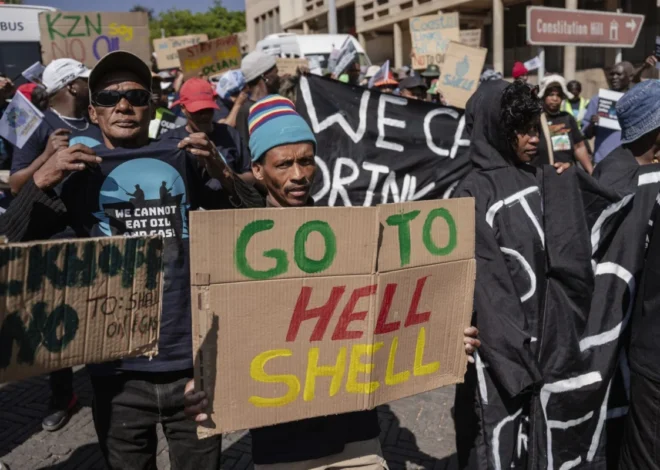
Constitutional Court of South Africa Bars Shell Oil Exploration in Landmark Victory for Environmental and Community Rights
The Battle for Saldanha Bay: South Africa’s Ambitious Ocean Economy Strategy Faces Legal and Environmental Reckoning