Hong Kong and Mainland China Forge Landmark Digital Economy Pact to Usher in New Era of Technological Advancement
Hong Kong authorities have officially cemented a significant Memorandum of Understanding (MOU) with the Cyberspace Administration of China (CAC), the nation’s preeminent internet regulator, signaling a concerted effort to propel the digital economy forward. The agreement, inked on Sunday, underscores Hong Kong’s commitment to actively contribute to China’s ambitious vision of becoming a formidable technological powerhouse. This pact is poised to shape the future of innovation and technology in the region, focusing on key areas such as artificial intelligence, cross-border data flows, and the burgeoning field of blockchain technology.
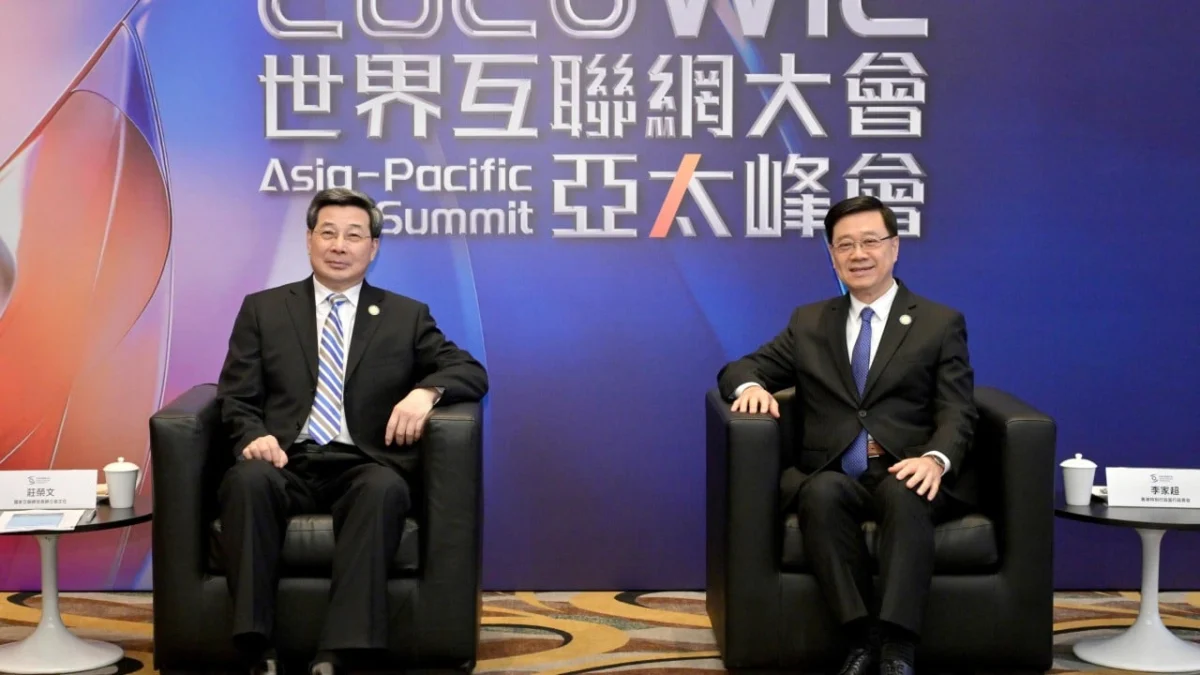
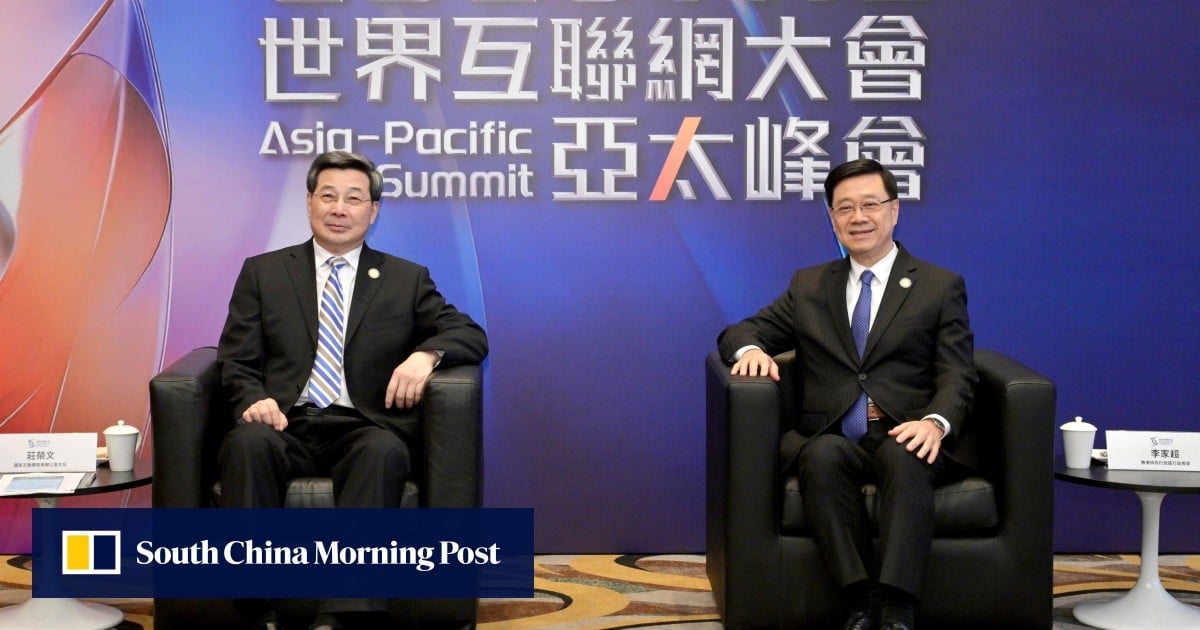
The pivotal signing ceremony saw the participation of key figures from both sides. Hong Kong’s Secretary for Innovation, Technology and Industry, Sun Dong, represented the Special Administrative Region, while Wang Jingtao, Deputy Director of the CAC, stood for the mainland administration. The event was further graced by the presence of Hong Kong’s Chief Executive, John Lee Ka-chiu, and the Director of the CAC, Zhuang Rongwen, underscoring the high-level importance attached to this bilateral cooperation.
Strategic Alignment with National Development Goals
The MOU is not merely a symbolic gesture; it is strategically designed to bolster the implementation of China’s 15th Five-Year Plan for Economic and Social Development, a crucial roadmap guiding the nation’s progress from 2026 to 2030. This alignment signifies Hong Kong’s integral role in the broader national strategy for technological and economic advancement.
Furthermore, the agreement explicitly aims to elevate Hong Kong’s status as an international hub for innovation and technology (I&T). This objective is intrinsically linked to fostering a new economic paradigm driven by cutting-edge I&T industries and deepening the integration of Hong Kong’s burgeoning digital landscape into the overarching national development framework.
A Milestone in Digital Cooperation
Chief Executive John Lee Ka-chiu lauded the MOU as a "new milestone" in the collaborative development of the digital economy. He emphasized that the agreement serves as a clear testament to the mainland’s unwavering support for Hong Kong’s I&T development. Lee articulated Hong Kong’s strategic positioning, stating, "Hong Kong will continue to capitalize on our distinctive advantages of having strong support from the motherland and close connection with the world under the ‘one country, two systems’ [governing] principle." This statement highlights the city’s unique dual role as a gateway and a facilitator, leveraging its distinct autonomy while benefiting from mainland China’s vast resources and market access.
Deepening the Digital Economy: Key Areas of Focus
The scope of the MOU is comprehensive, targeting several critical pillars of the modern digital economy:
- Artificial Intelligence (AI) Promotion: The pact will likely involve collaborative research and development initiatives, the establishment of shared AI platforms, and the cultivation of AI talent. This could translate into joint projects exploring AI applications in sectors like finance, healthcare, and smart city development. China has been aggressively investing in AI, aiming to become a global leader by 2030, and Hong Kong’s expertise in financial technology and its international outlook make it a valuable partner in this pursuit.
- Cross-Boundary Data Flow: Facilitating the secure and efficient movement of data between Hong Kong and mainland China is a cornerstone of the agreement. This is particularly crucial for businesses operating in both jurisdictions, enabling them to leverage data analytics, cloud computing, and other digital services seamlessly. The establishment of clear regulatory frameworks and data governance standards will be paramount to ensuring compliance with privacy and security concerns on both sides. This could involve the development of standardized data transfer protocols and mutual recognition of data protection laws.
- Blockchain Technology: The MOU signals a commitment to exploring and promoting the application of blockchain technology. This could encompass its use in supply chain management, digital identity verification, intellectual property protection, and financial transactions. Hong Kong’s established financial infrastructure and its regulatory sandbox for fintech innovations provide a fertile ground for piloting and scaling blockchain solutions. Mainland China is also keen on leveraging blockchain for various industrial and governmental applications, making this a significant area for synergy.
Background and Context: A Global Push for Digital Sovereignty
The signing of this MOU occurs against a backdrop of intensifying global competition in the digital realm. Nations worldwide are recognizing the immense economic and strategic importance of digital infrastructure, data governance, and technological innovation. Mainland China, under its national strategies, has prioritized self-reliance and leadership in key technological fields, including AI, 5G, and quantum computing.
Hong Kong, with its established financial markets, robust legal framework, and international connectivity, is uniquely positioned to act as a bridge between mainland China and the global digital ecosystem. The "one country, two systems" principle, while evolving, continues to offer Hong Kong a degree of autonomy that can be advantageous in fostering international collaboration and attracting foreign investment in the tech sector.
The CAC, as the principal state agency responsible for cyberspace and internet governance in China, plays a pivotal role in shaping the country’s digital policies. Its collaboration with Hong Kong signifies a top-down strategic imperative to integrate the SAR’s capabilities into the national digital agenda.
Timeline and Key Milestones
While specific timelines within the MOU are not detailed in the initial announcement, the overarching goal is to align with the 15th Five-Year Plan (2026-2030). This suggests that the initiatives outlined in the MOU will be rolled out and developed over the coming years, with potential interim targets and review periods.
- Immediate Post-Signing: Formation of joint working groups to detail specific project plans and regulatory frameworks for AI, data flow, and blockchain.
- Mid-Term (2026-2028): Pilot programs and initial deployments of collaborative initiatives, such as cross-border data pilot zones or joint AI research centers. Potential policy adjustments to facilitate data movement and digital trade.
- Long-Term (2028-2030 and beyond): Full-scale implementation of agreed-upon strategies, aiming to solidify Hong Kong’s position as an international I&T hub and a significant contributor to China’s digital economy.
Broader Implications and Analysis
The implications of this MOU are far-reaching and multifaceted:
- Economic Growth: By fostering innovation and facilitating digital trade, the agreement is expected to stimulate economic growth in both Hong Kong and mainland China. Hong Kong’s I&T sector, already a significant contributor to its GDP, is poised for accelerated development.
- Talent Development: The collaborative focus on AI and other advanced technologies will likely spur the demand for skilled professionals, leading to increased investment in education and training programs in both regions. This could also lead to the attraction of global tech talent to Hong Kong.
- Regulatory Harmonization: A key challenge will be the harmonization of differing regulatory approaches, particularly concerning data privacy and cybersecurity. The success of the MOU will hinge on the ability of both sides to establish clear, consistent, and mutually beneficial regulatory frameworks. This could involve adopting international best practices while respecting national sovereignty.
- International Standing: For Hong Kong, this partnership reinforces its role as a vital node in China’s technological ambitions, while also seeking to maintain its international appeal. For China, it signifies a strategic move to harness Hong Kong’s global connectivity and financial expertise to bolster its digital economy on the world stage.
- "One Country, Two Systems" Dynamics: The MOU also provides a tangible example of how the "one country, two systems" principle can be leveraged for pragmatic cooperation in strategic sectors. It demonstrates a commitment from Beijing to support Hong Kong’s development within the broader national context, while allowing for distinct operational frameworks.
Official Statements and Expected Reactions
While the initial announcement focused on the official signatories, it is reasonable to infer that various stakeholders will respond to this development.
- Hong Kong’s I&T Sector: Technology companies, startups, and research institutions in Hong Kong are likely to welcome the enhanced cooperation, anticipating greater access to mainland markets, funding opportunities, and collaborative research projects. They will be keen to understand the specifics of data flow regulations and potential support mechanisms.
- Mainland Chinese Tech Companies: Businesses in mainland China may see this as an opportunity to expand their reach into international markets through Hong Kong and to leverage the city’s expertise in finance and international business.
- International Investors: Global investors in the tech sector will closely monitor the implementation of the MOU, assessing its impact on market access, regulatory certainty, and the overall investment climate in Hong Kong and the Greater Bay Area. The clarity and transparency of the regulatory frameworks established will be critical for attracting foreign direct investment.
- Academics and Policy Analysts: Experts in technology policy, economics, and regional studies will analyze the strategic implications of the pact, particularly in relation to China’s broader technological ambitions and Hong Kong’s unique role in the global landscape. Discussions are likely to revolve around the balance between national integration and Hong Kong’s distinctiveness.
The signing of this MOU marks a significant step in the evolution of Hong Kong’s digital economy and its integration into mainland China’s national development strategy. The success of this collaboration will be measured by its ability to foster tangible advancements in AI, cross-border data flow, and blockchain technology, ultimately contributing to both regional prosperity and China’s overarching goal of technological leadership.