Israeli Air Strikes Target Critical Infrastructure in Lebanon as Humanitarian Crisis Deepens in the South
The escalation of hostilities in the Middle East reached a devastating new peak on April 8, 2026, as Israeli forces conducted more than 100 simultaneous air strikes across Lebanon, resulting in the deaths of over 300 people and the near-total isolation of the country’s southern panhandle. Human Rights Watch (HRW) reported today that the aerial campaign specifically targeted densely populated neighborhoods in Beirut and critical infrastructure, most notably the final remaining bridge over the Litani River. The destruction of these transit points has effectively severed the link between southern Lebanon and the rest of the country, threatening to cut off tens of thousands of civilians from essential humanitarian aid, medical supplies, and food.
According to the Lebanese Health Ministry, the strikes on April 8 killed at least 303 people and injured more than 1,150, marking the deadliest single day of the conflict since a major escalation began on March 2. The Israeli military stated that the strikes were executed within a ten-minute window, hitting multiple regions simultaneously to disrupt the operations of Hezbollah. However, the humanitarian fallout has been immediate and severe. Ramzi Kaiss, a Lebanon researcher at Human Rights Watch, characterized the campaign as a "humanitarian catastrophe" in the making, noting that the systematic destruction of bridges is a direct threat to the survival of the civilian population remaining in the south.
The Systematic Destruction of the Litani Crossings
The Litani River has long served as a strategic geographical marker in Lebanese-Israeli conflicts, but the current campaign has seen a level of infrastructure targeting that observers describe as unprecedented. Between March 12 and April 8, Israeli forces systematically dismantled the network of bridges that connect the southern districts of Tyre, Nabatieh, and Bint Jbeil to the northern governorates.
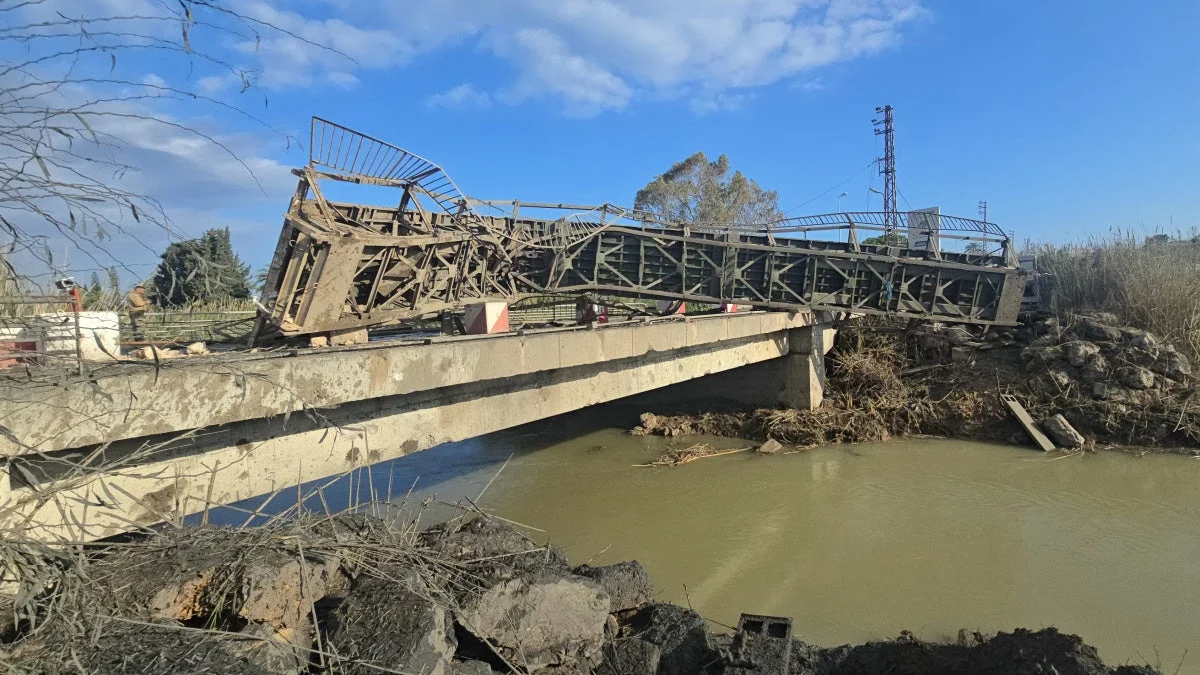
By the morning of April 9, nine bridges over the Litani River and its various tributaries had been rendered unusable. These include the primary crossings at Al-Khardali and several smaller but vital secondary routes. The final major artery, the Qasmieh bridge near the coastal city of Tyre, was targeted in the April 8 strikes. While the main structure remains partially operable for the time being, a parallel footbridge was destroyed, and debris has severely restricted the flow of traffic. The Lebanese Armed Forces were forced to evacuate the bridge following the strikes, and the Israeli military later confirmed it had struck "two key crossings" to prevent the movement of Hezbollah combatants and weaponry.
Human Rights Watch researchers, who visited the region on March 31, documented the growing desperation of the local population. Interviews with municipal officials, civil defense members, and displaced residents revealed a community that feels increasingly trapped. "If they strike the bridge, where will we go? There is nowhere to go," said Hassan Hamieh, a resident who had already fled his home in Beit Leif to seek relative safety in Tyre.
Chronology of the 2026 Escalation
The current crisis is the result of a rapid intensification of a conflict that has simmered since October 2023. To understand the gravity of the April 8 strikes, it is necessary to look at the timeline of the preceding weeks:
- March 2, 2026: A significant escalation in cross-border fire leads to a full-scale Israeli aerial campaign across southern Lebanon and the Bekaa Valley.
- March 4, 2026: The Israeli military begins issuing sweeping displacement orders for all residents south of the Litani River, encompassing the entire district of Tyre.
- March 12, 2026: Israeli forces begin the systematic targeting of bridge infrastructure. Displacement orders are expanded to include areas as far north as the Zahrani River, 40 kilometers from the border.
- March 17, 2026: The UN High Commissioner for Human Rights warns that the destruction of bridges is creating "heightened isolation" for southern residents.
- March 23, 2026: The UN Office for the Coordination of Humanitarian Affairs (OCHA) reports that the severance of connectivity has isolated over 150,000 people.
- March 31, 2026: HRW researchers arrive in Tyre to document the impact on hospitals and food security.
- April 8, 2026: The "Ten-Minute Campaign" occurs, involving 100+ strikes, the bombing of Beirut neighborhoods, and the targeting of the Qasmieh bridge.
Humanitarian Impact and the Collapse of Essential Services
The isolation of southern Lebanon has triggered a collapse in the region’s ability to sustain its remaining population. Mortada Mohanna, director of the Disaster Risk Reduction and Unit Management at the Union of Tyre Municipalities, estimated that as of April 8, approximately 71,000 people remain in Tyre and its surrounding villages. These individuals are now living in a state of siege.
Food and Water Security
Local authorities in Tyre have warned that food supplies are critically low. Alwan Charafeddine, the vice mayor of Tyre, stated that if the Qasmieh bridge is completely destroyed, the city’s remaining food stocks would last no more than a week. "By sea, by air, nothing can come in," Charafeddine told HRW. Currently, all five of the city’s major supermarkets have closed their doors due to supply chain disruptions and safety concerns. Only five bakeries remain operational, and they are struggling to meet the demands of the thousands of displaced persons seeking refuge in the city.
Medical Crisis
The healthcare sector is perhaps the most severely impacted. Since the March 2 escalation, at least six hospitals in Lebanon have been forced to shut down, including three located south of the Litani River. For those that remain open, such as Jabal Amel Hospital in Tyre, the situation is dire.
An official at Jabal Amel Hospital reported that staff are now living on-site because travel has become too dangerous. The hospital has become a final sanctuary for dialysis patients who can no longer risk traveling back and forth to their homes. Due to the bridge destructions, medical supplies must be ferried from Sidon—over 30 kilometers away—in high-risk night-time convoys. In some instances, doctors have been forced to perform complex surgeries using hand-operated drills because specialized medical tools could not be sent away for repair or replacement.
International Legal Standards and the Laws of War
The targeting of civilian infrastructure, such as bridges, is a contentious issue under international humanitarian law. The Israeli military maintains that these crossings are used by Hezbollah for "military purposes," including the transfer of reinforcements. However, Human Rights Watch emphasizes that even if a bridge is considered a military objective, any attack must adhere to the principle of proportionality.
Under the laws of war, an attack is prohibited if the expected harm to civilians and civilian objects is excessive in relation to the concrete and direct military advantage anticipated. HRW argues that the total isolation of 150,000 civilians and the resulting deprivation of food and medicine far outweigh the stated military goals. Furthermore, the organization notes that forced displacement is prohibited except for imperative military reasons or the protection of civilians—and even then, those who choose to stay remain fully protected under the law.
The International Criminal Court (ICC) has already taken notice of similar tactics in other theaters of the region. HRW points to the arrest warrants issued for Israeli Prime Minister Benjamin Netanyahu and former Defense Minister Yoav Gallant on charges related to the starvation of civilians in Gaza as a legal precedent that may apply to the systematic deprivation of aid in southern Lebanon.
Global Reactions and Calls for Accountability
The international community’s response to the April 8 strikes has been a mixture of alarm and calls for restraint. However, Human Rights Watch has criticized what it calls the "silence" of world powers, which it claims has emboldened the Israeli military to commit further atrocities.
HRW is calling for several immediate actions from the international community:
- Arms Embargo: The United States, United Kingdom, Germany, and other EU states are urged to suspend all arms sales and military assistance to Israel.
- Sanctions: Targeted sanctions should be imposed on officials implicated in grave crimes.
- Trade Suspension: The European Union is encouraged to suspend the trade pillar of its Association Agreement with Israel.
- Domestic Investigations: Lebanon’s judicial authorities are urged to initiate domestic investigations into international crimes and to accede to the ICC’s Rome Statute.
The UN Office for the Coordination of Humanitarian Affairs has echoed these concerns, stating that the damage to transport routes is not only impeding aid but also limiting the ability of civilians to move safely to areas further north.
Broader Implications for the Region
The destruction of the Litani bridges signifies a shift in the conflict from tactical skirmishes to a broader campaign of territorial and humanitarian pressure. By severing the south, the Israeli military appears to be attempting to create a "buffer zone" devoid of civilian life, a strategy that carries immense risks for regional stability.
The long-term impact on Lebanon’s economy and infrastructure will be felt for decades. The Litani River is the lifeblood of the country’s agricultural sector, and the inability to transport goods across the river will lead to soaring inflation and food shortages nationwide. Furthermore, the psychological impact on the population—feeling abandoned by the international community and trapped by geography—may fuel further radicalization and instability.
As the smoke clears from the strikes of April 8, the focus remains on the Qasmieh bridge. It stands as a fragile lifeline for tens of thousands of people. Should it fall, the "humanitarian catastrophe" warned of by Human Rights Watch will transition from a looming threat to a grim reality for the people of southern Lebanon. "Civilians are paying the price of the international community’s silence," said Ramzi Kaiss. "To prevent a catastrophe, the international community must act now to ensure that the last working bridge remains functional and that aid can reach those in need."

Related Posts
Bangladesh: First Enforced Disappearance Case Since July 2024 Uprising

Crackdown on Artistic Dissent in Morocco: The Arrest of Mehdi Black Wind and the Shrinking Space for Freedom of Expression