Escalating Attacks on Iranian Academic Institutions Spark Global Alarm Over Scientific and Intellectual Warfare
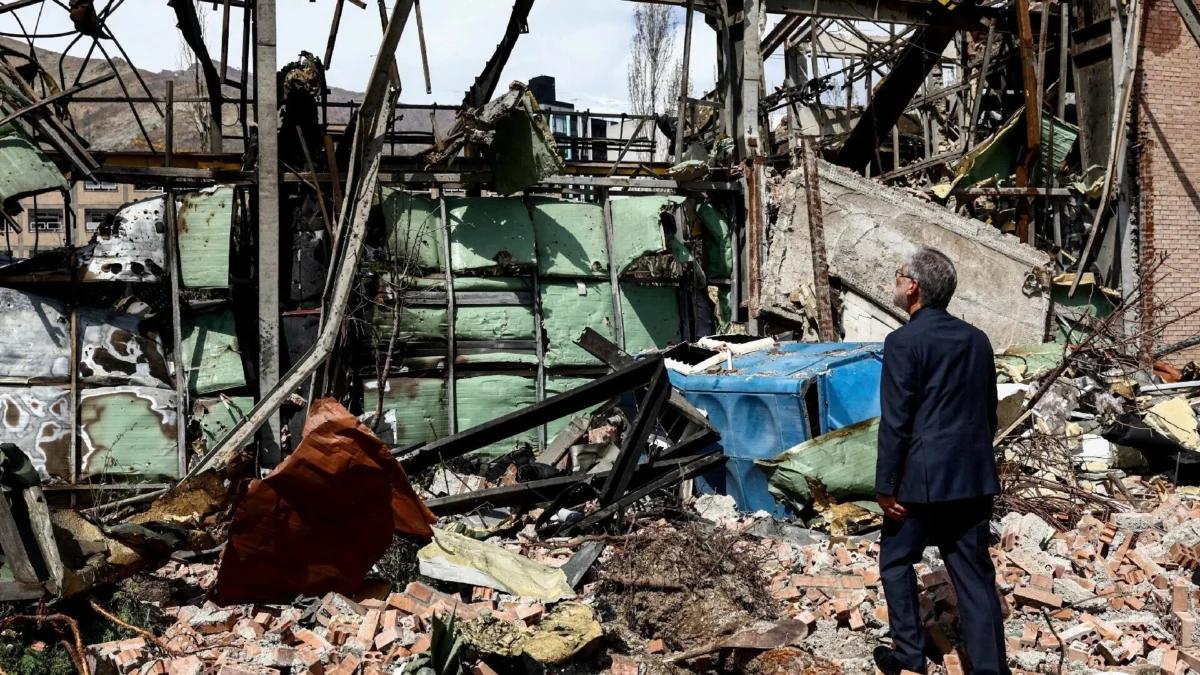
A powerful blast ripped through Iran’s esteemed Sharif University of Technology on April 6, severely damaging multiple buildings, most notably those housing a critical artificial intelligence (AI) centre. While no casualties were reported from this specific incident, the attack has ignited widespread concern, fitting into a disturbing pattern of strikes targeting Iran’s academic and research infrastructure amidst what is described as a US-Israeli war on the nation. The incident at Sharif, often dubbed the "MIT of Iran" due to its preeminent status, underscores a calculated campaign that observers warn could constitute war crimes and lead to profound, long-term societal damage.
Sharif University of Technology, with decades of history, stands as one of West Asia’s leading engineering schools. Its legacy includes distinguished alumni such as Maryam Mirzakhani, the first woman and first Iranian to be awarded the Fields Medal, mathematics’ most prestigious honour, in 2014. The targeted AI centre was a hub of national innovation, housing critical databases and boasting staff who had dedicated the past two years to training AI models specifically in Persian, a necessity born out of US sanctions that have largely isolated Iran from global AI research knowledge. "Most of its equipment was destroyed," lamented Amirhossein, a student who worked at the centre, speaking to Middle East Eye. He stressed the centre’s purely civilian mission: "We were developing data processing services and knowledge-based platforms for universities across the country." He concluded with a chilling assessment: "Attacks like this suggest the goal is to push Iran backwards scientifically."
The immediate aftermath saw an outpouring of defiance from the academic community. Despite working under the constant shadow of US sanctions that have long hampered their access to international collaborations and resources, students and faculty are resolute. Footage circulating on social media, notably on X (formerly Twitter), captured a mathematics professor setting up his laptop amidst the bombed-out shell of his classroom to deliver an online lecture, a poignant symbol of resilience. Mohammad Reza Aref, Iran’s first vice president, accused the US of deploying a "bunker buster bomb" on the university, declaring that "Trump fails to understand that Iran’s knowledge is not embedded in concrete to be destroyed by bombs; the true fortress is the will of our professors and elites."
A Pattern of Escalation: Chronology of Attacks
The strike on Sharif University is not an isolated incident but rather the latest in a series of attacks systematically targeting Iran’s research and educational institutions. This concerted campaign has drawn sharp condemnation and raised questions about the deliberate targeting of civilian academic infrastructure.
- March 22: Dr. Saeed Shamghadri, an associate professor in the electrical engineering department at Isfahan University of Technology (IUT), was tragically killed in an air strike along with his family, as reported by Iran’s Islamic Republic News Agency (IRNA). This marked a horrifying escalation, moving from infrastructure damage to the direct targeting of academic personnel.
- March 28: The Iran University of Science and Technology (IUST), founded in 1929 to train engineers crucial for national development, was reportedly struck in a US-Israeli attack. Local media highlighted the incident, though the full extent of the damage and potential casualties remained unclear.
- March 29: Isfahan University of Technology (IUT), another of the country’s most prestigious engineering universities, suffered its second attack. Iran’s Fars News Agency reported significant damage to several buildings and four members of staff wounded. IUT is notable for having produced the country’s national radar project and for designing and implementing Iran’s first submarine, underscoring its strategic importance to national self-sufficiency. In 2015, both Sharif University and IUT were globally recognized, ranking 40th and 63rd respectively in the Times Higher Education‘s list of the top 100 world universities under 50 years of age.
- Early March: An IVF clinic at Tehran’s Ghandi Hospital was hit, causing devastating damage. A couple who had spent a decade trying to conceive expressed their anguish to Middle East Eye, unsure of the fate of their stored samples. This incident highlighted the indiscriminate nature of the attacks, impacting even sensitive medical facilities and deeply personal aspirations.
- April 2: The century-old Pasteur Institute of Iran, a vital public health and research facility, was hit by a missile. Its vaccine-producing laboratories were reduced to rubble, severely undermining Iran’s capacity for medical research and public health initiatives, especially critical in a nation grappling with the enduring challenges of sanctions.
- Days after Pasteur Institute attack: A plasma and laser research laboratory at Shahid Beheshti University in Tehran also sustained a direct hit, further eroding the country’s scientific capabilities.
- April 6: The blast at Sharif University of Technology, the focus of the initial report, marked another significant strike against a pillar of Iranian academia.
According to Iran’s science and technology ministry, at least 30 universities have come under fire during this period. The British Society for Middle Eastern Studies (BRISMES) corroborates the scale of the destruction, reporting that at least 16 universities and research centres have sustained damage, painting a grim picture of widespread targeting of educational and scientific infrastructure.

Strategic Targeting: Undermining Iran’s Scientific Autonomy
The consistent targeting of scientific and technological research centres suggests a deliberate strategy aimed at crippling Iran’s capacity for independent innovation and development. These institutions are the bedrock of Iran’s drive towards self-reliance, particularly in critical sectors where sanctions have created significant barriers. The AI centre at Sharif, IUT’s contributions to national radar and submarine projects, and the Pasteur Institute’s vaccine production capabilities are not merely academic pursuits; they represent strategic national assets.
Morteza, a 42-year-old philosophy of science student at Sharif, voiced the profound disorientation felt by many: "Can someone explain why philosophy of science should be targeted? Is the problem with philosophy or with science itself? It feels like the real target is the ability to think." His words encapsulate the broader fear that these attacks aim to dismantle not just physical infrastructure, but the very intellectual foundations necessary for a nation’s progress.
This campaign appears to be an extension of the pressure exerted through decades of economic sanctions. These sanctions have systematically stifled Iran’s academic community, limiting international collaborations, restricting access to crucial scientific equipment and software, and barring students and researchers from attending international conferences. Reza Sohrabi, a research fellow at the University of Tehran, highlighted the daily struggles: "Not having connections with international universities is difficult; it means students cannot even go to a summer school abroad or on exchanges." Reports have also indicated that some editors have rejected papers from Iranian medical practitioners, and scientists have faced difficulties paying for society subscriptions and event registrations, effectively isolating them from the global scientific community.
Asama Abdi, a postdoctoral fellow at the Institute of Arab and Islamic Studies at the University of Exeter, argued that the attacks are designed to complete what sanctions could not: "Whatever technological capabilities could not be disabled and curtailed through sanctions are now being completely annihilated through bombardment." She described it as a "longer, indeed colonial, pattern of attempting to sabotage knowledge sovereignty and technological autonomy, ultimately undermining a country’s long-term capacity to remain sovereign in knowledge production and technological development." The implication is clear: by destroying these centres, the attackers aim to permanently roll back Iran’s technological advancements and future potential.
Disregard for International Law and Accusations of War Crimes
The systematic nature of these strikes has drawn comparisons to other conflicts where educational systems have been decimated. Lewis Turner, chair of the BRISMES Committee on Academic Freedom, pointed to the "widespread disregard for universities’ protected status under international law." He warned, "These actions may well amount to war crimes," echoing similar concerns raised regarding the eradication of Gaza’s education system during recent conflicts. International humanitarian law, including the Geneva Conventions, generally prohibits attacks on civilian objects, which include educational institutions, unless they are being used for military purposes. The repeated assertions by students and university officials that the targeted centres have no military connection only strengthen the case for potential violations.

Turner further emphasized the devastating, long-term repercussions: "How many generations will be denied access to education because of the damage to university infrastructure? Because of the roles that universities play within society for the progress of knowledge… this kind of destruction is going to have potentially long-term and profound effects on Iranian society." The destruction of labs, libraries, and research facilities represents an irreversible loss of accumulated knowledge and future potential.
Universities as Political Imaginaries: Beyond Scientific Targets
Beyond their scientific and technological roles, Iranian universities have historically been pivotal centres for intellectual discourse and political mobilization. Asama Abdi highlighted this dual function: "Throughout the modern history of Iran, student movements and universities have been the centre of anti-authoritarian and anti-imperialist mobilisations." From the anti-Shah protests to more recent anti-government demonstrations in February, universities have frequently emerged as critical battlegrounds for dissenting voices and the development of alternative political visions.
Following the fall of the Shah and the Pahlavi dynasty, universities remained strongholds for nationalist and leftist groups. This led to the "Cultural Revolution" in 1980, during which the new Islamic leadership temporarily shut down campuses, expelling professors and students deemed opposed to Islamic rulings upon their reopening in 1983, and establishing the Student Basij to monitor campus activity. More recently, during nationwide protests, the government’s move to transfer university classes online was widely interpreted as an attempt to quash burgeoning student activism.
Abdi suggested that the US-Israeli targeting of Iran’s academic institutions could be seen as an extension of this historical pattern of suppressing dissent, effectively annihilating the very spaces where "ideas are exchanged, and political imaginaries take shape." She termed this strategy a form of "scholasticide," similar to what has been observed in other conflict zones, aimed at "foreclos[ing] possibilities for political alternatives and political imaginaries, ultimately undermining the prospects for democracy in Iran." This perspective suggests that the attacks are not merely about stifling scientific progress but also about preempting future political change and intellectual autonomy.
The ongoing bombardments force Iranian students and academics to grapple with unprecedented challenges. "It’s not easy to study and work and research during a war. I’m trying to produce my thesis and dissertation and other papers," Sohrabi recounted, detailing the struggle to rely on unstable internet connections and the closure of essential resources like libraries. The destruction of universities thus impacts not only national scientific capabilities but also the daily lives and future aspirations of countless individuals, threatening to create a lost generation of scholars and innovators.
The international community watches with growing apprehension as the systematic targeting of Iranian academic institutions escalates. The long-term implications for Iran’s scientific development, intellectual freedom, and societal progress are immense. The calls for accountability and adherence to international law underscore the urgent need to protect educational spaces as vital civilian infrastructure and bastions of knowledge, even amidst conflict.

Related Posts
Over 150 Israeli Settlers Storm Al-Aqsa Compound and Perform Prayers, Violating Status Quo Under Police Protection.
UN Report Highlights Over 900 Obstacles Hampering West Bank Aid Amid Escalating Humanitarian Crisis