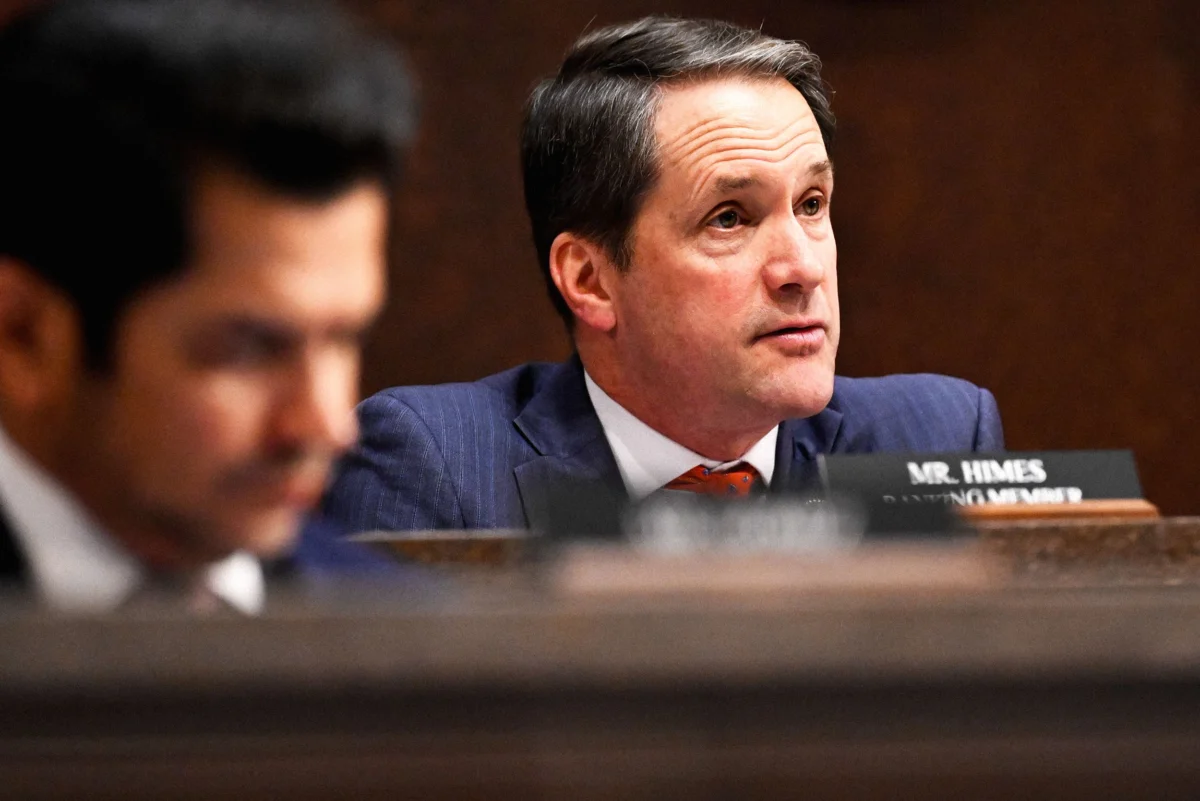
Representative Jim Himes Faces Internal Democratic Backlash Over Push to Renew Warrantless Surveillance Powers
Representative Jim Himes, the ranking Democrat on the House Intelligence Committee, is currently spearheading a quiet but significant effort to secure a clean reauthorization of Section 702 of the Foreign Intelligence Surveillance Act (FISA). The controversial provision, which allows the federal government to intercept the electronic communications of foreign nationals located abroad, frequently sweeps in vast quantities of private data belonging to United States citizens. Despite a climate of intense skepticism within his own party regarding the current administration’s use of surveillance tools, Himes is lobbying colleagues to move forward with a short-term renewal, arguing that the program is essential to national security and that existing oversight mechanisms are functioning as intended.
The push for reauthorization comes at a delicate political moment. Internal audits and reports from the Foreign Intelligence Surveillance Court (FISC) have documented a persistent history of non-compliance and improper querying by the Federal Bureau of Investigation. As the debate over the scope of executive power intensifies, the disagreement highlights a widening rift between national security hawks who prioritize intelligence collection and privacy advocates who fear that the current administrative framework is insufficient to prevent the targeting of domestic political opponents.
A Legacy of Reform and the Question of Compliance
The legislative framework currently under scrutiny is rooted in the "56 reforms" passed by Congress in 2024. These measures were designed to codify FBI internal protocols into law, ostensibly replacing the need for individual constitutional warrants for every search of American data. Himes, in a letter circulated to fellow Democrats, asserts that these reforms have proven effective, citing a compliance rate that he claims has exceeded 99 percent over the previous two-year period.
However, the validity of this metric has been called into question by structural changes within the Department of Justice and the FBI. The compliance data previously cited by intelligence officials was largely generated by the Office of Internal Auditing, a unit that functioned as an independent check on surveillance activities. Under the current administration, that office was shuttered by FBI Director Kash Patel, effectively removing the mechanism responsible for verifying the accuracy of the FBI’s own self-reported failure rates. Without an independent auditor, critics argue that the "99 percent" figure lacks a foundation in verified data, leaving Congress to rely on potentially incomplete or misleading internal reports.
Chronology of Oversight and Institutional Change
To understand the current impasse, one must examine the progression of the 702 program over the last three years:
- 2024: Congress passes the 702 reauthorization bill, incorporating the "56 reforms" to address concerns regarding the warrantless searching of American communications.
- Late 2024: The FBI Director, under the Trump administration, implements a restructuring of the federal workforce, stripping civil service protections from legal and management personnel. This creates an environment where failure to implement administrative policies can result in termination.
- Early 2025: The Office of Internal Auditing is formally closed. Court opinions begin to surface indicating that FBI personnel have deployed search tools that bypass logging and auditing protocols.
- Late 2025–Early 2026: Public disclosures reveal that the FBI has initiated investigations into journalists, activists involved in immigration protests, and groups associated with political opposition, often utilizing counterterrorism resources for these domestic activities.
- February 2026: The Congressional Progressive Caucus formally declares its opposition to a clean reauthorization, citing the administration’s demonstrated willingness to use surveillance for political ends.
Structural Weaknesses in the Oversight Framework
The core of the dispute involves the "reactive" nature of existing oversight. Unlike traditional criminal investigations, which require a judge to review evidence and issue a warrant before a search can occur, Section 702 searches are largely self-policed. The Foreign Intelligence Surveillance Court, while theoretically a check on the executive branch, lacks an investigative arm. Its role is confined to reviewing the information provided by the Department of Justice; if the department fails to report a violation or provides incomplete information, the court has no independent means of detection.
Liza Goitein, senior director of the Brennan Center for Justice’s Liberty and National Security Program, emphasizes that the reliance on the Department of Justice is a fatal flaw in the current system. "Neither Congress nor the FISA Court conducts independent audits," Goitein noted. "They rely on the Department of Justice to conduct thorough audits and to report the results truthfully and promptly. This particular Department of Justice has gutted internal oversight mechanisms and has been rebuked by dozens of federal courts for providing inaccurate, misleading, or incomplete information."
The Administrative Shift and Political Risk
The internal FBI environment has shifted significantly due to the 2025 overhaul of federal personnel policies. By removing civil service protections from the middle management and legal tiers of the bureau, the administration has effectively centralized control over the individuals responsible for approving surveillance queries. In this context, the "high-level approval" process—often cited by proponents as a safeguard—may be functioning as a gatekeeper for political agendas rather than a check on overreach.
Reports of FBI agents being encouraged to "actively run queries on Americans" to justify the program’s utility add another layer of concern. Former Deputy Director Paul Abbate’s 2024 directive, which encouraged such searches, serves as a point of contention for lawmakers who fear the program is being leveraged to manufacture intelligence or monitor domestic political actors.
Legislative Alternatives and the Path Forward
Proponents of reform, such as those supporting the Government Surveillance Reform Act, argue that a middle ground exists. These bills would mandate warrants for searches targeting American data, while maintaining "emergency carve-outs" that allow for rapid intelligence gathering when immediate threats to life or safety exist. Under such proposals, the FBI would still have the authority to act against imminent terrorist threats without waiting for a judge, while being required to present evidence for slower-moving investigations, such as espionage.
Representative Himes, however, maintains that even a temporary lapse in the program would imperil national security. In his communication to the caucus, he stated, "A short-term reauthorization of Section 702 will enable Congress to thoroughly debate the pros and cons of these suggested reforms—and to determine if compromise is possible—without placing our national security in peril by allowing the program to expire."
Implications for the Democratic Caucus
The stance taken by Himes has caused a significant stir within the Democratic caucus. With the Congressional Progressive Caucus—representing 98 members—vowing to vote against a clean extension, the path to passing a reauthorization bill through the House is narrow. Many Democrats are wary of providing the current administration with what they characterize as unchecked surveillance capabilities, especially given the public disclosures of raids on journalists and the monitoring of political chat groups.
Representative Pramila Jayapal and other privacy advocates have pointed to the administration’s apparent interest in the search histories of lawmakers as evidence that the system is already being compromised. The political risk for Democrats is twofold: failing to reauthorize a key intelligence program could leave them vulnerable to accusations of being "soft on national security," while supporting a clean renewal could alienate a base deeply concerned about civil liberties and the weaponization of the federal government.
As negotiations continue, the debate remains a litmus test for the balance of power in the post-reform era. With the "56 reforms" failing to prevent documented abuses, and with the internal auditing mechanisms that once provided a shred of accountability now dismantled, the decision facing Congress is whether to maintain the status quo or to finally impose the constitutional guardrails that many legal scholars believe are long overdue. The outcome of these negotiations will likely determine the extent of federal surveillance authority for years to come, setting a precedent for how the government interacts with the private digital lives of American citizens.

Related Posts

The Las Vegas Cybersecurity Summit and the Escalating Threat of Autonomous Digital Exploitation

New York City Council members and privacy advocates launch legislative campaign to ban biometric facial recognition at public entertainment venues