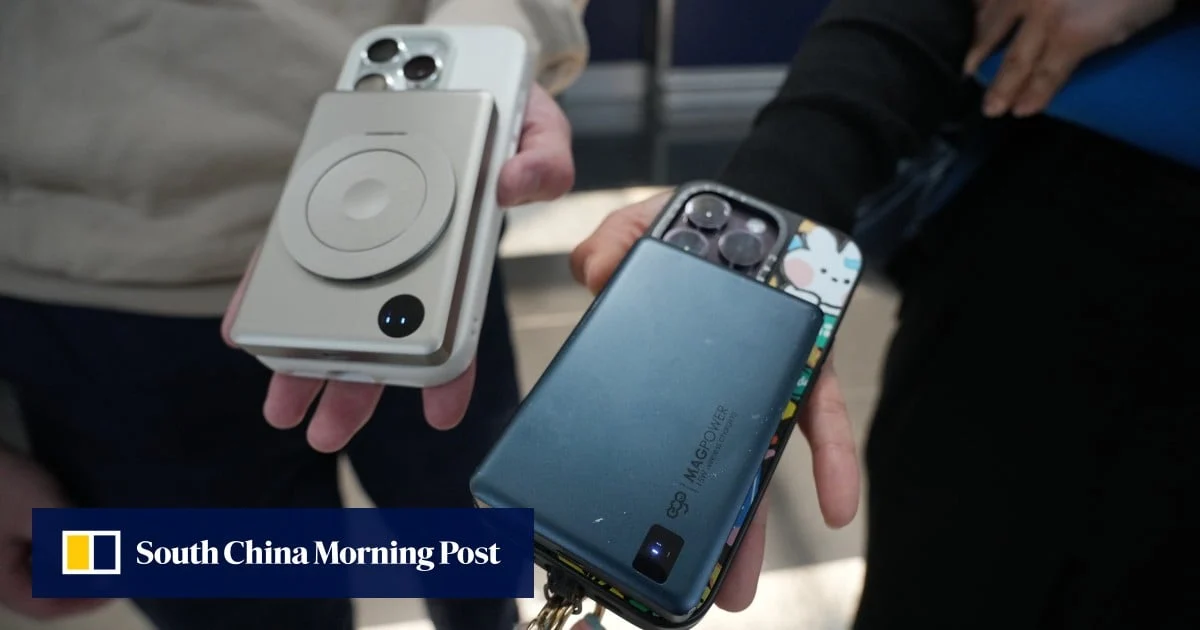
Hong Kong International Airport Implements Stricter Power Bank Regulations for Departing Passengers
Effective immediately, all passengers departing from Hong Kong International Airport are now subject to new regulations limiting the number of power banks they can carry, a move mandated by the International Civil Aviation Organization (ICAO) to bolster aviation safety. The Airport Authority announced this significant policy shift on Saturday evening, underscoring the growing international concern surrounding the carriage and use of lithium-ion batteries in air travel. Under the revised guidelines, each passenger is permitted to carry a maximum of two power banks, with a strict prohibition on their use or recharging during flight. This directive aims to mitigate the inherent risks associated with lithium-ion batteries, which can pose fire hazards if damaged, defective, or improperly handled, especially in the confined environment of an aircraft cabin.
Background and Context: The Evolving Threat of Lithium-Ion Batteries in Aviation
The decision to implement these stricter regulations stems from a broader, ongoing international effort to address the safety challenges posed by the proliferation of portable electronic devices powered by lithium-ion batteries. These batteries, renowned for their high energy density and relatively light weight, have become indispensable in modern life, powering everything from smartphones and laptops to medical devices and electric vehicles. However, their chemical composition also makes them susceptible to thermal runaway – a chain reaction that can lead to fires and explosions if the battery is compromised.
Aviation authorities worldwide have been grappling with this issue for years. Incidents, though rare, involving fires originating from lithium-ion batteries in checked or carry-on baggage have prompted a series of safety reviews and policy adjustments. The International Civil Aviation Organization (ICAO), a specialized agency of the United Nations that sets international standards for aviation, plays a crucial role in harmonizing these safety measures across member states. The recent announcement reflects the culmination of extensive research, risk assessments, and collaborative efforts among aviation safety experts and regulatory bodies. The objective is to create a more robust and unified approach to managing the potential hazards associated with these ubiquitous energy sources in the context of air travel.
Timeline of New Regulations and International Harmonization
The implementation of these new power bank regulations at Hong Kong International Airport follows a global announcement made by the ICAO on Friday. This indicates a coordinated effort to ensure a consistent passenger experience and safety standard across international aviation. While the precise date of the ICAO’s initial discussions and deliberations is not publicly detailed, the announcement on Friday signifies the finalization of these new measures. The Airport Authority’s prompt adoption and enforcement, effective immediately on Saturday night, demonstrate Hong Kong’s commitment to adhering to and swiftly enacting international aviation safety protocols.
It is understood that this policy is not an isolated event for Hong Kong but rather a local manifestation of a global directive. The ICAO’s mandate is designed to create a harmonized framework, meaning that similar restrictions are expected to be rolled out or are already in effect at major airports worldwide. This proactive approach aims to prevent a patchwork of regulations that could confuse passengers and complicate international travel. The Authority’s advisory for passengers to contact their airlines further reinforces the need for clear communication and consistent application of these new rules across the entire travel chain.
Specifics of the New Power Bank Restrictions
The core of the new regulations is straightforward yet significant:
- Quantity Limit: Passengers departing from Hong Kong International Airport are now permitted to carry a maximum of two power banks. This is a reduction from potentially higher limits that may have previously existed or been unofficially tolerated.
- No In-Flight Recharging: A critical component of the new rules is the absolute prohibition of recharging power banks while on board an aircraft. This measure is designed to prevent the activation of thermal runaway during the flight, when mitigation options are severely limited.
- Carry-On Requirement (Implicit): While not explicitly stated in the initial announcement from the Airport Authority, it is standard aviation safety protocol for lithium-ion batteries, including power banks, to be carried in carry-on baggage rather than checked luggage. This allows cabin crew to respond quickly in the event of an incident. Passengers are strongly advised to confirm this with their airlines.
- Crew Member Exemptions: Notably, crew members are exempt from these restrictions for their operational needs. This suggests that while passenger carriage poses a higher risk due to the volume and potential for misuse or damage, the use of power banks by trained crew in a controlled operational context is deemed manageable.
The Airport Authority’s statement, “Effective immediately, all passengers departing from Hong Kong International Airport are required to observe the requirements,” leaves no room for ambiguity regarding the mandatory nature of these new rules. The authority’s proactive communication and advisory to consult airlines are crucial steps in ensuring passenger compliance and minimizing disruption at the point of departure.
Supporting Data and Risk Analysis
The ICAO’s decision is underpinned by extensive data and risk assessments concerning lithium-ion battery incidents. While specific incident statistics are often proprietary or difficult to isolate for power banks alone, general aviation safety reports highlight the increasing prevalence of battery-related fires. According to a report by the U.S. Federal Aviation Administration (FAA), between 2006 and 2023, there were over 200 incidents involving lithium batteries on aircraft, with a significant portion occurring in carry-on baggage.
The energy density of lithium-ion batteries means that even a small power bank can contain a considerable amount of stored energy. A single faulty cell or damage during handling can initiate a thermal runaway event, which can be difficult to extinguish using standard aircraft fire-fighting equipment. The smoke and toxic fumes produced during such events can also pose a severe threat to passengers and crew. The prohibition of in-flight recharging directly addresses the risk of an incident occurring during the most vulnerable phase of the journey.
Official Responses and Broader Implications
The Airport Authority’s swift implementation of the ICAO’s directives underscores Hong Kong’s dedication to maintaining its status as a global aviation hub with rigorous safety standards. A spokesperson for the Airport Authority, in a statement inferred from the official announcement, emphasized, “The safety and security of passengers and our staff are paramount. We are committed to implementing international best practices to ensure the highest level of safety at Hong Kong International Airport.”
The broader implications of these new regulations extend beyond Hong Kong. This move signals a potential global trend towards more stringent controls on portable electronic devices and their power sources. Passengers traveling internationally will need to become accustomed to these new limitations. The airlines themselves will play a vital role in communicating these changes to their passengers through booking confirmations, pre-flight notifications, and announcements at check-in and boarding gates.
For travelers, this means planning ahead and ensuring that they only bring the permitted number of power banks, if any, and understanding that they will not be able to recharge them during their flight. This could affect travelers who rely heavily on power banks to keep their devices operational during long journeys. It may also encourage the development and adoption of more energy-efficient portable electronics or alternative charging solutions.
Analysis of Impact and Future Outlook
The introduction of these new power bank regulations at Hong Kong International Airport is a necessary step in enhancing aviation safety in an era dominated by battery-powered devices. While it may cause minor inconvenience to some passengers, the long-term benefits of mitigating potential fire hazards far outweigh the temporary adjustments required. The Airport Authority’s proactive stance, aligned with ICAO guidelines, positions Hong Kong as a responsible player in the global aviation community.
Looking ahead, it is plausible that aviation authorities will continue to monitor advancements in battery technology and evolving safety risks. Further refinements to regulations may occur as new technologies emerge or as more data becomes available from the implementation of current measures. Passengers are advised to stay informed about aviation safety regulations through official channels and to always comply with the directives issued by airport authorities and airlines to ensure a safe and seamless travel experience for everyone. The focus remains on a collaborative approach where passengers, airlines, and regulatory bodies work in concert to uphold the highest standards of air travel safety.

Related Posts
Hong Kong Enforces Strict Smoking Ban on Construction Sites, Inspects Over 200 Locations in First Week

Hong Kong Poised for Sweeping Reforms and Accountability After Deadliest Fire in Decades