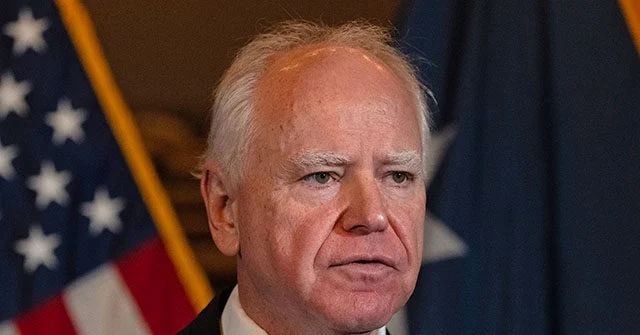
Minnesota Governor Tim Walz Challenges Federal Immigration Enforcement, Establishes State Commission for Justice
Governor Tim Walz (D-MN) publicly challenged President Donald Trump’s perceived ability to disregard the aftermath of a contentious Immigration and Customs Enforcement (ICE) operation in Minneapolis, asserting on MS NOW’s "All In" that Minnesotans unequivocally demand justice for the events. The Governor’s remarks underscored a deepening divide between state and federal approaches to immigration policy, particularly regarding enforcement tactics, and highlighted Minnesota’s intent to document alleged human rights abuses through a newly established state commission. This move positions Minnesota as a significant voice in the national discourse on federal overreach and the protection of immigrant communities, drawing parallels to international human rights standards and investigations.
The Genesis of Conflict: Federal Immigration Enforcement in Minnesota
The specific ICE enforcement operation referenced by Governor Walz, while not explicitly dated in his statement, occurred amidst a period of heightened federal immigration enforcement under the Trump administration. Throughout his presidency, Donald Trump pursued an aggressive stance on immigration, prioritizing increased arrests, expedited deportations, and the construction of border barriers. This national strategy translated into more visible and often controversial ICE operations within various communities across the United States, including cities like Minneapolis.
Minneapolis, a city with a diverse population and a significant immigrant community, became a focal point for this federal-state tension. Local advocacy groups and community leaders had frequently voiced concerns over ICE tactics, which they argued often instilled fear, separated families, and sometimes violated due process rights. These operations often involved raids on workplaces, homes, or public spaces, leading to arrests of individuals suspected of immigration violations. Critics often pointed to the broad scope of these operations, which frequently apprehended individuals with no criminal record beyond their immigration status, or those who had lived in the U.S. for many years, contributing to local economies and communities.
The community response to these federal actions in Minneapolis was swift and robust. Grassroots organizations, immigrant rights groups, and a segment of the general public mobilized in protest. Events described by Walz as "No King’s rallies" became emblematic of this resistance, signifying a rejection of what many perceived as authoritarian federal power over local populations. These rallies and demonstrations were not merely symbolic; they represented a concerted effort to create a "template" for local communities to push back against federal immigration policies deemed unjust or inhumane. They involved community organizing, legal aid efforts, and direct action to obstruct or protest ICE activities, often creating significant public spectacles and drawing national media attention.
Governor Walz’s Decisive Action: A State-Level Commission for Justice
In response to these events and the persistent calls for accountability, Governor Walz announced a decisive executive action: the formation of a state commission dedicated to investigating and documenting the stories of those affected by the ICE operations in Minnesota. This commission, established through the Governor’s executive authority, represents a significant assertion of state sovereignty and a commitment to human rights within state borders.
The primary mandate of this commission is to meticulously "capture all of the stories" related to the "absolute horrific assault on this state" that Walz described. This involves collecting testimonies, evidence, and data from individuals, families, and communities directly impacted by federal immigration enforcement actions. The commission is designed to collaborate closely with key stakeholders, including the American Civil Liberties Union (ACLU), various immigrant advocacy groups, and other relevant non-governmental organizations. This collaborative approach aims to ensure a comprehensive and victim-centered investigation, providing a platform for those who felt their rights were violated to be heard and documented.
The establishment of such a commission by a state governor is a powerful statement. It signals a willingness to use state resources and legal frameworks to scrutinize federal actions, particularly when those actions are perceived to infringe upon the rights and well-being of state residents. By focusing on "justice," Walz implies that the commission’s work extends beyond mere documentation; it seeks to lay the groundwork for potential redress, policy changes, and accountability for any identified abuses. This initiative sets a precedent for how states might address federal policies that conflict with local values and priorities, particularly in areas where federal jurisdiction is broad but state concern for its residents is paramount.
International Parallels and the Human Rights Framework
A particularly striking aspect of Governor Walz’s statement was his invocation of international human rights standards. He noted that "Folks at the United Nations and in Geneva, are working because what happened in Minnesota and the absolute horrific assault on this state, if this happened in another country, it wasn’t that long ago that the United States was a voice of reason, decency and human rights. We would investigate those things. We’re going to do that here." This comparison elevates the discussion from a domestic political dispute to a matter of universal human rights, implicitly suggesting that federal actions in Minnesota might fall short of international norms the U.S. has historically championed abroad.
The United States has long positioned itself as a global advocate for human rights, often critiquing other nations for their treatment of vulnerable populations, including migrants and minorities. Walz’s statement draws a direct parallel, suggesting that if similar events occurred in another country, the U.S. would likely call for an investigation. By initiating a state-level investigation, Walz is essentially holding the U.S. government, through its federal agencies, to the same standard it applies to other nations.
This framing brings into play several key human rights principles relevant to immigration enforcement:
- Due Process: The right to a fair legal process, including access to legal counsel, notice of charges, and an opportunity to be heard.
- Family Unity: The principle that families should not be arbitrarily separated by state action.
- Non-Discrimination: The right to be treated equally under the law, regardless of national origin or immigration status.
- Protection from Arbitrary Detention: The right not to be detained without a clear legal basis and judicial review.
- Access to Justice: The ability of individuals to seek remedies for human rights violations.
By referring to the UN and Geneva, Walz is not only leveraging the moral authority of international human rights law but also potentially inviting international scrutiny of federal immigration practices. While a state commission’s findings would not directly trigger an international investigation, they could contribute to reports from international human rights bodies and organizations, adding pressure on the federal government to review its policies and practices.
The Broader Political Landscape: Trump, Federalism, and State Resistance
Governor Walz’s defiance of President Trump’s perceived indifference fits into a larger pattern of federal-state clashes over immigration during the Trump administration. Throughout his tenure, President Trump frequently clashed with states and cities that adopted "sanctuary" policies or otherwise resisted federal immigration enforcement efforts. His administration often threatened to cut federal funding to such jurisdictions, framing state-level resistance as an obstruction of justice and a threat to national security.
Walz’s specific comment that Trump "thinks he can move on from Greenland, Venezuela, tired of the war in Iran that he started" is a direct critique of the President’s leadership style and his perceived tendency to abandon or downplay controversial issues once they lose political currency. By linking the Minneapolis ICE events to these high-profile foreign policy matters, Walz underscores his belief that the human impact of federal actions in Minnesota is not something that can simply be forgotten or dismissed by the executive branch. It transforms a local incident into a symbol of broader accountability and the enduring power of state-level advocacy.
The concept of states acting as a "template" for resistance against federal policies has deep roots in American history, particularly in civil rights and environmental movements. In the context of immigration, states like California, New York, and now Minnesota have increasingly asserted their authority to protect immigrant communities within their borders, often citing concerns about human rights, economic contributions of immigrants, and the social fabric of their diverse populations. This pushback often manifests in legislative actions (e.g., limiting state/local law enforcement cooperation with ICE), legal challenges, and executive actions like the one taken by Governor Walz.
Data and Contextual Information on Immigration Enforcement
To understand the full weight of Walz’s statements, it is crucial to consider the broader context of immigration enforcement data under the Trump administration. During this period, ICE conducted hundreds of thousands of arrests and deportations annually. While specific data for Minnesota ICE operations at the time of Walz’s statement are not readily available in public summaries, national trends indicate a significant increase in arrests of non-criminal immigrants and a more aggressive posture towards those residing in the interior of the country.
For instance, data from ICE’s own reports show that from Fiscal Year (FY) 2017 to FY 2020, arrests of non-criminal immigrants significantly increased compared to previous administrations. While ICE maintained that it prioritized individuals with criminal records, a substantial portion of arrests involved individuals whose only offense was an immigration violation. These operations often led to the detention of individuals who were long-term residents, parents of U.S. citizens, or essential workers.
Minnesota itself has a growing immigrant population. According to the American Immigration Council, as of 2018, immigrants made up 8.6% of Minnesota’s population, contributing significantly to its labor force and economy. Policies impacting these communities have profound economic and social effects on the state. Public opinion on immigration enforcement within Minnesota, like nationally, is complex and often polarized. However, surveys generally show strong support for pathways to citizenship for undocumented immigrants already in the country, coupled with concerns about human rights in enforcement practices. This nuanced public sentiment often fuels the political will for state leaders like Walz to take protective measures.
Human rights organizations like the ACLU and Human Rights Watch consistently documented alleged abuses during ICE operations, including instances of excessive force, racial profiling, lack of due process, and inadequate conditions in detention facilities. These reports often highlighted the psychological trauma inflicted on communities and families, particularly children, by aggressive enforcement actions. These findings provide a factual backdrop to Walz’s characterization of the events as an "assault" and underscore the necessity of "capturing stories" to expose potential systemic issues.
Reactions and Stakeholder Perspectives
The establishment of Governor Walz’s commission and his strong rhetoric likely elicited a range of reactions from various stakeholders:
-
Immigrant Rights Advocates: Groups like the ACLU of Minnesota and local immigrant support organizations would undoubtedly laud Walz’s initiative. They would view the commission as a crucial step towards accountability and a powerful affirmation of immigrant dignity. Their support would focus on ensuring the commission is adequately resourced, genuinely independent, and effectively gathers comprehensive testimony to document patterns of abuse and recommend systemic changes. They would likely emphasize that documentation is the first step towards achieving true justice and preventing future harms.
-
Federal Government/ICE: The Trump administration, through the Department of Homeland Security (DHS) and ICE, would likely dismiss the commission as politically motivated state interference with federal law enforcement responsibilities. They would assert that ICE operations are lawful, necessary for national security and public safety, and conducted professionally. They would likely reiterate the federal government’s supremacy in immigration matters, potentially questioning the legal authority of a state commission to investigate federal agencies. Any findings by the commission might be characterized as biased or unfounded.
-
Local Law Enforcement: The relationship between local police and ICE is often fraught. While some local agencies cooperate with ICE, others have sought to limit their involvement, citing concerns about community trust and resource allocation. For local law enforcement in Minneapolis, Walz’s commission could represent an opportunity to clarify boundaries or, conversely, add another layer of complexity to their operations if they are called upon to provide information or context.
-
Political Opponents (Minnesota Republicans/Conservatives): Republican leaders in Minnesota would likely criticize Governor Walz for overstepping his authority, politicizing a federal issue, and potentially creating an anti-enforcement environment that could jeopardize public safety. They might argue that the commission diverts state resources, interferes with legitimate federal operations, and sends a message that Minnesota does not support the rule of law regarding immigration. Their stance would align with the broader national Republican platform supporting stricter immigration enforcement.
Implications and Future Outlook
The implications of Governor Walz’s actions are far-reaching, touching upon legal, political, and societal dimensions.
-
Legal Implications: While a state commission cannot directly prosecute federal agents or overturn federal policies, its findings can carry significant legal weight. The documented stories and evidence could be used to support lawsuits against federal agencies for civil rights violations, inform state legislative efforts to protect immigrants, and pressure federal authorities for internal reforms. The commission’s report could also serve as an official state record of events, lending credibility to calls for federal accountability. The question of whether federal agents would cooperate with a state-mandated investigation would be a key legal and political battleground.
-
Political Implications: For Governor Walz, this move reinforces his image as a progressive leader committed to human rights and willing to stand up to federal overreach. It energizes his political base and aligns him with a national movement of Democratic governors challenging Trump-era policies. For the broader Democratic Party, Minnesota’s "template" could serve as a model for other states seeking to resist federal immigration enforcement. For President Trump, Walz’s challenge underscores the persistent opposition to his immigration agenda, even as his administration tried to "move on" from controversies. It could fuel the narrative of states actively undermining federal authority, a point Trump often used to rally his supporters.
-
Societal Impact: The commission’s work will have a profound impact on immigrant communities in Minnesota. By providing a formal avenue for their stories to be heard and documented, it can help restore trust, reduce fear, and affirm their humanity and rights. It sends a message that the state government values and protects all its residents, regardless of immigration status. More broadly, it contributes to the national conversation on immigration, challenging the dominant federal narrative and emphasizing the human cost of aggressive enforcement policies. It further cements the idea that states have a vital role in defining and defending the rights of their residents, even when those rights are challenged by the federal government.
In conclusion, Governor Tim Walz’s decision to establish a state commission to investigate federal ICE operations in Minneapolis marks a significant moment in the ongoing struggle over immigration policy in the United States. His assertion that Minnesotans demand justice, coupled with his strong rhetoric comparing federal actions to human rights concerns typically addressed on an international stage, positions Minnesota at the forefront of state-level resistance. By meticulously documenting the experiences of those affected, Walz’s commission seeks not only to provide a measure of justice for past events but also to forge a "template" for future state actions, ensuring that the human cost of federal policies cannot simply be ignored or forgotten by any administration. The "final days of this administration and beyond," as Walz noted, will undoubtedly continue to see Minnesotans — and potentially other states — demanding accountability and upholding human rights against perceived federal overreach.

Related Posts
Democratic Candidates Must Moderate to Win General Elections, Says Rep. Greg Stanton
Lisa Demuth Secures Republican Gubernatorial Nomination in Minnesota, Defeating Trump-Endorsed Mike Lindell