
The United Nations Demands Full Transparency and Accountability from the U.S. Over Deadly Strike on Iranian Primary School
The United Nations’ human rights chief has issued a strong appeal to the United States, urging the swift conclusion and public disclosure of its investigation into a devastating missile strike on an Iranian primary school. The incident, which occurred on the first day of recent military action last month, resulted in significant civilian casualties and has sparked international condemnation and calls for justice.
The Deadly Strike and its Immediate Aftermath
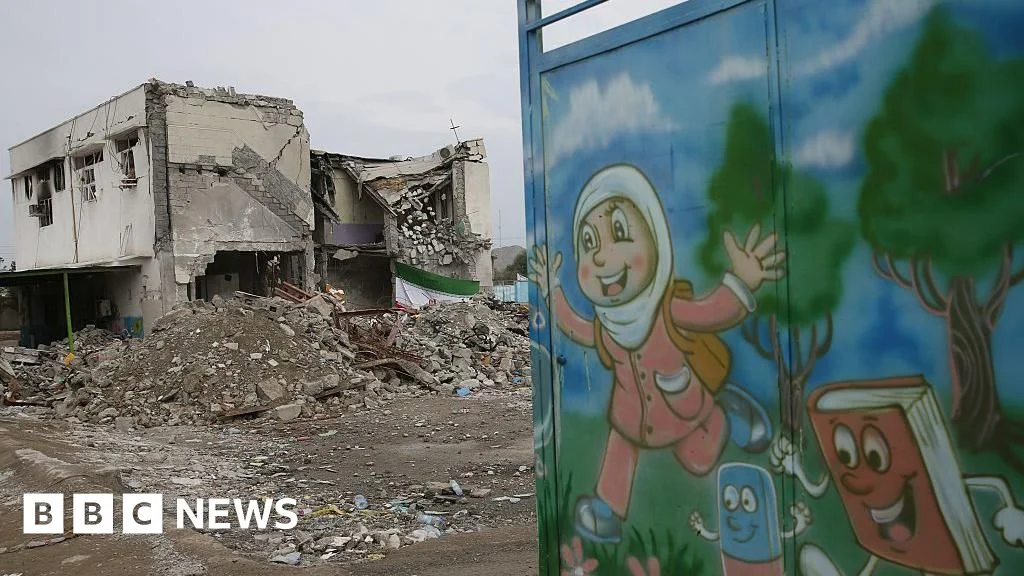
On the opening day of the conflict, the Shajareh Tayyebeh school in Minab, southern Iran, was struck by two missiles in rapid succession. Iranian officials have reported a horrific toll, with at least 168 people killed, including approximately 110 children. Images emerging from the scene depicted bombed-out classrooms engulfed in rubble, starkly illustrating the devastating impact on what was once a place of learning and safety. These visceral images, widely circulated, underscored the immense human cost of the conflict and immediately drew global attention to the plight of civilians caught in the crossfire. The Minab region, located in the province of Hormozgan, is a strategically important area in southern Iran, close to key waterways, which might explain the presence of military installations like the adjacent Islamic Revolutionary Guard Corps (IRGC) base that was reportedly the intended target. The rapid succession of the two strikes suggests a coordinated attack, raising questions about targeting procedures and intelligence accuracy.
The United Nations’ Urgent Call for Justice
In response to the catastrophic event, Volker Türk, the UN’s human rights chief, convened an urgent debate at the UN Human Rights Council in Geneva. Türk unequivocally stated that the bombing "evoked a visceral horror" and emphasized that there "must be justice for the terrible harm done." His address highlighted the profound moral imperative for accountability when civilian lives, especially those of children, are lost in military operations. Türk stressed that the onus of investigation and transparency falls squarely on those who conducted the attack. He explicitly called for the US investigation to be "concluded as soon as possible, and for its findings to be made public," underscoring the international community’s demand for a thorough, impartial, and transparent process. The UN’s Human Rights Council, comprising 47 member states, serves as a crucial forum for addressing human rights violations worldwide, and its urgent debate on this incident signals the gravity with which the international community views the strike. The involvement of the UN chief underscores the global concern over the protection of civilians in armed conflict, a cornerstone of international humanitarian law.
US Investigation and Emerging Media Reports
Initial statements from US Defence Secretary Pete Hegseth acknowledged that the matter was under investigation, without confirming or denying US involvement. However, subsequent reports from US media outlets, citing American military investigators, indicated that US forces were "likely responsible for hitting the school unintentionally." This admission, albeit through leaks to the press, suggests a growing internal consensus within the US military regarding its role in the incident. The New York Times, in particular, reported that officers at US Central Command (Centcom), which oversees US military operations in the Middle East, created the target coordinates for the strike using "outdated data provided by the Defense Intelligence Agency." This critical detail points to a potentially catastrophic failure in intelligence gathering and targeting protocols. The intended target was reportedly an adjacent base belonging to Iran’s Islamic Revolutionary Guard Corps (IRGC), a powerful and influential branch of the Iranian armed forces designated as a foreign terrorist organization by the US. The school building, tragically, was formerly a part of this IRGC base, raising questions about whether this historical connection contributed to the fatal error in targeting. The revelation of outdated intelligence highlights systemic vulnerabilities in modern warfare, where reliance on complex data systems can lead to devastating consequences when information is not current or accurate.
Congressional Scrutiny and Demands for Answers
The severity of the incident prompted strong reactions within the US Congress. Nearly every Senate Democrat sent a detailed letter to the Pentagon, demanding answers regarding the strike in Minab. The letter posed a series of critical questions, starting with the fundamental inquiry of whether the US indeed carried out the attack. Beyond confirming involvement, senators pressed for explanations regarding the potential use of "old or faulty target analysis" that could have led to the school being hit. Of particular concern was Defence Secretary Hegseth’s previous public vow during a news conference that there would be no "stupid rules of engagement" in the ongoing conflict. The senators specifically asked if Hegseth had complied with rules designed to prevent the commission of war crimes, indicating a serious concern about adherence to international legal standards governing armed conflict. This congressional oversight reflects a broader democratic principle of holding military actions accountable, especially when civilian casualties are involved. The Pentagon stated it would respond directly to the authors of the letter, a standard procedure for congressional correspondence, but the public nature of the inquiry intensified pressure for transparent findings. The focus on "rules of engagement" and "war crimes" underscores the legal and ethical complexities inherent in modern warfare and the high standards expected of military operations, particularly from a nation that champions human rights.
The Nature of the Attack: Technical Analysis
Crucial evidence supporting US involvement emerged from expert video analysis. A video published by Iran’s semi-official Mehr news agency, which was subsequently authenticated by BBC Verify, showed a missile in the moments before it struck the IRGC base. Experts who meticulously reviewed the footage identified the presence of a Tomahawk missile. The Tomahawk is a sophisticated, long-range, all-weather, subsonic cruise missile primarily used by the United States Navy and the Royal Navy of the United Kingdom. Its distinctive flight profile and operational characteristics are well-known to military analysts. Neither Israel nor Iran is known to possess Tomahawk missiles, making its identification a strong indicator of US operation. Furthermore, the experts noted that the area was hit with multiple strikes, which is consistent with the coordinated nature of US military operations employing such advanced weaponry. This technical corroboration significantly strengthens the narrative that the US military was responsible for the strike, adding weight to the UN’s demands for a comprehensive and public investigation. The precision and destructive power of a Tomahawk missile also raise questions about the extent of collateral damage anticipated, even if the strike was unintentional.
Background: US-Iran Tensions and Regional Context
The deadly strike in Minab occurred against a backdrop of deeply entrenched and escalating tensions between the United States and Iran. For decades, the two nations have been locked in a complex geopolitical rivalry, characterized by proxy conflicts, sanctions, and periodic military confrontations across the Middle East. The US maintains a significant military presence in the region, aimed at safeguarding its interests, ensuring regional stability, and countering what it perceives as Iranian destabilizing activities. Iran, in turn, views the US presence as an infringement on its sovereignty and a threat to its security, often responding through its network of regional proxies and the actions of entities like the IRGC.
The IRGC plays a central role in Iran’s military and political landscape, responsible for both internal security and projecting Iranian influence abroad. Its various branches, including the Basij paramilitary force and the Quds Force, are deeply integrated into Iranian society and military strategy. Consequently, IRGC facilities, such as the base adjacent to the Shajareh Tayyebeh school, are considered legitimate military targets by adversaries. However, the proximity of such installations to civilian infrastructure, especially schools, presents immense challenges for military planners and highlights the inherent risks of conflict in densely populated areas. The "war last month" mentioned in the original article likely refers to a recent, unnamed escalation of military actions, rather than a formal, declared war, reflecting the often undeclared but intense nature of US-Iran confrontations. This broader context is crucial for understanding the operational environment in which such a tragic error could occur, as well as the political sensitivities surrounding its investigation.
International Humanitarian Law and Civilian Protection
The incident at the Shajareh Tayyebeh school immediately brings into sharp focus the principles of international humanitarian law (IHL), also known as the laws of armed conflict. IHL is designed to limit the effects of armed conflict for humanitarian reasons and protects persons who are not, or are no longer, participating in hostilities. Key principles include:
- Distinction: Parties to a conflict must at all times distinguish between civilians and combatants and between civilian objects and military objectives. Attacks may only be directed against military objectives. Civilians and civilian objects must not be attacked. A school is a protected civilian object unless it is being used for military purposes.
- Proportionality: Even if a military objective is targeted, the attack must not be carried out if it is expected to cause incidental loss of civilian life, injury to civilians, damage to civilian objects, or a combination thereof, which would be excessive in relation to the concrete and direct military advantage anticipated.
- Precaution: Parties to a conflict must take all feasible precautions to avoid, and in any event to minimize, incidental loss of civilian life, injury to civilians, and damage to civilian objects. This includes taking precautions in attack (e.g., verifying targets) and precautions against the effects of attacks (e.g., evacuating civilians).
The reports of outdated intelligence leading to the strike on a school raise serious questions about the adherence to these IHL principles, particularly distinction and precaution. If the school was no longer an IRGC facility but was mistakenly targeted due to old data, it represents a failure to distinguish between a civilian object and a military objective. The sheer number of civilian casualties, particularly children, also forces a critical examination of proportionality. The international community, through the UN Human Rights Chief, is effectively reminding the US of its obligations under IHL and the need for accountability for any violations.
Implications for Accountability and Transparency
The US investigation into the Minab school strike carries significant implications for its credibility on the global stage and for the future conduct of its military operations. Transparency in the findings is paramount not only for justice for the victims and their families but also for maintaining international trust in the US military’s adherence to international law and its own stated values. A thorough, impartial, and public investigation can provide crucial lessons learned, potentially leading to reforms in targeting procedures, intelligence validation, and rules of engagement, thereby preventing similar tragedies in the future. Conversely, any perception of obfuscation or a whitewash could severely damage US diplomatic relations, particularly with nations in the Middle East, and fuel anti-American sentiment. The incident also reignites broader debates about the use of force, the impact of technology on warfare, and the enduring challenge of minimizing civilian harm in complex conflict zones. The call from nearly every Senate Democrat underscores the domestic demand for accountability and robust oversight of military actions, reflecting the democratic principle that even in times of conflict, governments must be held responsible for their actions.
Conclusion
The devastating missile strike on the Shajareh Tayyebeh school in Minab represents a profound tragedy and a stark reminder of the immense human cost of armed conflict. The UN’s urgent call for a transparent and public investigation by the United States reflects a global consensus on the imperative for justice and accountability. As the US military conducts its internal inquiry, the world watches, awaiting answers that will not only shed light on the specifics of this incident but also reaffirm the commitment of all parties to uphold international humanitarian law and protect innocent lives, especially those of children, in times of war. The findings of this investigation will undoubtedly shape perceptions of responsibility, influence future military protocols, and serve as a critical benchmark for how nations are held accountable for actions that result in such profound civilian suffering.

Related Posts
Zambia on Edge: Opposition Leader Arrested Amid Allegations of Insurrection Plot and Election Tensions
Rescuers search for survivors of powerful Indonesia earthquake

