Human Rights Watch Labels Pakistani Airstrike on Kabul Drug Treatment Center a Potential War Crime
The international community is facing a burgeoning humanitarian and legal crisis following a devastating Pakistani airstrike on the Omid Drug Rehabilitation Center in Kabul, Afghanistan. On March 16, 2026, precision munitions struck the sprawling 2,000-bed facility, resulting in the deaths of at least 143 individuals and leaving more than 250 others with significant injuries. Human Rights Watch (HRW) released a comprehensive report today characterizing the operation as an unlawful attack and a probable war crime, citing a lack of evidence that the facility was being used for military purposes. The strike, which targeted a well-known medical complex housing vulnerable civilians and recovering addicts, has intensified the already volatile relationship between Islamabad and the Taliban-led administration in Kabul.
The Strike on the Omid Drug Rehabilitation Center
The Omid Drug Rehabilitation Center, situated on the premises of the former NATO base known as Camp Phoenix in eastern Kabul, has been a cornerstone of Afghanistan’s limited public health infrastructure since its establishment in 2016. At the time of the attack, the facility was operating at high capacity, providing treatment for substance abuse to a population that included civilians, adolescents, and individuals transferred from the Pul-e Charkhi prison.
According to eyewitness accounts and HRW’s internal investigations, the Pakistan Air Force (PAF) launched the attack during the evening hours. A center employee confirmed that three specific structures within the complex were decimated: a primary building utilized as a communal dining area, a residential block housing approximately 450 patients, and a guard room staffed by eight personnel. The timing of the strike was particularly lethal, as many patients had gathered in the dining hall to break their daily fast during the holy month of Ramadan.
The United Nations later corroborated the scale of the tragedy, highlighting the "complete destruction of one block that housed adolescents receiving drug treatment." The loss of life among minors and the infirm has sparked international condemnation and renewed scrutiny of Pakistan’s rules of engagement regarding cross-border military operations.
Official Assertions and Discrepancies in Target Identification
In the immediate aftermath of the bombardment, Pakistani officials defended the operation as a necessary counter-terrorism measure. On March 17, 2026, Pakistan’s Federal Minister of Information and Broadcasting, Attaullah Tarar, issued a statement via the social media platform X (formerly Twitter). Tarar claimed that the PAF had successfully executed "precision airstrikes" targeting "technical support infrastructure and ammunition storage facilities" belonging to militant groups. Notably, the minister’s statement omitted any mention of the Omid facility or the mounting reports of civilian casualties within a medical compound.
However, forensic analysis and visual evidence reviewed by HRW challenge the Pakistani government’s narrative. Satellite imagery captured on March 23 shows widespread devastation across the Omid center, with the largest building and two peripheral structures reduced to rubble. Verification of a video posted by Minister Tarar himself showed a missile striking the center’s largest building, followed by secondary explosions at nearby facilities.
Crucially, HRW’s review of the footage found no evidence of "secondary detonations" typical of ammunition depots. In strikes involving bulk explosives or propellants, researchers usually observe sustained fires, tracer elements, or erratic explosions following the initial impact. Instead, the footage showed a singular, high-yield explosion and subsequent structural fires. Furthermore, humanitarian officials noted that the facility lacked the specialized storage requirements and safety clearances necessary to house an ammunition depot of the size Pakistan claimed to have neutralized.
Chronology of Escalating Tensions: 2024–2026
The strike on March 16 was not an isolated incident but the culmination of years of deteriorating security conditions along the Durand Line. To understand the context of this attack, it is necessary to examine the timeline of the conflict between Pakistan and the Taliban authorities:
- Throughout 2024: Pakistan experienced a surge in domestic terrorism. The Tehrik-i-Taliban Pakistan (TTP), an Islamist armed group, intensified its campaign against the Pakistani state. Official records indicate that over 600 Pakistani security personnel and more than 500 civilians were killed in TTP-linked attacks during this calendar year. Islamabad repeatedly accused the Taliban in Kabul of providing sanctuary and material support to the TTP, a charge the Taliban denied.
- February 2026: Cross-border tensions reached a fever pitch. The United Nations documented at least 76 civilian deaths and 213 injuries resulting from a series of Pakistani airstrikes across various Afghan provinces. These strikes were ostensibly aimed at TTP hideouts but frequently resulted in "collateral damage."
- March 13, 2026: Following a series of drone attacks on Pakistani border cities that injured several civilians, Pakistan’s President issued a stern warning. He stated that Afghanistan had "crossed a red line" and signaled that Islamabad would no longer exercise restraint in its response to perceived threats originating from Afghan soil.
- March 16, 2026: The PAF conducted the strike on the Omid Drug Rehabilitation Center in Kabul.
- March 17, 2026: Pakistan officially declared the strike a success against "terrorist infrastructure."
- March 19, 2026: Amidst international pressure, Pakistan and Afghanistan declared a temporary truce to allow for the recovery of bodies and humanitarian aid delivery, though the political rhetoric remained hostile.
Forensic Challenges and the Human Toll
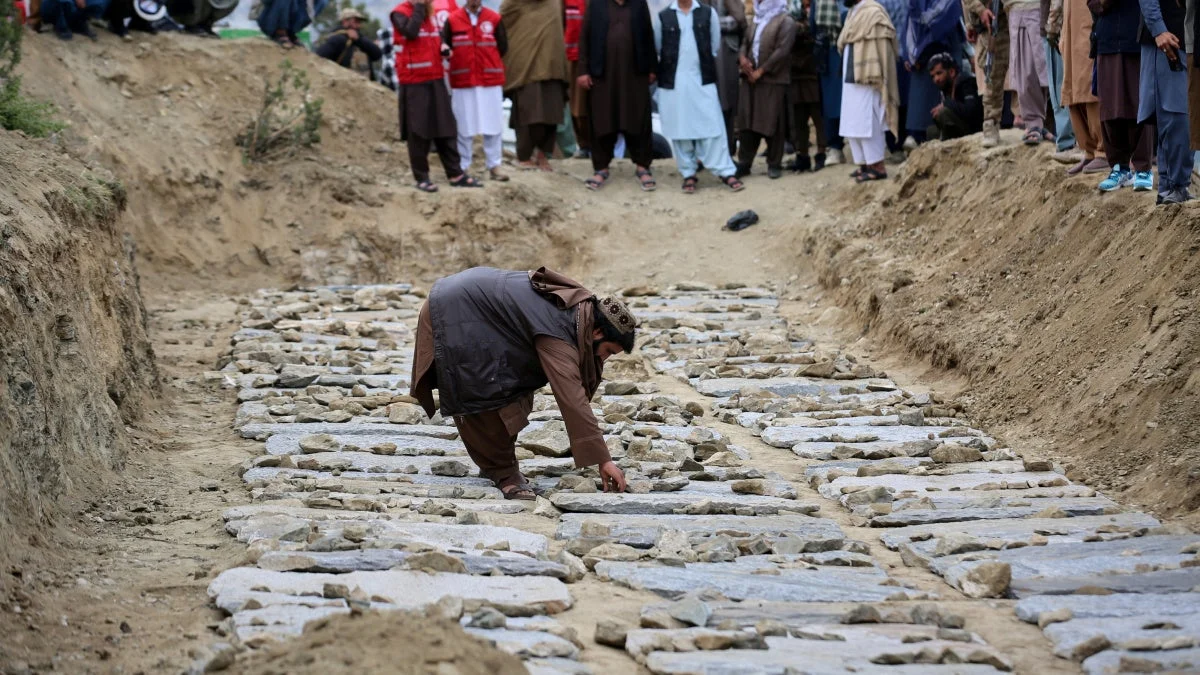
The aftermath of the strike has been characterized by chaos and a desperate search for the missing. Identification of the deceased has proven nearly impossible for many families due to the sheer force of the explosions and the lack of forensic resources in Afghanistan. The country’s Public Health Ministry lacks the DNA testing capacity required to identify charred remains, leaving many families in a state of perpetual mourning and uncertainty.
An Afghan forensic doctor at the ministry described the scene as "overwhelming," noting that medical personnel were forced to ask relatives to identify bodies based on clothing remnants or physical deformities. One father recounted a harrowing three-day search through every hospital in Kabul before finally locating his son’s remains at a forensic facility. "They showed us many bodies before we could identify him," he told researchers.
The uncertainty is compounded by the status of the patients. Because the Omid center also housed detainees and individuals picked up during anti-drug sweeps, there are fears that some survivors may have fled into the city to avoid re-arrest, while others may be buried under the debris of the collapsed residential blocks. The 1,000-bed Ibn Sina Addiction Treatment Hospital, which shares the former NATO complex, also sustained minor damage, further straining the city’s ability to care for the injured.
Legal Analysis and the Laws of War
Under International Humanitarian Law (IHL), also known as the laws of war, the attack on the Omid center raises profound legal questions. IHL requires all parties to a conflict to distinguish between military objectives and civilian objects. Hospitals, clinics, and medical facilities enjoy "special protection" status.
Patricia Gossman, senior associate Asia director at Human Rights Watch, emphasized that medical facilities only lose their protection if they are being used to commit "acts harmful to the enemy." Even in such rare circumstances, the attacking force is required to issue a clear warning with a reasonable time limit before initiating a strike. "The available evidence indicates that the Pakistani airstrike against a well-known Kabul medical facility killing dozens of patients was unlawful," Gossman stated.
Furthermore, the principle of proportionality prohibits attacks where the anticipated harm to civilians outweighs the expected military gain. Given that the Omid center was a high-capacity civilian health facility, any military advantage gained by targeting it—even if militants were present—would likely be viewed as disproportionate under international legal standards. HRW’s findings suggest that the strike was "unlawfully indiscriminate," as no evidence of military activity within the center has been produced by the Pakistani government.
Regional Implications and the Path to Accountability
The strike on the Omid center marks a dangerous inflection point in South Asian geopolitics. For Pakistan, the persistent threat of the TTP has created a domestic political imperative to act decisively. However, the decision to strike a target in the heart of Kabul—and a medical one at that—has isolated Islamabad on the global stage and provided the Taliban with a significant propaganda victory.
The Taliban administration has used the incident to characterize Pakistan as an aggressor that disregards Islamic and international norms. This narrative further complicates diplomatic efforts to stabilize the region and address the root causes of cross-border militancy.
Human Rights Watch and other international observers are now calling for a transparent, impartial investigation into the intelligence failures and decision-making processes that led to the strike. There is a growing demand for the Pakistani government to hold those responsible for the operation accountable and to provide reparations to the victims’ families.
"Concerned countries should press Pakistan to provide genuine accountability," Gossman urged. "It is essential to determine why a drug treatment center filled with civilians was identified as a military target to ensure that such catastrophic failures in intelligence and target verification are never repeated."
As the truce remains fragile, the ruins of Camp Phoenix stand as a grim reminder of the human cost of the escalating shadow war between Islamabad and Kabul. Without a shift toward diplomatic resolution and adherence to international legal standards, the cycle of strike and retaliation threatens to plunge the region into a deeper, more protracted conflict where civilians continue to pay the highest price.

Related Posts
Human Rights Watch Calls for Investigation into Death of Detainee Following Removal from Najaf Hospital by Iraqi Drug Police
Human Rights Watch Urges UN Security Council to Extend Lebanon Peacekeeping Mission Amid Escalating Conflict and Humanitarian Crisis