Deadly Maiduguri Bombings Signal Resurgence of Boko Haram and Urgent Need for Enhanced Civilian Protection in Northeast Nigeria
The coordinated bombings that tore through the city of Maiduguri on the evening of March 16, 2026, have sent shockwaves across Nigeria, marking a grim escalation in a conflict that many hoped was moving toward a resolution. With at least 23 people confirmed dead and 108 others sustaining various degrees of injury, the attacks have reignited fears that the insurgent group popularly known as Boko Haram is undergoing a lethal resurgence. Human Rights Watch (HRW) has characterized these strikes on crowded civilian hubs as apparent war crimes, urging the Nigerian government to pivot from purely military offensives toward a more robust, civilian-centric protection strategy.
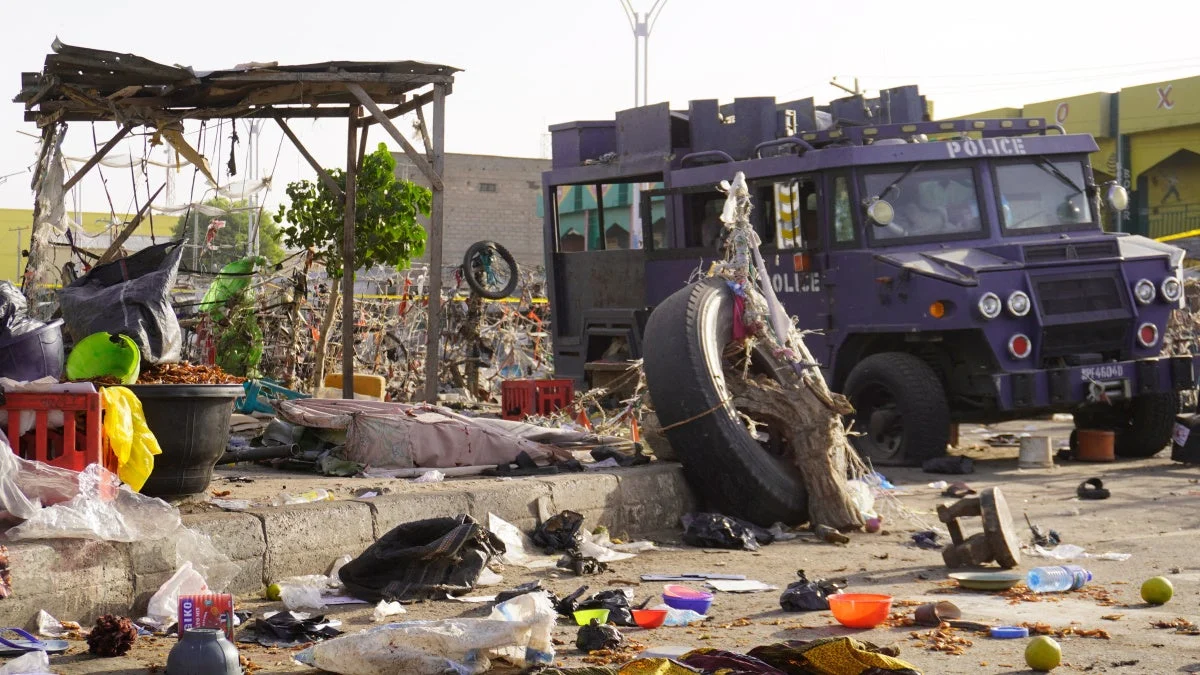
The explosions occurred during a period of heightened vulnerability, as many residents were observing the holy month of Ramadan. The timing and choice of targets—a bustling marketplace, a high-traffic area near a post office, and the gates of the region’s premier teaching hospital—suggest a calculated attempt to maximize casualties and instill widespread terror. According to Nigerian police and military sources, the attackers utilized a mix of improvised explosive devices (IEDs) and suicide operatives to bypass security cordons that have surrounded the Borno State capital for years.
A Coordinated Campaign of Terror: The Chronology of March 16
The violence began as the sun set over Maiduguri, a city that serves as the administrative and humanitarian heart of the Lake Chad Basin. At approximately 6:30 PM, as residents began breaking their fast and heading to local eateries and markets, the first blast rocked the vicinity of the Monday Market. This location is the city’s primary commercial nerve center, usually teeming with vendors and shoppers even into the evening hours.
Witnesses described a scene of immediate chaos. Babagana Abubakar, a 39-year-old fruit seller who was operating near the post office at the time of the blast, recalled the sheer force of the explosion. “I was selling watermelon to a customer when a loud explosion scattered everything,” he told investigators. In the panic that followed, Abubakar witnessed the gruesome aftermath, identifying one of the deceased—a young man who had just purchased bananas from him—by his white football jersey.
The second and third explosions followed in quick succession, targeting the area near the General Post Office and the gates of the University of Maiduguri Teaching Hospital (UMTH). At the UMTH gate, the attack was preceded by a confrontation. Ibrahim Talba, a 35-year-old tailor who was eating at a nearby restaurant, observed two men in a commercial tricycle arguing with a security guard after being denied entry. The situation turned lethal when a food flask, thrown during the dispute, exploded. As bystanders rushed to assist the guard, a second, larger device was detonated. Talba, who suffered shrapnel wounds to his back and stomach, is one of the dozens currently fighting for recovery in the very hospital targeted by the blast.
The Resurgence of the JAS Faction
While no group has officially claimed responsibility for the March 16 attacks, the Nigerian military and independent security analysts point directly to the Jama’atu Ahlis Sunna Lidda’awati wal-Jihad (JAS) faction of Boko Haram. For years, JAS was considered a waning force following the 2021 death of its long-time leader, Abubakar Shekau. Shekau reportedly took his own life during a confrontation with the Islamic State West Africa Province (ISWAP), a rival splinter group that had successfully usurped much of JAS’s territory and influence.
However, recent data suggests that JAS has not only survived but is actively rebuilding its operational capacity. Security analysts from the Institute for Security Studies (ISS) note that the group has been regrouping in the Mandara Mountains and parts of the Sambisa Forest, shifting back to its "trademark" tactics of indiscriminate urban bombings. Unlike ISWAP, which often attempts to establish a shadow government and focuses attacks on military targets, the JAS faction remains notorious for its lack of distinction between combatants and civilians.
The December 2025 bombing of a mosque in Maiduguri, which killed five people, was an early warning sign of this tactical return. The March 16 bombings, by comparison, represent a significant leap in scale and coordination, suggesting that the group has re-established logistics chains capable of infiltrating the heavily fortified "Super Camp" security perimeters of the city.
Humanitarian and Economic Implications for Borno State
Maiduguri is more than just a provincial capital; it is a sanctuary for hundreds of thousands of Internally Displaced Persons (IDPs) who have fled violence in rural Borno, Yobe, and Adamawa states. The city also serves as the primary hub for international non-governmental organizations (NGOs) and United Nations agencies.
The targeting of the University of Maiduguri Teaching Hospital gate is particularly significant. As the leading medical facility in the region, UMTH is critical for both war-wounded patients and the general population. Attacks near such facilities undermine the entire humanitarian infrastructure of the Northeast. Fatima Sheriff, a 25-year-old food vendor who was knocked unconscious by the blast at the hospital gate, highlighted the human cost: "I saw seven people brought in unconscious… including a young girl whom a doctor later pronounced dead."
The economic impact is equally devastating. For small-scale traders like Babagana Abubakar, the loss of a stall or inventory is a total loss of livelihood. "I have lost my source of livelihood since all the fruits I sell were scattered everywhere… I couldn’t pick or salvage anything," he lamented. With inflation already straining the Nigerian economy, the destruction of local markets and the subsequent fear of public spaces threaten to paralyze the region’s fragile recovery.
Legal Framework: Indiscriminate Attacks as War Crimes
Human Rights Watch has been clear in its legal assessment of the event. Under international humanitarian law, specifically the Geneva Conventions, attacks that do not distinguish between military objectives and civilians are prohibited. Anietie Ewang, a Nigeria researcher for HRW, emphasized that the "indiscriminate" nature of the March 16 bombings qualifies them as war crimes.
The International Criminal Court (ICC) has long had Nigeria under its lens. In 2020, then-Prosecutor Fatou Bensouda concluded a preliminary examination, stating there was a "reasonable basis to believe" that Boko Haram and its factions, as well as Nigerian security forces, had committed crimes against humanity and war crimes. While the ICC has yet to open a formal investigation—citing limited resources and the hope that Nigerian domestic courts would take the lead—the continued targeting of civilians in 2026 may increase international pressure for the Hague to intervene.
The Nigerian government’s failure to hold high-ranking insurgents or negligent security officials accountable remains a point of contention. HRW and other rights groups argue that without accountability, the cycle of violence is doomed to repeat.
Official Responses and the Path Forward
In the wake of the attacks, the Nigerian military released a statement describing the bombings as a "coordinated attempt by suspected Boko Haram fighters to cause mass casualties and spread panic." While the military has vowed to "smoke out" the perpetrators, critics argue that the current strategy is overly reliant on reactive force rather than proactive intelligence and community engagement.
Security experts suggest several urgent steps the Nigerian authorities must take:
- Enhanced Intelligence Sharing: Improving the flow of information between the Civilian Joint Task Force (CJTF) and the regular military to identify IED manufacturing cells within the city.
- Early Warning Systems: Implementing technological and community-based alerts to notify residents of suspicious activity in high-density areas like Monday Market.
- Victim Support and Compensation: Providing immediate financial and psychological aid to survivors like Abubakar and Talba, who have lost both their health and their means of survival.
- Transparent Investigations: Moving beyond rhetoric to conduct forensic investigations that lead to the prosecution of those who planned and funded the March 16 operation.
Conclusion: A City at a Crossroads
The tragedy of March 16, 2026, serves as a stark reminder that the insurgency in Northeast Nigeria is far from over. Despite claims of the "technical defeat" of Boko Haram in years past, the reality on the ground in Maiduguri is one of persistent peril. The resilience of the city’s residents is being tested to its breaking point.
As Anietie Ewang of HRW concluded, "The bombings in Maiduguri lay bare the extreme and ongoing danger civilians face. Nigerian authorities need to urgently step up efforts to protect civilians, ensure swift and transparent investigations, and hold those responsible to account." For the people of Borno State, the hope is that this latest atrocity will finally catalyze a security strategy that prioritizes the lives of the many over the military objectives of the few. Until then, the "Home of Peace" remains a city under the shadow of an enduring and evolving threat.

Related Posts
Bangladesh: First Enforced Disappearance Case Since July 2024 Uprising

Crackdown on Artistic Dissent in Morocco: The Arrest of Mehdi Black Wind and the Shrinking Space for Freedom of Expression