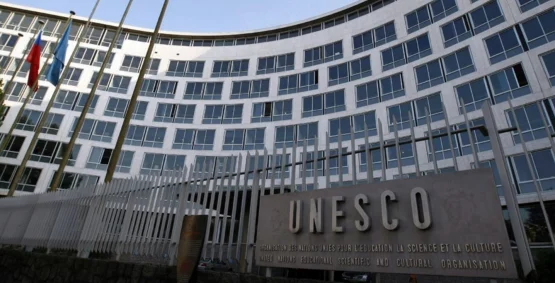
Global Education Crisis Deepens as Out-of-School Youth Population Hits 273 Million
The global educational landscape is facing a profound crisis, as the number of children and young people excluded from formal schooling has surged to an alarming 273 million, according to the 2026 Global Education Monitoring (GEM) Report released by the United Nations Educational, Scientific and Cultural Organisation (UNESCO) this Wednesday. This milestone marks the seventh consecutive year of growth in the out-of-school population, underscoring a systemic stagnation in global efforts to achieve universal education. With one in six school-age children currently denied the right to an education, the international community is grappling with the realization that the ambitious goals set for the current decade are increasingly slipping out of reach.
A Decade of Stagnation: The Chronology of Decline
The trajectory of global education has been marked by a tale of two eras. From 2000 to 2015, the world witnessed unprecedented momentum. During this period, the international community, driven by the Millennium Development Goals (MDGs), succeeded in bringing millions of children into classrooms, with global enrolment figures rising at an average rate of more than 25 additional children accessing school every minute.
However, the year 2015 proved to be a critical inflection point. As the world transitioned to the Sustainable Development Goals (SDGs)—specifically SDG 4, which aims for inclusive and equitable quality education—the rate of progress began to decelerate. By 2019, the pre-pandemic landscape already showed signs of slowing gains due to rising population growth outstripping infrastructure development. The onset of the COVID-19 pandemic in 2020 acted as a massive accelerant for exclusion, causing school closures that, in many developing nations, led to permanent dropout rates. The 2026 report confirms that the recovery period has been insufficient to reverse these losses, as conflict, economic instability, and demographic pressures continue to erode the foundations of schooling systems.
Dissecting the Data: The Geography of Exclusion
The 2026 GEM Report provides a granular view of where the crisis is most acute. Sub-Saharan Africa remains the most significantly impacted region, where the combination of rapid population growth and insufficient public spending on education has created a "perfect storm." In this region, the sheer volume of school-age children is outpacing the construction of new classrooms and the training of teachers.
Beyond regional disparities, the report highlights a sobering reality regarding secondary education. While primary education enrolment has remained relatively resilient, the drop-off at the secondary level is stark: only two in three children successfully complete their secondary schooling worldwide. This gap represents a significant loss of human potential, as secondary education is a primary determinant of economic mobility and social stability.
Furthermore, the report cautions that official statistics likely undercount the true scale of the crisis. In active conflict zones—such as those in parts of the Sahel, the Middle East, and Eastern Europe—the formal reporting mechanisms often break down. Millions of displaced children, refugees, and those living in areas controlled by non-state actors are effectively invisible to the data collectors, suggesting that the figure of 273 million may be a conservative estimate.
Conflict and Demographic Pressures: The Drivers of Crisis
The report identifies two primary structural drivers behind the current decline: geopolitical instability and demographic shifts.
Conflict remains the most severe barrier to education. When a school is targeted or repurposed for military use, the impact is multi-generational. Beyond the immediate loss of instruction time, the psychological trauma experienced by children in war-torn regions often leads to long-term disengagement from the educational system. UNESCO notes that in these environments, the lack of "safe corridors" and the absence of basic school infrastructure make the return to normalcy nearly impossible without sustained international intervention.
Simultaneously, the "demographic dividend" that many developing nations were expected to reap is turning into a "demographic burden." In nations where the youth population is growing faster than the economy, the state’s ability to provide high-quality education is severely tested. Without significant investment in infrastructure and teacher training, these countries face the risk of a "lost generation" whose lack of formal skills will exacerbate future poverty and political instability.
A Call for Strategic Policy Shifts
While the headline figures are discouraging, the 2026 report emphasizes that the situation is not irreversible. It cites success stories in several nations that have bucked the global trend. Countries that have implemented decentralized funding models, incentivized teacher retention in rural areas, and utilized digital learning tools to supplement traditional classrooms have seen measurable success in reducing out-of-school rates.
However, UNESCO’s experts are adamant: there is no "silver bullet" policy. The report warns against the adoption of one-size-fits-all solutions. Instead, it advocates for a three-pronged approach:
- Tailored Educational Pathways: Governments must design education systems that cater to the specific needs of marginalized groups, including children with disabilities, ethnic minorities, and those in remote geographic locations.
- Sustained and Protected Financing: Education budgets must be insulated from broader economic volatility. The report calls for increased international aid and a commitment from national governments to prioritize education spending as a percentage of GDP, even during fiscal downturns.
- Data-Driven Resilience: To address the "invisible" children in conflict zones, there is a critical need for better data collection mechanisms. UNESCO suggests that satellite imagery and community-led census efforts could play a role in identifying children who have fallen through the cracks.
Analysis of Global Implications
The failure to provide universal education has consequences that extend far beyond the classroom. Economically, the lack of a skilled workforce in developing nations limits global GDP growth and hinders the ability of these countries to participate in the digital economy. Societally, the exclusion of millions of young people from the education system serves as a breeding ground for social unrest, radicalization, and migration crises.
Education is widely regarded as the most effective tool for breaking the cycle of intergenerational poverty. When one in six children is denied this tool, the gap between the Global North and the Global South widens, undermining the stability of the global order. The 2026 report serves as a wake-up call to policymakers that the current pace of reform is fundamentally inadequate.
The Road Ahead: Expert Perspectives
In the wake of the report’s release, international development agencies have echoed UNESCO’s concerns. Analysts from various education policy think tanks have noted that the 2026 findings confirm the "emergency status" of global education. There is a growing consensus that without a massive mobilization of resources—comparable to the emergency responses seen during the climate summits or global health crises—the international community will fail to meet its 2030 targets.
"We are at a tipping point," one education policy expert noted. "If we do not pivot from passive observation to aggressive, localized investment, the goal of universal education will remain a theoretical aspiration rather than a reality for millions of children."
As the international community digests these findings, the pressure is mounting on G20 nations and international financial institutions to prioritize educational infrastructure as a core pillar of global development. Whether this report acts as a catalyst for renewed investment or simply as a chronicle of decline remains to be seen. What is clear, however, is that for 273 million children, the opportunity to learn is not a guaranteed right, but a daily battle against a system that is failing to provide the most basic of human requirements.
The 2026 Global Education Monitoring Report will serve as the primary framework for upcoming ministerial summits, where leaders will be forced to reconcile their national commitments with the harsh reality presented by the data. The consensus among observers is that while the progress made since 2000 remains a testament to what is possible, the current trajectory is unsustainable. The challenge for the next decade will be to transform these findings into actionable policies that move the needle for the millions left behind.

Related Posts

Jigawa boat accident death toll rises to six, 34 still missing

Kylian Mbappe becomes the FIFA World Cup all-time leading goalscorer after historic 2026 tournament performance