Police Conclude Alan Ritchson Acted in Self-Defense During Brentwood Altercation, No Charges to Be Filed Against ‘Reacher’ Star.
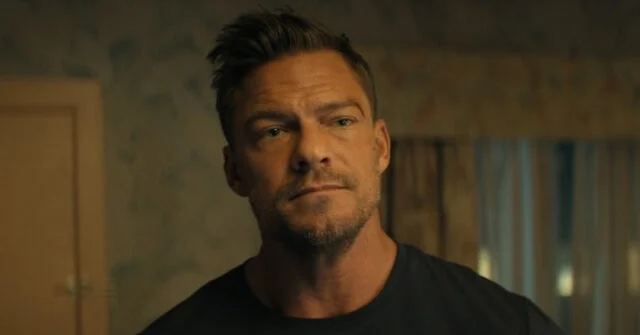
Brentwood, Tennessee – In a significant development following a highly publicized altercation, authorities have officially cleared actor Alan Ritchson, best known for his titular role in Amazon Prime Video’s hit series Reacher, of any wrongdoing, concluding that his actions against a neighbor were entirely in self-defense. The decision, announced by the Brentwood Police Department, brings to a close a case that garnered widespread media attention and sparked public debate about celebrity conduct and the legal boundaries of self-protection. The incident, which unfolded in the affluent Nashville suburb, saw Ritchson involved in a physical confrontation that was partially captured on video, raising initial questions before a more comprehensive review of evidence clarified the sequence of events.
The Incident Unfolds: A Chronology of Events
The altercation first came to public light through a video obtained and published by TMZ earlier this week, depicting a physical confrontation between Ritchson and an unidentified neighbor. The initial footage, while dramatic, presented an incomplete picture, showing Ritchson engaging physically with the other individual while his children were reportedly present on the street. This immediate visual prompted a flurry of speculative reports and discussions across various media platforms, including Breitbart News, which highlighted the video’s surfacing.
However, subsequent reporting by TMZ, citing sources close to the actor, quickly began to paint a different narrative. These sources asserted that Ritchson had not instigated the confrontation. Instead, they claimed that the neighbor had aggressively approached Ritchson, pushing him off his bicycle not once, but twice, prior to the moments captured by the widely circulated video. This crucial piece of background information began to shift the public perception and provided a necessary context for the actor’s subsequent actions.
The catalyst for the dispute reportedly stemmed from a "noise disturbance" involving motorcycles. According to Ritchson’s own body camera footage, which later became a critical piece of evidence for law enforcement, the neighbor, identified as Taylor, allegedly ran onto the street specifically to confront and attack Ritchson over this issue. This footage corroborated Ritchson’s account, firmly establishing the neighbor as the aggressor and Ritchson’s response as reactive rather than proactive. The incident escalated rapidly from a verbal dispute over noise into a physical altercation initiated by the neighbor, forcing Ritchson into a defensive posture.
The Evidence Speaks: Video Footage and Official Review
The investigation undertaken by the Brentwood Police Department was thorough, relying on multiple forms of evidence to reconstruct the events accurately. Key among these were the initial video footage that brought the incident to public attention, witness statements from those who may have observed parts of the confrontation, and critically, Alan Ritchson’s personal body camera footage. The existence and content of Ritchson’s bodycam proved instrumental in providing an unbiased, first-person perspective of the altercation’s genesis. This footage not only confirmed the neighbor’s aggressive approach but also documented the initial physical assaults against Ritchson, thereby substantiating his claim of self-defense.
Brentwood Police Captain Steven Pepin confirmed the findings, stating to The Hollywood Reporter (THR), "After reviewing available evidence, including video footage and witness statements, authorities determined that no criminal charges will be pursued. Mr. Ritchson’s actions were found to be in self-defense." This official statement underscored the comprehensive nature of the police investigation and the clear conclusion drawn from the gathered evidence. The clarity provided by Ritchson’s bodycam likely played a pivotal role in swiftly resolving any ambiguities surrounding who initiated the physical engagement. In an era where personal devices frequently capture unforeseen events, Ritchson’s foresight in recording his interactions proved invaluable for his legal vindication.
Legal Framework: Self-Defense in Tennessee
The legal concept of self-defense is a fundamental right enshrined in law across the United States, including in Tennessee. Under Tennessee law (specifically TCA § 39-11-611), an individual is justified in using defensive force when they reasonably believe that such force is immediately necessary to protect themselves against the other’s use or attempted use of unlawful force. The degree of force used in self-defense must be proportionate to the perceived threat. While specific nuances can vary, the core principle revolves around the reasonable belief of imminent danger and the necessity of the defensive action.
In Ritchson’s case, the police conclusion indicates that his response met these legal thresholds. The initial pushes and the neighbor "running onto the street to attack him first" over a noise disturbance would likely be interpreted as unlawful force initiating the confrontation. Ritchson’s subsequent physical actions were therefore deemed a reasonable and necessary response to protect himself from further harm. This legal interpretation is crucial, as it distinguishes between initiating an attack and reacting to one, upholding the right of individuals to defend themselves when confronted with aggression. The District Attorney’s office’s agreement to close the case further solidifies that Ritchson’s actions were viewed as legally justifiable under these statutes.
Official Confirmation and Case Closure
The Brentwood Police Department’s definitive conclusion that Alan Ritchson acted in self-defense led to the formal decision not to pursue any criminal charges against the actor. Captain Steven Pepin further elaborated on the outcome, highlighting Ritchson’s own decision regarding potential charges against his neighbor. "Although a potential reckless endangerment charge was considered, Mr. Ritchson declined to pursue charges. With the agreement of the District Attorney’s Office, the case is now closed, and no further action will be taken," Pepin confirmed.
This detail is significant for several reasons. Firstly, the police considering a "reckless endangerment" charge against the neighbor indicates that law enforcement viewed the neighbor’s initial actions as potentially dangerous and unlawful, extending beyond mere aggression to a level that could have posed a risk to others, especially given the presence of Ritchson’s children. Secondly, Ritchson’s decision not to press charges against his neighbor demonstrates a desire to de-escalate the situation permanently and move past the incident without further legal entanglements for either party. This choice, while personal, speaks to a potential desire for peace rather than prolonged litigation or retribution, a stance that aligns with a measured and responsible approach to such a volatile situation. The District Attorney’s Office’s agreement to close the case signifies their concurrence with the police findings and Ritchson’s decision, ensuring that the matter is legally resolved without lingering questions.
Broader Context: Celebrity and Public Scrutiny
The incident involving Alan Ritchson highlights the unique challenges faced by public figures when involved in personal altercations. The rapid spread of partial information, often sensationalized, can quickly lead to premature judgment and reputational damage. Initial reports, based solely on the confrontational aspects of the video, fueled speculation about Ritchson’s conduct, potentially undermining his public image as a hero embodying justice in his Reacher role.
However, the subsequent release of more complete evidence and the official police findings serve as a powerful reminder of the importance of due process and thorough investigation. For celebrities, every action is magnified under the public microscope, and the initial narrative can be difficult to overcome. In this instance, the clear evidence, particularly Ritchson’s body camera footage, played a crucial role in correcting the record and ensuring that the full context of the event was understood. This case underscores the media’s responsibility to present facts comprehensively and the public’s need to reserve judgment until all evidence has been evaluated by official channels. It also showcases how modern technology, such as personal body cameras, can provide an unvarnished account that can protect individuals, regardless of their public status, from misinterpretation or false accusations.
Implications and Precedents
The resolution of this case carries several implications. For Alan Ritchson, the official clearance is a significant vindication, protecting his professional standing and personal reputation. It affirms that even public figures have the right to self-defense and that law enforcement will uphold this right based on factual evidence. The outcome reinforces his public image as a principled individual, mirroring the strong moral compass often attributed to his on-screen characters.
Beyond Ritchson, the incident serves as a pertinent case study in neighbor disputes and their potential for rapid escalation. It underscores the critical importance of de-escalation tactics and, failing that, the proper legal channels for resolving conflicts rather than resorting to physical confrontation. The presence of crucial evidence, like Ritchson’s bodycam, sets a precedent for how such altercations can be definitively resolved, minimizing ambiguity and ensuring justice. It emphasizes that in an age of ubiquitous recording devices, individuals should be aware that their actions may be documented, and such recordings can be decisive in legal proceedings.
Ultimately, the Brentwood Police Department’s conclusion regarding Alan Ritchson’s self-defense provides a clear and unambiguous resolution to a complex situation. It reaffirms the legal principles of self-protection and highlights the thoroughness of law enforcement when presented with compelling evidence. The case is now closed, allowing Ritchson to continue his career and personal life without the shadow of criminal allegations, and serving as a reminder that initial appearances do not always tell the full story.

Related Posts
Democratic Candidates Must Moderate to Win General Elections, Says Rep. Greg Stanton
Lisa Demuth Secures Republican Gubernatorial Nomination in Minnesota, Defeating Trump-Endorsed Mike Lindell