Russia Unleashes Largest Drone Swarm on Ukraine Since War Began, Striking Western Cities and UNESCO Site
The past 24-hour period has witnessed an unprecedented escalation in Russia’s aerial assault on Ukraine, with a staggering 948 drones launched across the country, marking the largest such attack since the full-scale invasion commenced four years ago. This massive barrage, which included an unusual daytime wave of over 400 drones, has inflicted widespread damage and casualties, particularly in Ukraine’s western regions, which have historically been spared the intensity seen in other parts of the nation. The deliberate targeting of civilian infrastructure, including a maternity hospital, and a UNESCO World Heritage site underscores the indiscriminate nature of these sustained attacks.
Unprecedented Aerial Barrage: A 24-Hour Timeline of Terror
The relentless assault unfolded in two distinct phases, commencing with a heavy overnight attack that tragically claimed at least five lives before Tuesday morning. However, the scale of the offensive dramatically intensified on Tuesday afternoon, when Russian forces unleashed an additional wave of more than 400 unmanned aerial vehicles (UAVs) in broad daylight. This daytime strike proved particularly devastating, resulting in numerous fatalities and injuries across several western Ukrainian cities. The sheer volume of drones employed in this 24-hour window, totaling nearly a thousand, underscores a significant shift in Russia’s tactics, aiming to overwhelm Ukrainian air defense systems through numerical superiority and sustained pressure.
The strategic intent behind such a massive and sustained drone assault appears multifaceted. Military analysts suggest it aims to exhaust Ukraine’s dwindling air defense missile stockpiles, terrorize the civilian population, and disrupt critical infrastructure across a broader geographical area. The extensive use of low-flying, relatively slow Shahed-type drones, often supplied by Iran, allows Russia to conduct cost-effective attacks that, when deployed in large numbers or "swarms," can bypass or overwhelm sophisticated air defense systems designed primarily for faster, higher-flying missiles. These drones, while individually less destructive than cruise missiles, collectively pose a significant threat, especially when they reach their targets unimpeded, causing widespread damage and casualties. This tactic also forces Ukraine to expend valuable and expensive interceptor missiles against much cheaper drone threats, creating an economic imbalance in air defense.
Lviv Bears the Brunt: Civilian Casualties and Cultural Heritage Under Fire
Among the cities most severely impacted by the recent attacks was Lviv, a historic cultural hub in western Ukraine, previously considered a relatively safer haven compared to the eastern and southern frontlines. Mayor Andriy Sadovyi confirmed that at least 22 people in Lviv sustained injuries, a number he warned was likely to rise as rescue operations continued amidst the rubble and devastation. The city, renowned for its architectural heritage and vibrant cultural life, found itself directly in the crosshairs of this unprecedented aerial assault, shattering its perceived sanctuary status.
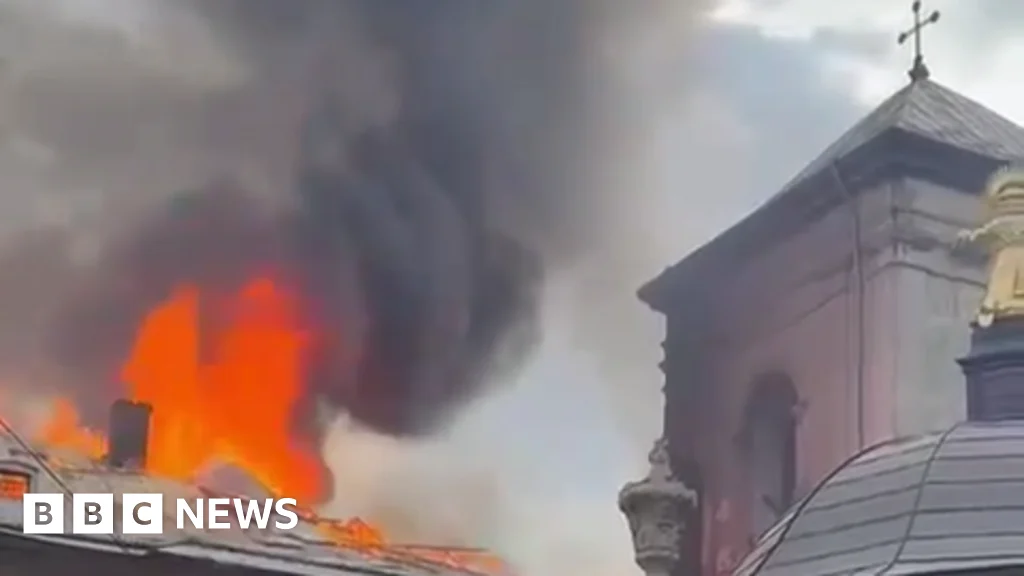
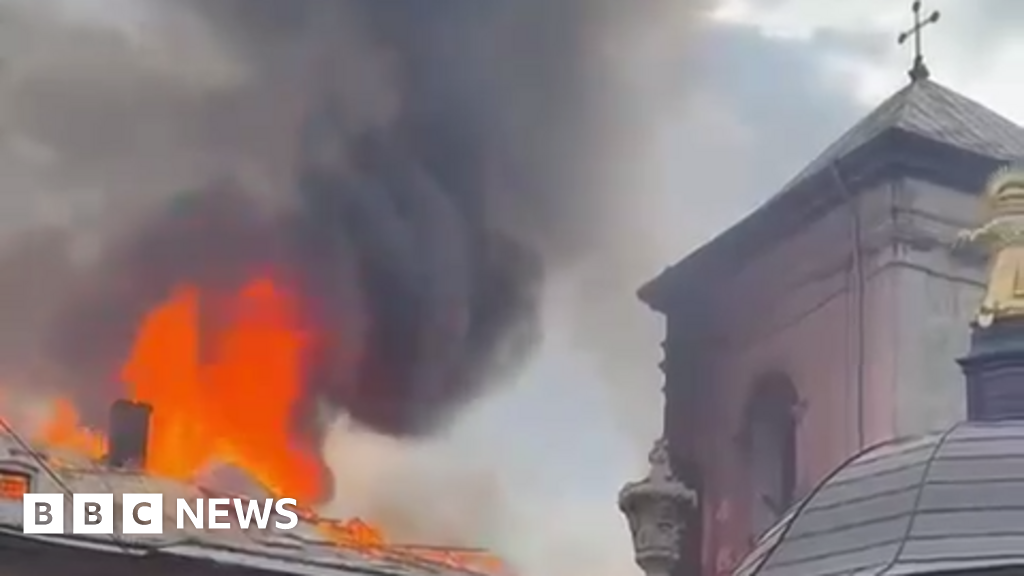
The impact on Lviv’s historical fabric was particularly alarming. Maksym Kozytskyi, head of the Lviv region, reported significant damage to the Bernardine monastery, a revered 16th-century complex recognized as a UNESCO World Heritage site. Images and videos circulated by Lviv authorities depicted a harrowing scene, with flames engulfing the roof of a residential building situated precariously close to the ancient monastery. The proximity of the strike to such a significant historical landmark immediately drew international condemnation, highlighting the indiscriminate nature of these attacks and their potential to erase irreplaceable cultural heritage. The Bernardine monastery, with its distinctive Baroque architecture, towering bell tower, and rich history dating back to the Polish-Lithuanian Commonwealth, serves not only as a spiritual center but also as a profound symbol of Ukrainian identity and European cultural interconnectedness. Its damage represents a tangible loss, echoing similar instances of cultural destruction witnessed throughout the broader conflict in Ukraine. Such acts are often considered war crimes under the 1954 Hague Convention for the Protection of Cultural Property in the Event of Armed Conflict.
Western Ukraine Targeted: A Shift in Attack Patterns
While four years of conflict have left virtually no part of Ukraine untouched by the specter of war, the country’s western regions have, until recently, experienced a comparatively lower frequency and intensity of attacks than areas closer to the Russian border. This latest drone offensive, however, marks a concerning shift, bringing the full brutal reality of the conflict closer to communities that had previously offered some respite for internally displaced persons and served as vital logistical hubs away from the immediate front lines. This expansion of targets could be an attempt to destabilize the entire country, disrupt supply lines from Western allies, and undermine the psychological resilience of the Ukrainian population by demonstrating that no area is truly safe.
Beyond Lviv, three other significant western Ukrainian cities were subjected to heavy bombardment: Ivano-Frankivsk, Vinnytsia, and Ternopil. In Ivano-Frankivsk, Svitlana Onyshchuk, the region’s head, tragically reported two fatalities and four injuries, among them a six-year-old child. The scale of destruction in Ivano-Frankivsk was extensive, with multiple civilian buildings sustaining damage, including the city’s maternity hospital. The deliberate targeting or incidental damage to medical facilities, a protected entity under international humanitarian law, underscores the blatant disregard for civilian safety and human dignity characteristic of these attacks. Such actions not only cause immediate physical harm but also severely compromise healthcare services, creating long-term humanitarian crises and exacerbating the suffering of an already war-weary population.
Vinnytsia also suffered a deadly strike, with one person confirmed dead and eleven others injured in the Tuesday afternoon assault. The coordinated nature of these strikes across multiple geographically dispersed cities in western Ukraine suggests a deliberate strategy to spread fear, disrupt daily life, and strain emergency services across a broader area, testing Ukraine’s resilience and resourcefulness in responding to simultaneous crises. Ternopil, another western city located further north, also reported being targeted, though specific casualty figures were not immediately available, further illustrating the widespread nature of the drone campaign and the comprehensive threat faced by Ukraine’s western flank.
Military Assessment: Overwhelming Numbers and Broadened Geography
Yurii Ihnat, spokesman for the Ukrainian Air Force, provided a critical assessment of the assault late on Tuesday, confirming the unprecedented scale and unusual tactics employed by Russian forces. He noted that a "large number of drones" had penetrated Ukrainian airspace from the north, moving "effectively in columns." This tactic of deploying drones in dense formations or "swarms" is designed to overwhelm air defense systems, making it difficult for interceptors to engage every incoming threat effectively. Such saturation attacks aim to create gaps in defensive coverage, allowing some drones to reach their intended targets even if many are shot down.
"The geography of the strikes during the daytime was broader than at night," Ihnat stated, emphasizing the expanded reach of the recent attacks. He unequivocally declared, "It can be said this was one of the largest attacks within a 24-hour period." This statement from a senior military official underscores the gravity of the situation and the exceptional nature of the recent Russian offensive. The deployment of drones in columns suggests a sophisticated, albeit brutal, strategy aimed at maximizing penetration and impact, forcing Ukrainian defenders to make difficult choices about which targets to prioritize with their limited and valuable resources. The daylight nature of a significant portion of the attack is also notable, as many previous large-scale drone assaults have occurred under the cover of darkness to exploit visual limitations for air defense operators.
The sheer volume of drones, particularly in the daytime, highlights Russia’s evolving aerial warfare strategy. While initial phases of the war often relied on cruise missile attacks against high-value targets, the increasing use of large drone swarms indicates a pivot towards a more attritional approach. This strategy aims to deplete Ukraine’s precious air defense munitions, which are costly and difficult to replenish, while simultaneously causing significant disruption and damage with relatively inexpensive UAVs. The broad geographical spread also forces Ukraine to disperse its air defense assets, making them potentially less effective against concentrated attacks on specific targets and creating vulnerabilities elsewhere.
The Ongoing War: Four Years of Relentless Conflict
The latest drone attacks serve as a stark reminder that four years after Moscow launched its full-scale invasion in February 2022, the war in Ukraine continues unabated. Despite significant international support for Kyiv and robust Ukrainian resistance, Russia persists in its campaign of aggression, launching near-daily attacks on cities and towns across the country. The conflict, initially anticipated by some to be a swift Russian victory, has instead devolved into a protracted and brutal war of attrition, with devastating consequences for civilians and infrastructure. The continuous aerial assaults, often targeting civilian areas and critical infrastructure, are a cornerstone of Russia’s strategy to break Ukrainian morale and undermine the country’s economic and military capabilities.
Beyond the direct casualties and destruction, these attacks create an environment of constant fear and uncertainty, forcing millions to live under the shadow of potential bombardment. The psychological toll on the population, particularly children, is immeasurable, contributing to widespread trauma, displacement, and a profound sense of insecurity. The destruction of homes, workplaces, and cultural sites also has a lasting impact on community cohesion and the nation’s ability to recover.
Reciprocal Actions and Escalation Concerns
The conflict, however, is not entirely one-sided in terms of cross-border strikes. On the same Tuesday, the governor of Russia’s Kursk region reported that a Ukrainian drone attack on an agricultural enterprise resulted in the death of one man and injuries to 13 others. This incident highlights the reciprocal nature of border hostilities, with both sides employing drone technology to strike targets beyond the immediate front lines. While Ukraine’s attacks on Russian territory are generally characterized as defensive responses to the ongoing invasion, aiming to disrupt military logistics or infrastructure supporting the war effort, they contribute to the broader climate of escalation and underscore the pervasive reach of the conflict into Russian border regions.
The targeting of civilian or agricultural infrastructure, regardless of the aggressor, raises serious concerns about the adherence to international humanitarian law and the protection of non-combatants. Such incidents complicate efforts towards de-escalation and fuel the cycle of violence, making a peaceful resolution seem increasingly distant. The international community continues to call for restraint and adherence to the principles of proportionality and distinction in warfare, yet these appeals often fall on deaf ears amidst the brutal realities of armed conflict, where both sides accuse the other of violations.
Implications for Ukraine and the International Community
The unprecedented scale of the recent drone attack carries significant implications for Ukraine’s defense strategy and for international efforts to support Kyiv. Firstly, it underscores the urgent and ongoing need for enhanced air defense capabilities. Ukraine has repeatedly called for more advanced Western air defense systems, such as Patriot and NASAMS, and for greater supplies of interceptor missiles to counter both ballistic and cruise missiles, as well as the proliferating threat of drone swarms. The ability to effectively counter large drone swarms is crucial for protecting civilian lives, critical infrastructure, and military assets, and the current supplies are often described as insufficient to cover the entire country.
Secondly, the deliberate targeting of western cities and a UNESCO World Heritage site is likely to intensify international condemnation of Russia’s actions. Attacks on cultural heritage are considered war crimes under international law, and the destruction of such sites represents an irreversible loss for humanity. This could galvanize further diplomatic pressure, potentially leading to stricter sanctions against Moscow and renewed calls for accountability for those responsible for such violations.
Finally, the shift towards larger, more geographically dispersed drone attacks indicates a deepening and perhaps more desperate phase of Russia’s war effort. It suggests an attempt to expand the conflict’s psychological and material impact across the entire Ukrainian territory, rather than solely focusing on front-line areas. This strategy demands a comprehensive response from Ukraine and its allies, encompassing not only increased military aid but also humanitarian assistance, robust reconstruction efforts, and unwavering diplomatic engagement to isolate Russia further and press for a just and lasting peace. The war’s trajectory remains uncertain, but this latest wave of attacks serves as a grim reminder of the relentless challenges facing Ukraine and the enduring need for unwavering international solidarity. The conflict continues to evolve, pushing the boundaries of modern warfare and exacting an unbearable toll on the Ukrainian people, whose resilience remains a defining characteristic as communities across the nation continue to rebuild and resist amidst the ongoing aggression. The global community watches intently, understanding that the future of international law and order hangs in the balance.

Related Posts

US Imposes Sweeping 50% Tariffs on Canadian Goods, Citing "Unequal Treatment" in Major Trade Escalation

The Silent Threat: How a Tick Bite Led to the World’s First Confirmed Fatal Mammalian Meat Allergy