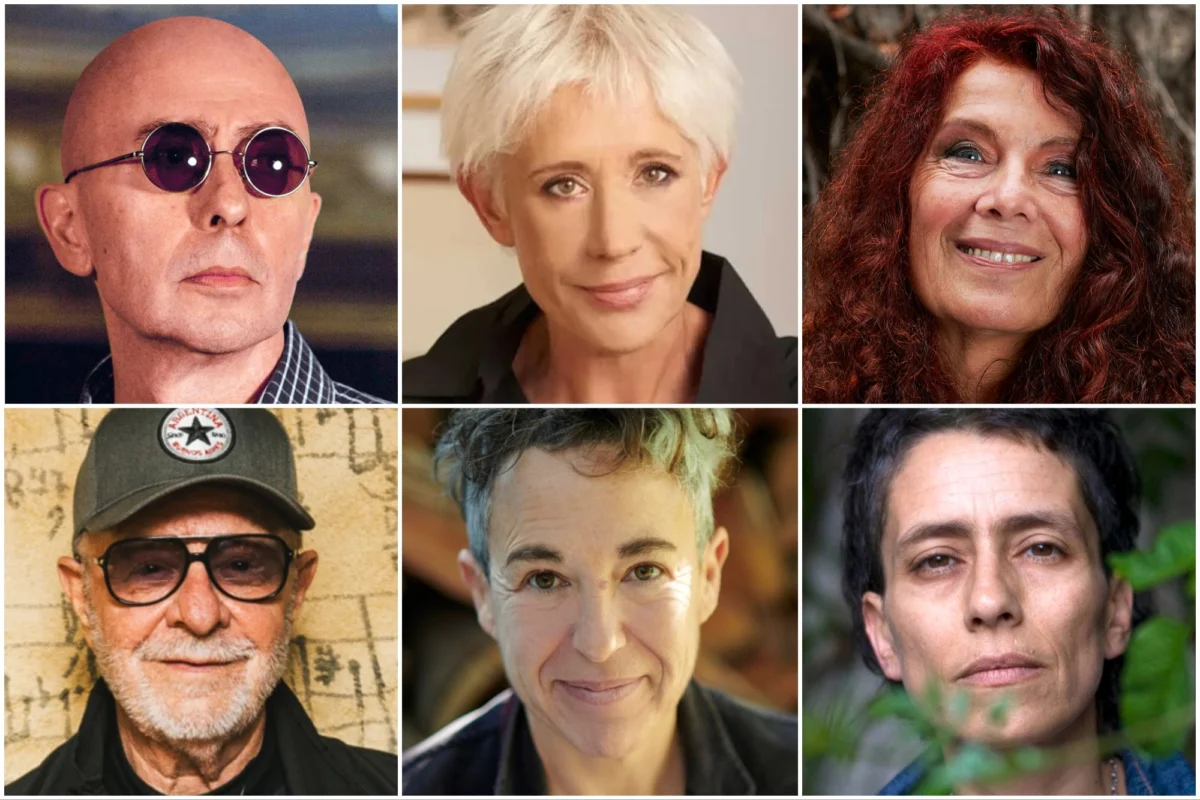
A 50 años del golpe: más de mil artistas, intelectuales y escritores acusan al Gobierno de promover un “apagón cultural”
More than a thousand prominent intellectuals, artists, writers, educators, journalists, and activists have signed a public declaration, known as a solicitada, to express grave concerns over what they perceive as a dangerous replication of the economic, social, and political model implemented by Argentina’s last military dictatorship (1976-1983) under the current administration of President Javier Milei. The signatories contend that the government is not only mirroring the authoritarian policies of that dark period but is also minimizing and even justifying the crimes committed during those years. Furthermore, they decry what they term a "cultural blackout" being actively promoted by the administration.
The initiative, spearheaded by Florencia Saintout, President of the Cultural Institute of the Province of Buenos Aires, was undertaken in a personal capacity and not as an institutional representation, according to sources close to the matter. The declaration articulates a belief that the government’s intention is to "turn back the clock of history," fundamentally altering a society that, prior to the dictatorship, was characterized by robust collective rights, social and labor movements, a flourishing industrial sector, and exceptional cultural vibrancy. This perspective draws a direct parallel between the aspirations of the current government and the objectives of the military junta that seized power in 1976.
Among the signatories, a constellation of figures with significant international recognition, are esteemed artists and cultural icons. These include León Gieco, a legendary folk musician; Estela de Carlotto and Taty Almeida, prominent human rights activists who have tirelessly advocated for justice and memory; Indio Solari, the enigmatic frontman of the iconic rock band Patricio Rey y sus Redonditos de Ricota; Tata Cedrón, a renowned tango musician and composer; Teresa Parodi, a celebrated folk singer and songwriter; Adolfo Pérez Esquivel, Nobel Peace Prize laureate and lifelong human rights advocate; Víctor Heredia, another influential folk singer; Marilina Ross, a multifaceted actress and singer; Cecilia Roth, an acclaimed actress with a distinguished international career; Claudia Piñeiro, a best-selling novelist; Rita Cortese, a respected actress; Juan Minujín, a prominent actor; Liliana Herrero, a versatile musician; Juan Falú, a celebrated guitarist and composer; Pablo Echarri and Dolores Fonzi, both well-known actors; Lito Vitale, a prolific musician and composer; Albertina Carri, an influential filmmaker; Selva Almada, a contemporary writer; Guillermo Saccomanno, a celebrated novelist and recipient of prestigious literary awards; Adriana Varela, a renowned tango singer; Liliana López Foressi, a cultural critic; Diego Capussotto, a popular humorist and television personality; Pedro Sabrido, a journalist; Guillermo Martínez, a distinguished writer; Analía Couceyro, an actress; Maitena, a celebrated cartoonist; Tute, a cartoonist and illustrator; and Gabriela Cabezón Cámara, a highly regarded novelist whose work has gained international acclaim. The breadth of artistic disciplines represented underscores the widespread concern across the cultural landscape.
Call to Action: Commemorating March 24th and Defending Democracy
Beyond their denunciation, the signatories are also actively mobilizing support for a significant public demonstration. They are calling on the public to gather in Plaza de Mayo on Tuesday, March 24th, a date of profound historical significance in Argentina, with the powerful slogan, "so that ‘Never Again’ is definitive." This date marks the anniversary of the 1976 coup that initiated the military dictatorship. The call to action is being coordinated by prominent cultural and human rights organizations, including the PEN Argentina Center, the Union of Argentine Writers, the Association of Argentine Draftsmen, the Association of Children’s and Young Adult Literature of Argentina, and the Collective of Literature for Children, Girls, Boys, and Youth. These organizations have confirmed their participation in the march, which is framed as a defense of democracy, commencing at 2:30 PM at the intersection of Tacuarí and Avenida de Mayo.
The solicitada vividly recalls the cultural devastation wrought by the dictatorship, stating, "The other dimension of the horror perpetrated was cultural policy: hundreds of thousands of books burned and banned, universities closed, films and plays canceled, actors and actresses persecuted, exiled, or disappeared, theaters shut down and set ablaze." This passage highlights the systematic suppression of intellectual and artistic expression as a deliberate tactic of the regime to control information and stifle dissent.
Historical Context and Contemporary Parallels
The declaration explicitly draws a contrast with the period between 2003 and 2015, during which, they argue, national government policies on human rights allowed for a deeper pursuit of truth and memory. This era is credited with accelerating judicial proceedings against those responsible for the atrocities of the dictatorship. However, the signatories now assert that "we find ourselves today with a national government whose economic, social, and political model appears to be a carbon copy of those fierce years: it even relativizes and actually vindicates the crimes of the dictatorship." This assertion forms the core of their critique, suggesting a deliberate regression to a past characterized by state repression and authoritarianism.
The document further elaborates on the contemporary concerns, denouncing "permanent adjustments to the state budget – except for external debt payments – alignment with neocolonial policies, and the dismantling of labor legislation." They also identify the "repression of social protest as a hallmark of these times," pointing to incidents that have occurred recently as evidence of a trend towards intolerance of dissent. This broad critique encompasses economic austerity measures, foreign policy orientations, and the erosion of workers’ rights, all of which are perceived as echoes of the dictatorship’s policies.
A Diverse Spectrum of Signatories
The list of signatories extends beyond those already mentioned, encompassing a wide array of influential figures from various fields. Among them are Sergio Olguín, a prominent novelist; Cristian Alarcón, a journalist and writer recognized for his investigative work; Vivi Tellas, a theater director; Benjamín Rojas, an actor and musician; Florencia de la V, a well-known television personality and actress; Raúl Zaffaroni, a distinguished jurist and former Supreme Court justice; Dolores Reyes, a contemporary author; Alejandra Kamiya, a writer; Marina Bellati, an actress; Dora Barrancos, a sociologist and feminist historian; Baltasar Garzón, a renowned Spanish judge known for his human rights cases; María Eugenia Ludueña, an actress; Gloria Carrá, an actress and singer; Gerardo Romano and Ana María Picchio, both celebrated actors; Luciano Cáceres, an actor; Cristina Banegas and Jean Pierre Noher, both esteemed actors; Virginia Innocenti, an actress; Helen Zout, a photographer; Benjamín Ávila, a filmmaker; Sergio Pujol, a writer and historian; Emilia Mazer and Valentina Bassi, actresses; Julián López, a writer; Pablo Semán, an anthropologist and writer; Marina Mariasch, a writer; Fernando Spiner, a filmmaker; Lidia Borda, a tango singer; Inés Ulanovsky, a journalist and writer; Carmen Guarini, a filmmaker; Natalí Incaminato, an actress; María Victoria Menis, a filmmaker; and Ignacio Copani, an artist, among many others. The inclusion of university rectors, deans, and professors from national public universities further emphasizes the broad academic and educational community’s alarm.
Official Response and Broader Implications
In response to inquiries regarding the government’s stance on the upcoming March 24th commemoration, the National Secretariat of Culture informed this newspaper that no activities associated with the anniversary were planned. This statement, or lack thereof, from the cultural arm of the government could be interpreted as a tacit endorsement of the signatories’ concerns about a "cultural blackout" or a deliberate disengagement from a significant historical moment.
The collective voice of these prominent Argentinians signifies a deep-seated apprehension within the country’s intellectual and artistic circles. Their denunciation, rooted in historical parallels and contemporary observations, raises critical questions about the direction of Argentina’s political, social, and cultural trajectory under President Milei’s administration. The act of signing such a public declaration is a powerful statement of civic engagement, reflecting a commitment to safeguarding democratic values and historical memory against what they perceive as existential threats. The upcoming demonstration on March 24th is expected to be a focal point for these concerns, drawing attention to the enduring importance of the "Nunca Más" (Never Again) principle in Argentina’s national consciousness. The implications of this broad coalition’s dissent extend beyond cultural discourse, touching upon the fundamental tenets of Argentine democracy and its relationship with its own history.

Related Posts
La mujer que denunció al intendente Espinoza pidió que no lo dejen salir del país sin permiso.

Argentina’s President Javier Milei Reflects on 2026 World Cup Reception and Political Criticisms