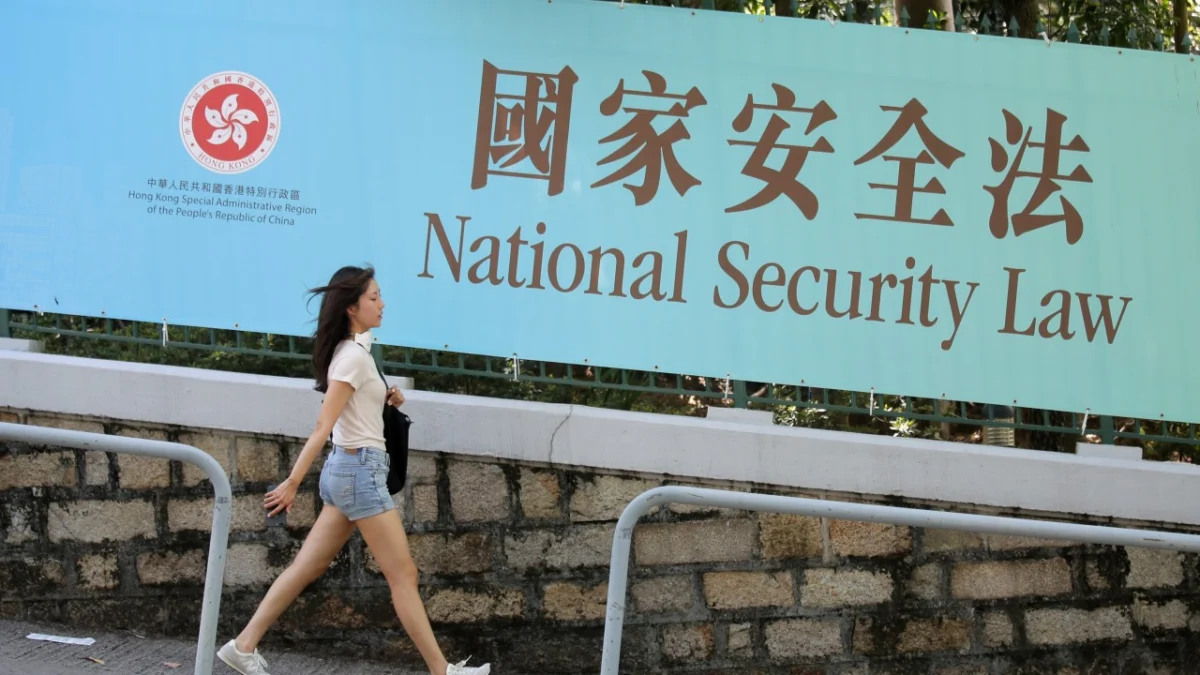
New National Security Law Implementation Rules Bolster Police Powers, Aim to Expedite Investigations Amidst Rising Geopolitical Tensions
Revisions that came into effect on Monday give police powers enjoyed in other jurisdictions and will speed up investigations, they say. The Hong Kong government has gazetted a series of amendments to the implementation rules of the Beijing-imposed national security law, granting law enforcement enhanced capabilities designed to expedite investigations and strengthen the city’s security apparatus. These changes, which took effect on Monday, have been met with a mix of official endorsement and academic commentary, with proponents arguing they align Hong Kong’s powers with those in other jurisdictions and are crucial for addressing evolving security threats, particularly in the digital realm.
Enhanced Investigative Powers and Legal Framework
The core of the amendments empowers police to compel individuals under investigation to provide passwords or decryption methods for electronic devices. Failure to comply with such a request carries a significant penalty: a maximum of one year’s imprisonment and a fine of HK$100,000 (approximately US$12,760). This move directly addresses the growing challenge of encrypted data in criminal investigations, a hurdle that has increasingly hampered law enforcement efforts globally. Previously, obtaining access to such information often involved lengthy legal processes or was entirely unattainable, potentially allowing individuals to conceal crucial evidence.
Furthermore, the revised rules grant customs officers the authority to seize articles deemed seditious. This expansion of power aims to proactively counter the dissemination of content that could undermine national security. The government has also committed to establishing clear procedures and a strict timetable for the processing of claims of legal professional privilege concerning materials seized by police during investigations. This addresses a critical concern for legal practitioners, ensuring that legitimate confidential communications are protected while still allowing for thorough security investigations.
Background and Rationale for the Amendments
The national security law, imposed by Beijing in June 2020, fundamentally reshaped Hong Kong’s legal and political landscape. Its broad provisions have been used to prosecute a wide range of offenses, from secession and subversion to collusion with foreign forces. The recent amendments are framed as necessary adjustments to the law’s implementation, rather than the introduction of entirely new principles.
According to Senior Counsel Ronny Tong Ka-wah, a member of the key decision-making Executive Council, the amendments "are new procedures, but there are no new powers or principles." This assertion suggests that the government views these changes as codifying and clarifying existing authorities, making them more effective in practice. The rationale behind such clarifications is often rooted in the need to adapt to evolving threats and operational challenges.
An academic expert, who preferred to remain anonymous, argued that the move was necessitated by the rise of online threats, which can often involve external actors. In an era where information warfare and digital espionage are increasingly prevalent, the ability to access and analyze digital evidence is paramount. The amendments, from this perspective, are a direct response to the sophisticated methods employed by those seeking to destabilize the city or undermine its security.
Chronology of National Security Law Developments
The introduction of the national security law in 2020 marked a significant turning point for Hong Kong. The law’s enactment followed months of widespread anti-government protests, which Beijing characterized as a threat to national stability.
- June 30, 2020: The Standing Committee of the National People’s Congress passes the Law of the People’s Republic of China on Safeguarding National Security in the Hong Kong Special Administrative Region (NSL). The law takes effect in Hong Kong the same day.
- July 1, 2020: The first arrests are made under the new law.
- Ongoing: Various provisions of the NSL are enacted and implemented through subsidiary legislation and court interpretations. Cases under the NSL proceed through the courts, with several high-profile individuals being charged and convicted.
- Early 2026: Discussions and consultations regarding potential enhancements to the implementation rules intensify, particularly focusing on digital evidence and border security.
- March 2026: The government announces a series of amendments to the implementation rules of the NSL.
- March 24, 2026: The amendments are gazetted and come into effect.
This timeline highlights the continuous evolution of the national security framework in Hong Kong, with the recent amendments representing a further step in refining its operational capacity.
Supporting Data and International Comparisons
The challenges posed by encrypted digital data are not unique to Hong Kong. Law enforcement agencies worldwide grapple with this issue. For instance, in many Western jurisdictions, laws have been enacted or debated to compel individuals to provide access to their digital devices. In the United States, for example, the debate around "warrant-proof encryption" and the "Going Dark" problem has led to calls for legislative solutions. Similarly, the United Kingdom’s Investigatory Powers Act 2016 includes provisions that can compel individuals to disclose decryption keys.
The HK$100,000 fine and one-year imprisonment for non-compliance in Hong Kong are comparable to penalties in other jurisdictions for similar offenses. The intention is to create a strong deterrent against withholding critical information necessary for national security investigations.
The empowerment of customs officers to seize seditious materials also aligns with practices in many countries where border agencies play a role in preventing the import of materials deemed harmful to public order or national security. The establishment of clear procedures for legal professional privilege is also a standard feature in robust legal systems, aiming to balance investigative needs with the protection of fundamental rights.
Official Responses and Expert Commentary
A government spokesman stated that the changes would "strengthen enforcement power, improve investigation of cases and mitigate national security risks more promptly." This statement underscores the government’s view that the amendments are a proactive measure to enhance the effectiveness of the national security apparatus.
Mr. Tong’s emphasis on the procedural nature of the changes is significant. It suggests that the government is seeking to optimize the existing legal framework rather than introducing radical new concepts that might face greater legal or international scrutiny. By focusing on "procedures," the aim is to ensure that the law can be applied more efficiently and effectively on the ground.
The academic’s point about external forces and online threats is particularly relevant. The digital age has blurred traditional borders, making it easier for individuals or groups to engage in activities that could threaten national security from afar. The ability to access digital devices and identify seditious materials are crucial tools in combating such threats.
Broader Impact and Implications
The amendments to the national security law’s implementation rules are likely to have several significant implications for Hong Kong.
Firstly, they signal a continued commitment by the Hong Kong government, under Beijing’s guidance, to bolstering its security capabilities. This will likely be viewed by proponents as a necessary step to maintain stability and order in a complex geopolitical environment.
Secondly, the enhanced powers regarding digital devices could lead to increased scrutiny of individuals’ online activities. While the stated aim is to investigate national security threats, concerns about privacy and civil liberties are likely to persist, particularly among those who have been critical of the national security law since its inception. The clear establishment of procedures for legal professional privilege is a critical safeguard, but its implementation will be closely watched.
Thirdly, the amendments underscore the growing importance of cybersecurity and digital forensics in national security. As threats become more sophisticated and move into the digital domain, law enforcement agencies must be equipped with the necessary tools and legal frameworks to combat them effectively.
Finally, the government’s assertion that these changes align Hong Kong’s powers with those in other jurisdictions suggests an effort to normalize these measures within an international context. However, the broader reception of these amendments will depend on how they are implemented in practice and their impact on the city’s legal system and fundamental freedoms. The focus on "speeding up investigations" and "mitigating risks more promptly" indicates a strategic imperative to ensure that Hong Kong can respond swiftly and decisively to perceived threats, reflecting the ongoing challenges of maintaining security in a rapidly changing world.