Globalists at Rupert Murdoch’s WSJ Demand Ground Troops in Iran
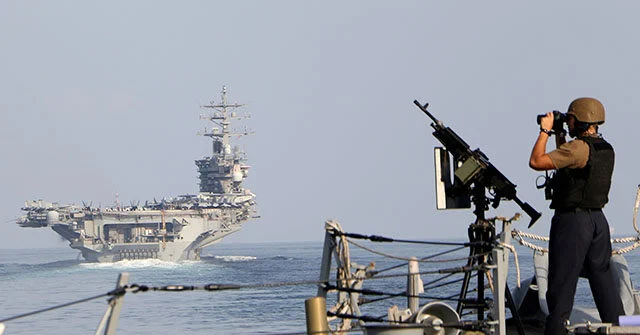
A recent commentary published in the Wall Street Journal has ignited debate, calling for a significant escalation of U.S. military involvement in Iran. Seth Cropsey, a former Pentagon official, penned an opinion piece on Sunday, headlined "American Credibility Is on the Line in Iran," urging former President Donald Trump to deploy ground forces to southern Iran. The stated objectives are to reopen the strategically vital Strait of Hormuz and to complete what Cropsey describes as an "unfinished" military campaign against the Islamic Republic. This proposal comes amidst ongoing friction between Trump and elements of the Murdoch press empire, raising questions about the motivations and broader implications of such high-profile recommendations.
The Call for Ground Troops and the "Unfinished Campaign"
Cropsey’s article unequivocally advocates for a direct military intervention, arguing that "President Trump must put boots on the ground to open the Strait of Hormuz and demonstrate the unquestionable supremacy of American power." He warns against any premature withdrawal, stating that "the job, while admirably executed, is unfinished." Specifically, Cropsey suggests the deployment of "several thousand special-ops forces to southern Iran," to be supported by regular troops, with the explicit aim of securing the Strait of Hormuz after weeks of hypothetical conflict.
The urgency in Cropsey’s argument is underscored by his dire warnings regarding the consequences of inaction. He cautions that "halting now, however, would be a cataclysmic mistake with repercussions well beyond the Middle East." According to Cropsey, abandoning the conflict while Iran retains any leverage over the critical waterway would "destroy American credibility" globally. He further posits a chain reaction, claiming such a perceived weakness "could trigger a Chinese move against Taiwan or a Russian move against NATO," linking regional stability in the Persian Gulf directly to broader international security paradigms.
The Strategic Importance of the Strait of Hormuz
At the heart of Cropsey’s proposal lies the Strait of Hormuz, a narrow maritime chokepoint connecting the Persian Gulf to the Arabian Sea and the open ocean. Its strategic importance cannot be overstated. Approximately one-fifth of the world’s total petroleum liquids consumption, and a significant portion of global liquefied natural gas (LNG) trade, passes through this strait. Data from the U.S. Energy Information Administration consistently highlights the strait as the world’s most important oil transit chokepoint. Any disruption to shipping in the strait has immediate and profound impacts on global energy markets, leading to spikes in oil prices and significant economic uncertainty.
For decades, the security of the Strait of Hormuz has been a primary concern for international trade and global energy supply. Iran, situated along the northern coast of the strait, has repeatedly threatened to close it in response to international pressure or sanctions. Such threats have historically been met with strong condemnations from the United States and its allies, who maintain a significant naval presence in the region to ensure freedom of navigation. The U.S. Fifth Fleet, based in Bahrain, is specifically tasked with safeguarding maritime security in the Persian Gulf, Arabian Sea, and parts of the Indian Ocean.
A History of US-Iran Antagonism
Cropsey frames his argument within a broader historical context of US-Iran relations, describing the Islamic Republic as an "incorrigible U.S. adversary since its founding in 1979." He enumerates a litany of grievances, including attacks on U.S. diplomats, servicemembers, civilians, and allies, asserting that "these reasons justify Mr. Trump’s decision to join Israel" in confronting Iran. This narrative aligns with a hawkish perspective that views Iran as a persistent threat to regional stability and U.S. interests, necessitating a robust and decisive military response.
The relationship between the United States and Iran has been fraught with tension since the 1979 Islamic Revolution and the subsequent hostage crisis at the U.S. embassy in Tehran. Decades of sanctions, proxy conflicts, and diplomatic stalemates have characterized the dynamic. Under the Trump administration, tensions escalated significantly following the U.S. withdrawal from the Joint Comprehensive Plan of Action (JCPOA), or Iran nuclear deal, in 2018. This withdrawal was followed by a "maximum pressure" campaign of sanctions aimed at crippling Iran’s economy and forcing it to renegotiate a more stringent nuclear agreement. Incidents such as attacks on oil tankers in the Gulf, drone downings, and the assassination of Iranian General Qasem Soleimani in early 2020 further pushed the two nations to the brink of open conflict.
Trump’s Ambiguous Stance and Contradictory Signals
Cropsey’s commentary also highlights what he perceives as conflicting signals emanating from former President Trump regarding the current state and future direction of U.S. operations in Iran. Trump’s public statements have indeed presented a mixed picture, oscillating between suggestions of de-escalation and hints of continued military pressure.
On March 20, Trump reportedly stated that the United States was "getting very close to meeting our objectives" in Iran and was "considering winding down our great Military efforts in the Middle East." He suggested that countries utilizing the Strait of Hormuz would "have to guard and police as necessary" and that the U.S. would only help "If asked." This statement appeared to signal a potential reduction in direct U.S. military engagement.
However, on the same day, when questioned about reports of additional Marine deployments, Trump cryptically responded, "as far as troops are concerned, I can’t tell you what we’re doing." This ambiguity followed an even more direct denial just a day earlier, on March 19, when Trump declared, "I’m not putting troops anywhere." He added, "If I were, I certainly wouldn’t tell you, but I’m not putting troops," while disputing media reports about his administration considering the deployment of thousands of U.S. forces to the region.
Cropsey argues that such mixed messaging undermines U.S. resolve and that "the only way to accomplish this with a reasonable chance of success is to put boots on the ground." This viewpoint suggests that clarity and decisive action, even if militarily aggressive, are preferable to perceived vacillation.
Historical Parallels and Global Repercussions
To bolster his argument about the importance of completing the campaign, Cropsey invokes the 1956 Suez Crisis. He posits that failing to secure the Strait of Hormuz would similarly undermine U.S. global standing, much as the Suez episode marked "the psychological transformation of two erstwhile great powers into medium powers." The Suez Crisis, which saw Britain and France’s influence significantly curtailed by U.S. diplomatic pressure, serves as a historical warning in Cropsey’s view: a great power’s perceived retreat or failure to assert dominance in a critical region can lead to a fundamental reassessment of its global authority. By drawing this parallel, Cropsey implies that the U.S. faces a similar risk of diminished international stature if it withdraws before achieving its objectives in the Persian Gulf.
Potential Implications of a Ground Intervention
A U.S. ground intervention in southern Iran, as proposed by Cropsey, would carry immense and complex implications across military, economic, and geopolitical spheres.
Military Implications: Deploying "several thousand special-ops forces" backed by regular troops into Iranian territory would constitute a direct invasion. This would almost certainly be met with fierce resistance from Iranian regular forces, the Islamic Revolutionary Guard Corps (IRGC), and potentially a mobilized civilian populace. The terrain in southern Iran, particularly around the Strait of Hormuz, is mountainous and rugged, posing significant logistical challenges for any invading force. Such an operation would likely trigger a prolonged and costly conflict, potentially escalating beyond the initial objectives and drawing the U.S. into another protracted engagement in the Middle East. It could also lead to a regional proxy war, with Iran activating its network of allied militias and groups across the Levant and Gulf states.
Economic Implications: The immediate economic fallout would be severe. Global oil prices would skyrocket, potentially reaching unprecedented levels, as the risk to the world’s most critical oil chokepoint becomes a reality. Shipping insurance rates would soar, and many shipping companies might divert vessels, causing massive disruptions to global supply chains. The cost of such a military operation, both in terms of direct expenditure and indirect economic damage, would be astronomical.
Geopolitical Implications:
- Regional Instability: A ground invasion would plunge the Middle East into unprecedented turmoil, potentially destabilizing U.S. allies in the Gulf who rely on regional security.
- International Condemnation: Many international actors, including key U.S. allies in Europe, would likely condemn such an unprovoked invasion, further isolating the United States on the world stage.
- Adversary Response: Cropsey’s warnings about China and Russia are significant. While a direct military response from these powers is unlikely, they could exploit U.S. entanglement in Iran to advance their own strategic interests elsewhere, as suggested by Cropsey. Russia could intensify its actions in Eastern Europe, and China could increase pressure on Taiwan or expand its influence in the South China Sea.
- Humanitarian Crisis: Any large-scale military conflict would undoubtedly lead to a significant humanitarian crisis, including mass displacement, civilian casualties, and widespread destruction.
The Murdoch Media Empire and Trump: A Pattern of Friction
The Wall Street Journal‘s latest call for troops is not an isolated incident but rather fits into a broader pattern of friction and sometimes overt disagreement between former President Trump and the Murdoch press empire. This dynamic adds a layer of complexity to the analysis of the op-ed, suggesting it might also reflect internal ideological battles within conservative media.
Breitbart News, a prominent conservative outlet often aligned with Trump’s "America First" agenda, has extensively documented this tension. In January, Breitbart reported that the Journal refused to fully correct a story claiming Vice President JD Vance and Secretary of State Marco Rubio were deterring Trump from striking Iran. Vance’s office explicitly stated the Journal‘s reporting was "not accurate," clarifying that "Vance and Rubio together are presenting a suite of options to the President, ranging from a diplomatic approach to military actions. They are presenting those options without bias or favor." This dispute drew sharp criticism from conservatives, who labeled the report "false" and "FAKE NEWS," accusing the paper of attempting to "create the illusion of division between President Trump, Vance, and Secretary Rubio."
Further back, in June 2025, Trump himself publicly criticized the Journal, stating it "has No Idea what my thoughts are concerning Iran!" This was in response to a Journal report, based on anonymous sources, claiming he had authorized attack plans but was awaiting a final order. Trump’s reaction underscored his distrust of such reporting and his desire to control the narrative surrounding his foreign policy decisions.
Breitbart News reports have also consistently described a "barrage" of anti-Vance commentary across Murdoch-owned outlets, including the Journal, Fox News, and the New York Post. This criticism, particularly on economic and foreign policy issues, was seen to reflect a divide between what Breitbart characterized as "old guard media" and the newer "America First" wing of the Republican party. One GOP adviser quoted suggested such outlets were "completely out of touch with the direction of the GOP." The Journal alone was noted to have published at least 17 opinion pieces or letters attacking Vance since February 2025.
More broadly, Breitbart News has asserted that the Wall Street Journal‘s editorial page has spent roughly a decade attempting to undermine Trump. This includes consistent criticism of his trade policy, immigration agenda, foreign policy restraint, and political instincts. A March 2025 story argued the paper views issues "through the clouded lens of a bygone era" and has been "hostile to Trump’s populist economic and immigration policies," reflecting a "globalist worldview" perceived as out of step with the Republican base. A June 2024 piece similarly suggested that Murdoch’s media empire was attempting to influence Trump’s vice-presidential selection, using the Journal to promote preferred candidates while opposing figures like Vance over their positions on Ukraine and industrial policy.
This historical context of tension between Trump and the Wall Street Journal‘s editorial stance is crucial for understanding the recent commentary. Cropsey’s strong advocacy for military escalation, while presented as a strategic imperative, can also be viewed through the lens of this ongoing ideological struggle, potentially reflecting a desire by certain establishment voices to push for more interventionist foreign policy positions, even when seemingly at odds with a former President who has often expressed skepticism about prolonged military engagements in the Middle East.
In conclusion, Seth Cropsey’s commentary in the Wall Street Journal presents a stark and highly interventionist vision for U.S. policy in Iran, advocating for ground troops to secure the Strait of Hormuz. This proposal, while framed as essential for American credibility and global stability, stands in contrast to former President Trump’s sometimes contradictory statements and highlights the profound complexities and risks associated with military escalation in such a volatile region. Furthermore, its publication within the Wall Street Journal underscores the persistent ideological fault lines within conservative media regarding foreign policy, particularly concerning the legacy and future direction of the "America First" movement.

Related Posts
Department of Homeland Security Reports Steady 2,000 Daily Migrant Arrests Amidst Intense Political Scrutiny and Calls for Greater Enforcement
Federal Building in New York City Targeted by Incendiary Device, Suspect in Custody Following Incident at 26 Federal Plaza