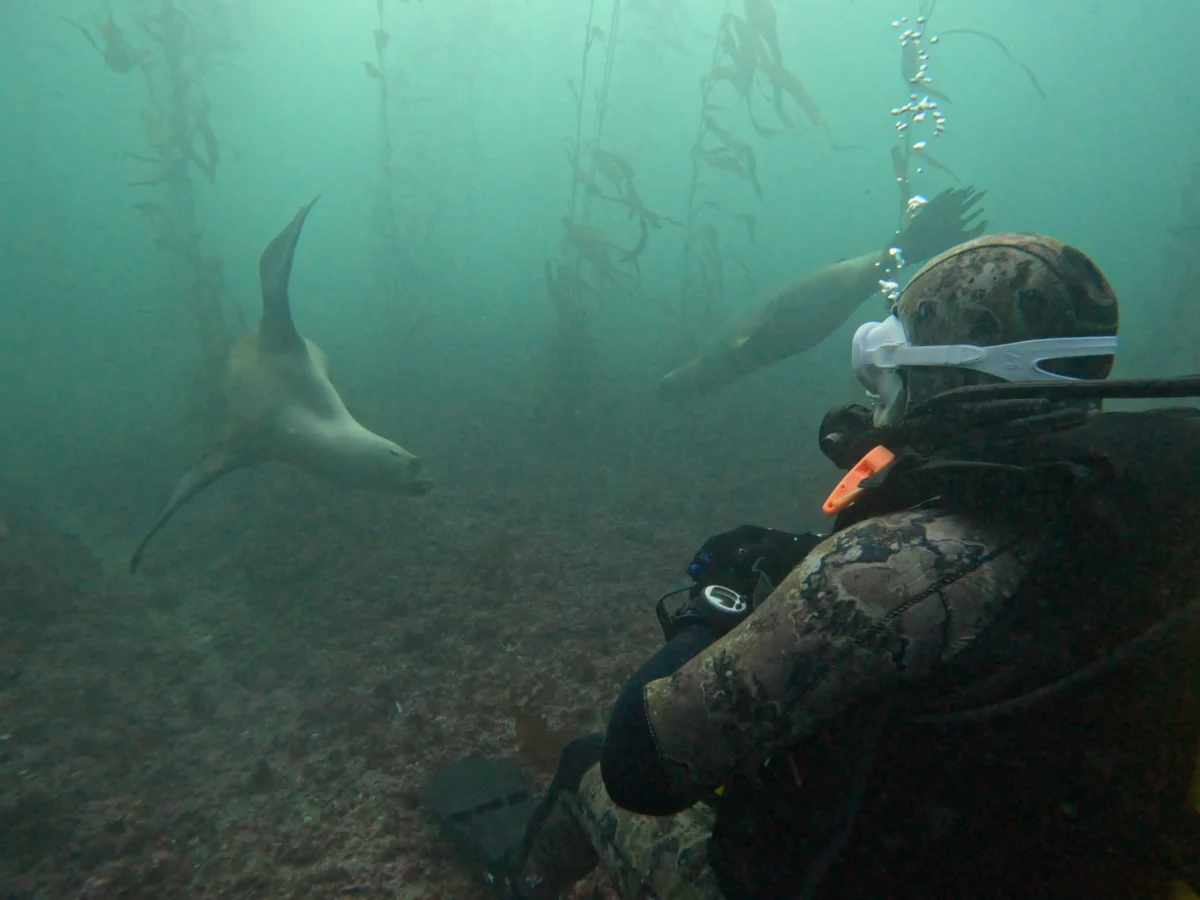
Patagonia’s Pristine Waters: A Global Hub for Immersive Marine Wildlife Encounters
The Patagonian coast of Argentina has firmly established itself as a premier global destination for unparalleled marine wildlife encounters in their natural habitats. Within this expansive geographical tapestry, the province of Chubut has meticulously curated an offering that transcends mere observation, immersing visitors into the vibrant subaquatic ecosystem. Puerto Madryn, globally recognized as the National Capital of Diving, spearheads this movement with robust infrastructure that facilitates access to protected natural reserves, all governed by stringent conservation protocols. However, the sphere of this activity is dynamically expanding southward, encompassing the shores of Comodoro Rivadavia and extending to the subantarctic waters of the Beagle Channel in Ushuaia, each location presenting distinct biological characteristics and technical diving challenges.
The practice of interacting with marine fauna, far from being a haphazard endeavor, is underpinned by a profound understanding of species behavior and a sophisticated logistics network designed to minimize acoustic and physical impacts on marine colonies. Jorge Natale, Director of Master Divers Patagonia and President of the Association of Diving Operators (AOB), emphasizes the unique allure of the region. "Diving with animals is, in essence, the pinnacle of sport diving," Natale states. "Whenever one engages in sport diving, there’s an eager anticipation to immerse oneself in the habitat of marine flora and fauna, to revel in the environment with the least possible impact."
He further elaborates on the exceptional encounters characteristic of the region: "In Patagonia, in particular, we frequently experience serendipitous encounters with local and pelagic animals possessing unique traits in terms of size and behavior, such as sea lions, whales, and dolphins." Natale highlights Punta Loma Reserve as a critical nexus for these interactions, serving as a permanent home to over 500 South American sea lions.
Logistics and Protocols: Mastering the Diving Capital
The evolution of marine wildlife diving in Patagonia, since its formal authorization in 2005, has been significant. Current experiences are categorized into snorkeling, conducted at the surface, and autonomous diving, or scuba diving. The latter is reserved for individuals holding relevant certifications, though novices can opt for shallow underwater parks, typically ranging from 6 to 12 meters in depth, or explore shipwrecks that necessitate advanced technical proficiency, descending to depths of up to 30 meters.
The daily operational routine commences with meticulous equipment preparation. Given the notably low water temperatures, the mandatory use of 7-millimeter thick neoprene wetsuits is essential for diver comfort and safety. Natale explains that the process involves a 25-minute boat journey to the reserve, during which a comprehensive technical briefing is provided. "The regulations are detailed, including adherence to designated distances from the coast and guidelines for interacting with the animals," he notes. Upon arrival at the dive site, "the activity duration is 45 minutes and is continuously monitored by wildlife rangers. A system of buoys, positioned at 70 and 50 meters from the shore, delineates the permissible zones for both vessels and swimmers."
Regarding animal behavior, Natale clarifies that any close interaction is initiated by the animals themselves. "The distance between divers and animals is dictated by them," he states. Drawing from his extensive experience, Natale observes that summer months are characterized by harems, featuring dominant males and their young, while autumn and winter see younger sea lions venturing out from maternal protection, exhibiting a greater degree of curiosity. "If they approach and initiate contact, we provide guidance on techniques such as closing one’s fist to avoid uncomfortable bites and maintaining slow, deliberate movements while in their immediate vicinity," the expert advises.
Comodoro Rivadavia and Ushuaia: Expanding the Marine Circuit
Further south along Chubut’s coastline, the diving landscape transforms. Comodoro Rivadavia is emerging as a site of considerable biological potential, boasting biodiversity that extends beyond large marine mammals. Hugo Daniel Lemos Ferloni, a representative of the Zeus Diving School, notes that activities are conducted both along the city’s coast and near the provincial border with Santa Cruz. Currently, pilot programs are underway to establish snorkeling with sea lions near the local coastline.
For divers like Lemos Ferloni, the essence of a successful immersion lies in passive observation. "The optimal approach is to remain still and savor the moment," he advocates. His expeditions have revealed an extensive array of species inhabiting the kelp forests, including dolphins, porpoises, and various whale species such as the Southern Right Whale and Sei Whale, alongside octopuses, crabs, salmon, groupers, and starfish. "Mammals are particularly inclined to engage with us, approaching with curiosity to observe us, coming and going," he describes.
The operational dynamics in this region offer two primary modalities: shore-based diving, where participants enter the water on foot after a technical briefing, or boat-based excursions, involving a 25-minute navigation to the dive site. Regardless of the entry method, the paramount principle remains respect. "All maneuvers are executed with caution; one must not become agitated or attempt to embrace them," Lemos Ferloni emphasizes.
At the southernmost tip of Argentina, Ushuaia presents a markedly different subaquatic panorama. The frigid waters of the Beagle Channel impose specific technical requirements and support a biodiversity distinct from the abundant colonies found further north. Romina, from the operator Beagle Buceos, manages expectations for those venturing into Tierra del Fuego: "Here in Ushuaia, the biodiversity we typically observe consists mainly of smaller-sized organisms. Sea lions occasionally approach, but this is not a commonplace occurrence."
Diving in the Beagle Channel offers an experience focused on discovering minute organisms within an ecosystem where water temperatures necessitate rigorous technical planning, and encounters with large marine mammals are fortuitous rather than guaranteed.
A common thread among all operators is the emphasis on accessibility and stringent safety protocols. For snorkeling, the ability to swim is not a prerequisite, as the neoprene gear and buoyancy vest ensure flotation, with instructors guiding participants’ movements. Scuba diving, however, mandates certification or the completion of an introductory dive experience, often referred to as a "baptism of diving."
Lemos Ferloni details that participation is open to individuals as young as seven years old. The administrative process is thorough, involving the completion of a form with personal details, medical history, and a declaration of responsibility. Once in the water, constant instructor supervision is maintained, either physically or visually. "Participants simply need to relax and breathe; the equipment handles the rest," assures the instructor from Comodoro Rivadavia.
The regulatory framework governing these underwater excursions is established at both provincial and local levels. The AOB has developed comprehensive protocols, honed over years of experience, specifically designed to prevent animal stress. These regulations explicitly prohibit harassment, pursuit, or any form of aggression towards marine specimens. Non-compliance with mandated minimum approach distances can result in the suspension of operating permits for dive operators, thereby ensuring the long-term sustainability of this unique tourism sector.
The Profound Impact of the Subaquatic Experience
The total duration of these underwater activities typically ranges from 90 to 120 minutes, encompassing preparation and transit times. The ultimate objective, as articulated by the participating experts, is to foster a deeper appreciation for the immense value of marine natural heritage. Diving with wildlife offers an unparalleled opportunity to observe species that are usually seen from the coastline or depicted in documentaries, but from an intimate, egalitarian perspective within their aquatic realm.
As Daniel Lemos Ferloni aptly puts it, this is an interaction where human participants must adapt to an alien environment: "The animals dictate the rules of engagement; at times, they are a meter away, and at others, five meters." This inherent unpredictability is precisely what imbues the Patagonian experience with its profound credibility and enduring appeal.
In this manner, the development of wildlife diving in Argentina successfully harmonizes the growth of its tourism industry with the imperative of species preservation. Puerto Madryn, with its established colony at Punta Loma, continues to be the benchmark for mass sea lion encounters. Comodoro Rivadavia is broadening the scope of activities to include the observation of diverse biodiversity in less explored environments, while Ushuaia offers a technically demanding immersion into the micro-ecosystems of the subantarctic waters. This multi-faceted approach ensures that the pristine marine environments of Patagonia remain accessible for generations to come, fostering both economic prosperity and ecological stewardship.

Related Posts
Argentina’s President Javier Milei Reflects on 2026 World Cup Reception and Political Criticisms

Argentina’s Captain Lionel Messi to Forego National Team Celebrations for Club Commitments