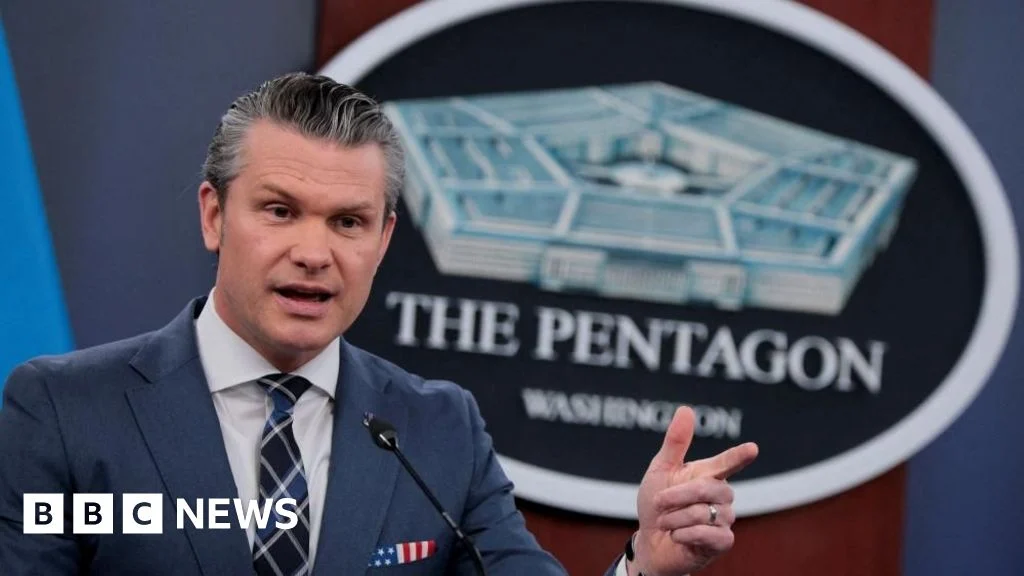
Federal Judge Blocks Pentagon’s Restrictive Media Access Policy, Citing First and Fifth Amendment Violations
A significant ruling delivered by a federal judge has struck down key aspects of the Department of Defense’s controversial policy governing how journalists access the Pentagon, determining that it violates fundamental tenets of the US Constitution. District Judge Paul L. Friedman sided with The New York Times, which had initiated legal action against the department after it implemented stringent controls widely perceived as limiting the press’s ability to gather and disseminate information from the nation’s defense headquarters. The ruling marks a substantial victory for press freedom advocates and a setback for the Pentagon’s efforts to tighten its grip on information flow, though the department has swiftly indicated its intention to appeal the decision.
The Genesis of a Controversial Policy
The policy at the heart of the dispute was enacted in October of the preceding year, dramatically altering the long-standing protocols for credentialed journalists covering the Department of Defense. Prior to this, the relationship between the Pentagon and its dedicated press corps, while often fraught with the inherent tension between national security and public transparency, largely operated under a system that afforded daily access to reporters. The new policy, however, introduced unprecedented requirements that immediately sparked widespread condemnation across major media organizations.
Central to the Pentagon’s revised guidelines was a mandate that reporters sign a document agreeing that any information gathered, even if unclassified, must receive departmental approval before publication or release. This pre-approval clause was viewed by many as a form of prior restraint, a legal concept generally disfavored under the First Amendment. Furthermore, the policy stipulated that journalists who "solicited" sensitive information, broadly defined, could be barred from the building due to perceived security risks. This particular clause ignited fierce opposition, as the act of soliciting information – asking questions, seeking sources, pursuing leads – lies at the very core of journalistic practice. The Pentagon maintained that these measures were necessary to protect national security interests and prevent the unauthorized disclosure of sensitive information by defense department employees. It also argued that the policy did not compel journalists to clear entire stories with the military, but rather aimed to control the flow of unclassified but potentially sensitive data.
The ramifications of this policy were immediate and stark. A significant majority of major news outlets, including prominent names such as CBS News, ABC News, NBC News, CNN, Fox News, and BBC News, collectively refused to sign the contentious agreement. Their refusal resulted in the revocation of their daily access credentials, effectively barring their journalists from the Pentagon’s press room and other common areas. This mass withdrawal of credentials led to a dramatic shift in the composition of the Pentagon press corps, which subsequently became dominated by a smaller cohort of conservative media outlets, notably the One America News Network, that had agreed to abide by the new rules. This created an environment where a significant segment of the American public was being informed about defense matters by a limited ideological spectrum of news organizations, raising serious concerns about viewpoint discrimination and the breadth of information available to the public.
The Legal Challenge and Judge Friedman’s Scrutiny
In response to what it viewed as an unconstitutional infringement on press freedoms, The New York Times filed a lawsuit against the Department of Defense. The newspaper, a perennial fixture in defense reporting, argued that the policy violated both the First Amendment, which protects freedom of speech and the press, and the Fifth Amendment, which guarantees due process and protection against arbitrary government action. The lawsuit underscored the critical role of an independent press in overseeing government operations, especially those related to national security, and highlighted the chilling effect the policy would have on investigative journalism.
Judge Paul L. Friedman of the District Court for the District of Columbia meticulously examined the arguments presented by both sides. His ruling on Friday delivered a sharp rebuke to the Pentagon’s policy, finding its provisions to be unconstitutionally vague and overly broad.
One of the central pillars of Friedman’s decision was his direct challenge to the policy’s prohibition on "soliciting" sensitive information. He eloquently stated in his ruling, "To state the obvious, obtaining and attempting to obtain information is what journalists do." He elaborated on the inherent absurdity and constitutional peril of a policy that could deem essential journalistic practices as security risks. "Under the Policy’s terms, then, essential journalistic practices that the plaintiffs and others engage in every day – such as asking questions of Department employees – could trigger a determination by the Department that a journalist poses a security or safety risk," the ruling clarified. This interpretation, Friedman concluded, rendered the policy so "vague" that it failed to provide a reasonable person with sufficient information to understand what conduct was prohibited, thereby violating due process principles enshrined in the Fifth Amendment. The vagueness doctrine prevents the government from enacting laws that are so unclear that they fail to give ordinary people fair notice of what is prohibited, or that allow for arbitrary and discriminatory enforcement.
Furthermore, Judge Friedman took aim at the Pentagon’s assertion that access to the building was merely a "privilege" rather than a "right." He emphatically stated that while the government has the authority to regulate access to its facilities, it cannot deny such access "unreasonably or on the basis of viewpoint." This distinction is crucial in First Amendment jurisprudence, affirming that even when access is not an absolute right, government entities cannot arbitrarily or discriminatorily restrict it, especially when such restrictions impinge on protected speech and press activities. The implication here is that by revoking credentials based on refusal to sign a restrictive agreement, the Pentagon was effectively engaging in viewpoint discrimination, allowing only those sympathetic to its information control methods to report from within.
However, not all aspects of the Pentagon’s policy were struck down. Judge Friedman did not invalidate the requirement for reporters to have an escort when accessing certain parts of the building. This particular restriction is often seen as a reasonable security measure in sensitive government facilities, allowing the Pentagon to maintain control over movement within its premises while still enabling journalists to perform their duties in designated areas. This partial acceptance of the policy suggests a judicial acknowledgment of the legitimate security concerns of the Department of Defense, seeking to balance them against constitutional protections for the press.
Reactions and Immediate Implications
The ruling was met with immediate and divergent reactions from the parties involved. Sean Parnell, a Pentagon spokesman, quickly took to social media platform X (formerly Twitter) to announce the department’s stance: "We disagree with the decision and are pursuing an immediate appeal." This swift declaration signals the Pentagon’s unwavering commitment to its policy and indicates that the legal battle over press access is far from over. The department is likely to reiterate its arguments concerning national security imperatives and the need to prevent unauthorized disclosures in its appeal.
The New York Times, the plaintiff in the case, is expected to issue a statement celebrating the decision as a critical affirmation of press freedom and government transparency. For the journalistic community, the ruling was a moment of vindication. The Pentagon Press Association (PPA), a professional organization dedicated to representing the interests of defense reporters, issued a statement to CBS News following the ruling, expressing its profound satisfaction. The PPA "celebrates the decision by a federal judge today that the Pentagon’s press credentialing policy violated the US Constitution," the statement read, further calling for the "immediate reinstatement of the credentials of all PPA members." This demand underscores the practical implications of the ruling: the restoration of daily access for numerous journalists who were previously barred.
Legal experts and First Amendment advocates have largely lauded Judge Friedman’s decision. Many view it as a robust defense of constitutional principles, particularly in an era where government transparency is frequently challenged. The ruling reinforces the judiciary’s role as a crucial check on executive power, ensuring that attempts to control information do not overstep constitutional bounds. Experts might point to the importance of an unhindered press in a democracy, especially when reporting on institutions as powerful and opaque as the Department of Defense, which controls vast resources and makes decisions with global implications. The ability of journalists to independently investigate and report on defense matters is vital for public oversight and accountability.
Broader Impact and Future Outlook
The immediate impact of Judge Friedman’s ruling is the suspension of the most restrictive elements of the Pentagon’s policy. This should lead to the reinstatement of credentials for a significant number of journalists who had been denied access, restoring a broader and more diverse press corps to the Pentagon. This will, in turn, likely lead to more comprehensive and varied reporting on defense issues for the American public.
However, the Pentagon’s announced intention to appeal means that this legal battle is far from concluded. The case will now likely move to the US Court of Appeals for the District of Columbia Circuit, and potentially even to the Supreme Court. The appellate process could be lengthy, and the final outcome remains uncertain. An appeals court could uphold Friedman’s ruling, reverse it, or modify it. Should the Pentagon succeed on appeal, the policy could be reinstated, or a revised version might be introduced. This ongoing legal uncertainty could continue to cast a shadow over Pentagon-press relations for the foreseeable future.
This case also carries broader implications for the delicate balance between national security and government transparency in a democratic society. The Pentagon’s argument for the policy rested on the imperative of protecting classified information and preventing leaks that could jeopardize national security. While these concerns are legitimate, the court’s ruling suggests that the method chosen by the Department of Defense was an overreach that infringed upon constitutional rights. It reaffirms the principle that even in matters of national security, the government’s actions are subject to judicial review and must adhere to constitutional limitations.
The outcome of this legal challenge will likely set an important precedent for how other government agencies interact with the press, particularly concerning access and information control. Should Judge Friedman’s ruling ultimately stand, it would serve as a powerful reminder to government entities that attempts to restrict journalistic activity must be narrowly tailored and constitutionally sound, rather than broadly restrictive and vague. It underscores the enduring importance of a free and independent press as a cornerstone of democratic governance, ensuring that citizens are well-informed about the actions of their government, especially in critical areas such as defense and foreign policy. The public’s right to know, facilitated by a robust and unfettered press, remains a vital check on power.

Related Posts
US Imposes Sweeping 50% Tariffs on Canadian Goods, Citing "Unequal Treatment" in Major Trade Escalation

The Silent Threat: How a Tick Bite Led to the World’s First Confirmed Fatal Mammalian Meat Allergy