Hong Kong Crane Collapse Reignites Safety Concerns, Union Calls for Stricter Oversight
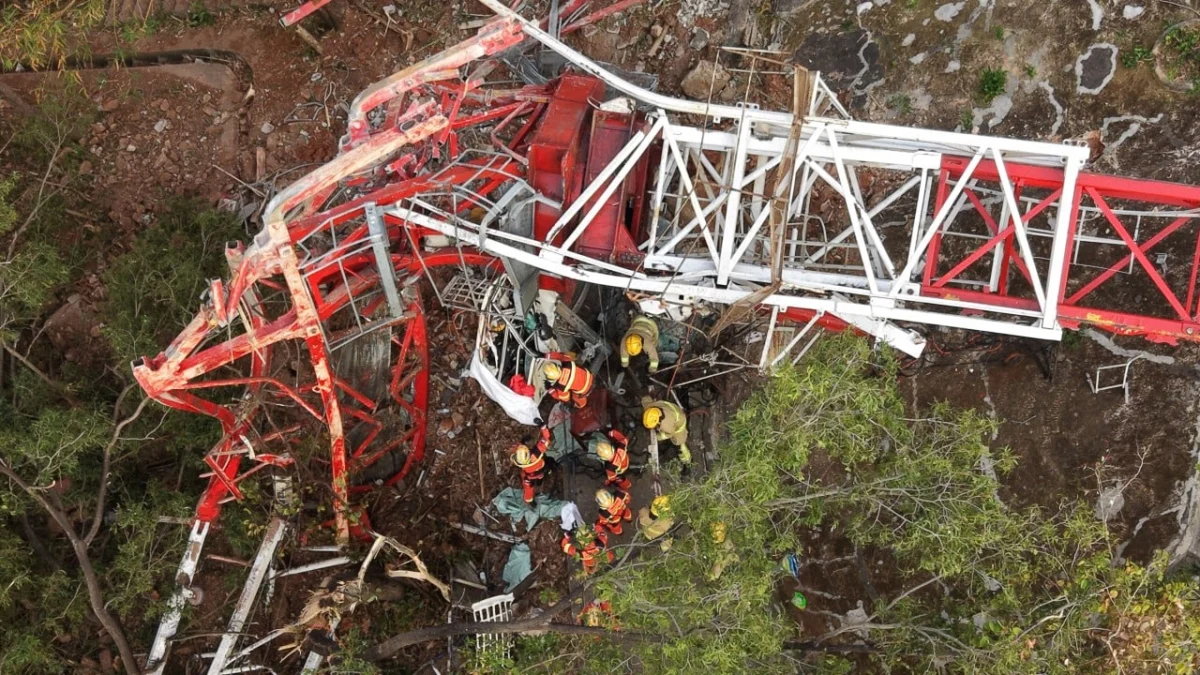
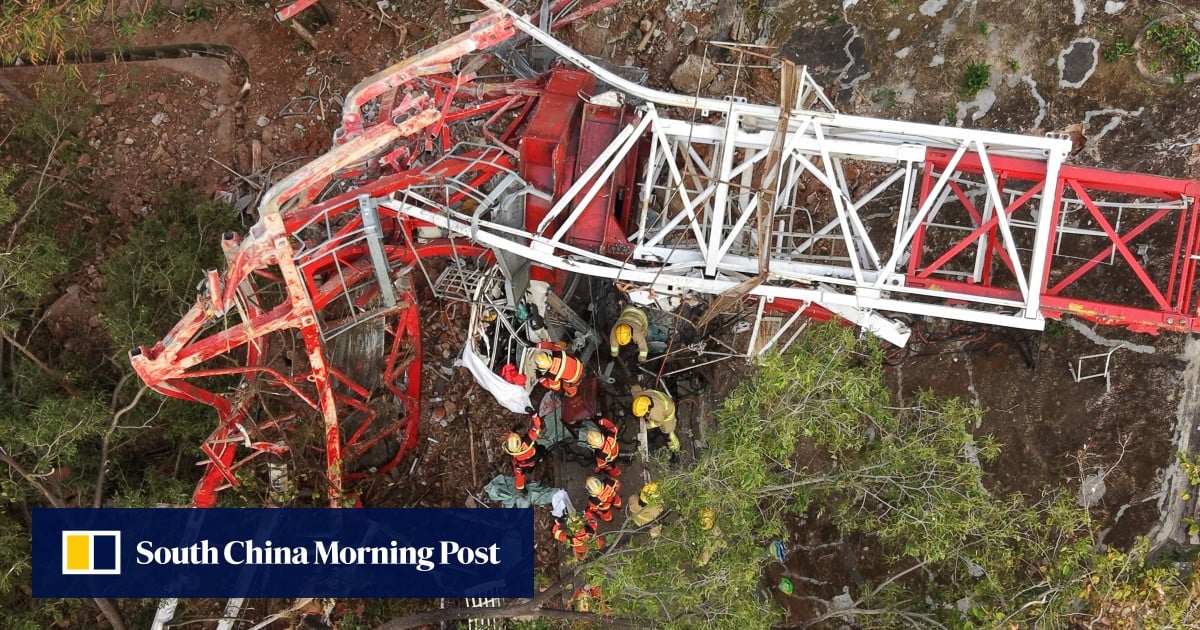
A devastating tower crane collapse on Thursday afternoon, which claimed the life of an operator, has sent shockwaves through Hong Kong’s construction industry, prompting urgent calls for a comprehensive review of safety protocols and a re-evaluation of existing inspection standards. The incident, which occurred at a public housing project construction site on Tai Wo Hau Road, has cast a spotlight on recurring safety lapses and the potential inadequacy of current regulatory frameworks.
The ill-fated tower crane, a critical piece of machinery at the construction site for the second phase of a public housing development, catastrophically failed and toppled onto a steep slope adjacent to Pik Kwai House at Kwai Chung Estate. Emergency services were immediately dispatched to the scene, but tragically, the operator, whose identity has not yet been released, was pronounced dead at the scene. The collapse also raised concerns about potential damage to nearby residential buildings, though initial reports indicated no further casualties or significant structural damage to the adjacent public housing blocks.
This latest fatality adds a grim chapter to the history of construction site accidents in Hong Kong, particularly concerning heavy machinery. It is particularly poignant given the track record of the project’s main contractor, Woon Lee Construction. Public records reveal that the company has been subject to regulatory scrutiny and penalties in the past due to fatal incidents at its construction sites. Notably, two separate fatal incidents occurred at Woon Lee Construction sites in 2009 and 2011, resulting in significant fines and investigations into their safety practices. The recurrence of such a tragic event under the same contractor’s purview has intensified scrutiny and fueled public demand for accountability.
The Hong Kong Construction Industry Employees General Union has been a vocal advocate for enhanced worker safety and has seized upon this latest disaster to reiterate its long-standing concerns. Chau Sze-kit, the union’s chairman, issued a stark warning on Friday, asserting that the current system of mechanical inspections is demonstrably insufficient to prevent such catastrophic failures. He expressed his understanding that the collapsed tower crane had recently undergone a thorough inspection earlier in March and was reportedly subjected to routine daily checks, a standard procedure in the industry.
However, Chau highlighted a critical deficiency in these regular inspections. "The checks were primarily visual inspection or mechanical tests of cables, and they did not cover metal fatigue," he stated during a press conference held on Friday. "It remains to be seen whether the current inspection scope is sufficient." This statement points to a potential blind spot in the regulatory oversight, where components susceptible to wear and tear over time, such as the structural integrity of metal parts, might not be adequately assessed. The fact that the crane in question had reportedly been in operation for only two to three years further complicates this issue, raising questions about the lifespan expectations of such machinery and the methods used to assess their ongoing safety.
A Pattern of Concern: Previous Incidents and Regulatory Scrutiny
The incident on Tai Wo Hau Road is not an isolated event, and its context within the broader landscape of construction safety in Hong Kong is crucial for understanding the current crisis. The city’s rapid development, particularly in its drive to increase public housing supply, often involves large-scale, complex construction projects. While Hong Kong boasts a relatively robust regulatory framework, a series of high-profile accidents over the years has repeatedly tested its efficacy.
The 2009 and 2011 incidents involving Woon Lee Construction, while not directly related in terms of the specific type of accident, underscore a pattern of potential systemic issues within the company’s operations. In 2009, a worker was killed at a construction site in Tseung Kwan O when a concrete pump hose ruptured, sending debris falling onto him. In 2011, another fatality occurred at a different Woon Lee site when a worker fell from a height of approximately 10 metres. These events led to investigations and subsequent fines, highlighting breaches in site safety management and supervision. The fact that a similar catastrophic failure involving heavy machinery has occurred again under the same contractor raises serious questions about the effectiveness of past remedial measures and the thoroughness of regulatory follow-ups.
The Unfolding Timeline of Tragedy
The events of Thursday afternoon paint a grim picture of the final moments before the disaster:
- Thursday Afternoon: The tower crane, operating at the public housing construction site on Tai Woאו Hau Road, suddenly collapsed. The exact time of the collapse has been reported as Thursday afternoon.
- Immediate Aftermath: Emergency services were alerted and swiftly arrived at the scene. Rescue operations were initiated to extricate the trapped operator.
- Fatal Outcome: Despite the efforts of emergency responders, the operator was declared deceased at the scene.
- Friday Morning: Chau Sze-kit, chairman of the Hong Kong Construction Industry Employees General Union, held a press conference to address the incident and voice his concerns about safety regulations. He called for a review of existing crane safety guidelines.
- Ongoing Investigation: Authorities have launched an investigation into the cause of the collapse, which will likely involve forensic examination of the crane wreckage and a review of maintenance and operational records.
The Science of Failure: Metal Fatigue and Inspection Gaps
The union chairman’s emphasis on "metal fatigue" points to a critical area of concern for the longevity and safety of heavy construction equipment. Metal fatigue is a process where materials weaken over time due to repeated stress cycles. In the context of a tower crane, this can involve the constant loading and unloading of materials, exposure to wind, and the vibrations inherent in its operation. Over time, microscopic cracks can form and propagate, eventually leading to a structural failure.
Current inspection regimes, as described by Chau, may focus on more immediate and visible indicators of wear and tear, such as the condition of cables, the functionality of the motor, and the overall visual appearance of the structure. While these are important, they may not adequately detect the insidious progression of metal fatigue. Advanced NDT (Non-Destructive Testing) methods, such as ultrasonic testing or magnetic particle inspection, are designed to detect internal flaws and material degradation without damaging the component. The question now is whether these more sophisticated testing methods are mandated or sufficiently utilized within Hong Kong’s current safety framework for tower cranes.
The relatively short operational lifespan of the collapsed crane (two to three years) suggests that either there was a manufacturing defect, an unusually high stress environment, or a failure in the maintenance and inspection process to identify developing issues.
Broader Implications and Calls for Action
The implications of this fatal accident extend far beyond the immediate tragedy. It raises fundamental questions about the adequacy of Hong Kong’s construction safety regulations, the effectiveness of enforcement, and the responsibility of all stakeholders involved in the construction process.
1. Regulatory Review and Enhancement: The most immediate demand from industry bodies is a thorough review of the current crane safety guidelines. This review should critically assess the scope and frequency of inspections, with a particular focus on incorporating advanced techniques for detecting metal fatigue and other forms of structural degradation. The government may need to consider updating regulations to mandate specific NDT methods for critical crane components, especially for cranes operating in high-stress environments or those nearing the end of their expected service life.
2. Contractor Accountability: The history of Woon Lee Construction will undoubtedly be a significant factor in the ongoing investigation. Authorities will need to determine if the company has adequately learned from past incidents and implemented robust safety management systems. Repeat offenses, particularly those resulting in fatalities, could lead to stricter penalties, temporary or permanent bans from tendering for public projects, or increased oversight.
3. Worker Training and Awareness: While the focus is often on the machinery, the human element is also critical. Ensuring that crane operators are adequately trained and that all site personnel are aware of potential hazards and emergency procedures is paramount. Unions like the Hong Kong Construction Industry Employees General Union play a vital role in advocating for better training and working conditions.
4. Public Housing Project Impact: The collapse at a public housing project site is particularly sensitive. The government has ambitious targets for increasing public housing supply, and any delays or disruptions caused by safety incidents can have significant social and economic consequences. The investigation and subsequent remedial actions could lead to project delays, increased costs, and potentially impact the timeline for delivering much-needed homes.
5. Industry-Wide Safety Culture: Ultimately, this incident serves as a stark reminder of the need to foster a proactive safety culture across the entire construction industry. This involves not just compliance with regulations but a genuine commitment from all parties – developers, contractors, sub-contractors, workers, and regulators – to prioritize safety above all else. This includes transparent reporting of near misses and incidents, encouraging workers to report unsafe conditions without fear of reprisal, and continuously seeking ways to improve safety practices.
As investigations continue, the construction sector in Hong Kong will be watching closely for the outcomes and the subsequent actions taken by the authorities. The hope is that this tragic event will serve as a catalyst for meaningful change, leading to enhanced safety standards and preventing future loss of life on construction sites across the city. The memory of the operator lost on Thursday serves as a somber impetus for a more vigilant and robust approach to construction safety.

Related Posts
Hong Kong Enforces Strict Smoking Ban on Construction Sites, Inspects Over 200 Locations in First Week

Hong Kong Poised for Sweeping Reforms and Accountability After Deadliest Fire in Decades