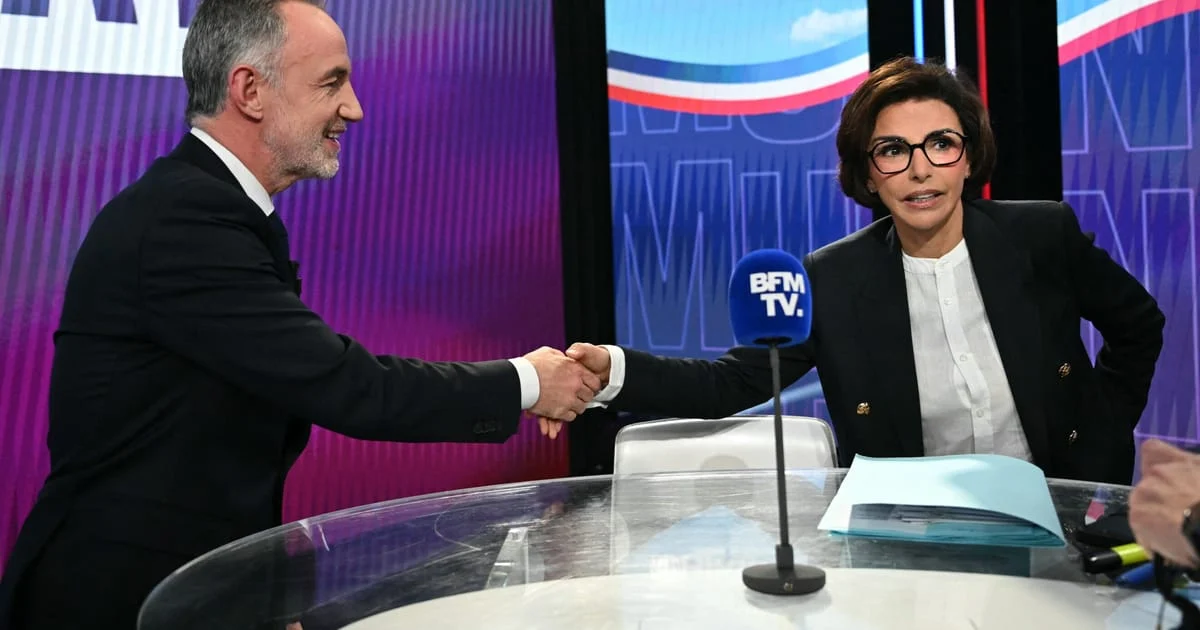
SONDAGE EXCLUSIF. A Paris, Emmanuel Grégoire favori devant Rachida Dati
The Resilience of Incumbency in Perpignan
In Perpignan, the political climate remains overwhelmingly favorable to the incumbent mayor, Louis Aliot. As a prominent figure within the Rassemblement National (RN) and the party’s number two, Aliot’s hold on the city appears formidable. The latest polling indicates that, barring a significant late-stage political realignment or a unified front from his challengers, he remains effectively untouchable.
The strategy employed by Aliot has been one of consolidation, leveraging his municipal record to maintain a broad base of support that transcends traditional partisan lines. For his opponents, the challenge is twofold: the division of the center-left and center-right blocs, and the inherent difficulty of dismantling a well-established local administration. Historically, Perpignan has served as a critical laboratory for the RN’s municipal governance model. The data suggests that voters are largely satisfied with the status quo, or at the very least, unconvinced by the alternatives presented by the fractured opposition. This dynamic underscores a broader trend in French local politics where the "incumbency advantage" is amplified by the inability of disparate political movements to form cohesive, credible coalitions capable of challenging the established order.

Rouen and the Socialist Stronghold
Moving north to Rouen, the political reality shifts toward the Socialist Party (PS). Mayor Nicolas Mayer-Rossignol has solidified his position as the clear frontrunner for the upcoming municipal cycle. The polling data reflects a significant lead for the incumbent in the first round of voting, placing him well ahead of his competitors.
The strength of Mayer-Rossignol’s candidacy lies in his ability to maintain a strong grip on the local electorate despite the broader national headwinds that have occasionally challenged the Socialist Party’s influence. His platform, which emphasizes urban development and sustainability, appears to resonate with the specific demographic needs of Rouen’s residents. His opponents, meanwhile, are struggling to articulate a competing vision that can gain traction beyond their core constituencies. The fragmentation of the opposition in Rouen mirrors the difficulties seen elsewhere, where a lack of strategic coordination among center-right and environmentalist groups provides the incumbent with a clear path to re-election. The lack of a strong, unified challenger serves as a stark reminder of how critical political infrastructure is to mounting a successful campaign.
Bordeaux: A Competitive Landscape in Flux
In contrast to the relative stability of Perpignan and Rouen, the situation in Bordeaux remains highly fluid. The incumbent Ecologist mayor, Pierre Hurmic, currently leads his Macronist rival in the first-round projections. However, the presence of economist Philippe Dessertine, who is leading a center-right list, introduces a significant wild card into the equation.

The Bordeaux race is perhaps the most representative of the modern French electoral environment, where traditional left-right divisions are increasingly complicated by the rise of the center and the environmental movement. Hurmic’s leadership has been defined by a focus on climate-conscious urbanism, which has won him supporters but also alienated segments of the business and professional classes. Dessertine’s entry into the race could potentially siphon off enough votes from the center-right to force a runoff that might otherwise have been avoided. This "triangular" dynamic—or at least a three-way competitive split—creates an environment of extreme uncertainty. Political analysts are closely monitoring this contest as a potential bellwether for how green policies will fare in major French cities when confronted with a coherent, professionalized center-right challenge.
The Shrinking Public Square: Media and the Debate Crisis
Beyond the specific electoral dynamics in individual cities, a broader concern has emerged regarding the health of the democratic debate in Paris. Recent decisions by major television networks—including LCI, BFMTV, and CNews—to cancel scheduled debates for the Paris municipal elections have sparked significant controversy.
The decision to "unplug" these broadcasts follows a singular, albeit comprehensive, debate hosted on FranceInfo. The networks cited a variety of factors, including the logistical difficulties of managing multiple candidates and concerns over the quality of the discourse. However, critics argue that the reduction in media coverage severely limits the electorate’s ability to compare platforms in a structured, televised environment.

The timeline of these cancellations suggests a cooling of the relationship between media conglomerates and political campaign staff. In previous cycles, the marathon of televised debates was considered a staple of the democratic process. The current trend toward restricting access and reducing the number of debates reflects a broader move toward digital-first campaign strategies, where candidates prioritize social media engagement over traditional, moderated television formats. While this may offer candidates more control over their messaging, it raises fundamental questions about the role of the press in facilitating informed voter decision-making.
Chronology and Strategic Implications
The trajectory of these municipal elections can be categorized into three distinct phases: the consolidation phase, the debate phase, and the final push.
- Phase 1: Early Polling (January–February): During this period, incumbents utilized their institutional visibility to frame the debate around local successes, while challengers struggled to secure party endorsements and funding.
- Phase 2: The Debate Crisis (March): The sudden withdrawal of major networks from the debate circuit has forced campaigns to pivot toward direct-to-voter communication, including town halls and digital advertising. This has disadvantaged lesser-known candidates who rely on the "level playing field" of televised debate exposure.
- Phase 3: The Final Stretch (April–Election Day): As the elections approach, the focus is shifting to get-out-the-vote (GOTV) efforts. The data suggests that turnout will be the decisive factor in cities like Bordeaux, whereas in Perpignan and Rouen, the focus is on maintaining the existing voter base.
Broader Impact on the French Political Landscape
The overarching narrative emerging from these municipal contests is one of localized endurance versus national fragmentation. The success of incumbents like Aliot and Mayer-Rossignol suggests that voters are prioritizing perceived stability and local performance over national ideological alignments. In an era of intense political polarization at the national level, the municipal tier is increasingly becoming a sanctuary for pragmatic, locally-focused governance.

However, the persistent fragmentation of the opposition parties—both on the left and the right—remains a systemic issue. This fragmentation is not merely a tactical failure but a reflection of the evolving nature of political identity in France. As the traditional parties continue to struggle with identity crises, local coalitions are becoming more idiosyncratic and issue-specific.
The implications for the next national election cycle are significant. If major parties cannot demonstrate the ability to unite disparate factions at the local level, they are unlikely to succeed in building the broad-based coalitions necessary for national governance. The municipal elections, therefore, are more than just local contests; they are a stress test for the organizational capacity of every major political force in the country.
As citizens prepare to head to the polls, the focus remains on whether the current frontrunners can maintain their momentum or if the late-stage interventions of opposition groups—or the absence of traditional media scrutiny—will introduce volatility into the final results. The outcome in each of these cities will provide a roadmap for the future of French local politics, signaling whether the trend toward consolidation will hold or if a new era of unpredictable, multi-polar competition is on the horizon.