U.S. Air Force A-10 Thunderbolt II Joins Maritime Interdiction Operations in the Strait of Hormuz Under Operation Epic Fury
The U.S. Air Force has officially integrated the A-10 Thunderbolt II, an aircraft traditionally celebrated for its devastating effectiveness in ground-based close air support, into high-stakes maritime interdiction operations within the Strait of Hormuz. This strategic pivot, confirmed by Air Force Gen. Dan Caine during a Pentagon briefing, places the "Warthog" on the southern flank of Operation Epic Fury, where it is specifically tasked with neutralizing fast-attack watercraft operated by the Islamic Revolutionary Guard Corps (IRGC). The deployment marks a significant evolution in the mission profile of the aging but resilient airframe, demonstrating its continued relevance in modern asymmetric naval warfare.
“The A-10 Warthog is now engaged across the southern flank, targeting fast-attack watercraft in the Strait of Hormuz,” Gen. Caine stated, signaling a clear expansion of the U.S. military’s tactical response to maritime threats in the region. While the A-10 has long been the primary tool for supporting infantry on the battlefield, its transition to the maritime domain reflects a growing need for persistent, heavily armed overwatch in contested littoral waters.
Tactical Integration and Capability
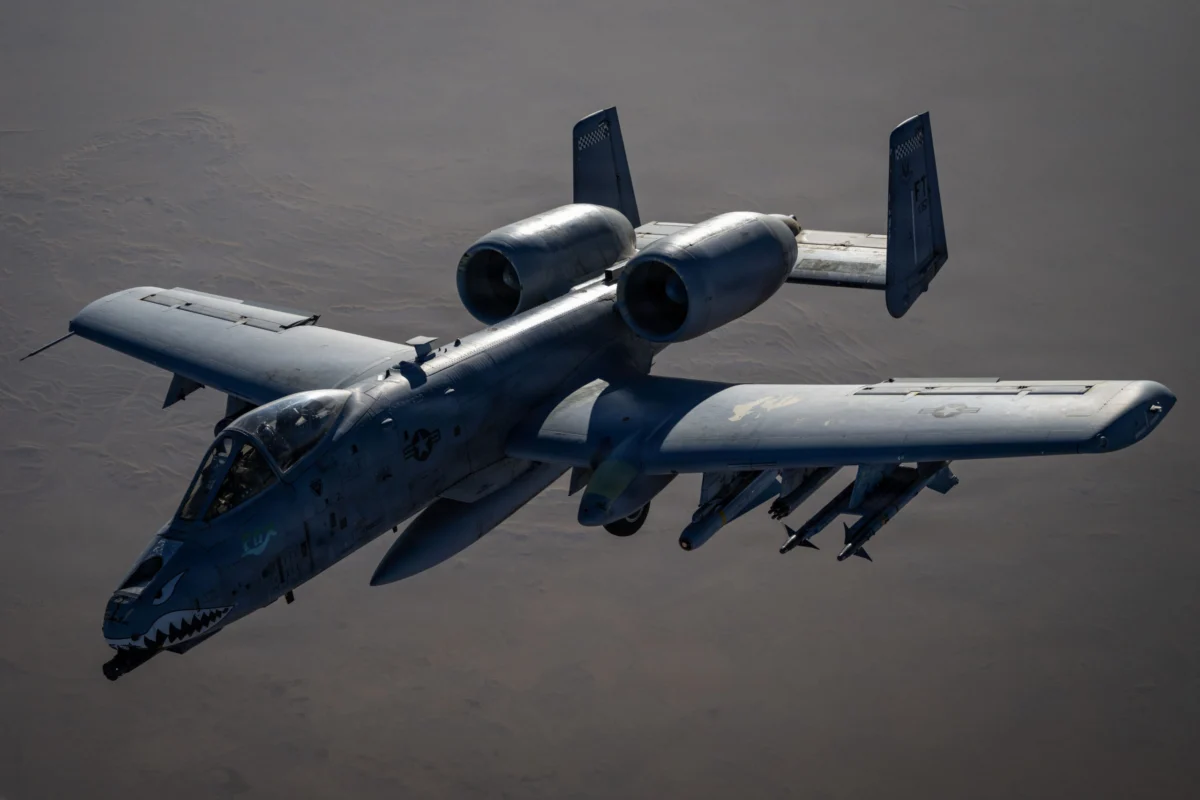
The inclusion of the A-10C Thunderbolt II in Operation Epic Fury was first hinted at through official channels on March 15, when U.S. Central Command (CENTCOM) released imagery depicting the aircraft receiving mid-air refueling. These visuals provided the first concrete evidence of the Warthog’s participation in the campaign. In a subsequent statement, CENTCOM emphasized the aircraft’s unique endurance, noting that the A-10 can loiter for hours, providing a constant presence that faster, fuel-hungry fighter jets cannot match.
The A-10’s design is uniquely suited for the "swarm" tactics often employed by the IRGC Navy. The IRGC utilizes small, agile, and often armed speedboats to harass commercial shipping and challenge international naval vessels in the narrow confines of the Strait. To counter these, the A-10 brings a formidable arsenal:
- The GAU-8/A Avenger: A 30mm Gatling-style cannon capable of firing 3,900 rounds per minute. Its depleted uranium or high-explosive incendiary rounds are more than capable of shredding the light hulls of fast-attack craft.
- AGM-65 Maverick Missiles: These air-to-surface missiles provide the ability to strike targets from a distance with high precision.
- APKWS Laser-Guided Rockets: The Advanced Precision Kill Weapon System allows the A-10 to engage smaller targets with surgical accuracy, minimizing collateral damage in crowded shipping lanes.
Furthermore, the A-10’s "titanium bathtub"—a 1,200-pound armored cockpit—protects the pilot from ground fire and small-arms fire from the surface. This durability, combined with redundant flight control systems, allows the aircraft to operate in low-altitude environments where other jets would be prohibitively vulnerable.
The Strategic Importance of the Strait of Hormuz
The Strait of Hormuz remains the world’s most sensitive maritime chokepoint. According to data from the U.S. Energy Information Administration (EIA), approximately 20% of the global liquid petroleum consumption transits through this narrow waterway daily. The strait, which at its narrowest point is only 21 miles wide, connects the Persian Gulf with the Gulf of Oman and the Arabian Sea.
For the United States and its global partners, maintaining the "freedom of navigation" is not merely a military objective but an economic necessity. Any disruption to the flow of oil and liquefied natural gas (LNG) through the strait has the potential to cause immediate and severe spikes in global energy prices. The IRGC’s reliance on asymmetric naval tactics—using hundreds of small boats to overwhelm a larger opponent—has necessitated a shift in U.S. strategy. By deploying the A-10, CENTCOM is effectively fighting "small with small," using the aircraft’s agility and low-speed handling to track and engage the IRGC’s nimble surface fleet.
In a video address released on March 16, Adm. Brad Cooper, the commander of CENTCOM’s naval forces, reported that U.S. operations had already resulted in the destruction of more than 100 Iranian naval vessels. "We will continue to rapidly deplete Iran’s ability to threaten freedom of navigation in and around the Strait of Hormuz," Cooper asserted.
Chronology of Operation Epic Fury
The escalation of the A-10’s role has followed a steady timeline of increased visibility and operational intensity:
- March 9, 2026: A-10 Thunderbolt II aircraft are spotted flying over the U.S. Central Command area of responsibility. Initial reports suggest a routine presence, but the altitude and flight patterns indicate a shift toward maritime surveillance.
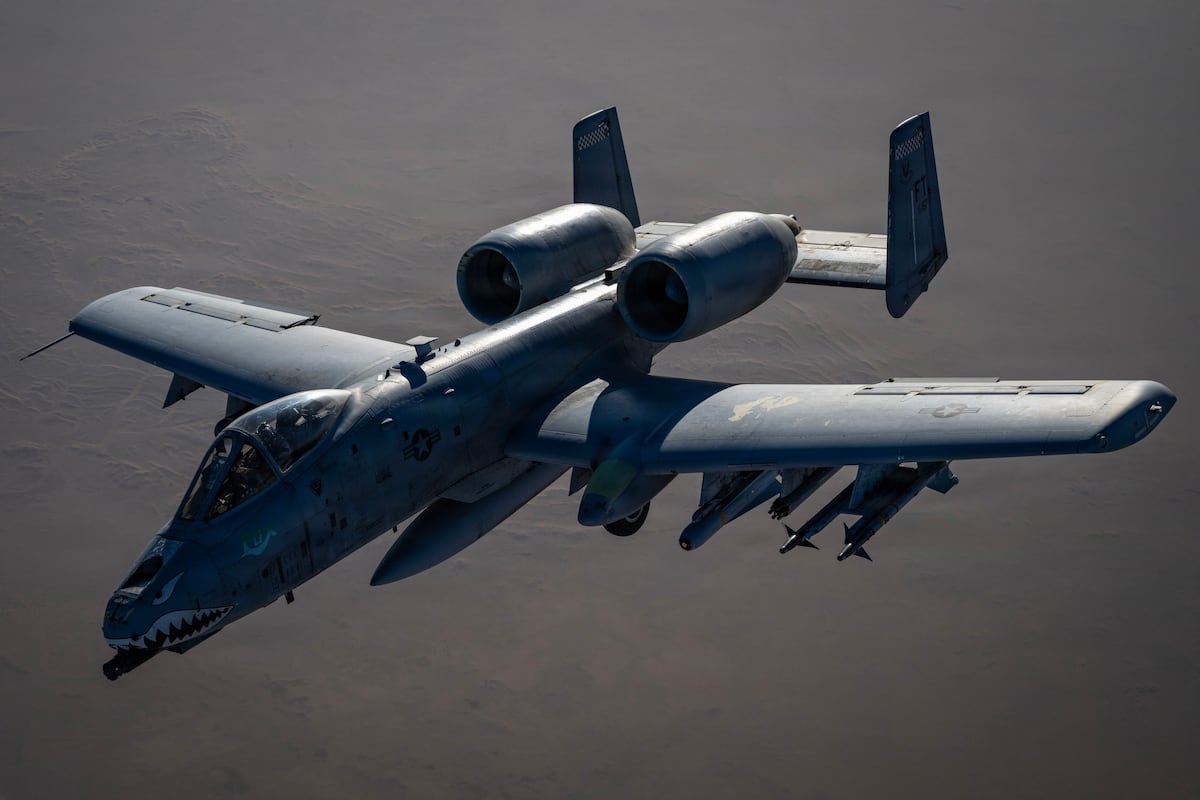
- March 15, 2026: CENTCOM releases the first official imagery of A-10C models participating in Operation Epic Fury. The images show the aircraft refueling, highlighting the long-range and high-endurance nature of the missions being flown over the southern flank.
- March 16, 2026: Adm. Brad Cooper confirms the high attrition rate of Iranian vessels, stating that over 100 craft have been neutralized.
- Present: Gen. Dan Caine officially announces the A-10’s role in maritime interdiction, specifically targeting the IRGC’s fast-attack watercraft in the Strait of Hormuz.
Legislative Protection and the Future of the Warthog
The A-10’s prominent role in Operation Epic Fury comes at a time of intense political maneuvering in Washington. For years, the U.S. Air Force has sought to retire the A-10 fleet, arguing that the aircraft is too slow and vulnerable to survive in a high-end conflict against a near-peer adversary equipped with sophisticated integrated air defense systems (IADS). The Air Force has pushed to divert maintenance funds toward the F-35 Lightning II and other fifth-generation platforms.
However, the A-10 has a dedicated block of supporters in Congress who view the aircraft as an irreplaceable asset for specific mission sets. The National Defense Authorization Act (NDAA) for Fiscal Year 2026 reflects this support. The legislation explicitly blocks the Air Force’s divestment plans, mandating that the service maintain a minimum inventory of 103 A-10s through at least September 30, 2026.
Proponents of the aircraft argue that the current operations in the Strait of Hormuz prove the A-10’s utility. While an F-35 might be better suited for penetrating deep into enemy airspace, the A-10 is far more cost-effective and tactically suited for loitering over a maritime chokepoint to hunt small boats. The NDAA also requires the Pentagon to provide detailed transition planning, ensuring that the specialized skills of A-10 pilots and maintainers are not lost if and when the platform is eventually retired.
Geopolitical Implications and Allied Relations
The intensification of Operation Epic Fury has also highlighted fractures in international maritime coalitions. While the U.S. has led the charge in securing the Strait of Hormuz, some traditional allies have shown reluctance to commit significant naval or air assets to the mission.
Former President Donald Trump, commenting on the situation during a recent briefing, characterized the lack of allied support as a "loyalty test" that many nations were failing. This sentiment reflects a long-standing tension regarding "burden-sharing" within the NATO alliance and among Gulf partners. As the U.S. deploys specialized assets like the A-10 to protect global trade routes, the political pressure on allies to contribute to the security of the strait is expected to increase.
The IRGC, for its part, has condemned the U.S. presence as "provocative." Iranian officials have frequently stated that they view the security of the Persian Gulf as the sole responsibility of regional powers. However, the continued harassment of commercial tankers—including the seizure of vessels and the use of limpet mines in recent years—has provided the justification for the U.S. to maintain and expand its "active defense" posture.
Analysis: The A-10 as a Maritime Asset
The deployment of the A-10 in a maritime role offers a fascinating case study in military adaptation. Historically, the A-10 was designed to stop Soviet tank columns in the Fulda Gap. In the 1990s and 2000s, it became the "guardian angel" of ground troops in Iraq and Afghanistan. Today, in the littoral waters of the Middle East, it is being utilized as a "counter-mosquito" platform.
The effectiveness of the A-10 in this role stems from its ability to fly at very low speeds—down to 120 knots—without stalling. This allows pilots to visually identify targets and distinguish between IRGC combatants and innocent civilian dhows or fishing vessels that frequent the strait. In a high-traffic environment where the risk of a "blue-on-green" incident or a civilian tragedy is high, the A-10’s human-in-the-loop precision is a significant asset.
While the Pentagon has not released specific strike figures for the A-10’s contributions to the "100 vessels destroyed" tally, the aircraft’s engagement on the southern flank suggests it is carrying a heavy operational load. As Operation Epic Fury continues, the data gathered from these sorties will likely play a crucial role in the upcoming debates regarding the future of the U.S. Air Force’s tactical fleet.
For now, the "Warthog" remains on the front lines, its 30mm cannon serving as a potent deterrent against those who would disrupt the world’s most vital energy artery. The mission in the Strait of Hormuz has not only extended the operational life of the A-10 but has redefined its legacy for a new era of maritime security.

Related Posts
Pentagon Forges Landmark Seven-Year Agreements with Boeing and RTX to Accelerate Standard Missile-3 Production and Stabilize Defense Supply Chains
Boeing Unveils Ultra Low-Cost Seeker to Enhance Missile Inventory and Combat Cost Challenges in Modern Warfare