Qatar Says Iranian Attacks Crossed All Red Lines Regionally
Doha, Qatar – The State of Qatar’s foreign ministry has issued a strong condemnation of what it described as "Iranian attacks" targeting critical energy infrastructure in both Saudi Arabia and the United Arab Emirates, asserting that these strikes have "crossed all red lines" and represent a grave threat to regional and global stability. This unequivocal statement from Doha underscores the escalating tensions in the Gulf region, where repeated assaults on vital energy facilities have consistently challenged international law and jeopardized global energy security.
The Qatari Ministry of Foreign Affairs highlighted that the deliberate targeting of such infrastructure constitutes a clear violation of international law. It further emphasized the direct threat these actions pose not only to the security of global energy supplies but also to the safety of international navigation. The ministry’s statement called for immediate de-escalation to restore stability in the region and expressed unwavering solidarity with the affected Gulf countries, signaling a unified stance among some Gulf Cooperation Council (GCC) members against these acts of aggression.
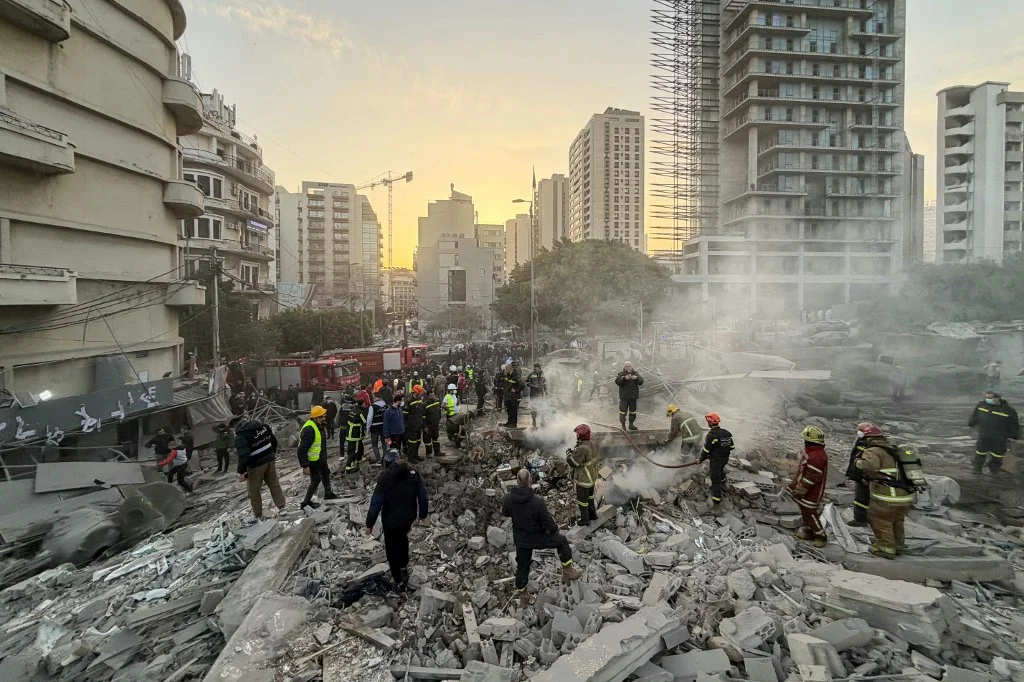
A specific incident mentioned in the Qatari statement involved civil defence teams responding to a fire in the Ras Laffan industrial area following an attack. While no injuries were reported in that particular incident, the mention of Ras Laffan, a major global hub for liquefied natural gas (LNG) production and export, underscores the severe implications of such attacks on critical infrastructure beyond crude oil facilities. This incident, alongside other unnamed attacks on Saudi and Emirati energy assets, forms the backdrop for Qatar’s forceful denunciation.
The Broader Context of Regional Volatility
The Gulf region, a cornerstone of global energy supply, has long been a flashpoint for geopolitical rivalries, primarily between Iran and its regional adversaries, particularly Saudi Arabia and the United Arab Emirates. These tensions frequently manifest through proxy conflicts and direct attacks on economic targets, aiming to disrupt oil markets and assert influence. The "Iranian attacks" referred to by Qatar are widely understood to encompass actions taken by Iran’s network of allied militias and proxy groups, most notably the Houthi movement in Yemen, which has repeatedly launched drones and missiles at Saudi and Emirati targets.
The conflict in Yemen, which began in 2014, has served as a primary conduit for these cross-border attacks. The Saudi-led coalition intervened in Yemen in 2015 to support the internationally recognized government against the Houthis, who are backed by Iran. Since then, Houthi forces have frequently targeted Saudi oil installations, airports, and cities, increasingly expanding their reach to include Emirati targets in recent years. While the Houthis claim responsibility for many of these attacks, Saudi Arabia, the UAE, and now Qatar, often attribute the capabilities and strategic direction to Iran itself, citing the advanced weaponry and tactical sophistication that they argue only a state actor could provide.
A Chronology of Escalation and Infrastructure Targeting
The recent condemnation by Qatar is not an isolated event but rather a continuation of a pattern of attacks that have plagued the Gulf over the past several years. Understanding this chronology is crucial to grasping the gravity of the current situation:
- 2019 Abqaiq-Khurais Attacks: One of the most significant incidents occurred in September 2019, when drone and missile strikes targeted the Abqaiq oil processing plant and Khurais oil field in Saudi Arabia, temporarily halving the kingdom’s oil output. While the Houthis claimed responsibility, the United States, Saudi Arabia, and several European nations directly blamed Iran for the sophisticated assault. This event sent shockwaves through global energy markets and demonstrated the vulnerability of even highly secured facilities.
- Ongoing Houthi Campaign against Saudi Arabia: Throughout 2020 and 2021, Houthi forces maintained a consistent barrage of drone and missile attacks against various targets in Saudi Arabia, including airports, military bases, and critical oil infrastructure such as Ras Tanura, one of the world’s largest oil shipping ports, and facilities in Jeddah and Dhahran. These attacks, while often intercepted, consistently raised concerns about the safety of Saudi civilians and energy assets.
- 2022 Attacks on the UAE: The conflict took a significant turn in January 2022 when the Houthis launched a series of unprecedented drone and missile attacks against Abu Dhabi, the capital of the United Arab Emirates. These attacks targeted an ADNOC fuel depot and caused civilian casualties, marking a direct expansion of the conflict into Emirati territory. Subsequent attacks in the following weeks further demonstrated the Houthis’ intent and capabilities, prompting strong international condemnation and a reaffirmation of support for the UAE’s security.
- Ras Laffan Incident: While the specific date of the Ras Laffan incident mentioned by Qatar’s foreign ministry is not detailed in the original brief, its inclusion in the condemnation indicates a recent and significant event. Ras Laffan Industrial City, located on Qatar’s northeast coast, is home to the world’s largest LNG plants and is a critical node in global energy supply chains. An attack impacting this facility, even if contained, signifies an alarming escalation in the geographic scope and ambition of these strikes. The original article mentions "Iranian attacks on energy facilities in Saudi Arabia and the United Arab Emirates" and then separately states that "civil defence teams were responding to a fire in the Ras Laffan industrial area following an attack." This phrasing suggests that while Qatar is condemning attacks on its neighbors, it has also recently dealt with an attack within its own borders, which it attributes to the broader "Iranian attacks" paradigm, further highlighting the regional nature of the threat.
The Imperative of Global Energy Security
The Gulf region collectively accounts for a substantial portion of the world’s proven oil and natural gas reserves, making it indispensable to global energy markets. The Strait of Hormuz, a narrow maritime chokepoint between Iran and Oman, is particularly vital, with approximately 20% of the world’s petroleum liquids consumption and a significant portion of global LNG trade passing through it daily. Any disruption to energy production or shipping in this region has immediate and far-reaching consequences for international oil prices, supply chains, and the economic stability of nations worldwide.
Attacks on facilities like Abqaiq, Ras Tanura, and Ras Laffan are not merely assaults on sovereign nations; they are direct threats to the stability of the global economy. They introduce significant uncertainty into energy markets, driving up insurance costs for shipping, deterring foreign investment, and potentially leading to higher fuel prices for consumers globally. The continuous nature of these threats places immense pressure on international efforts to ensure the free flow of energy and maintain maritime security in one of the world’s most critical strategic waterways.
International Reactions and Calls for De-escalation
The Qatari condemnation, while significant in its directness, is echoed by a chorus of international voices expressing concern over the escalating regional tensions.
- United Nations: The UN Secretary-General and various UN special envoys have consistently condemned attacks on civilian infrastructure and called on all parties to exercise maximum restraint and engage in dialogue. They emphasize the urgent need for a political resolution to the conflict in Yemen and broader regional disputes to prevent further destabilization.
- United States: The U.S. has repeatedly affirmed its commitment to the security of its Gulf allies, providing military assistance and deploying missile defense systems. Washington has also imposed sanctions on individuals and entities linked to Iran’s missile and drone programs and its support for regional proxies, while also pursuing diplomatic efforts to revive the Iran nuclear deal (JCPOA) in hopes of de-escalating broader regional tensions.
- European Union: The EU has expressed deep concern over the attacks, urging all actors to respect international law and work towards a peaceful resolution. European nations often emphasize the importance of diplomatic engagement and multilateral efforts to address the root causes of instability.
- Other Gulf States: Beyond Saudi Arabia and the UAE, other GCC members have also voiced their solidarity and condemned the attacks, underscoring a collective concern about regional security. While diplomatic approaches may vary, there is a shared understanding of the existential threat posed by these continued aggressions.
The consistent message from the international community is one of de-escalation, adherence to international humanitarian law, and a renewed push for diplomatic solutions. The Qatari statement, coming from a nation that has historically maintained a more balanced diplomatic posture in the region, adds significant weight to these calls, reflecting a collective Gulf concern over unchecked aggression.
Economic and Market Implications
The repeated targeting of energy infrastructure has tangible economic consequences. Beyond the immediate fluctuations in oil and gas prices, there are long-term impacts:
- Investment Climate: Persistent threats deter foreign direct investment into the region’s energy sector, despite its lucrative potential. Companies become wary of the security risks, leading to higher operational costs and potentially hindering expansion and modernization projects.
- Insurance Premiums: Shipping and cargo insurance premiums for vessels operating in the Gulf and transiting the Strait of Hormuz invariably rise following such incidents, increasing the cost of trade for all nations dependent on this route.
- Supply Chain Resilience: The attacks highlight vulnerabilities in global energy supply chains, prompting calls for greater diversification of energy sources and routes, though the sheer volume of Gulf energy makes full substitution impractical in the short to medium term.
- Domestic Impact: For the affected countries, resources that could be allocated to economic diversification and social development are instead diverted to enhance defense capabilities and repair damaged infrastructure.
The Ras Laffan incident, in particular, could have significant implications for global LNG markets. Qatar is the world’s second-largest exporter of LNG (as of recent data), and any sustained disruption to its production or export capabilities would send ripples through natural gas markets, especially at a time when global demand for LNG is high due to geopolitical shifts in Europe and elsewhere.
The Path Forward: Diplomacy and Security Challenges
Qatar’s strong condemnation, framing the attacks as having "crossed all red lines," signifies a heightened level of alarm among regional actors. It underscores the urgent need for a concerted effort to address the root causes of the conflict and prevent further escalation.
Diplomatic initiatives, such as the ongoing UN-led efforts to secure a lasting truce in Yemen and broader regional dialogue, remain critical. However, the efficacy of these efforts is continually tested by continued military actions. The challenge lies in finding a balance between robust defense measures to protect critical infrastructure and diplomatic pathways that can de-escalate tensions without rewarding aggression.
For Qatar, a country that has historically sought to mediate disputes in the region and maintain working relationships with diverse actors, this direct condemnation of "Iranian attacks" marks a significant stance. It reflects a growing consensus within the Gulf that the persistent targeting of energy facilities is an intolerable threat that demands a unified and firm response. The international community, therefore, faces a renewed imperative to support de-escalation efforts, uphold international law, and ensure the security of global energy supplies against what are increasingly seen as systematic and dangerous acts of aggression. The long-term stability of the Middle East, and by extension, the global economy, hinges on the ability of regional and international stakeholders to effectively address these "red line" transgressions.

Related Posts
Over 150 Israeli Settlers Storm Al-Aqsa Compound and Perform Prayers, Violating Status Quo Under Police Protection.
UN Report Highlights Over 900 Obstacles Hampering West Bank Aid Amid Escalating Humanitarian Crisis