Budapest Police Prohibit Trans Visibility Demonstration as Hungarian Authorities Escalate Restrictions on Public Assembly and LGBTQ Rights
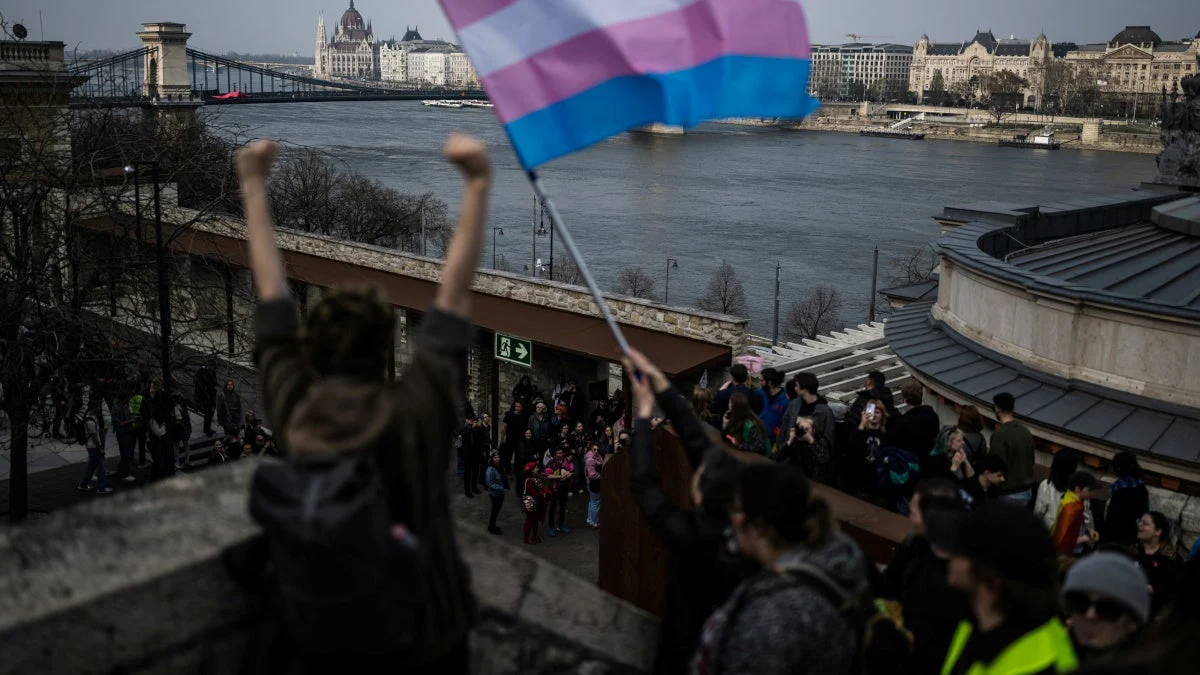
The decision by the Budapest police to ban a demonstration scheduled to commemorate the International Day of Trans Visibility marks a significant escalation in the Hungarian government’s ongoing efforts to curb freedom of assembly and limit the visibility of LGBTQ individuals. Issued in mid-March 2026, the police order prevents the Prizma Community, a prominent local advocacy group, from holding a peaceful march intended to raise awareness for transgender rights. While the authorities have framed the decision as a necessary measure for public order and "child protection," legal experts and human rights organizations argue that the move is the latest implementation of a restrictive legislative framework designed to silence dissenting voices and marginalize specific segments of the population.
This prohibition is not an isolated administrative act but rather the culmination of a systematic campaign that has intensified over the past year. The legal basis for the ban rests on controversial legislation passed in early 2025, which expanded the state’s power to restrict public events associated with lesbian, gay, bisexual, and transgender (LGBTQ) themes. As the Hungarian Constitutional Court currently reviews the validity of these laws, the suspension of the demonstration highlights the deepening rift between Hungary’s domestic policies and international human rights standards regarding the right to peaceful assembly.
The Legislative Foundation of the 2026 Ban
To understand the current prohibition, one must look back to the legislative shift that occurred in the spring of 2025. Following years of incremental pressure on LGBTQ organizations, the Hungarian Parliament adopted a series of measures that granted police and administrative bodies broad discretion to deny permits for public gatherings. These laws specifically target events that "promote or display" identities deviating from traditional gender roles or sexual orientations, citing "child protection" as the primary justification.
Under the 2025 statutes, any event deemed to have an impact on the "moral development" of minors can be subject to immediate cancellation or relocation. Critics argue that the language of the law is intentionally vague, allowing the Budapest police to categorize almost any LGBTQ-related visibility event as a potential threat to the well-being of children. This lack of legal precision has created a "chilling effect," where organizers often self-censor or abandon plans for public engagement to avoid the risk of administrative penalties or criminal prosecution.
The March 2026 decision specifically cited the proximity of the proposed march route to educational institutions and public parks, asserting that the "visual nature" of the Trans Pride demonstration would violate the 2025 child protection standards. However, the organizers from the Prizma Community have challenged this rationale, noting that the demonstration was planned as a solemn and educational commemoration of Transgender Day of Visibility, a globally recognized event.
A Chronology of Increasing Restrictions (2021–2026)
The trajectory of the current crackdown can be traced through several key milestones over the last five years:
- June 2021: The Hungarian Parliament passes the initial "Anti-Pedophilia Act," which included amendments prohibiting the "promotion" of homosexuality and gender reassignment to minors in schools and media. This law drew sharp condemnation from the European Commission and triggered infringement procedures.
- March 2025: The government introduces and passes the "Assembly Protection Act," which specifically allows for the banning of LGBTQ-themed protests and marches under the guise of protecting public morality and the rights of minors.
- June 2025: In a major act of civil disobedience, Budapest Pride organizers proceed with their annual march despite a police ban. A record-breaking crowd of over 35,000 people participates, turning the event into a massive pro-democracy rally.
- September 2025 – January 2026: Authorities begin a wave of retaliatory legal actions. Criminal charges are filed against organizers of the June march, as well as high-profile political figures who supported the event.
- February 2026: The Hungarian Constitutional Court agrees to review the 2025 legislation following a petition by the Ombudsman for Fundamental Rights. Pending this review, several lower-court cases are suspended, but police continue to enforce the ban on new applications.
- March 12, 2026: Budapest police officially ban the Trans Visibility demonstration, citing the 2025 laws and rejecting the organizers’ appeal for a compromise on the route.
Criminalization of Support and the Role of the Mayor
The stakes of the current ban are heightened by the ongoing criminal proceedings against those who have defied similar orders in the past. Most notably, the Budapest Mayor, Gergely Karácsony, faces charges related to his participation in and support of the unauthorized 2025 Pride march. Prosecutors allege that the Mayor abused his official position by providing logistical support and public endorsement for an event that had been legally prohibited.
Similarly, a prominent Pride organizer in the city of Pécs is facing prosecution for "incitement against a legal order" after leading a local demonstration in late 2025. These cases represent a shift from administrative fines to criminal sanctions, a move that international observers describe as an attempt to decapitate the leadership of Hungary’s civil society movements.
The suspension of these cases during the Constitutional Court’s review provides a temporary reprieve but leaves a sword of Damocles hanging over the heads of activists. The Budapest police’s decision to ban the March 2026 trans rights rally suggests that the executive branch has no intention of slowing its enforcement actions while the court deliberates.
Responses from Civil Society and International Bodies
The reaction to the ban has been swift and critical. The Hungarian Helsinki Committee, providing legal representation for the Prizma Community, issued a statement asserting that the ban is a direct violation of the European Convention on Human Rights. "The selective denial of assembly rights based on the identity of the participants is the hallmark of an illiberal state," the statement read. "The police have failed to provide any empirical evidence that a peaceful walk for trans visibility poses a danger to any member of society, let alone children."
International human rights organizations, including Amnesty International and Human Rights Watch, have called on the European Union to take further action. They argue that the 2025 laws and their subsequent enforcement are a breach of the "rule of law" conditions tied to EU funding.
Conversely, government spokespeople have defended the police action. In a press briefing following the announcement of the ban, a Ministry of Interior official stated: "The government’s priority is the protection of Hungarian children from ideologies that they are not yet equipped to process. Freedom of assembly is not absolute; it must be balanced against the rights of parents to raise their children according to their own values."
Analysis of Implications: The Chilling Effect and Democratic Backsliding
The prohibition of the Trans Visibility march carries implications that extend far beyond the LGBTQ community. Political analysts suggest that the "selective ban" strategy serves two primary purposes for the ruling administration.
First, it consolidates the government’s domestic base by framing the issue as a defense of traditional family values against "external" or "liberal" pressures. By forcing a confrontation with activists and the Budapest Mayor, the government can maintain a narrative of conflict that distracts from economic challenges or other policy failures.
Second, it tests the limits of judicial and international oversight. By enacting laws that are intentionally difficult to reconcile with EU treaties, the Hungarian government creates a prolonged legal "gray zone." During the years it takes for the European Court of Human Rights (ECHR) or the European Court of Justice (ECJ) to issue a final ruling, the domestic social landscape can be fundamentally altered. Organizations may dissolve due to legal fees, activists may flee the country, and the public square may become increasingly homogenized.
Data from recent years suggests a narrowing of the civic space in Hungary. According to reports from the Civicus Monitor, Hungary’s rating for civic freedoms has moved from "narrowed" to "obstructed." The number of denied protest permits has reportedly risen by 40% since the passage of the 2025 legislation, with a disproportionate number of those denials affecting groups advocating for minority rights, environmental protections, and educational reform.
The Future of Dissent in Hungary
As the Prizma Community prepares to challenge the police ban in court, the outcome remains uncertain. If the court upholds the police decision, it will solidify the precedent that the state can curate the content of public protests based on ideological preferences. If the ban is overturned, it may offer a temporary victory for the right to assembly, but it is unlikely to deter the government from seeking new legislative avenues to achieve its goals.
The "Budapest Model" of defiance—seen in June 2025—remains a possibility for the Trans Visibility Day. However, with the threat of criminal charges now a reality, the cost of participation has increased significantly. For many trans individuals in Hungary, the ban is not just a legal hurdle but a message of exclusion.
In a broader sense, the situation in Budapest serves as a warning for other democratic nations. It demonstrates how "regulation" can be weaponized into "repression" through the use of vague legal definitions and the targeting of vulnerable populations. The International Day of Trans Visibility was established to celebrate the courage of transgender people living authentically; in 2026 Budapest, that authenticity has become a point of legal and political contention that will shape the future of Hungarian democracy for years to come.

Related Posts

Crackdown on Artistic Dissent in Morocco: The Arrest of Mehdi Black Wind and the Shrinking Space for Freedom of Expression
Eritrea Marks 38th Sawa Graduation Amid Growing International Concern Over Indefinite National Service and Human Rights Violations